



HCAR2
HCAR2 (hydroxycarboxylic acid receptor 2, also known as GPR109A) is a G protein-coupled receptor (GPCR) that functions as a metabolic and immune sensor linking nutrient-derived metabolites to cellular signaling pathways[1][1]. Activation of HCAR2 by endogenous ligands such as β-hydroxybutyrate and by pharmacological agonists including niacin initiates Gi-dependent signaling, suppresses inflammatory responses, and regulates lipid metabolism[1][2]. Mechanistically, HCAR2 signaling reduces pro-inflammatory cytokine production, modulates macrophage activation, and attenuates microglial reactivity, thereby contributing to immune homeostasis and neuroinflammatory control[1][3][4]. In disease models, HCAR2 activation has been associated with protection against colonic inflammation, colorectal tumorigenesis, atherosclerosis, and neuroinflammatory disorders, supporting its value as a therapeutic and experimental target in inflammation-related research[3][4][5]. Compared with related hydroxycarboxylic acid receptor family members, HCAR2 and HCAR3 share exceptionally high sequence similarity, yet differ in ligand recognition and binding-pocket architecture, resulting in distinct pharmacological profiles and receptor selectivity[2][6]. Structural studies further demonstrated that niacin and acipimox preferentially activate HCAR2, whereas subtype-selective agonists such as MK-6892 exhibit markedly greater specificity for HCAR2 than for HCAR3[6]. Therefore, selective HCAR2 agonists provide useful tools for dissecting receptor-specific signaling mechanisms and evaluating anti-inflammatory pathways in preclinical disease models[1][6].
References:
- [1]. Testai L, et al. Hydroxyl carboxylic acid receptor-2 (HCAR2) as a potential target in neurometabolic diseases. Pharmacol Ther. 2025 Oct;274:108909. [Content Brief]
- [2]. Park JH, et al. Structural basis for ligand recognition and signaling of hydroxy-carboxylic acid receptor 2. Nat Commun. 2023 Nov 6;14(1):7150. [Content Brief]
- [3]. Powell FL, et al. Hydroxycarboxylic acid receptor 2 (HCAR2/GPR109A) expression and signaling promotes the maintenance of an immunoinhibitory retinal environment. Preprint. 2021 Mar 17.
- [4]. Thackray AE, et al. Energy replacement diminishes the effect of exercise on postprandial lipemia in boys. Metabolism. 2016 Apr;65(4):496-506. [Content Brief]
- [5]. Singh N, et al. Activation of Gpr109a, receptor for niacin and the commensal metabolite butyrate, suppresses colonic inflammation and carcinogenesis. Immunity. 2014 Jan 16;40(1):128-39. [Content Brief]
- [6]. Pan X, et al. Structural insights into ligand recognition and selectivity of the human hydroxycarboxylic acid receptor HCAR2. Cell Discov. 2023 Nov 28;9(1):118. [Content Brief]
All Product Categories
-
HCAR2 Related Products (2)
Related Products (2)

-
3-Hydroxybenzoic acid
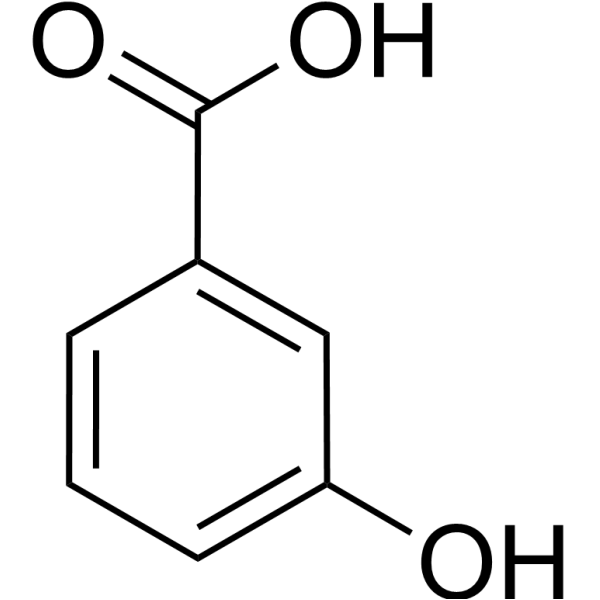 0 Images3-Hydroxybenzoic acid is an orally active endogenous metabolite. 3-Hydroxybenzoic acid is an agonist for GPR81 and GPR109A. 3-Hydroxybenzoic acid acts as stress response desensitizers. 3-Hydroxybenzoic acid can be used for anti-inflammatory and analgesic study.
-
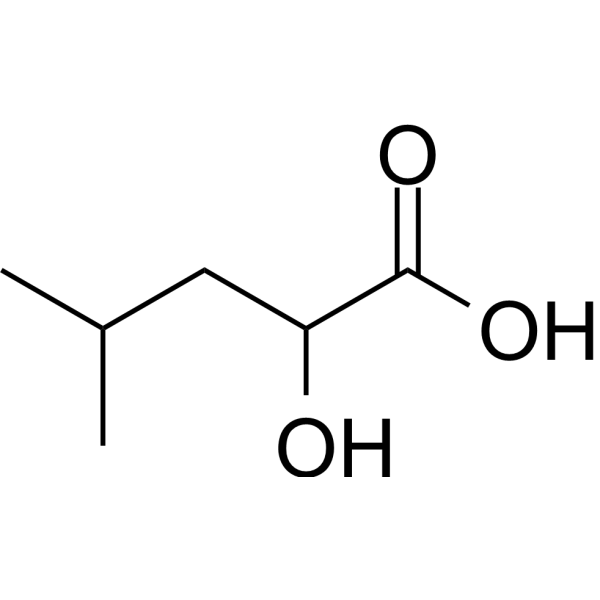
Leucic acid
 0 ImagesLeucic acid (α-Hydroxyisocaproic acid) is an orally active end-product of the microbial metabolism of leucine. Leucic acid can bind to HCAR2, alters AMPK and ERK1/2 phosphorylation status, suppresses lipid synthesis, promotes catabolism, reduces adiposity, enhances lean mass and exercise capacity. Leucic acid suppresses pro-inflammatory cytokine secretion, inflammation-related gene mRNA expression. Leucic acid decreases basal protein synthesis, attenuates myotube atrophy. Leucic acid can be used for the research of obesity.



