



Isotope-Labeled Compounds
Isotope-labeled compounds are chemical substances in which some atoms in their molecules are replaced by isotope atoms. The range of stable isotope products can cover from gases to complex molecules. Isotope-labeled compounds could provide a site-specific investigation of structures, making molecules easily detectable by mass spectrometry and NMR, and maintaining the physico-chemical properties of the target molecule at the same time.
MCE isotope-labeled compounds are all stable isotope-labeled compounds and are non-radioactive labeled substances. MCE isotope-labeled compounds are unique tools for identifying and understanding biological and chemical processes. Stable isotope-labeled products are now getting more and more popular among scientists. The scope of application is gradually penetrating into various scientific fields, such as life sciences, food and medicine, agriculture, environment, geology, etc. Stable isotope-labeled compounds have a wide range of applications in the Life Science areas, such as Metabolomics, Proteomics, Clinical studies, Deuterium drugs, etc.
All Product Categories
-
Isotope-Labeled Compounds Related Products (11051)
Related Products (11051)

-
KRASG12D-IN-3-d3
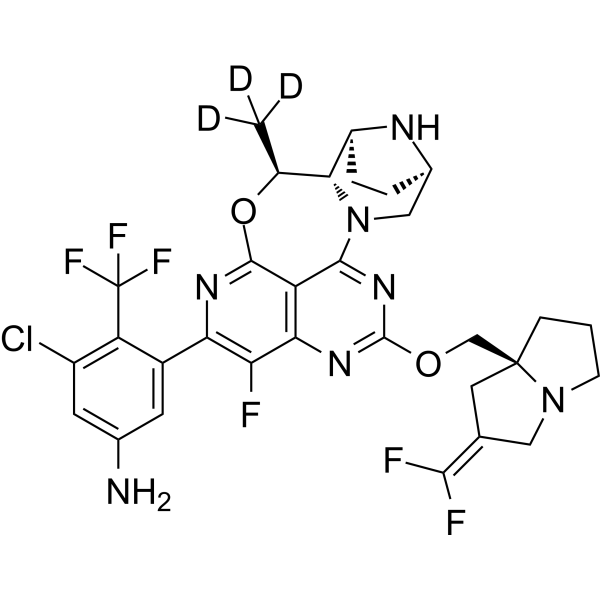 0 ImagesCat. No.: HY-162445SCAS No.: 3033638-69-3pan-KRAS-IN-5-d3 is deuterated labeled pan-KRAS-IN-5.
-
Givinostat impurity 1-d10 (hydrochloride)
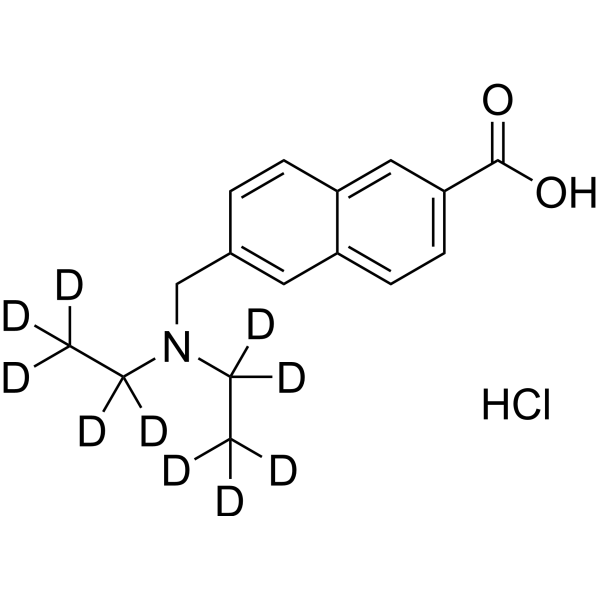 0 ImagesCat. No.: HY-143960SGivinostat impurity 1-d10 (hydrochloride) is the deuterium labeled Givinostat impurity 1 hydrochloride.
-
(3-Phenoxyphenyl)methanol-d5
 0 ImagesCat. No.: HY-W708653Synonyms: m-Phenoxybenzyl alcohol-d5(3-Phenoxyphenyl)methanol-d5 (m-Phenoxybenzyl alcohol-d5) is the deuterium labeled (3-Phenoxyphenyl)methanol (HY-W014898).
-
1,3-16:1 DG-d5
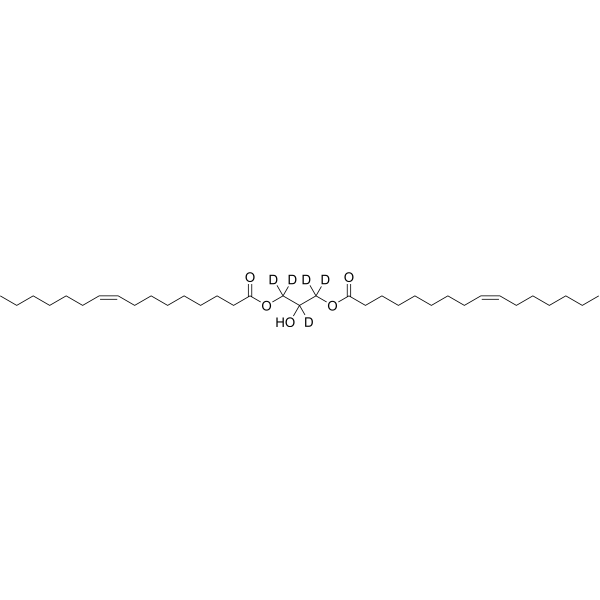 0 ImagesCat. No.: HY-146826SCAS No.: 1246523-68-11,3-16:1 DG-d5 is deuterium labeled 1,3-16:1 DG.
-
Afoxolaner-d6
 0 ImagesCat. No.: HY-16974SAfoxolaner-d6 is the deuterium labeled Afoxolaner (HY-16974). Afoxolaner is an orally active isoxazoline insecticide/acaricide against Ixodes scapularis in dogs. Afoxolaner acts on the insect γ-aminobutyric acid receptor (GABA) and glutamate receptors, inhibiting GABA & glutamate-regulated uptake of chloride ions, resulting in excess neuronal stimulation and death of the arthropod.
-
1,2-Dimyristoyl-sn-glycero-3-phosphoserine-d3 ammonium
 0 ImagesCat. No.: HY-178730SSynonyms: DMPS-d3 ammonium1,2-Dimyristoyl-sn-glycero-3-phosphoserine-d3 ammonium (DMPS-d3 ammonium) is the deuterium labeled 1,2-Dimyristoyl-sn-glycero-3-phosphoserine ammonium.
-
N-Desmethylnefopam-d5 (hydrochloride)
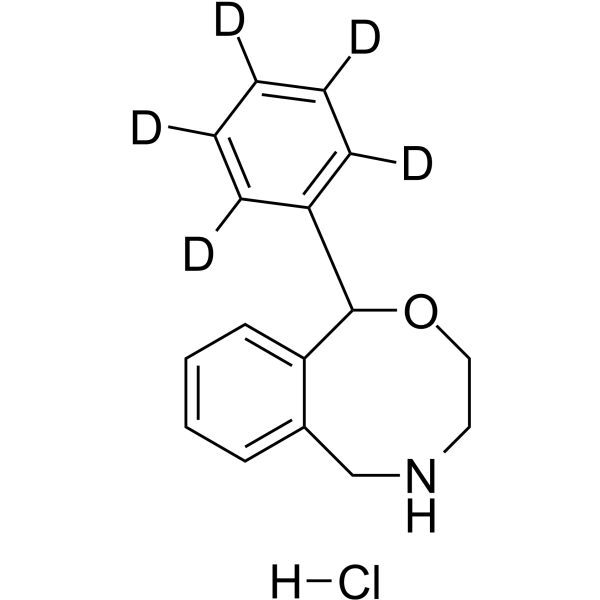 0 ImagesCat. No.: HY-133115ASCAS No.: 2748500-29-8N-Desmethylnefopam-d5 (hydrochloride) is a deuterium labeled N-Desmethylnefopam hydrochloride. N-Desmethylnefopam hydrochloride is the main metabolite of Nefopam. N-Desmethylnefopam hydrochloride is a centrally-acting but non-opioid analgesic agent, for the relief of moderate to severe pain.
-
4-Hydroxybenzophenone-d4
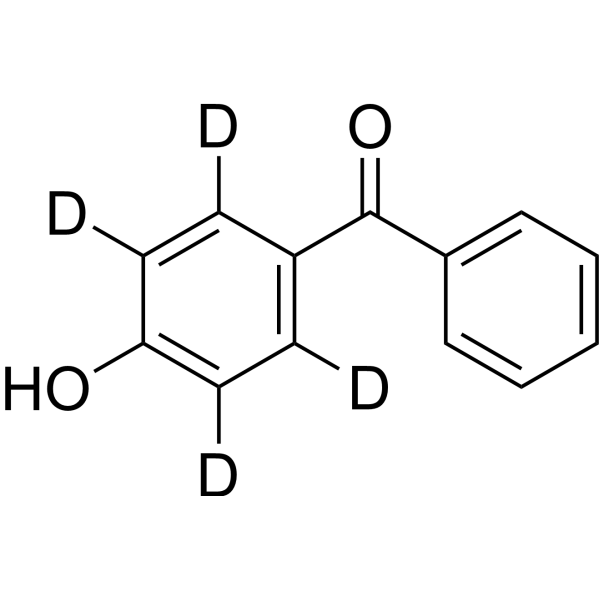 0 ImagesCat. No.: HY-W014937SCAS No.: 93496-64-14-Hydroxybenzophenone-d4 is deuterium labeled (4-Hydroxyphenyl)(phenyl)methanone.
-
L-Histidine-15N3
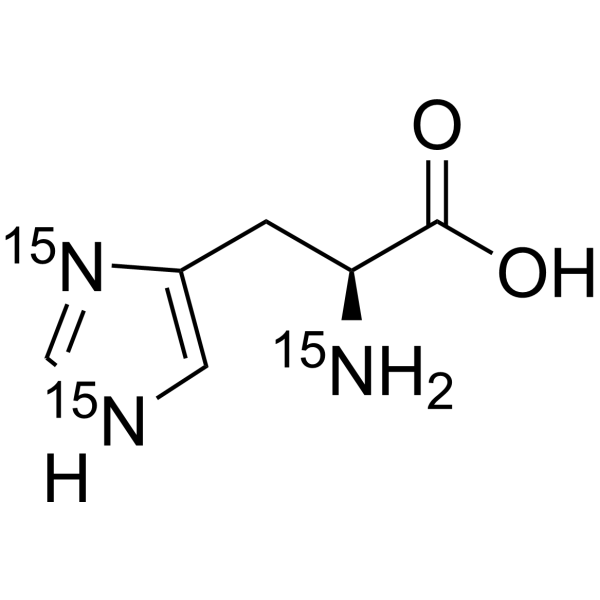 0 ImagesCat. No.: HY-N0832SCAS No.: 1217456-12-6L-Histidine-15N3 is the 15N-labeled L-Histidine. L-Histidine is an essential amino acid for infants. L-Histidine is an inhibitor of mitochondrial glutamine transport.
-
3-(3,4-Dimethoxyphenyl)propanoic acid-d10
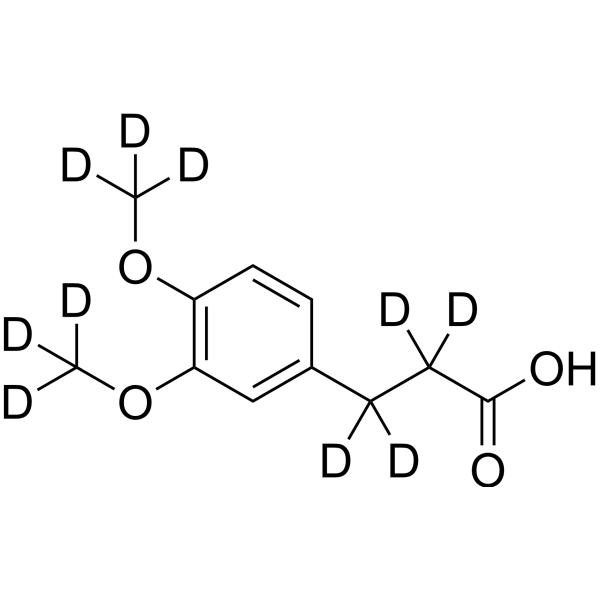 0 Images3-(3,4-Dimethoxyphenyl)propanoic acid-d10 is the deuterium labeled 3-(3,4-Dimethoxyphenyl)propanoic acid. 3-(3,4-Dimethoxyphenyl)propanoic acid is an orally active short-chain fatty acids (SCFAs). 3-(3,4-Dimethoxyphenyl)propanoic acid stimulates γ globin gene expression, erythropoiesis in vivo and is used for the β hemoglobinopathies and other anemias.
-
6,7-Dimethoxy-3,4-dihydroisoquinoline-d6
 0 ImagesCat. No.: HY-W097909SCAS No.: 1221885-61-56,7-Dimethoxy-3,4-dihydroisoquinoline-d6 is the deuterium labeled 6,7-Dimethoxy-3,4-dihydroisoquinoline.
-
DPPG-d62
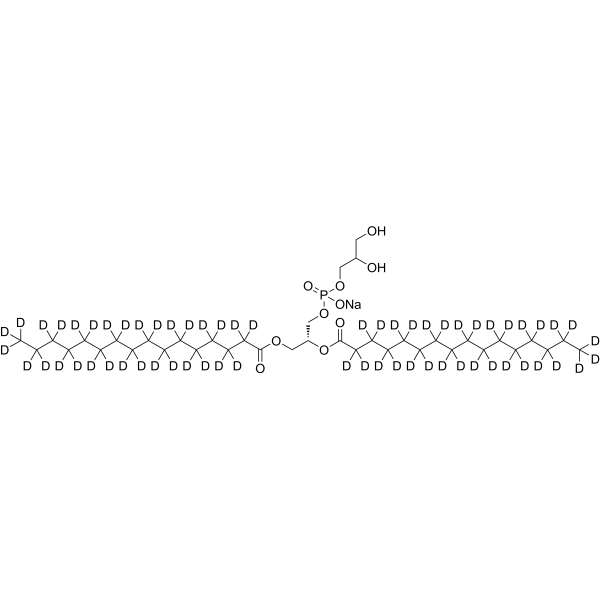 0 ImagesCat. No.: HY-125940SCAS No.: 326495-46-9Synonyms: 1,2-Dipalmitoyl-sn-glycero-3-phosphoglycerol-d62 sodiumDPPG-d62 (sodium) is deuterium labeled DPPG. DPPG sodium (1,2-Dipalmitoyl-sn-glycero-3-PG sodium) is a phospholipid containing the long-chain(16:0) palmitic acid inserted at the sn-1 and sn-2 positions. DPPG sodium is used in the generation of micelles, l
-
Indobufen-d5
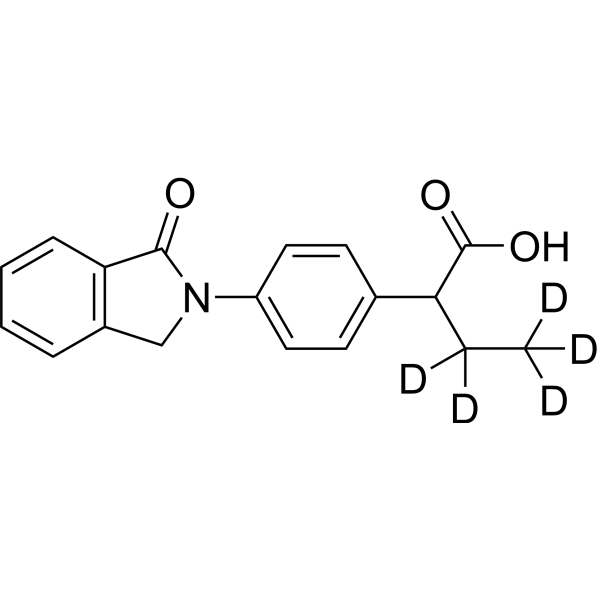 0 ImagesCat. No.: HY-18763SSynonyms: Ibustrin-d5Indobufen-d5 is deuterium labeled Indobufen. Indobufen is a platelet aggregation inhibitor. Indobufen is a reversible platelet cyclooxygenase (Cox) activity inhibitor. Indobufen suppresses thromboxane A2 (TxA2) synthesis. Indobufen down-regulates tissue factor (TF) in monocytes.
-
Fmoc-Phe-OH-15N
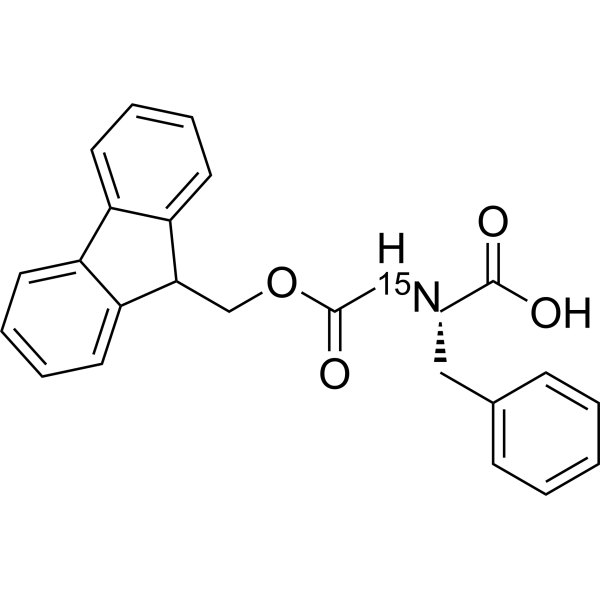 0 ImagesCat. No.: HY-79131S3CAS No.: 125700-32-5
-
Saccharin-13C6
 0 ImagesCat. No.: HY-W777496CAS No.: 1286479-01-3
-
Sarcosine-13C3
 0 ImagesCat. No.: HY-W748519CAS No.: 2806125-84-6Synonyms: N-Methylglycine-13C3; Sarcosin-13C3Sarcosine-13C3 (N-Methylglycine-13C3; Sarcosin-13C3) is the 13C-labeled Sarcosine (HY-101037). Sarcosine (N-Methylglycine), an endogenous amino acid, is a competitive glycine transporter type I (GlyT1) inhibitor and N-methyl-D-aspartate (NMDA) receptor co-agonist. Sarcosine increases the glycine concentration, resulting in an indirect potentiation of the NMDA receptor. Sarcosine is commonly used for the research of schizophrenia.
-
Hexane-1,6-diol-d4
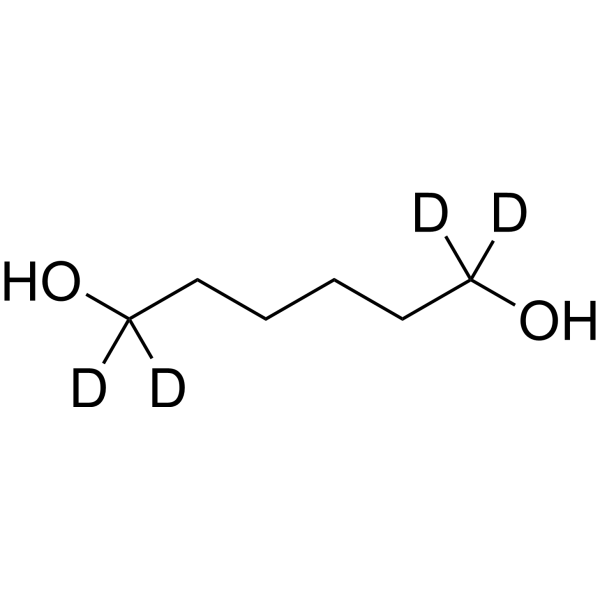 0 ImagesCat. No.: HY-W010505SCAS No.: 6843-76-1Hexane-1,6-diol-d4 is the deuterium labeled Hexane-1,6-diol (HY-W010505). Hexane-1,6-diol is a 6-carbon straight-chain diol with hydroxyl groups at both ends. Hexane-1,6-diol can be used as an additive for drilling fluids. Hexane-1,6-diol can also be used as a substrate in life science-related research.
-
Mitiperstat-d3
 0 ImagesCat. No.: HY-145581SSynonyms: AZD4831-d3Mitiperstat-d3 (AZD4831-d3) is the deuterated -labeled Mitiperstat (HY-145581).Mitiperstat (AZD4831) is an effective oral inhibitor of myeloperoxidase (MPO). Mitiperstat inhibits MPO and thyroid peroxidase (TPO) with IC50s of 1.5 nM and 0.69 μM. Mitiperstat exhibits a weak inhibitory activity against CYP3A4 with an IC50 of 6 μM. Mitiperstat can reduce inflammation and improve microvascular function, and it can be used in studies related to heart failure, preserved or mildly reduced ejection fraction, non-alcoholic fatty liver disease, and chronic obstructive pulmonary disease.
-
7α,24(R/S)-Dihydroxycholestenone-d7
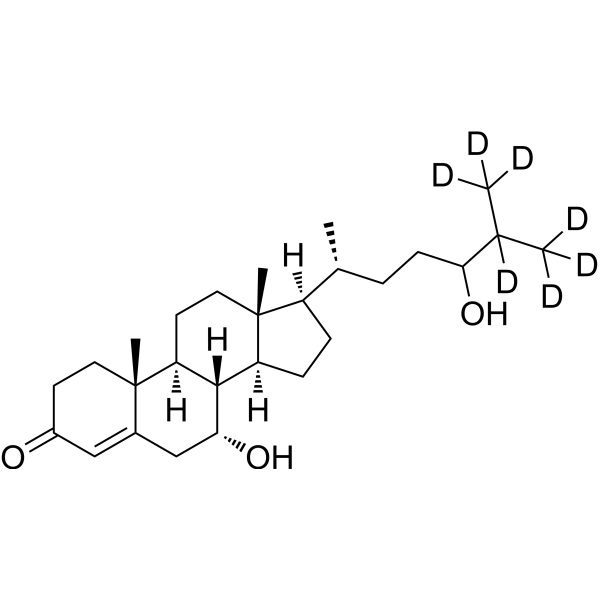 0 ImagesCat. No.: HY-146787SCAS No.: 2260669-21-27α,24(R/S)-Dihydroxycholestenone-d7 is deuterium labeled 7α,24(R/S)-Dihydroxycholestenone.
-
3-Demethylthiocolchicine-13C2,d6
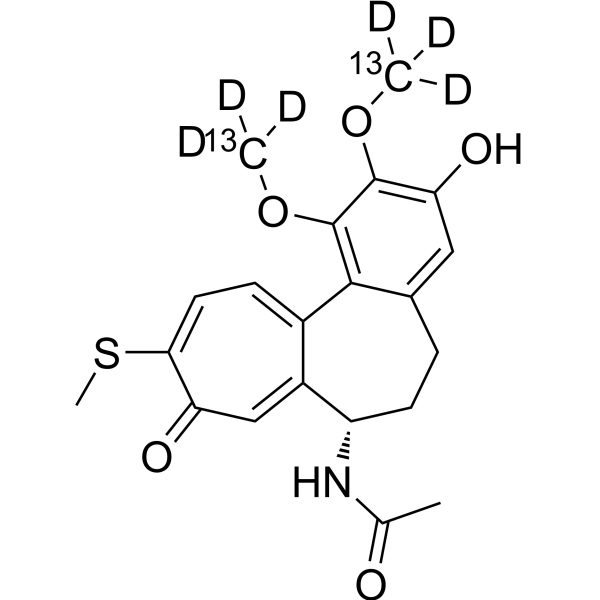 0 ImagesCat. No.: HY-132644S13-Demethyl Thiocolchicine---13C2,d6 is 13C and deuterated labeled 3-Demethyl Thiocolchicine-.



