



KAT6A Antibody (YA6622)
(Synonyms: Histone acetyltransferase KAT6A EC:2.3.1.48 MOZ, YBF2/SAS3, SAS2 and TIP60 protein 3 (MYST-3) Monocytic leukemia zinc finger protein Runt-related transcription factor-binding protein 2 Zinc finger protein 220 KAT6A MOZ MYST3 RUNXBP2 Histone acetyltransferase KAT6A EC:2.3.1.48 MOZ, YBF2/SAS3, SAS2 and TIP60 protein 3 (MYST-3) Monocytic leukemia zinc finger protein Runt-related transcription factor-binding protein 2 Zinc finger protein 220 KAT6A MOZ MYST3 RUNXBP2 ZNF220 )Based on 1 publication(s) in Google Scholar
KAT6A Antibody (YA6622) is a Rabbit-derived and non-conjugated IgG monoclonal antibody, targeting to KAT6A.
-
Host:
Rabbit
-
Isotype:
IgG
-
Application:
ICC/IF, IHC-P, FC, ChIP
-
Reactivity :
Human, Mouse, Rat
-
Formulation:
Supplied in PBS (pH7.4), 0.1% BSA, 40% Glycerol. Preservative: 0.05% Sodium Azide.
-
Conjugation:
Non-conjugated


To place orders, for customer services and technical support, please contact: MedChemExpress USA
Tel: 609-228-6898 E-mail: [email protected] [email protected]



Publications Citing Use of MedChemExpress (MCE) KAT6A Antibody (YA6622)
More

Applications
| Application |
ICC/IF

ICC/IF: Immunocytochemistry/
Immunofluorescence |
IHC-P
IHC-P: Immunohistochemistry-Paraffin
|
FC
FC: Flow Cytometry
|
ChIP
ChIP: Chromatin Immunoprecipitation
|
|---|---|---|---|---|
| Dilution Ratio | 1:500 | 1:2000-1:20000 | 1:200-1:1000 | Use 5 μg for 25 μg of chromatin. |


Product Details
KAT6A Antibody (YA6622) is a Rabbit-derived and non-conjugated IgG monoclonal antibody, targeting to KAT6A.
-
Host Rabbit

-
Clonality Recombinant,Monoclonal

-
Species ReactivityHuman, Mouse, Rat
-
Calculated Molecular Weight Predicted band size: 225 kDa

Recombinant protein within human KAT6A aa 785-1,034.
affinity purified.
Non-conjugated
Unmodified
IgG


Product Properties
-
Appearance
Solution
-
Formulation
Supplied in PBS (pH7.4), 0.1% BSA, 40% Glycerol. Preservative: 0.05% Sodium Azide.
-
Concentration
Batch-dependent, Please check the COA for the concentration of each lot. Check Lot Concentration
-
Storage & Stability
Stored at -20°C for 1 year. Avoid repeated freeze / thaw cycles.
-
Shipping
Shipping with blue ice.


Publications (1)
-
Journal Impact Factor
-
Most Recent
-
BMC Cancer
Histone acetyltransferase KAT6A contributes to colon cancer malignant progression by inhibiting ferroptosis. [Abstract]2025 Dec 27;26(1):150. PMID: 41454337


Verification Images
-
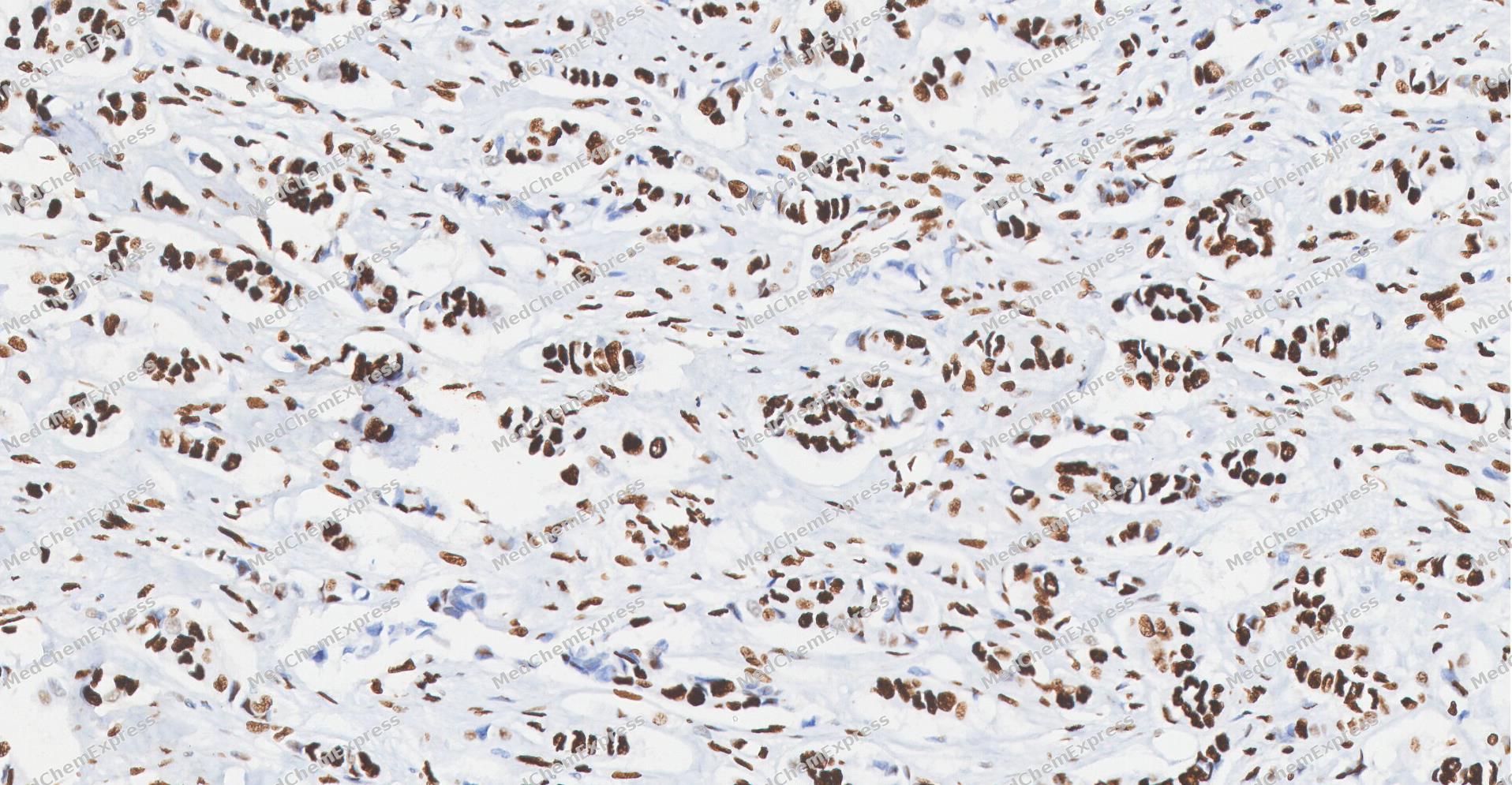 Immunohistochemical analysis of paraffin-embedded human Breast Cancer tissue using KAT6A antibody was performed. The section was pretreated using high-temperature and high-pressure mediated EDTA antigen retrieval buffer (pH 9.0), for 5 minutes. The tissues were incubated with primary antibody (HY-P86929, 1:2000 dilution) at room temperature for 60 minutes. Detection was performed using an HRP conjugated compact polymer system. DAB was used as the chromogen. The tissues were counterstained with hematoxylin and mounted with neutral balsam mounting medium.
 -
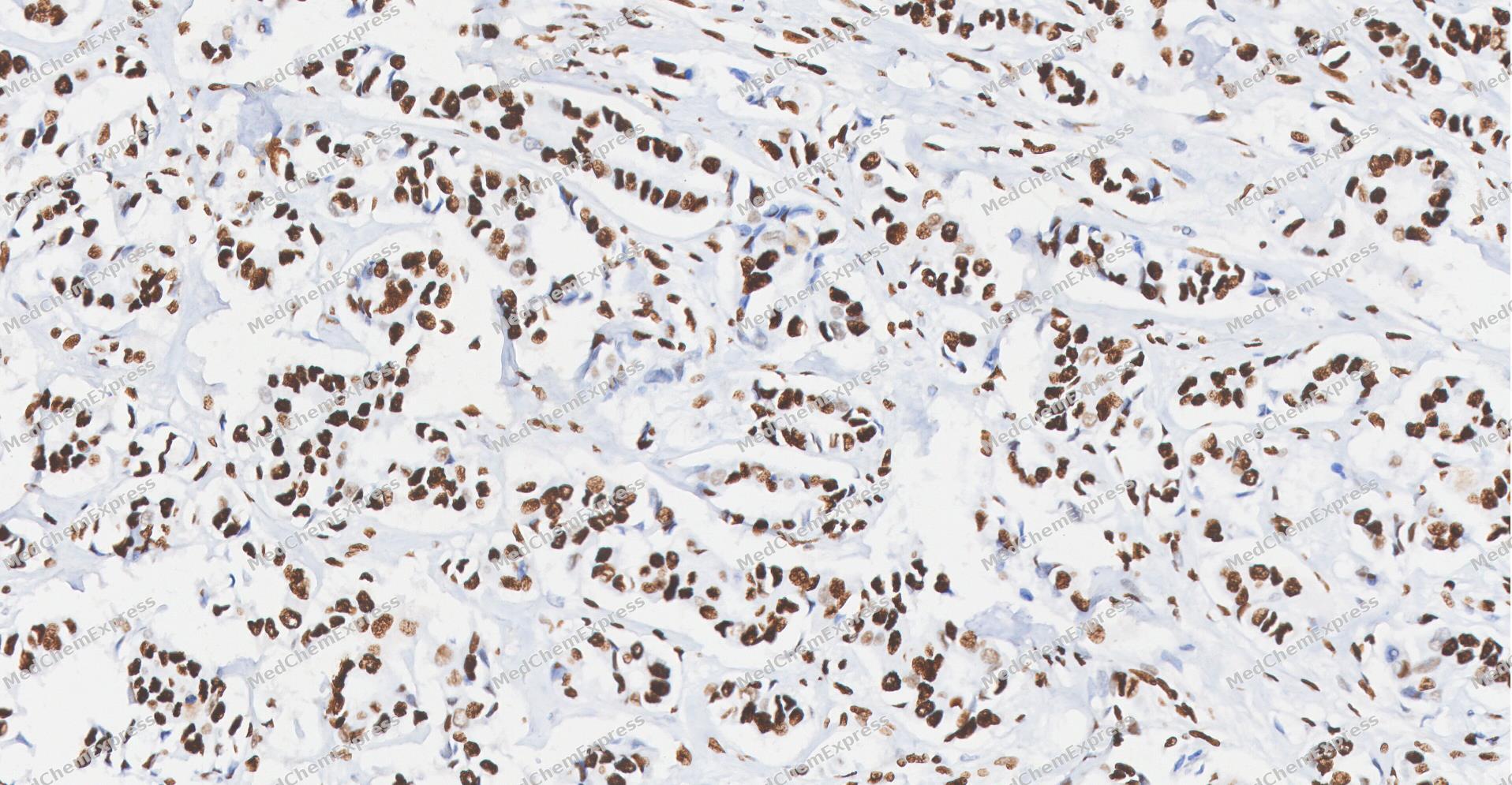 Immunohistochemical analysis of paraffin-embedded human Breast Cancer tissue using KAT6A antibody was performed. The section was pretreated using high-temperature and high-pressure mediated EDTA antigen retrieval buffer (pH 9.0), for 5 minutes. The tissues were incubated with primary antibody (HY-P86929, 1:2000 dilution) at room temperature for 60 minutes. Detection was performed using an HRP conjugated compact polymer system. DAB was used as the chromogen. The tissues were counterstained with hematoxylin and mounted with neutral balsam mounting medium.
 -
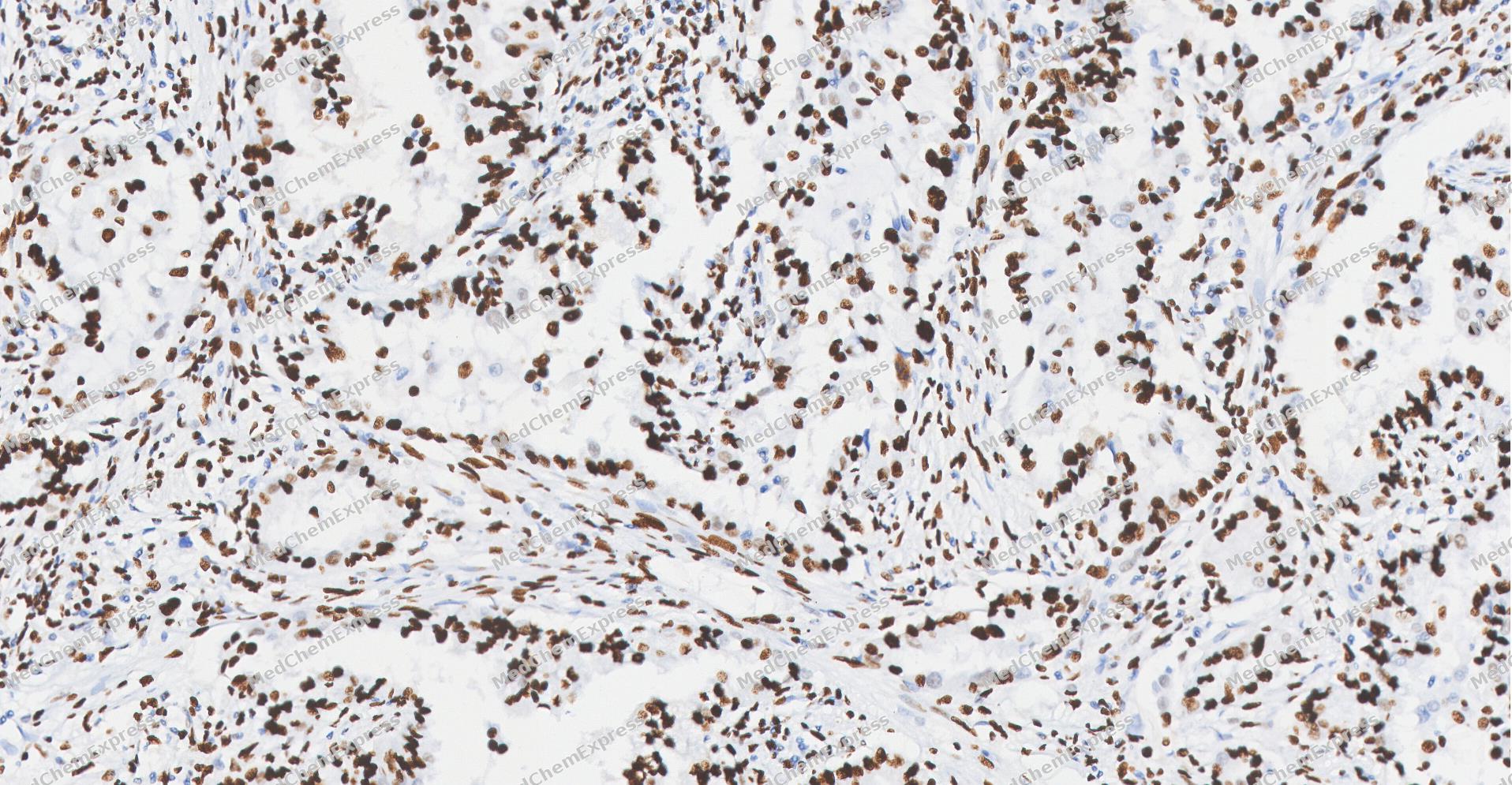 Immunohistochemical analysis of paraffin-embedded human Lung Adenocarcinoma tissue using KAT6A antibody was performed. The section was pretreated using high-temperature and high-pressure mediated EDTA antigen retrieval buffer (pH 9.0), for 5 minutes. The tissues were incubated with primary antibody (HY-P86929, 1:2000 dilution) at room temperature for 60 minutes. Detection was performed using an HRP conjugated compact polymer system. DAB was used as the chromogen. The tissues were counterstained with hematoxylin and mounted with neutral balsam mounting medium.
 -
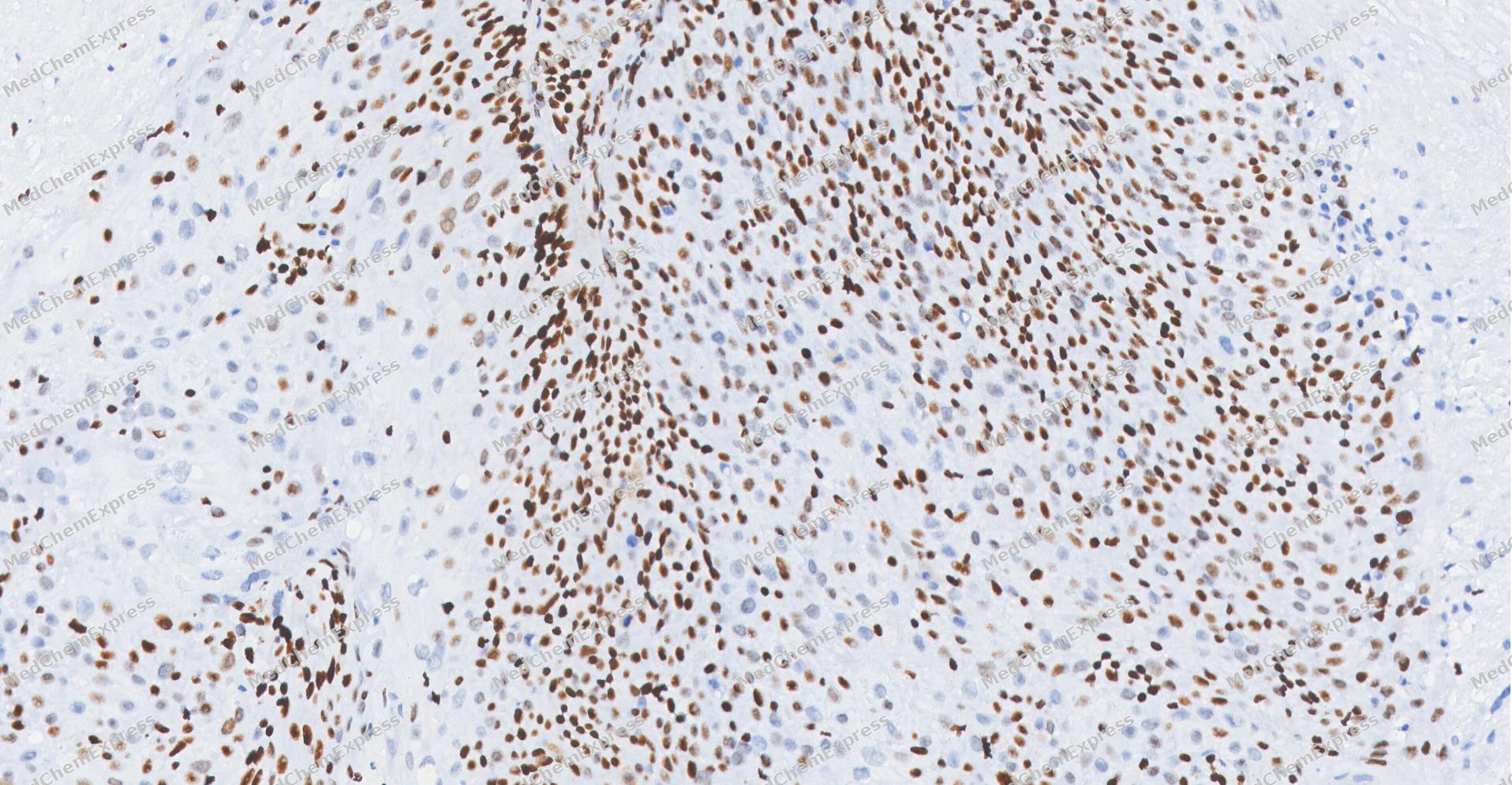 Immunohistochemical analysis of paraffin-embedded human Cervical Cancer tissue using KAT6A antibody was performed. The section was pretreated using high-temperature and high-pressure mediated EDTA antigen retrieval buffer (pH 9.0), for 5 minutes. The tissues were incubated with primary antibody (HY-P86929, 1:2000 dilution) at room temperature for 60 minutes. Detection was performed using an HRP conjugated compact polymer system. DAB was used as the chromogen. The tissues were counterstained with hematoxylin and mounted with neutral balsam mounting medium.
 -
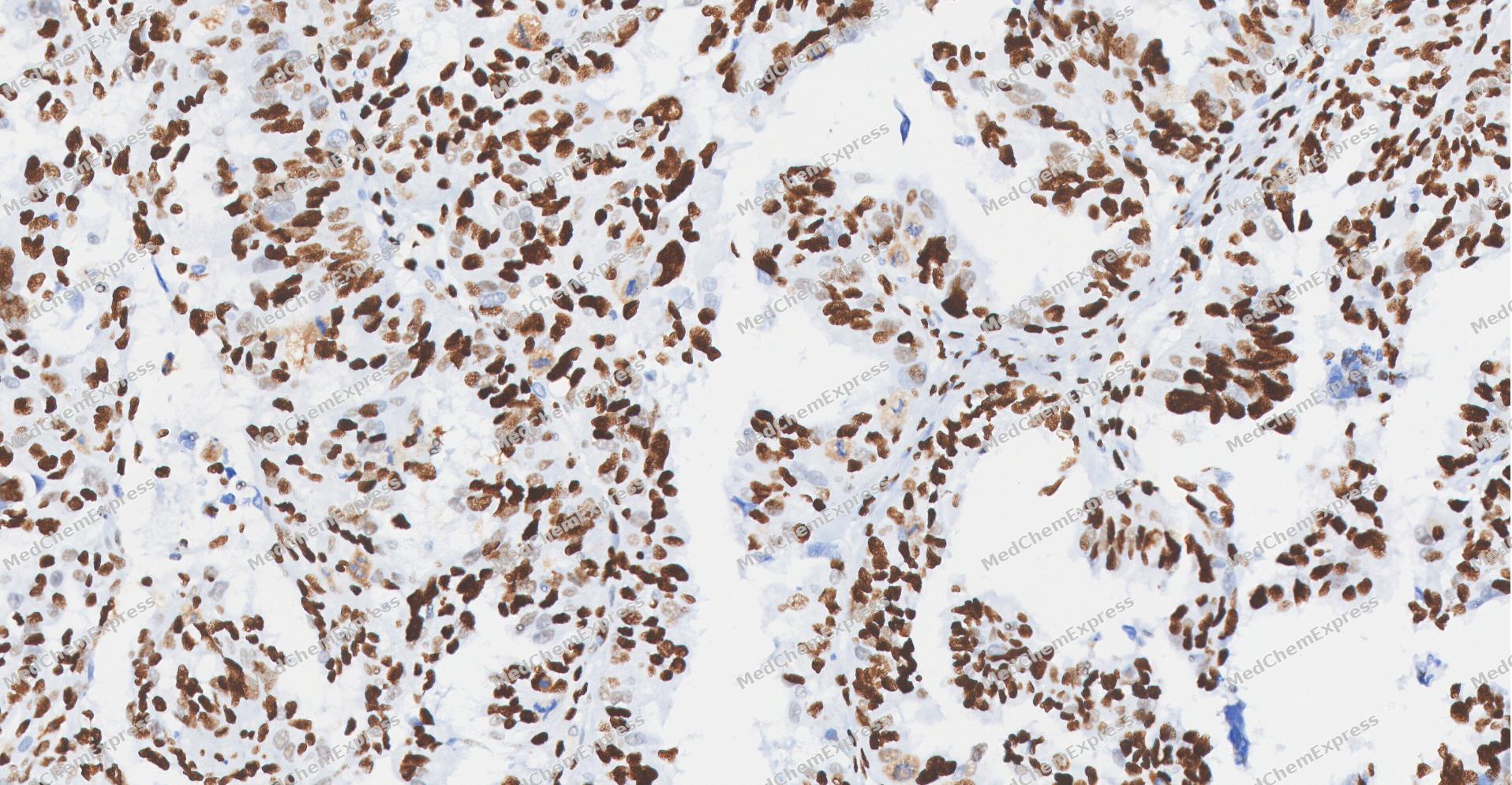 Immunohistochemical analysis of paraffin-embedded human Ovarian Cancer tissue using KAT6A antibody was performed. The section was pretreated using high-temperature and high-pressure mediated EDTA antigen retrieval buffer (pH 9.0), for 5 minutes. The tissues were incubated with primary antibody (HY-P86929, 1:2000 dilution) at room temperature for 60 minutes. Detection was performed using an HRP conjugated compact polymer system. DAB was used as the chromogen. The tissues were counterstained with hematoxylin and mounted with neutral balsam mounting medium.
 -
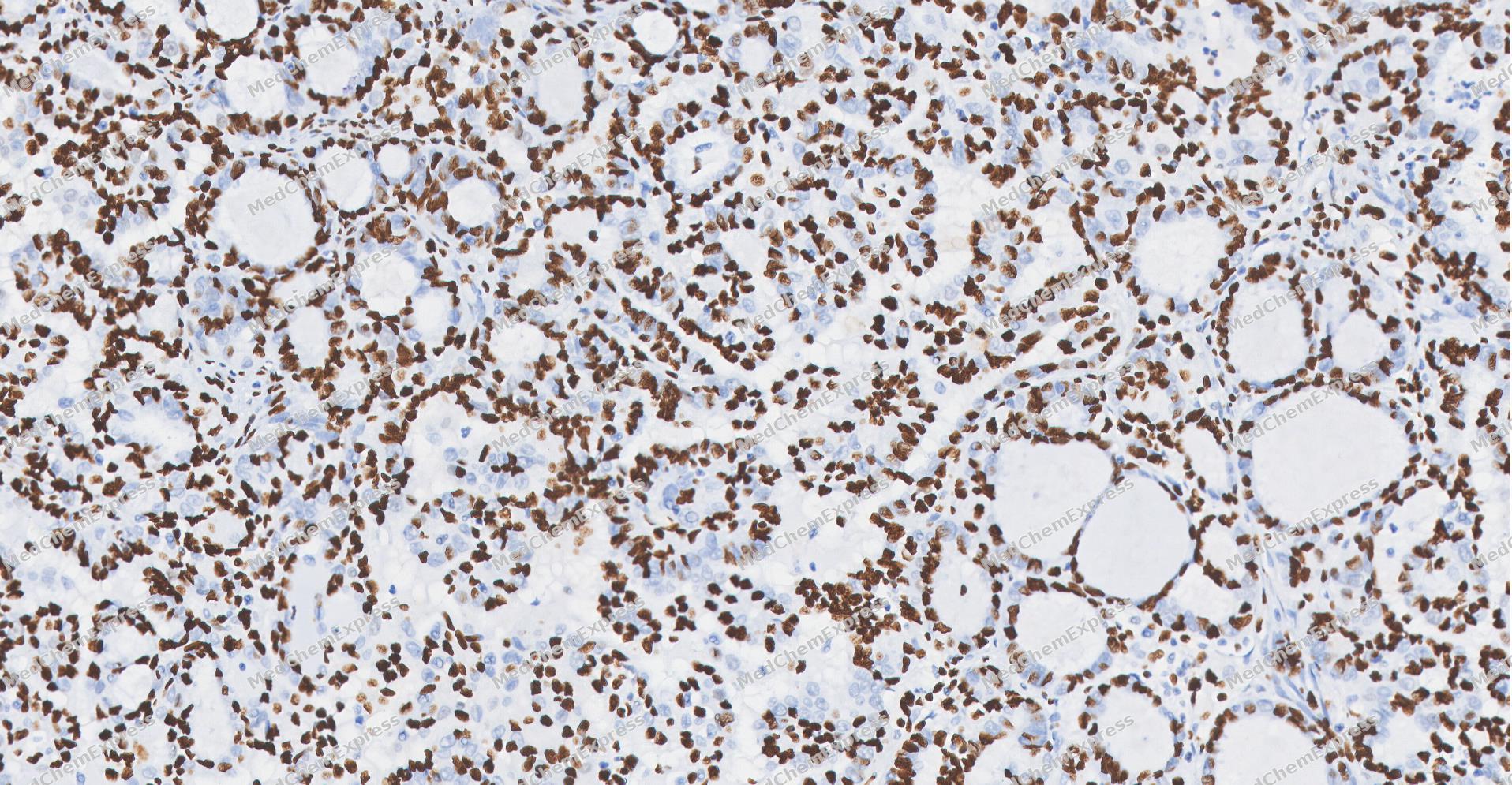 Immunohistochemical analysis of paraffin-embedded human Ovarian Cancer tissue using KAT6A antibody was performed. The section was pretreated using high-temperature and high-pressure mediated EDTA antigen retrieval buffer (pH 9.0), for 5 minutes. The tissues were incubated with primary antibody (HY-P86929, 1:2000 dilution) at room temperature for 60 minutes. Detection was performed using an HRP conjugated compact polymer system. DAB was used as the chromogen. The tissues were counterstained with hematoxylin and mounted with neutral balsam mounting medium.
 -
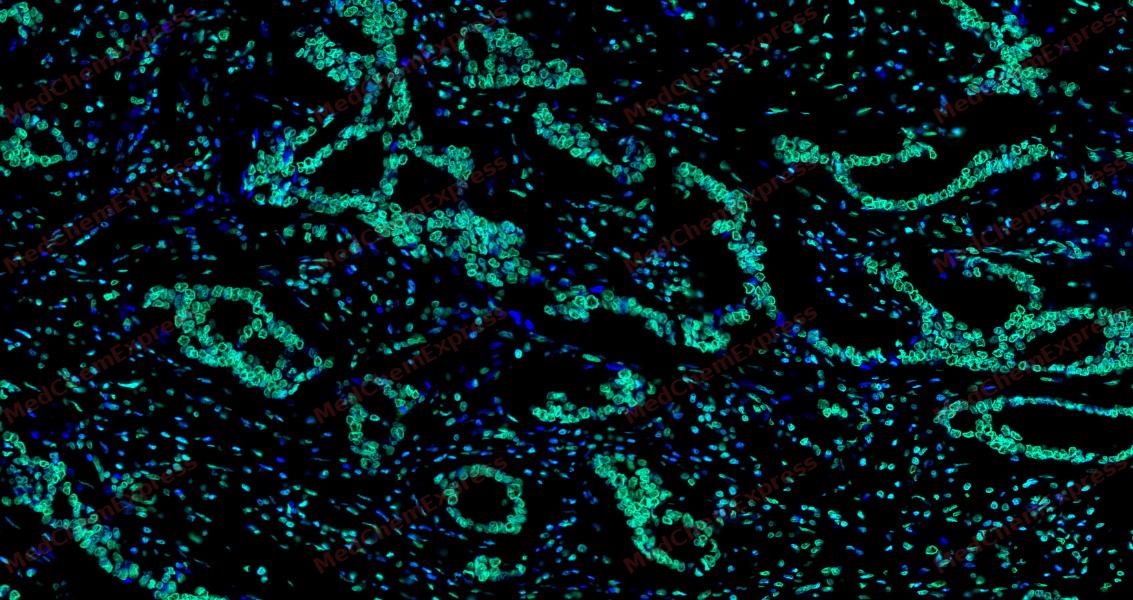 Tyramide signaling amplification based immunofluorescence was performed on paraffin-embedded human Breast Cancer tissue using KAT6A antibody. Antigen retrieval was performed in EDTA buffer pH 9.0 (95 °C, 20 min) followed by cooling to RT. Then incubated with primary antibody (HY-P86929, 1:3000 dilution) at room temperature for 60 minutes and HRP conjugated secondary antibody for 10 minutes. Fluorescence was then developed with Vari Fluor 532 TSA (200×)(HY-D1832). The tissues were counterstained with DAPI and mounted with Anti-fade mounting medium.
 -
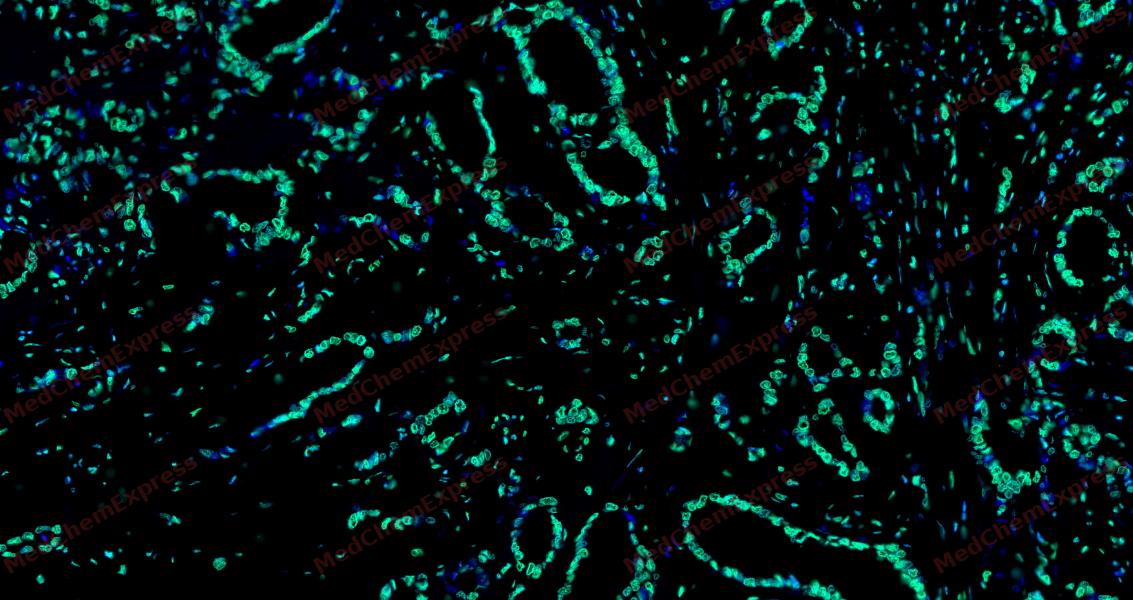 Tyramide signaling amplification based immunofluorescence was performed on paraffin-embedded human Breast Cancer tissue using KAT6A antibody. Antigen retrieval was performed in EDTA buffer pH 9.0 (95 °C, 20 min) followed by cooling to RT. Then incubated with primary antibody (HY-P86929, 1:3000 dilution) at room temperature for 60 minutes and HRP conjugated secondary antibody for 10 minutes. Fluorescence was then developed with Vari Fluor 532 TSA (200×)(HY-D1832). The tissues were counterstained with DAPI and mounted with Anti-fade mounting medium.
 -
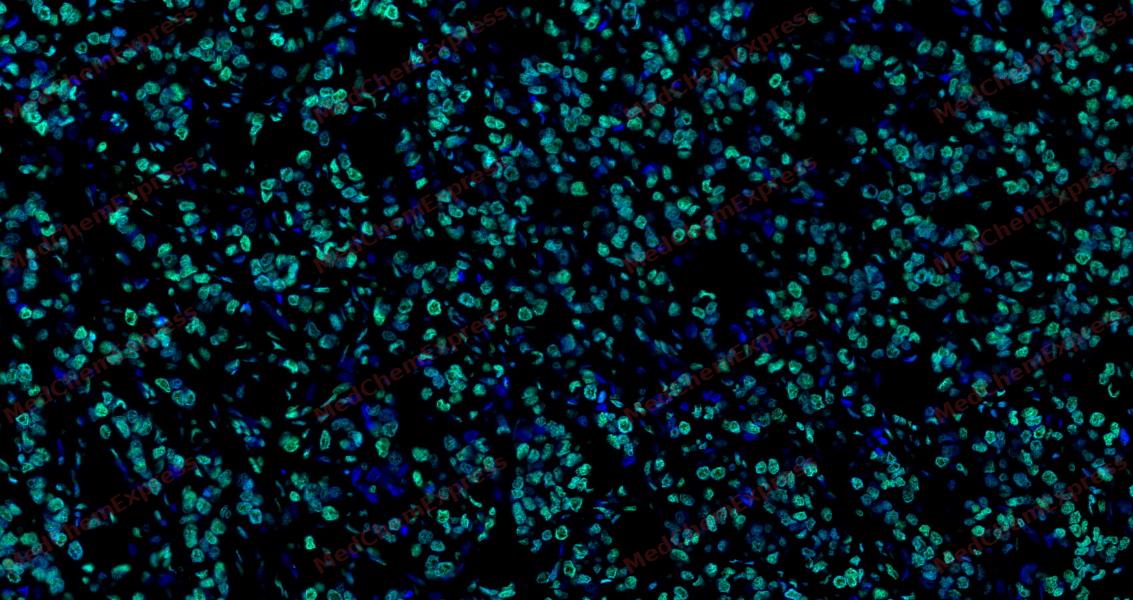 Tyramide signaling amplification based immunofluorescence was performed on paraffin-embedded human Breast Cancer tissue using KAT6A antibody. Antigen retrieval was performed in EDTA buffer pH 9.0 (95 °C, 20 min) followed by cooling to RT. Then incubated with primary antibody (HY-P86929, 1:3000 dilution) at room temperature for 60 minutes and HRP conjugated secondary antibody for 10 minutes. Fluorescence was then developed with Vari Fluor 532 TSA (200×)(HY-D1832). The tissues were counterstained with DAPI and mounted with Anti-fade mounting medium.
 -
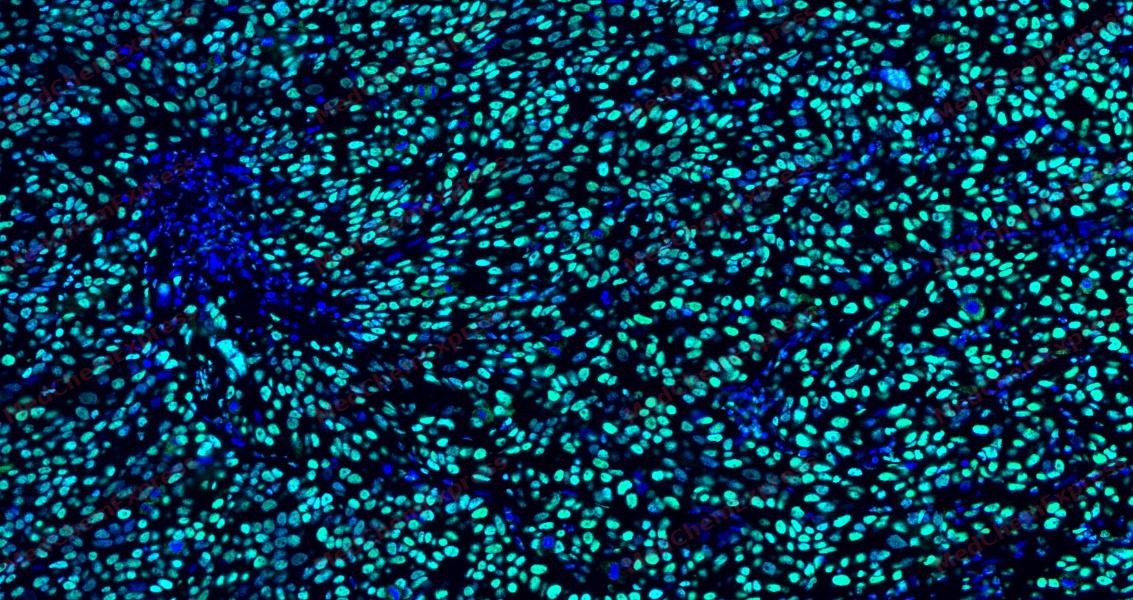 Tyramide signaling amplification based immunofluorescence was performed on paraffin-embedded human Cervical Cancer tissue using KAT6A antibody. Antigen retrieval was performed in EDTA buffer pH 9.0 (95 °C, 20 min) followed by cooling to RT. Then incubated with primary antibody (HY-P86929, 1:3000 dilution) at room temperature for 60 minutes and HRP conjugated secondary antibody for 10 minutes. Fluorescence was then developed with Vari Fluor 532 TSA (200×)(HY-D1832). The tissues were counterstained with DAPI and mounted with Anti-fade mounting medium.
 -
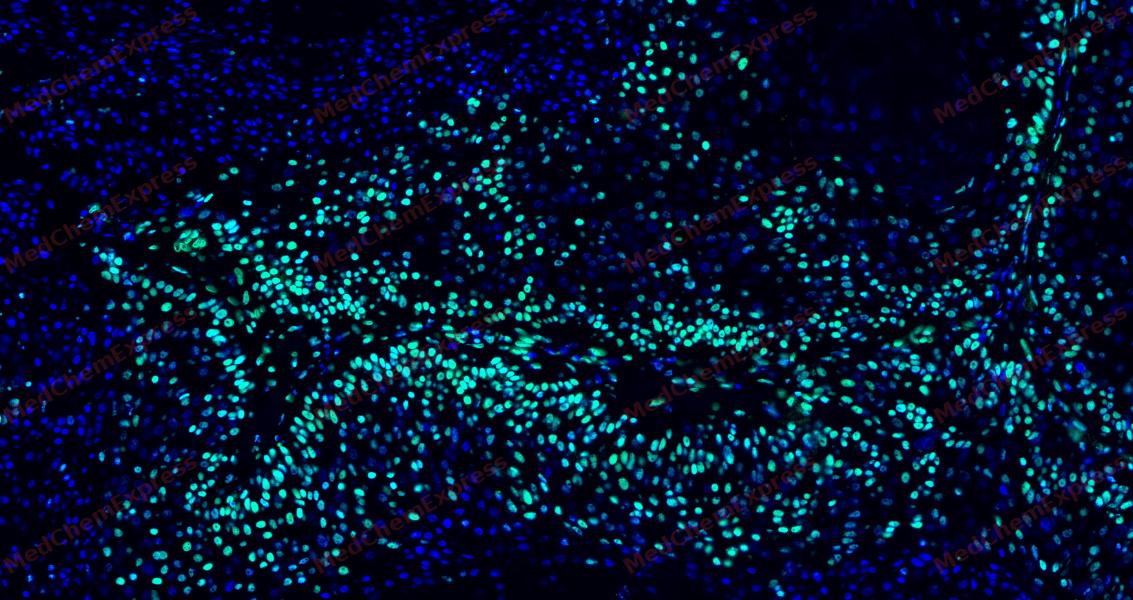 Tyramide signaling amplification based immunofluorescence was performed on paraffin-embedded human Cervical Cancer tissue using KAT6A antibody. Antigen retrieval was performed in EDTA buffer pH 9.0 (95 °C, 20 min) followed by cooling to RT. Then incubated with primary antibody (HY-P86929, 1:3000 dilution) at room temperature for 60 minutes and HRP conjugated secondary antibody for 10 minutes. Fluorescence was then developed with Vari Fluor 532 TSA (200×)(HY-D1832). The tissues were counterstained with DAPI and mounted with Anti-fade mounting medium.
 -
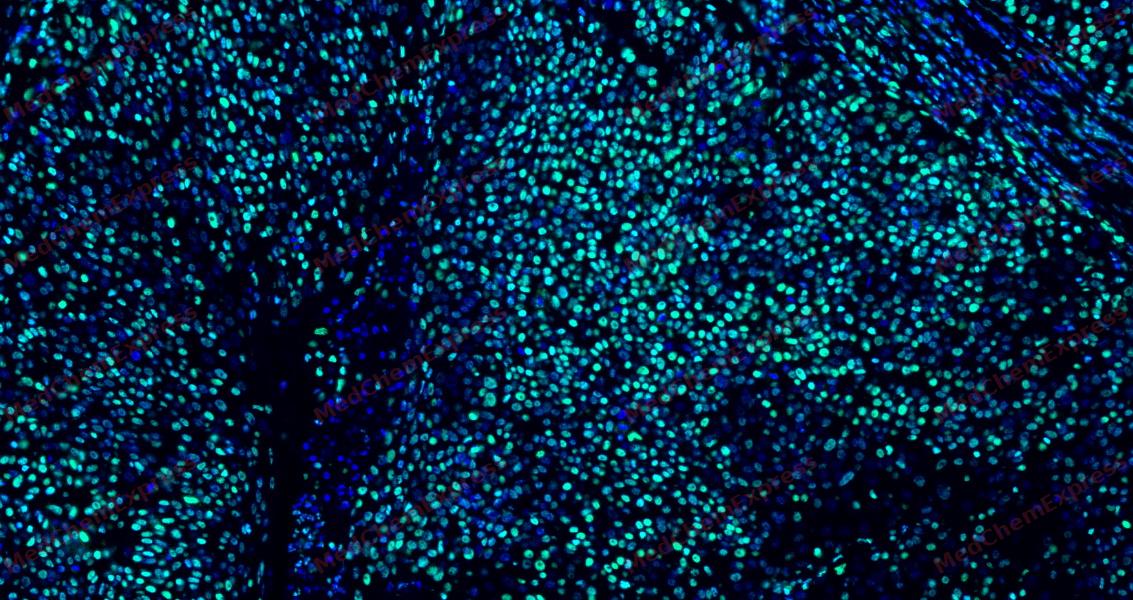 Tyramide signaling amplification based immunofluorescence was performed on paraffin-embedded human Cervical Cancer tissue using KAT6A antibody. Antigen retrieval was performed in EDTA buffer pH 9.0 (95 °C, 20 min) followed by cooling to RT. Then incubated with primary antibody (HY-P86929, 1:3000 dilution) at room temperature for 60 minutes and HRP conjugated secondary antibody for 10 minutes. Fluorescence was then developed with Vari Fluor 532 TSA (200×)(HY-D1832). The tissues were counterstained with DAPI and mounted with Anti-fade mounting medium.


Background
-
Function
KAT6A is a Histone acetyltransferase that acetylates lysine residues in histone H3 and histone H4 (in vitro). Component of the MOZ/MORF complex which has a histone H3 acetyltransferase activity. May act as a transcriptional coactivator for RUNX1 and RUNX2. Acetylates p53/TP53 at 'Lys-120' and 'Lys-382' and controls its transcriptional activity via association with PML
-
Subcellular Localization
Nucleus,Nucleus, nucleolus,Nucleus, nucleoplasm,Nucleus, PML body
-
Isoforms & Post-Translational Modification
Q92794: 2004 amino acids, molecular weight 225028 Da.
-
Subunit
Component of the MOZ/MORF complex composed at least of ING5, KAT6A, KAT6B, MEAF6 and one of BRPF1, BRD1/BRPF2 and BRPF3
-
SwissProt ID
-
Synonyms
Histone acetyltransferase KAT6A EC:2.3.1.48 MOZ, YBF2/SAS3, SAS2 and TIP60 protein 3 (MYST-3) Monocytic leukemia zinc finger protein Runt-related transcription factor-binding protein 2 Zinc finger protein 220 KAT6A MOZ MYST3 RUNXBP2 Histone acetyltransferase KAT6A EC:2.3.1.48 MOZ, YBF2/SAS3, SAS2 and TIP60 protein 3 (MYST-3) Monocytic leukemia zinc finger protein Runt-related transcription factor-binding protein 2 Zinc finger protein 220 KAT6A MOZ MYST3 RUNXBP2 ZNF220
Documentation
-
Data Sheet (231 KB)
-
SDS (254 KB)
- English - EN (254 KB)
- Français - FR (254 KB)
- Deutsch - DE (254 KB)
- Norwegian - NO (254 KB)
- Español - ES (254 KB)
- Swedish - SV (254 KB)
- Italian - IT (254 KB)
- Korean - KR (254 KB)
- Portuguese - PT (254 KB)
-
User Guide for Antibodies (1077 KB)

 Powered by Bioz
