



Duodenal Ulcer
-
Duodenal Ulcer (4)


- Formula: C23H30ClN
- Molecular Weight: 355.94
Igmesine hydrochloride (JO 1784 hydrochloride) is a selective σ-1 receptor agonist (IC50 = 39 nM) with oral activity and blood-brain barrier penetration. Igmesine hydrochloride stimulates duodenal bicarbonate secretion in rats via a σ1/vagal/CCK-A-dependent pathway, without antisecretory activity. Igmesine hydrochloride centrally blocks CRF-mediated gastrin-inhibitory effects, and in TMT toxicity and MCAO focal ischemia models, it downregulates PTBBS, reduces NOS, and modulates M1/M2 density. Igmesine hydrochloride is used in research on duodenal ulcers, Alzheimer's disease, and related diseases.
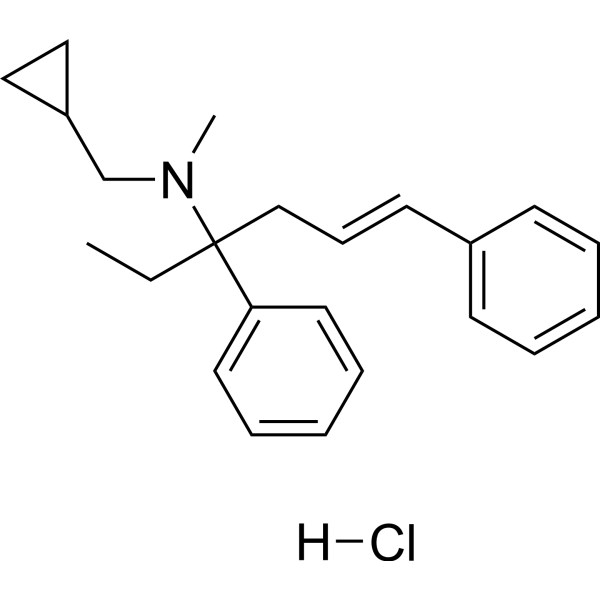
- Formula: C23H30ClN
- Molecular Weight: 355.94
(+)-Igmesine hydrochloride (JO1784) is an orally active and selective σ1 receptor ligand with an IC50 of 39 nM. (+)-Igmesine hydrochloride binds σ1 receptors to activate G-proteins and modulate Ca2+ uptake. (+)-Igmesine (hydrochloride) attenuates ischaemia-induced nitric oxide synthase activity and hyperactivity. (+)-Igmesine hydrochloride can be used for the research of duodenal ulcers, gastric ulcers, and cerebral ischaemia.

- Formula: C23H29N
- Molecular Weight: 319.49
Igmesine (JO 1784) is a selective σ-1 receptor agonist (IC50 = 39 nM) with oral activity and blood-brain barrier penetration. Igmesine stimulates duodenal bicarbonate secretion in rats via a σ1/vagal/CCK-A-dependent pathway, without antisecretory activity. Igmesine centrally blocks CRF-mediated gastrin-inhibitory effects, and in TMT toxicity and MCAO focal ischemia models, it downregulates PTBBS, reduces NOS, and modulates M1/M2 density. Igmesine is used in research on duodenal ulcers, Alzheimer's disease, and related diseases.

- Formula: C21H25N3O2S2
- Molecular Weight: 415.57
Quisultidine (LM 24056) is an orally active phenothiazine derivative with both calmodulin (Calmodulin) inhibitory activity (with a IC50 of 55 μM against porcine calmodulin) and muscarinic acetylcholine receptor (mAChR) ligand activity (with a IC50 of 400 nM). It inhibits gastric acid and pepsin secretion, reduces circulating gastrin levels, and blocks histamine-stimulated gastric acid secretion. Quisultidine can be used in the research of duodenal ulcer.



