



Immunotherapy for Breast Cancer
-
Immunotherapy for Breast Cancer (4)

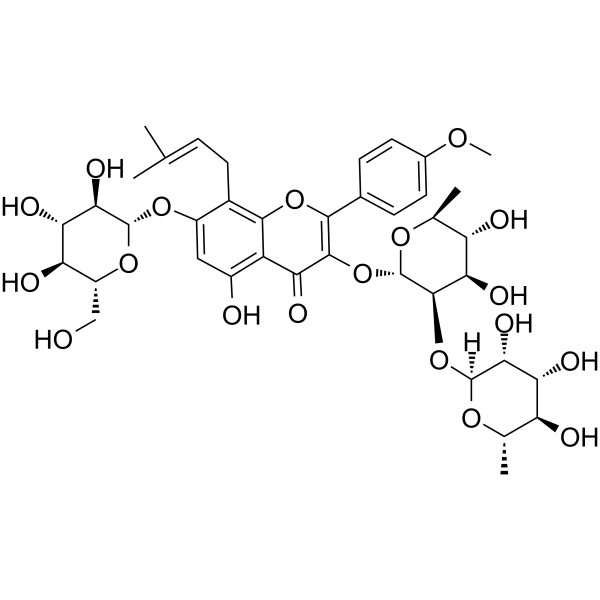
- Formula: C39H50O19
- Molecular Weight: 822.80
Epmedin C (Epimedin-C; Baohuoside-VI) is an orally active anti-inflammatory agent and immunomodulator that binds to multiple key proteins including UCP1, Caspase-1, CDK2 and Keap1. Epmedin C inhibits epithelial cell proliferation by disrupting the complex function of CDK2/Cyclin E. Epmedin C also upregulates Nrf2 expression, reduces ROS levels and inhibits pro-inflammatory cytokine secretion, thereby effectively restoring antibody production and alleviating tissue damage. Epmedin C has good safety with no hepatotoxicity or skin sensitization, and it has been used in studies on diseases such as obesity, Deoxynivalenol (HY-N6684)-induced immunotoxicity and mammary hyperplasia.


- Formula: C31H32O15
- Molecular Weight: 644.58
Procumbenoside A is a lignan glycoside discovered in Justicia procumbens. Procumbenoside A inhibits HIV-1 replication with an IC50 of 4.95 μM. Procumbenoside A exerts cytotoxic effects on various cancer cells. Procumbenoside A induces Cu (II)-mediated strand breaks in supercoiled plasmid DNA, generating the relaxed circular DNA form, while no linear form is detected. Procumbenoside A is used in studies related to liver cancer, colon adenocarcinoma, and HIV-1 infection.

- Formula: C11H8O4
- Molecular Weight: 204.18
2-Methoxyjuglone, a naphthoquinone, is an apoptosis inducer. 2-Methoxyjuglone activates caspase-9 and caspase-3 via the mitochondrial cytochrome c-dependent intrinsic apoptosis cascade. 2-Methoxyjuglone increases pro-apoptotic Bax levels, decreases anti-apoptotic Bcl-2 levels, and promotes mitochondrial cytochrome c release. 2-Methoxyjuglone induces apoptosis morphological features, early apoptosis, S-phase and G2/M-phase cell cycle arrest, and DNA double-strand breaks. 2-Methoxyjuglone exerts activity against Gram-positive bacteria, pathogenic fungi, and phytopathogenic fungi. 2-Methoxyjuglone can be used for the research of hepatocellular carcinoma, osteosarcoma, colon adenocarcinoma, breast cancer, fungal infection, bacterial infection.



