



Measles Virus Infection
-
Measles Virus Infection (5)

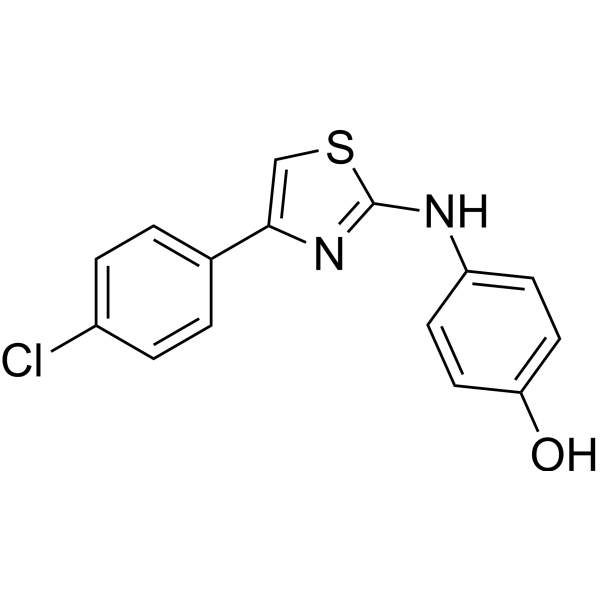
- Formula: C15H11ClN2OS
- Molecular Weight: 302.78
SKI-II is an orally active dual-target inhibitor of SphK1/2 and DES1, with Ki values of 16 µM and 0.3 µM against SphK1 and DES1, respectively. SKI-II activates the PERK-Nrf2 antioxidant pathway by stabilizing Nrf2, and synergizes with Temozolomide (HY-17364) to induce oxidative/endoplasmic reticulum stress and cancer cell death under hypoxic conditions. In vivo, SKI-II inhibits SphK activity, promotes ceramide accumulation and apoptosis, and synergizes with Cisplatin (HY-17394) to reverse drug resistance via the ras/MAPK pathway. SKI-II reduces measles virus replication by inhibiting mTORC1 activity. SKI-II binds to VCP to induce M1 polarization, enhances host tolerance to Staphylococcus aureus infection, and exerts radioprotective effects through Nrf2 activation and accelerated DNA repair. SKI-II can be used in research related to glioblastoma, acute myeloid leukemia, gastric cancer, measles virus infection, Staphylococcus aureus infection, and acute radiation syndrome.

- Formula: C16H14N4O
- Molecular Weight: 278.31
GHP-88310 is an orally active broad-spectrum paramyxovirus and orthomyxovirus inhibitor that targets the L protein-RdRP complex, and exhibits activity against respiratory viruses and viruses of the genus Morbillivirus. GHP-88310 binds to the central cavity of the polymerase protein, blocks replicase and transcriptase activities, interferes with the viral life cycle and inhibits viral replication. GHP-88310 can be used in studies of paramyxovirus infections, including morbillivirus-like diseases, human parainfluenza virus type 3 infection and measles.

- Formula: C20H15NO6
- Molecular Weight: 365.34
Oxophoebine is a biologically active oxoaporphine alkaloid and also a DNA topoisomerase inhibitor. Oxophoebine acts as a cytotoxic agent against certain cancer cells. Oxophoebine binds to Measles Virus fusion protein, hemagglutinin and phosphoprotein, and interferes with viral entry, replication and particle assembly processes. Oxophoebine exhibits selective toxicity towards yeast mutants with defects in DNA repair and recombination. Oxophoebine can be used in studies related to measles and coronavirus disease 2019 (COVID-19).

- Formula: C15H12Cl2N2OS
- Molecular Weight: 339.24
SKI-II hydrochloride is an orally active dual-target inhibitor of SphK1/2 and DES1, with Ki values of 16 µM and 0.3 µM against SphK1 and DES1, respectively. SKI-II hydrochloride activates the PERK-Nrf2 antioxidant pathway by stabilizing Nrf2, and synergizes with Temozolomide (HY-17364) to induce oxidative/endoplasmic reticulum stress and cancer cell death under hypoxic conditions. SKI-II hydrochloride inhibits SphK activity, promotes ceramide accumulation and apoptosis, and synergizes with Cisplatin (HY-17394) to reverse drug resistance via the ras/MAPK pathway in vivo. SKI-II hydrochloride reduces measles virus replication by inhibiting mTORC1 activity. SKI-II hydrochloride binds to VCP to induce M1 polarization, enhances host tolerance to Staphylococcus aureus infection, and exerts radioprotective effects through Nrf2 activation and accelerated DNA repair. SKI-II hydrochloride can be used in research related to glioblastoma, acute myeloid leukemia, gastric cancer, measles virus infection, Staphylococcus aureus infection, and acute radiation syndrome.

- Formula: C30H22O10
- Molecular Weight: 542.49
Rhusflavanone is a biflavonoid found in the stamens of Mesua ferrea. Rhusflavanone IC50 values against elastase and tyrosinase are 10.6 and 14.3 μg/mL, respectively. Rhusflavanone inhibits the replication of influenza B virus, SARS-CoV-2, Measles virus and HSV-2, and suppresses the secretion of Salmonella T3SS effector proteins. Rhusflavanone inhibits the production of pro-inflammatory mediators and exerts cytotoxic effects on cancer cells. Rhusflavanone can be used in research related to colon cancer, breast cancer, cervical cancer, COVID-19, influenza B, measles, HSV-2 infection and Salmonella infection.



