



Enterotoxin type B Protein, S. aureus (P.pastoris, His)
Based on 4 publication(s) in Google Scholar
Enterotoxin B (SEB) is an antigen derived from Staphylococcus aureus (S. aureus) that can be recognized and bound by MHC class II molecules on antigen-presenting cells. Enterotoxin B also interacts with T cell receptors (TCRs), triggering massive activation of CD4+ and CD8+ T cells, leading to the release of proinflammatory cytokines (TNF-α, IFN-γ) and Th2-type cytokines (IL-4, IL-5, IL-13), regulating inflammatory responses. Enterotoxin B also exerts anti-tumor potential in fibrosarcoma models, inducing tumor necrosis. Enterotoxin type B Protein, S. aureus (P.pastoris, His) is a recombinant Enterotoxin B protein expressed by P. pastoris yeast with N-6*His tag.
- Species: Staphylococcus aureus
- Source: P. pastoris
-
Storage:Stored at -20°C for 2 years from date of receipt. After reconstitution, it is stable at 4°C for 1 week or -20°C for longer (with carrier protein). It is recommended to freeze aliquots at -20°C or -80°C for extended storage.


To place orders, for customer services and technical support, please contact: MedChemExpress USA
Tel: 609-228-6898 E-mail: [email protected] [email protected]


-
 Biological Activity
-
Technical Parameters
-
Product Properties
- Documentation
- References
- Help & FAQs


-
HY-18739
Phorbol 12-myristate 13-acetate -
HY-15531
Venetoclax -
HY-W090090
BODIPY 493/503 -

HY-P71509
Enterotoxin type A Protein, S. aureus (His) -

HY-Y1888
Corn oil -
HY-17394
Cisplatin -

HY-Y1891
Tween 80 -
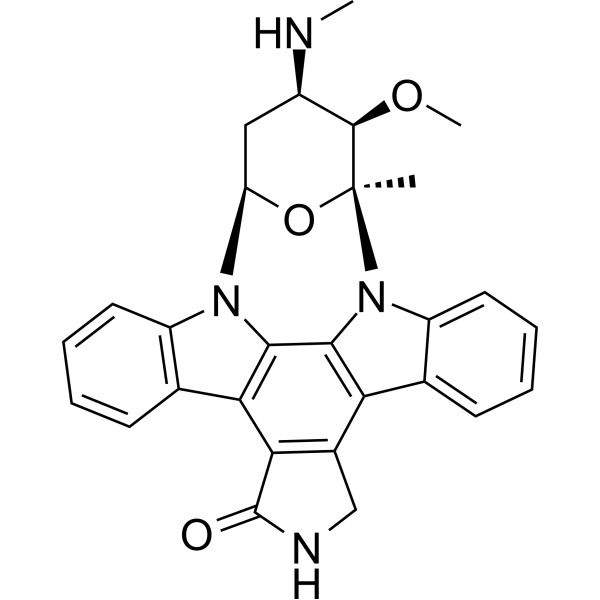
HY-15141
Staurosporine -
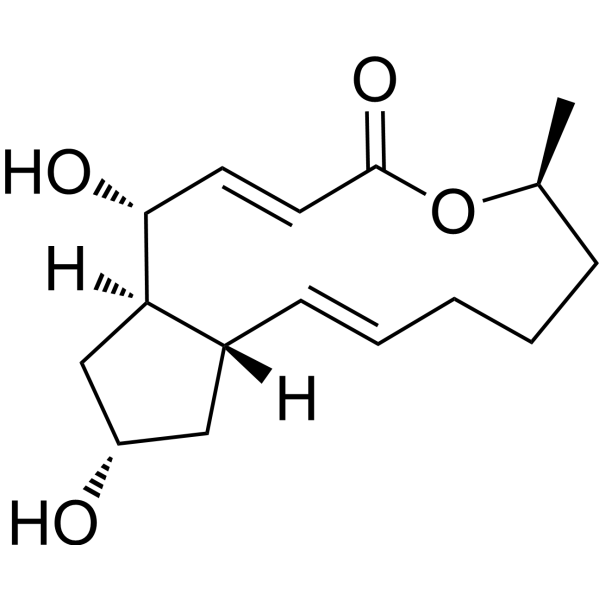
HY-16592
Brefeldin A -
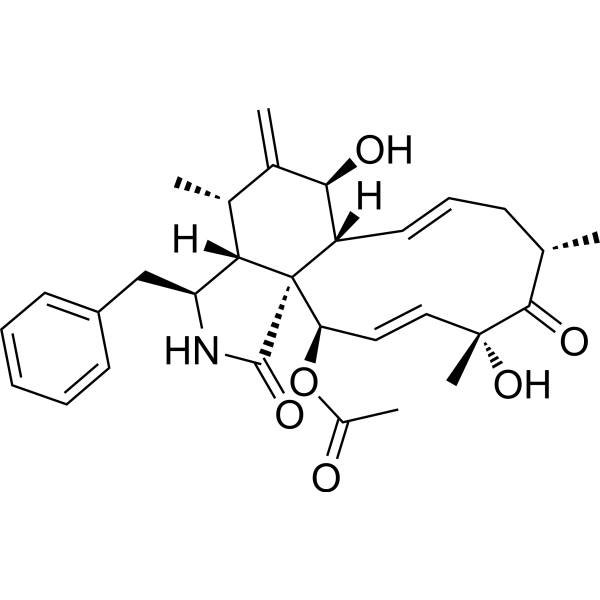
HY-N6682
Cytochalasin D -
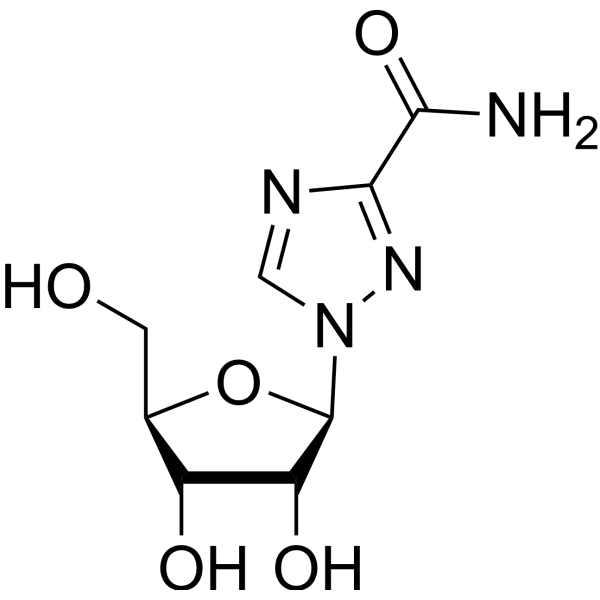
HY-B0434
Ribavirin -
HY-19569
Upadacitinib


Biological Activity
Description
Enterotoxin B (SEB) is an antigen derived from Staphylococcus aureus (S. aureus) that can be recognized and bound by MHC class II molecules on antigen-presenting cells. Enterotoxin B also interacts with T cell receptors (TCRs), triggering massive activation of CD4+ and CD8+ T cells, leading to the release of proinflammatory cytokines (TNF-α, IFN-γ) and Th2-type cytokines (IL-4, IL-5, IL-13), regulating inflammatory responses. Enterotoxin B also exerts anti-tumor potential in fibrosarcoma models, inducing tumor necrosis. Enterotoxin type B Protein, S. aureus (P.pastoris, His) is a recombinant Enterotoxin B protein expressed by P. pastoris yeast with N-6*His tag.
Background
Enterotoxin type B, S. aureus is a superantigen of enterotoxin B (SEB) derived from Staphylococcus aureus (S. aureus), which belongs to the staphylococcal enterotoxin family. Enterotoxin B structurally binds to MHC class II molecules on antigen presenting cells and binds to the variable region of the β chain of the T cell receptor (TCR), activating T cells expressing a specific (Vβ)-TCR fragment. Enterotoxin B-TCR triggers massive activation of CD4+ and CD8+ T cells, leading to the release of proinflammatory cytokines (TNF-α, IFN-γ) and Th2-type cytokines (IL-4, IL-5, IL-13), and mediates the synthesis of nitric oxide (NO) through TNF and IFN-γ. The activity of enterotoxin B involves a regulatory loop in which NO downregulates cytokine production to prevent excessive inflammation. Enterotoxin B has been shown to induce TH2-biased cytokine release in a nasal polyp model; in an endotoxin shock model, NO-mediated protection against lethal cytokine storm was observed. In addition, intravenous administration of Enterotoxin B enhanced IFN-γ production and CD4+/CD8+ T cell infiltration, demonstrated anti-tumor potential in a fibrosarcoma model, and induced tumor necrosis.
In Vivo
Enterotoxin type B Protein, S. aureus (100 μg; intraperitoneal injection; 1 time; single dose) can induce a large amount of NO synthesis in the mouse endotoxin shock model. The synthesis of NO is regulated by TNF and IFN-γ. At the same time, endogenous NO can downregulate the production of TNF and IFN-γ and play a protective role. Inhibition of NO synthesis will lead to the death of mice, while neutralization of IFN-γ and TNF can reduce the mortality of mice[1].
Enterotoxin type B Protein, S. aureus (10 ng; intravenous injection; once every 3 days; 2 weeks) can significantly inhibit the tumor growth of the mouse fibrosarcoma model, increase the IFN-γ level and CD4+/CD8+ T cell infiltration rate, and induce tumor tissue necrosis, while intratumoral injection has no obvious tumor inhibition effect[2].
Verified Bioactivity
Measured by its ability to induce IL-10 secretion by Raji cells. The ED50 for this effect is 53.25 ng/mL, corresponding to a specific activity is 1.878×10^4 U/mg.
MCE Validation Data
-
Bioactivity - Cell-Based Assay
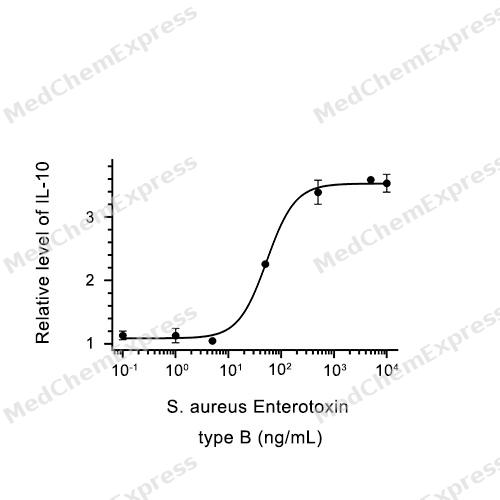
Bioactivity - Cell-Based Assay


Publications (4)
-
Journal Impact Factor
-
Most Recent
-
Int J Mol Sci
Single-Cell RNA-Sequencing Reveals Peripheral T Helper Cells Promoting the Development of IgG4-Related Disease by Enhancing B Cell Activation and Differentiation. [Abstract]2023 Sep 6;24(18):13735. PMID: 37762039 -
-
-


Technical Parameters
-
Species Staphylococcus aureus
-
Source P. pastoris
-
Tag N-6*His
-
Accession
P01552 (E28-K266)
-
Gene ID/
-
Molecular Construction
-
N-term
-
6*His
-
SEB (E28-K266)
Accession # P01552 -
C-term
-
-
Protein Length
Full Length of Mature Protein
-
Synonyms
Enterotoxin type B; SEB; entB
-
AA Sequence
ESQPDPKPDELHKSSKFTGLMENMKVLYDDNHVSAINVKSIDQFLYFDLIYSIKDTKLGNYDNVRVEFKNKDLADKYKDKYVDVFGANYYYQCYFSKKTNDINSHQTDKRKTCMYGGVTEHNGNQLDKYRSITVRVFEDGKNLLSFDVQTNKKKVTAQELDYLTRHYLVKNKKLYEFNNSPYETGYIKFIENENSFWYDMMPAPGDKFDQSKYLMMYNDNKMVDSKDVKIEVYLTTKKK
-
Predicted Molecular Mass
30.4 kDa
-
Molecular Weight
Approximately 30 kDa, based on SDS-PAGE under reducing conditions.
-
Purity
≥ 90%, as determined by reducing SDS-PAGE.


Product Properties
Lyophilized powder
1.Lyophilized from a 0.22 μm filtered solution of 20 mM Tris-HC1, 0.5 M NaCl, 6% trehalose, pH 8.0.
2.Lyophilized from a 0.22 μm filtered solution of PBS, 6% trehalose, pH 7.4.
Please refer to the lot-specific COA for specific buffer information.
Note: For SPR assay, please replace the buffer. Primary amine components (e.g., Tris, imidazole) can affect protein-coupled chips.
<1 EU/μg, determined by LAL method.
It is not recommended to reconstitute to a concentration less than 100 μg/mL in ddH2O.
Stored at -20°C for 2 years from date of receipt. After reconstitution, it is stable at 4°C for 1 week or -20°C for longer (with carrier protein). It is recommended to freeze aliquots at -20°C or -80°C for extended storage.
Room temperature in continental US; may vary elsewhere.


Documentation
-
Data Sheet (264 KB)
-
SDS (393 KB)
- English - EN (393 KB)
- Français - FR (393 KB)
- Deutsch - DE (393 KB)
- Norwegian - NO (393 KB)
- Español - ES (393 KB)
- Swedish - SV (393 KB)
- Italian - IT (393 KB)
- Korean - KR (393 KB)
- Portuguese - PT (393 KB)
-
Handling Instructions (2659 KB)


References
[1]. Patou J, et al. Staphylococcus aureus enterotoxin B, protein A, and lipoteichoic acid stimulations in nasal polyps. J Allergy Clin Immunol. 2008 Jan;121(1):110-5. [Content Brief]
[3]. Florquin S, et al. The protective role of endogenously synthesized nitric oxide in staphylococcal enterotoxin B-induced shock in mice. J Exp Med. 1994 Sep 1;180(3):1153-8. [Content Brief]
[4]. Fooladi AA, et al. In vivo induction of necrosis in mice fibrosarcoma via intravenous injection of type B staphylococcal enterotoxin. Biotechnol Lett. 2008 Dec;30(12):2053-9. [Content Brief]

Calculators
Concentration (start) × Volume (start) = Concentration (final) × Volume (final)


 Powered by Bioz

