



LIF Protein, Human (HEK293)
Based on 5 publication(s) in Google Scholar
LIF protein induces terminal differentiation in leukemic cells, promoting hematopoietic and neuronal cell differentiation, and stimulating acute-phase protein synthesis in hepatocytes. Its diverse activities highlight its role in influencing cellular differentiation across various cell types and physiological contexts. LIF Protein, Human (HEK293) is the recombinant human-derived LIF protein, expressed by HEK293 , with tag free.
- Species: Human
- Source: HEK293
-
Storage:Stored at -20°C for 2 years from date of receipt. After reconstitution, it is stable at 4°C for 1 week or -20°C for longer (with carrier protein). It is recommended to freeze aliquots at -20°C or -80°C for extended storage.


To place orders, for customer services and technical support, please contact: MedChemExpress USA
Tel: 609-228-6898 E-mail: [email protected] [email protected]


-
 Biological Activity
-
Technical Parameters
-
Product Properties
- Documentation
- Help & FAQs


-
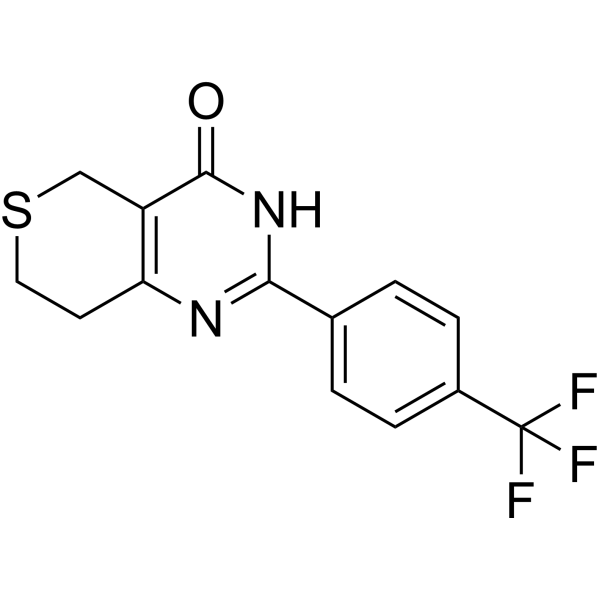
HY-15147
XAV-939 -
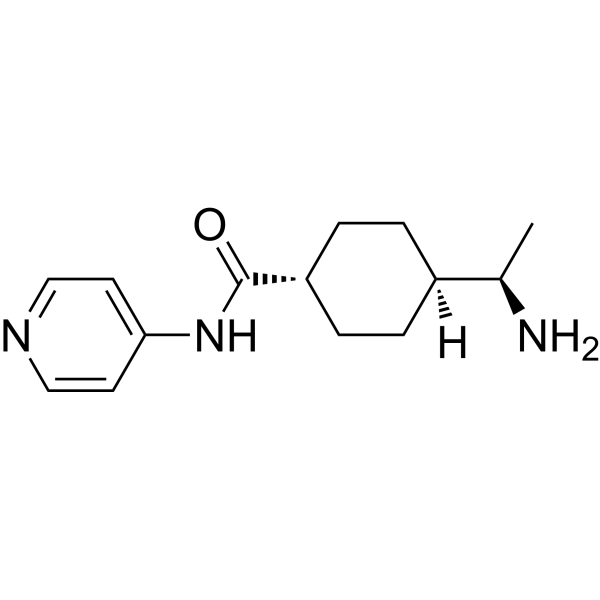
HY-10071
Y-27632 -
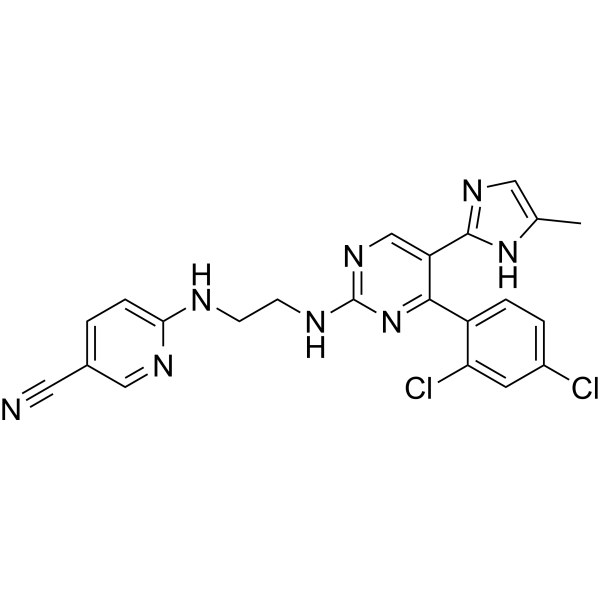
HY-10182
Laduviglusib -
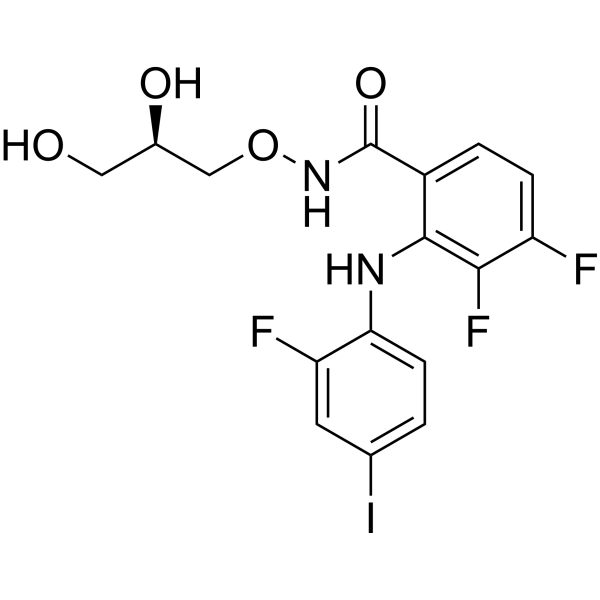
HY-10254
Mirdametinib -

HY-P70311
Activin A Protein, Human/Mouse/Rat (HEK293) -
HY-10431
SB-431542 -
HY-12238
IWR-1 -
HY-13689
Go 6983 -
HY-P7004
FGF basic/bFGF Protein, Human (146a.a) -
HY-P7116A
BDNF Protein, Human/Mouse/Rat -
HY-P7109
EGF Protein, Human -
HY-P7331
FGF basic/bFGF Protein, Human (154a.a)


Biological Activity
Description
LIF protein induces terminal differentiation in leukemic cells, promoting hematopoietic and neuronal cell differentiation, and stimulating acute-phase protein synthesis in hepatocytes. Its diverse activities highlight its role in influencing cellular differentiation across various cell types and physiological contexts. LIF Protein, Human (HEK293) is the recombinant human-derived LIF protein, expressed by HEK293 , with tag free.
Background
The LIF protein possesses the capacity to induce terminal differentiation in leukemic cells. Its diverse range of activities encompasses the induction of hematopoietic differentiation in both normal and myeloid leukemia cells, prompting neuronal cell differentiation, and stimulating acute-phase protein synthesis in hepatocytes. These multifaceted activities underscore LIF's role in influencing cellular differentiation across various cell types and physiological contexts.
Verified Bioactivity
1.Measured by its ability to inhibit the proliferation of M1 mouse myeloid leukemia cells and the ED50 is typically 0.2-0.8 ng/mL.
2.Measured in a cell proliferation assay using TF-1 human erythroleukemic cells. The ED50 for this effect is 0.004-0.1 ng/mL.
3.Immobilized Human LIF at 2 μg/mL (100 μl/Well) on the plate. Dose response curve for Human LIF R, hFc Tag with the EC50 of ≤0.12 μg/mL determined by ELISA.
MCE Validation Data
-
Purity - SDS-PAGE
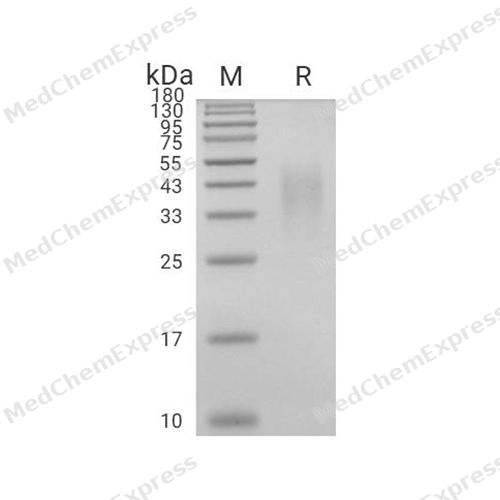
Purity - SDS-PAGE
-
Bioactivity - Cell-Based Assay
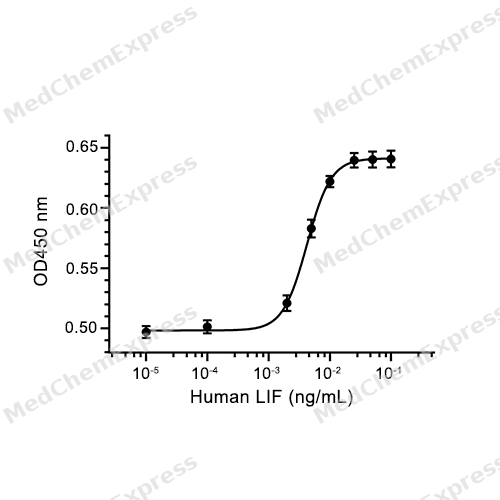
Bioactivity - Cell-Based Assay


Publications (5)
-
Journal Impact Factor
-
Most Recent
-
Cell Rep Med
Myeloid cells coordinately induce glioma cell-intrinsic and cell-extrinsic pathways for chemoresistance via GP130 signaling. [Abstract]2024 Aug 20;5(8):101658. PMID: 39053460 -
Colloids Surf B Biointerfaces
2025 Aug:252:114656. PMID: 40168696 -
Commun Biol
Enhancing reprogramming towards induced human expanded pluripotency through substitution of SOX2 with engineered SOX17 transcription factors. [Abstract]2026 Apr 9;9(1):780. PMID: 41957290 -
-


Technical Parameters
-
Species Human
-
Source HEK293
-
Tag Tag Free
-
Accession
P15018-1 (S23-F202)
-
Molecular Construction
-
N-term
-
LIF (S23-F202)
Accession # P15018-1 -
C-term
-
-
Protein Length
Full Length of Isoform-1
-
Synonyms
LIF; Hepatocyte-Stimulating Factor III; LIF Interleukin 6 Family Cytokine; Differentiation-Inducing Factor; HILDA; Melanoma-Derived LPL Inhibitor; Leukemia Inhibitory Factor; Human Interleukin In DA Cells; CDF; D Factor; DIA; MLPLI; Differentiation Inhibi
-
AA Sequence
SPLPITPVNATCAIRHPCHNNLMNQIRSQLAQLNGSANALFILYYTAQGEPFPNNLDKLCGPNVTDFPPFHANGTEKAKLVELYRIVVYLGTSLGNITRDQKILNPSALSLHSKLNATADILRGLLSNVLCRLCSKYHVGHVDVTYGPDTSGKDVFQKKKLGCQLLGKYKQIIAVLAQAF
-
Predicted Molecular Mass
19.7 kDa
-
Molecular Weight
Approximately 24-55 kDa, based on SDS-PAGE under reducing conditions, due to the glycosylation.
-
Glycosylation
Yes
-
Purity
≥ 95%, as determined by reducing SDS-PAGE or Bis-Tris PAGE.


Product Properties
Lyophilized powder
1.Lyophilized from a 0.22 μm filtered solution of PBS, pH 7.4, 5% trehalose, 5% mannitol, 0.01% Tween 80.
2.Lyophilized from a 0.22 μm filtered solution of PBS, 8% trehalose, pH 7.4.
3.Lyophilized from a 0.22 μm filtered solution of 20 mM Tris, 150 mM NaCl, pH 7.4.
4.Lyophilized from a 0.22 μm filtered solution of PBS, pH 7.4.
Please refer to the lot-specific COA for specific buffer information.
Note: For SPR assay, please replace the buffer. Primary amine components (e.g., Tris, imidazole) can affect protein-coupled chips.
<1 EU/μg, determined by LAL method.
It is not recommended to reconstitute to a concentration less than 100 μg/mL in ddH2O. For long term storage it is recommended to add a carrier protein (0.1% BSA, 5% HSA, 10% FBS or 5% Trehalose).
Stored at -20°C for 2 years from date of receipt. After reconstitution, it is stable at 4°C for 1 week or -20°C for longer (with carrier protein). It is recommended to freeze aliquots at -20°C or -80°C for extended storage.
Room temperature in continental US; may vary elsewhere.


Documentation
-
Data Sheet (237 KB)
-
SDS (254 KB)
- English - EN (254 KB)
- Français - FR (254 KB)
- Deutsch - DE (254 KB)
- Norwegian - NO (254 KB)
- Español - ES (254 KB)
- Swedish - SV (254 KB)
- Italian - IT (254 KB)
- Korean - KR (254 KB)
- Portuguese - PT (254 KB)
-
Handling Instructions (2659 KB)

Calculators
Concentration (start) × Volume (start) = Concentration (final) × Volume (final)


 Powered by Bioz

