



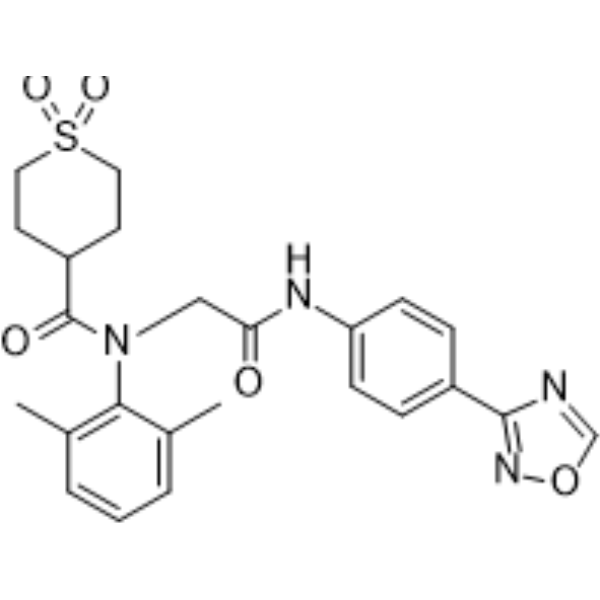
Amenamevir
Based on 7 publication(s) in Google Scholar
Amenamevir is a helicase-primase inhibitor which has potent antiviral activity against HSVs with an EC50 of 14 ng/mL.
Para uso exclusivo en investigación. No vendemos a pacientes.
- Pureza : 99.92%
- No. CAS: 841301-32-4
- Fòrmula: C24H26N4O5S
- Peso molecular:482.55
-
Almacenamiento:Powder -20°C, 3 years , 4°C, 2 years ; In solvent -80°C, 2 years , -20°C, 1 year

To place orders, for customer services and technical support, please contact: MedChemExpress USA
Tel: 609-228-6898 E-mail: [email protected] [email protected]


-
 Actividad biológica
-
Chemical Information
-
Solvente y solubilidad
- Protocolo
- Pureza y Documentación
- Referencias
-
 Help & FAQs


-
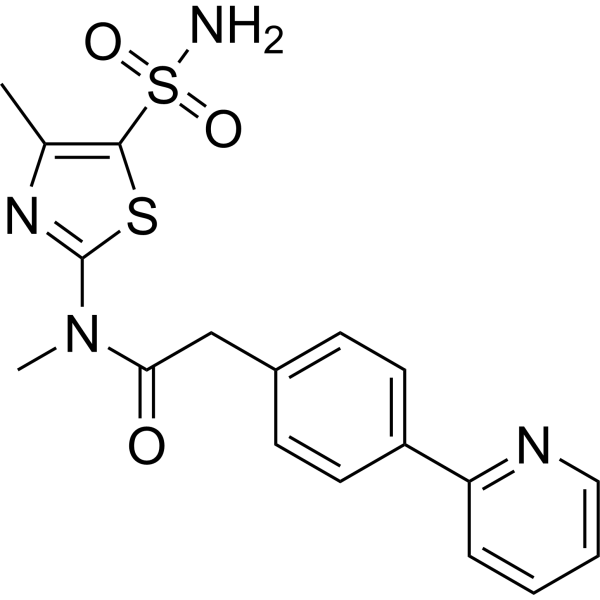
HY-15303
PritelivirHSV Inhibitor -
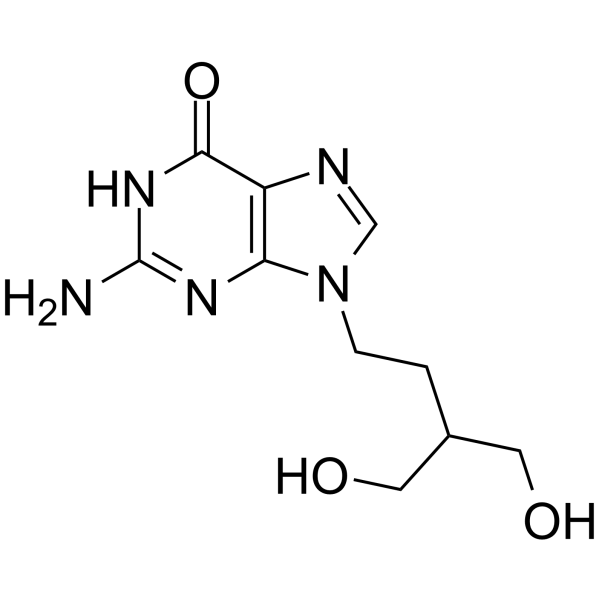
HY-17424
PenciclovirAnti-herpesvirus Agent -
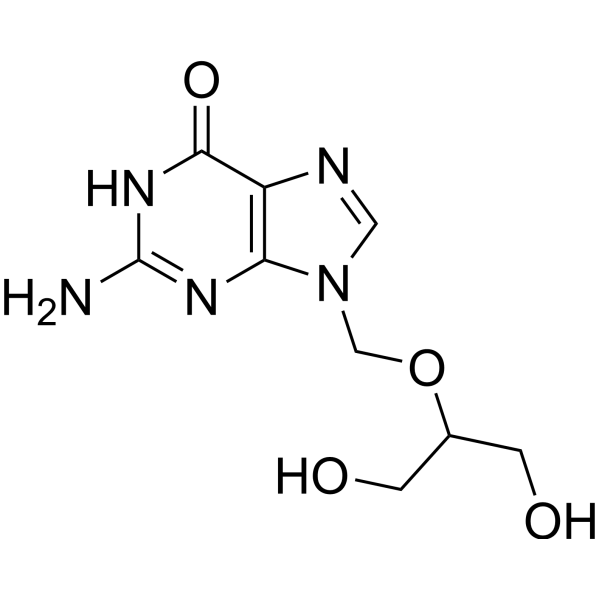
HY-13637
GanciclovirAntiviral Agent -

HY-14809R
Amenamevir (Standard)HSV Inhibitor -
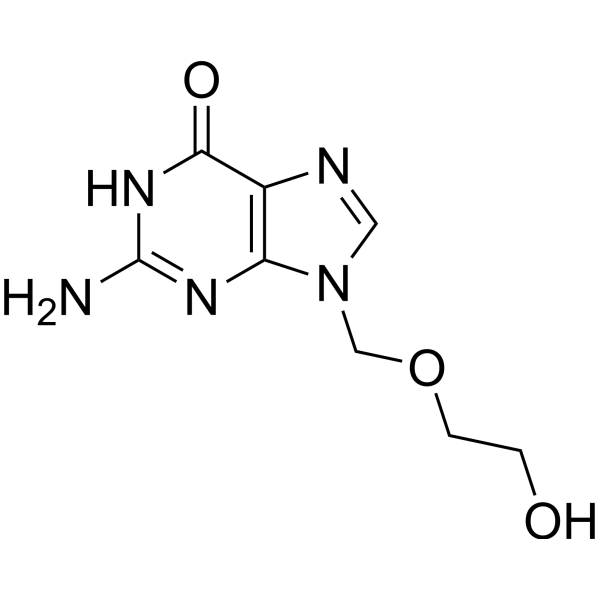
HY-17422
AcyclovirHSV Inhibitor -
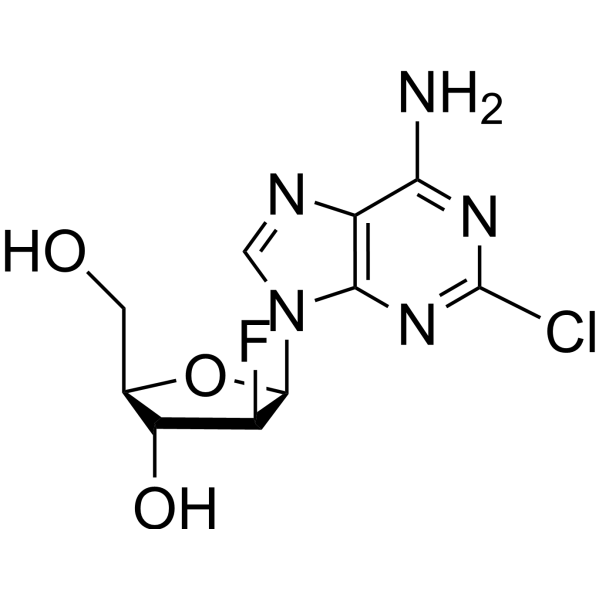
HY-A0005
ClofarabineRibonucleotide Reductase Inhibitor -
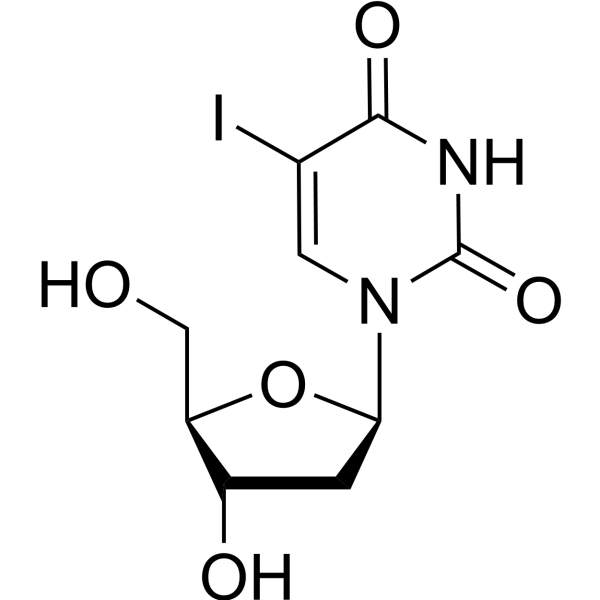
HY-B0307
IdoxuridineAntiviral Agent -

HY-17424R
Penciclovir (Standard)Anti-herpesvirus Agent -

HY-150306
AdibelivirHelicase-Primase Inhibitor -
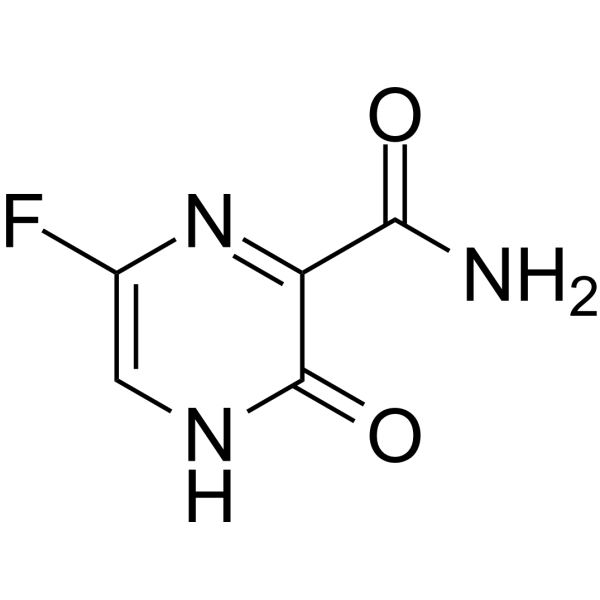
HY-14768
FavipiravirRNA Polymerase Inhibitor -
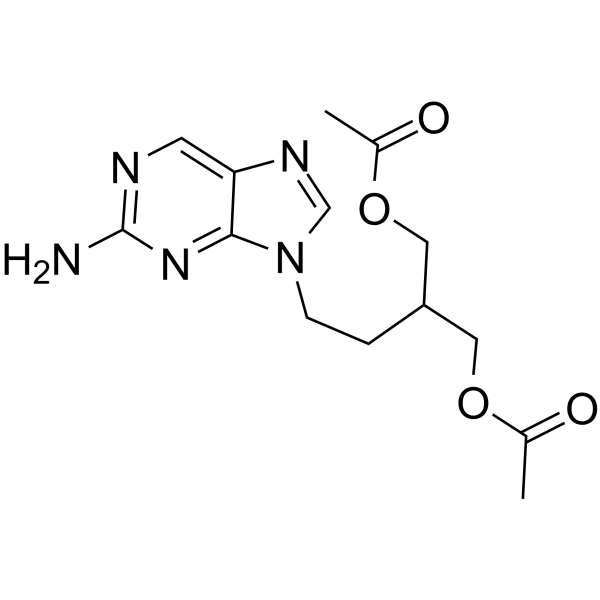
HY-17426
FamciclovirAntiviral Agent -
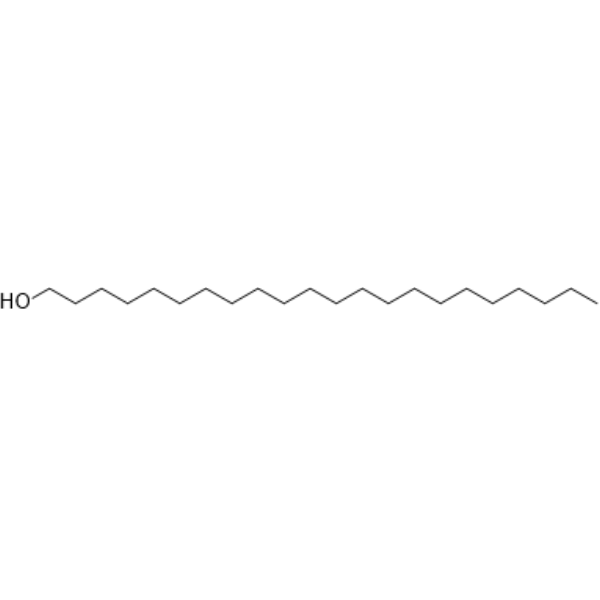
HY-B0222
1-DocosanolHSV Inhibitor
Publications Citing Use of MedChemExpress (MCE) Amenamevir
More

Actividad biológica
Descripciòn
IC50 & Target
[1]|
HSV-1 7.7-20 ng/mL (IC50) |
HSV-2 15-58 ng/mL (IC50) |
In Vitro
Amenamevir (ASP2151) inhibits the replication of the HSV strains isolated in Japan and the United States as well as the laboratory-stocked strains. The mean EC50s of Amenamevir against HSV-1 and HSV-2 are 14 (range, 7.7 to 20) and 30 ng/mL (range, 15 to 58), respectively, whereas those of acyclovir (ACV) are 29 (range, 18 to 38) and 71 ng/mL (range, 45 to 95), respectively. The EC50s of Amenamevir against HSV strains are significantly lower than those of ACV[1].
MedChemExpress (MCE) has not independently confirmed the accuracy of these methods. They are for reference only.
In Vivo
MedChemExpress (MCE) has not independently confirmed the accuracy of these methods. They are for reference only.
Ensayo clínico
| NCT Number | Sponsor | Condition | Start Date |
Phase

|
|---|---|---|---|---|
| NCT01329991 | 2011-05 | PHASE1 |


Chemical Information
-
No. CAS 841301-32-4
-
Appearance Solid
-
Peso molecular 482.55
-
Fòrmula C24H26N4O5S
-
Color White to off-white
-
SMILES
O=C(C(CC1)CCS1(=O)=O)N(C2=C(C)C=CC=C2C)CC(NC3=CC=C(C4=NOC=N4)C=C3)=O
-
Synonyms
ASP2151
-
Envío
Room temperature in continental US; may vary elsewhere.
-
Almacenamiento
Powder -20°C 3 years 4°C 2 years In solvent -80°C 2 years -20°C 1 year


Publications (7)
-
Journal Impact Factor
-
Most Recent
-
Cell
2026 Jan 22;189(2):478-494.e18. PMID: 41468884 -
Antiviral Res
Structural determinants of nervous system exposure of adibelivir (IM-250) and related herpes helicase-primase inhibitors across animal species. [Abstract]2025 Nov:243:106271. PMID: 40912604 -
Arch Virol
Serum/glucocorticoid-regulated kinase 1 contributes to the proliferation of varicella-zoster virus and induction of cyclin B1 expression. [Abstract]2024 May 9;169(5):116. PMID: 38722402 -
J Vet Med Sci
2025 Aug 1;87(8):906-910. PMID: 40571578 -
-
bioRxiv
A human sensory neuron model for varicella-zoster virus latency and reactivation in vitro. [Abstract]2025 Dec 12:2025.12.12.693952. PMID: 41415445 -


Solvente y solubilidad
In Vitro:
DMSO : ≥ 50 mg/mL (103.62 mM; Hygroscopic DMSO has a significant impact on the solubility of product, please use newly opened DMSO)
* "≥" means soluble, but saturation unknown.
Please refer to the solubility information to select the appropriate solvent. Once prepared, please aliquot and store the solution to prevent product inactivation from repeated freeze-thaw cycles.
Storage method and period of stock solution: -80°C, 2 years; -20°C, 1 year. When stored at -80°C, please use it within 2 years. When stored at -20°C, please use it within 1 year.
Please refer to the solubility information to select the appropriate solvent. Once prepared, please aliquot and store the solution to prevent product inactivation from repeated freeze-thaw cycles.
Storage method and period of stock solution: -80°C, 2 years; -20°C, 1 year. When stored at -80°C, please use it within 2 years. When stored at -20°C, please use it within 1 year.
Concentration (start) × Volume (start) = Concentration (final) × Volume (final)
In Vivo:
Select the appropriate dissolution method based on your experimental animal and administration route.
- For the following dissolution methods, please ensure to first prepare a clear stock solution using an In Vitro approach and then sequentially add co-solvents:
- To ensure reliable experimental results, the clarified stock solution can be appropriately stored based on storage conditions. As for the working solution for In Vivo experiments, it is recommended to prepare freshly and use it on the same day.
- The percentages shown for the solvents indicate their volumetric ratio in the final prepared solution. If precipitation or phase separation occurs during preparation, heat and/or sonication can be used to aid dissolution.
Add each solvent one by one: 10% DMSO 40% PEG300 5% Tween-80 45% Saline
Solubility: ≥ 2.08 mg/mL (4.31 mM); Clear solution
This protocol yields a clear solution of ≥ 2.08 mg/mL (saturation unknown).
Taking 1 mL working solution as an example, add 100 μL DMSO stock solution (20.8 mg/mL) to 400 μL PEG300, and mix evenly; then add 50 μL Tween-80 and mix evenly; then add 450 μL Saline to adjust the volume to 1 mL.
Preparation of Saline: Dissolve 0.9 g sodium chloride in ddH₂O and dilute to 100 mL to obtain a clear Saline solution.
Add each solvent one by one: 10% DMSO 90% (20% SBE-β-CD in Saline)
Solubility: ≥ 2.08 mg/mL (4.31 mM); Clear solution
This protocol yields a clear solution of ≥ 2.08 mg/mL (saturation unknown).
Taking 1 mL working solution as an example, add 100 μL DMSO stock solution (20.8 mg/mL) to 900 μL 20% SBE-β-CD in Saline, and mix evenly.
Preparation of 20% SBE-β-CD in Saline (4°C, storage for one week): 2 g SBE-β-CD powder is dissolved in 10 mL Saline, completely dissolve until clear.
In Vivo Dissolution Calculator
Please enter the basic information of animal experiments:
-
-
-
-
Recommended: Prepare an additional quantity of animals to account for potential losses during experiments.
Please enter your animal formula composition:
-
%DMSO +
Recommended: Keep the proportion of DMSO in working solution below 2% if your animal is weak.
-
%+
-
+%Tween-80 + +
-
%Saline +
The co-solvents required include: DMSO, . All of co-solvents are available by MedChemExpress (MCE). , Tween 80. All of co-solvents are available by MedChemExpress (MCE).
Working solution concentration: 0.22 mg/mL
Method for preparing stock solution: mg drug dissolved in μL DMSO. Stock solution concentration: mg/mL.
1. Take μL DMSO stock solution;
2. Add μL .
μL , mix evenly;
3. Then add μL Tween 80, mix evenly;
4. Then add μL
Please ensure that the stock solution in the first step is dissolved to a clear state, and add co-solvents in sequence. You can use ultrasonic heating (ultrasonic cleaner, recommended frequency 20-40 kHz), vortexing, etc. to assist dissolution.


Pureza y Documentación
-
Ficha de datos (282 KB)
-
SDS (393 KB)
- English - EN (393 KB)
- Français - FR (393 KB)
- Deutsch - DE (393 KB)
- Norwegian - NO (393 KB)
- Español - ES (393 KB)
- Swedish - SV (393 KB)
- Italian - IT (393 KB)
- Korean - KR (393 KB)
- Portuguese - PT (393 KB)
-
Instrucciones de manejo (2659 KB)
Referencias


Complete Stock Solution Preparation Table
Please refer to the solubility information to select the appropriate solvent. Once prepared, please aliquot and store the solution to prevent product inactivation from repeated freeze-thaw cycles.
Storage method and period of stock solution: -80°C, 2 years; -20°C, 1 year. When stored at -80°C, please use it within 2 years. When stored at -20°C, please use it within 1 year.
| Optional Solvent | Concentration Solvent Mass | 1 mg | 5 mg | 10 mg | 25 mg |
|---|---|---|---|---|---|
| DMSO | 1 mM | 2.0723 mL | 10.3616 mL | 20.7232 mL | 51.8081 mL |
| 5 mM | 0.4145 mL | 2.0723 mL | 4.1446 mL | 10.3616 mL | |
| 10 mM | 0.2072 mL | 1.0362 mL | 2.0723 mL | 5.1808 mL | |
| 15 mM | 0.1382 mL | 0.6908 mL | 1.3815 mL | 3.4539 mL | |
| 20 mM | 0.1036 mL | 0.5181 mL | 1.0362 mL | 2.5904 mL | |
| 25 mM | 0.0829 mL | 0.4145 mL | 0.8289 mL | 2.0723 mL | |
| 30 mM | 0.0691 mL | 0.3454 mL | 0.6908 mL | 1.7269 mL | |
| 40 mM | 0.0518 mL | 0.2590 mL | 0.5181 mL | 1.2952 mL | |
| 50 mM | 0.0414 mL | 0.2072 mL | 0.4145 mL | 1.0362 mL | |
| 60 mM | 0.0345 mL | 0.1727 mL | 0.3454 mL | 0.8635 mL | |
| 80 mM | 0.0259 mL | 0.1295 mL | 0.2590 mL | 0.6476 mL | |
| 100 mM | 0.0207 mL | 0.1036 mL | 0.2072 mL | 0.5181 mL |


Amenamevir Related Classifications
HY-14809 Related Classifications
 Powered by Bioz