



PTP1B-IN-2
Based on 5 publication(s) in Google Scholar
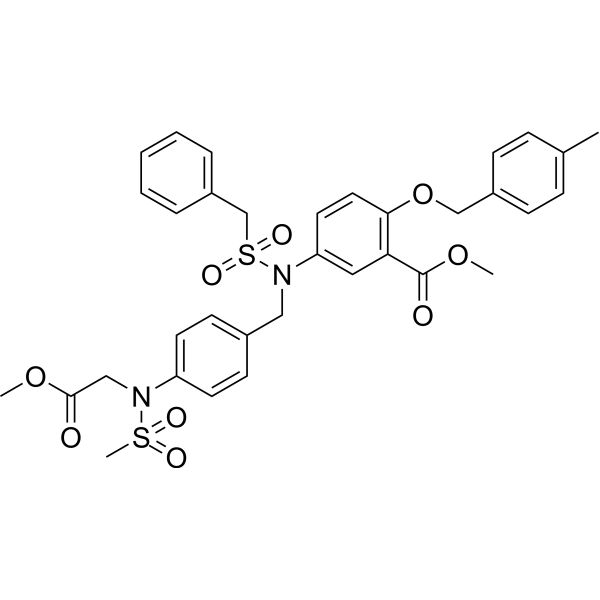
PTP1B-IN-2 is a potent protein tyrosine phosphatase 1B (PTP1B) inhibitor with an IC50 of 50 nM.
Nur für Forschungszwecke. Wir verkaufen nicht an Patienten.
- Reinheit : 99.88%
- CAS. Nr.: 1919853-46-5
- Formel: C34H36N2O9S2
- Molecular Weight:680.79
-
Speicherung:Powder -20°C, 3 years , 4°C, 2 years ; In solvent -80°C, 2 years , -20°C, 1 year

To place orders, for customer services and technical support, please contact: MedChemExpress USA
Tel: 609-228-6898 E-mail: [email protected] [email protected]


-
 Biologische Aktivität
-
Chemical Information
-
Lösungsmittel & Löslichkeit
- Reinheit & Dokumentation
- Verweise
-
 Help & FAQs


-
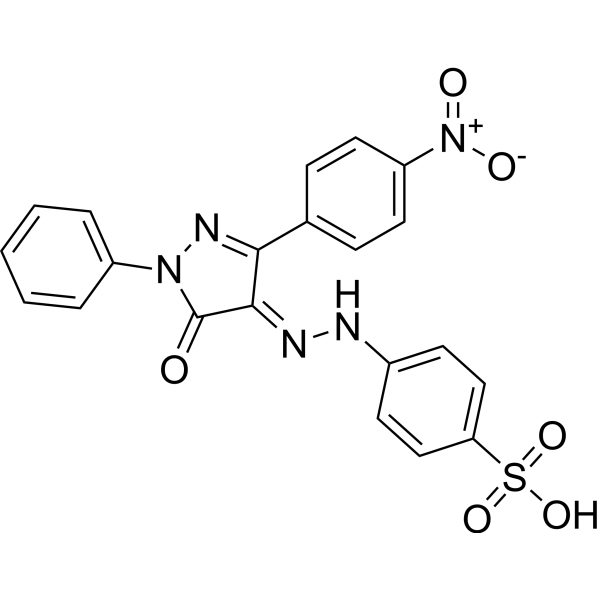
HY-112368
PHPS1Shp2 Inhibitor -
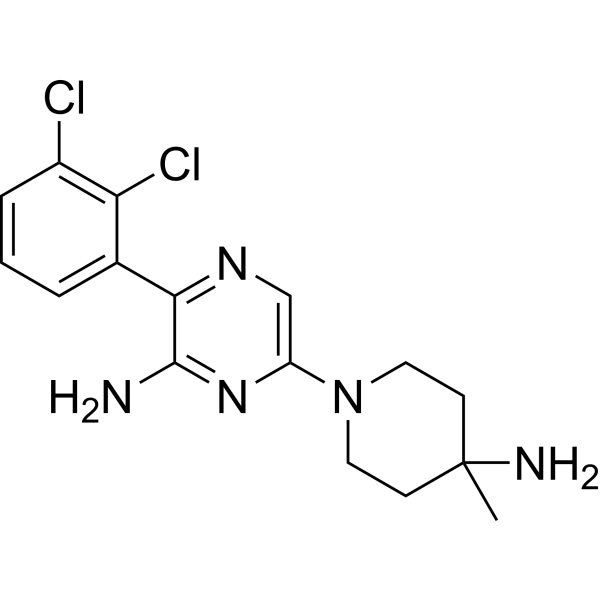
HY-100388
SHP099SHP2 Inhibitor -
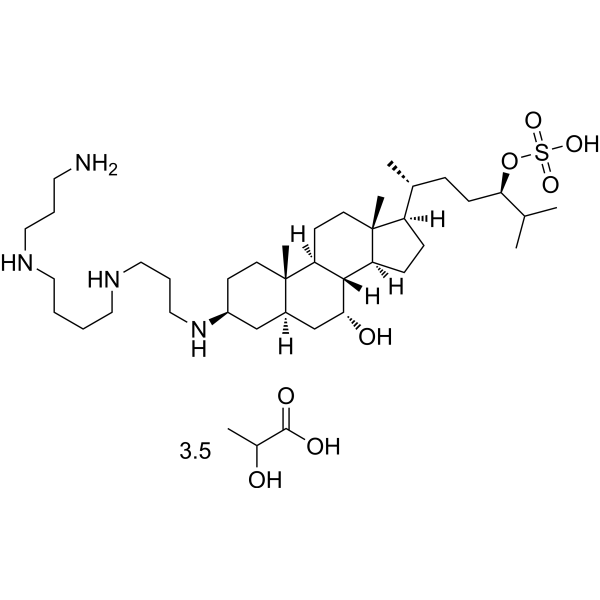
HY-12219A
MSI-1436 lactatePTP1B Inhibitor -
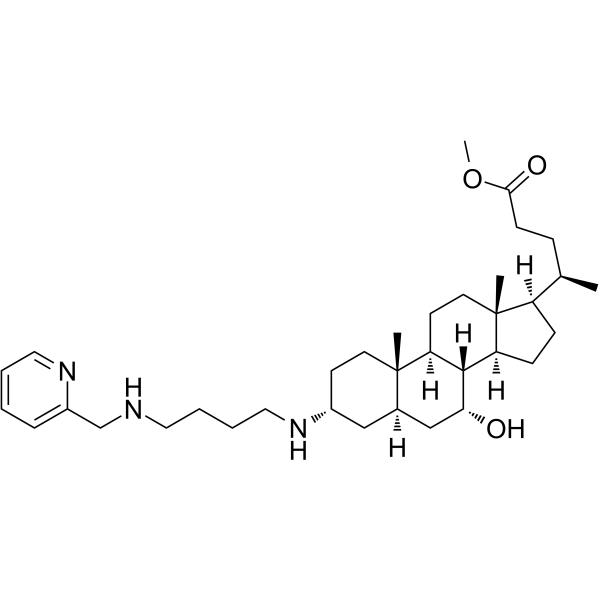
HY-121515
DPM-1001PTP1B Inhibitor -
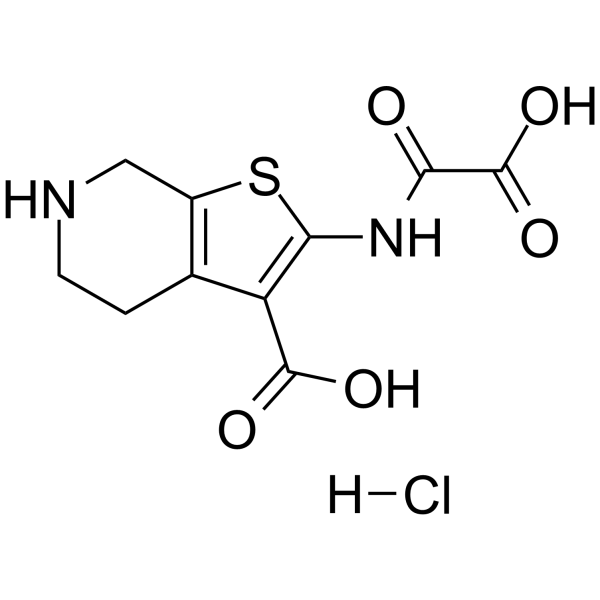
HY-12312
TCS 401Phosphatase Inhibitor -
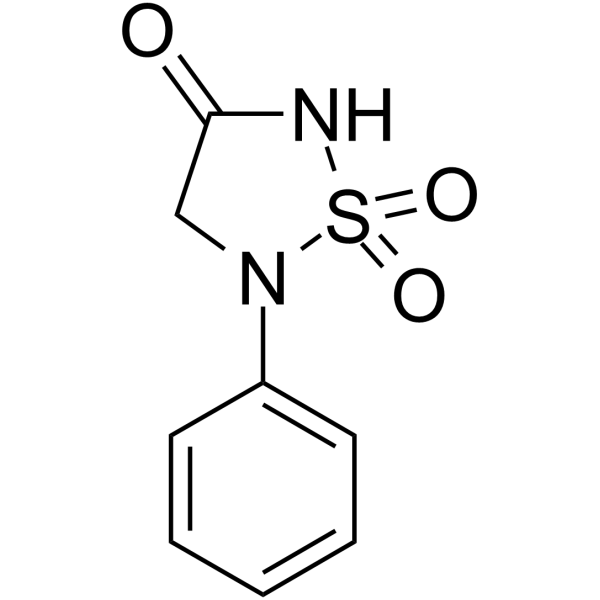
HY-10704
PTP1B-IN-1Phosphatase Inhibitor -
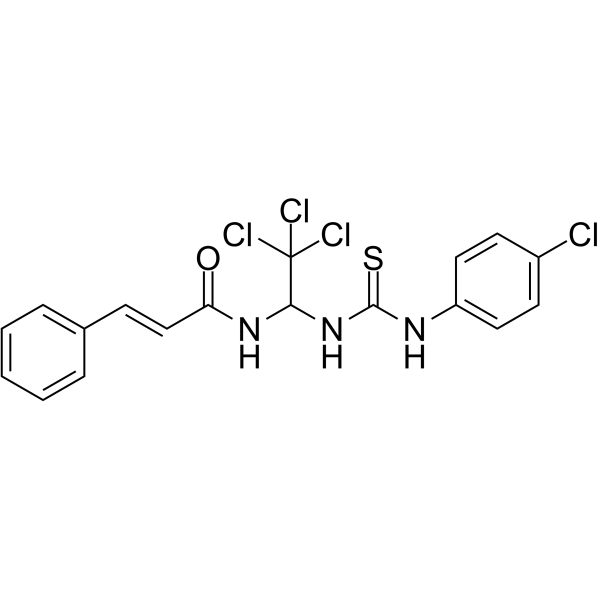
HY-15969
Sal003eIF2α Phophatase Inhibitor -
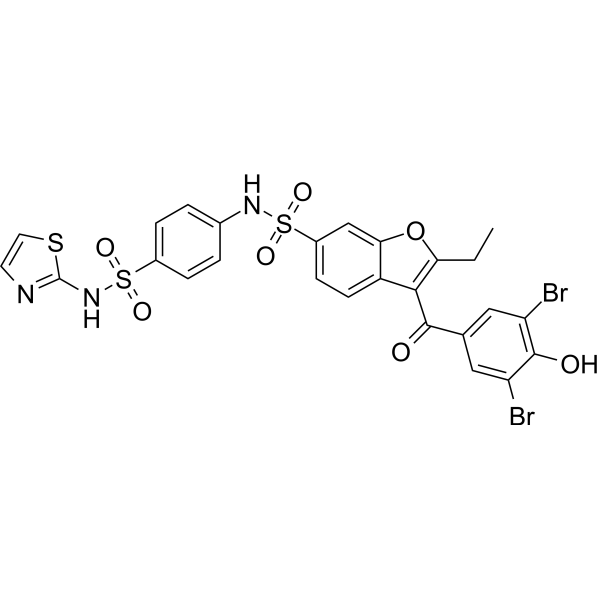
HY-15756
PTP1B-IN-4PTP1B Inhibitor -
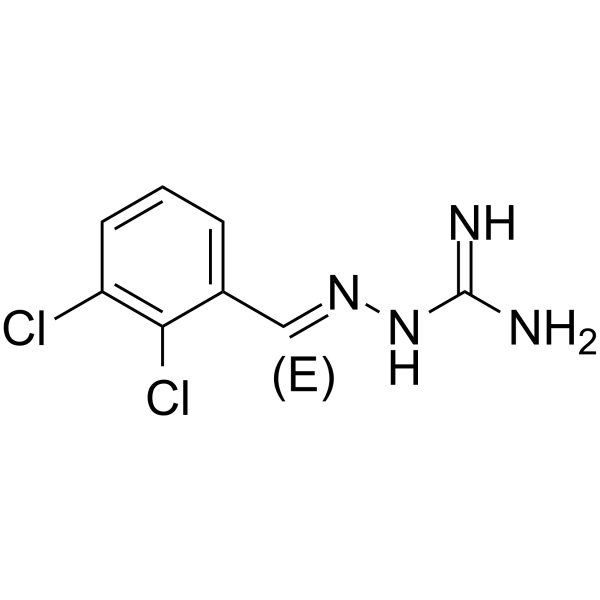
HY-123960
Raphin1Phosphatase Inhibitor -
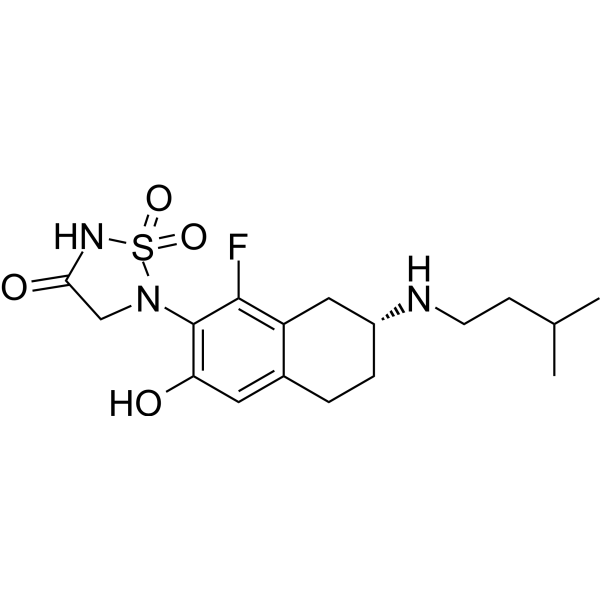
HY-145923
OsunprotafibPTPN1/PTPN2 Inhibitor -
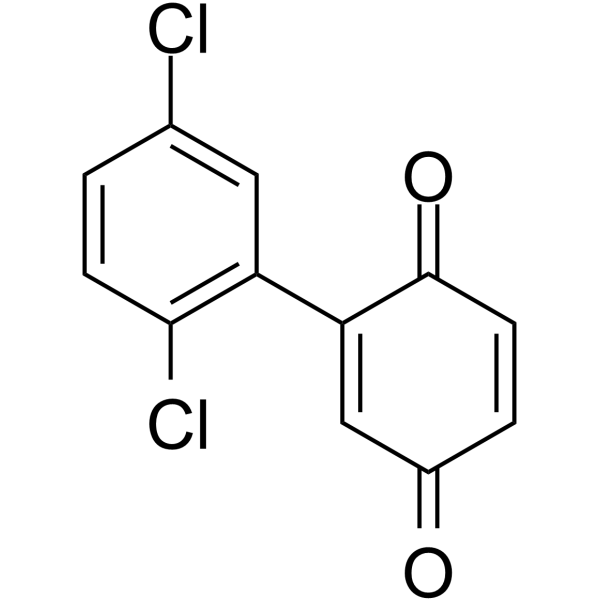
HY-100463
TPI-1SHP-1 Inhibitor -
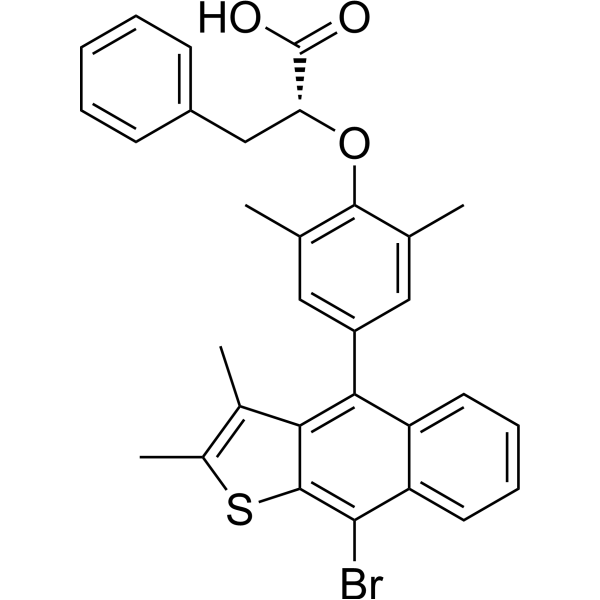
HY-19383
ErtiprotafibPPAR Agonist
Publications Citing Use of MedChemExpress (MCE) PTP1B-IN-2
More Customer Validation & Images

-
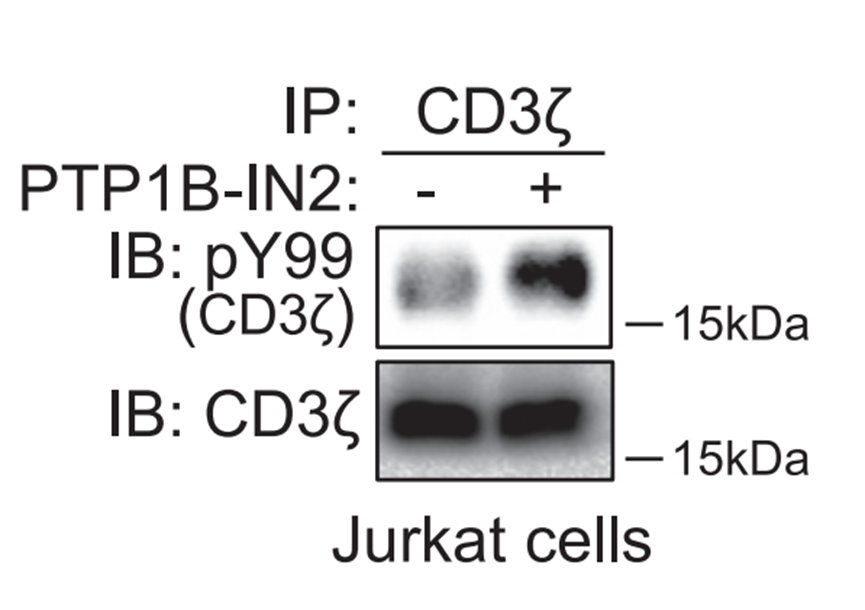
IP
-
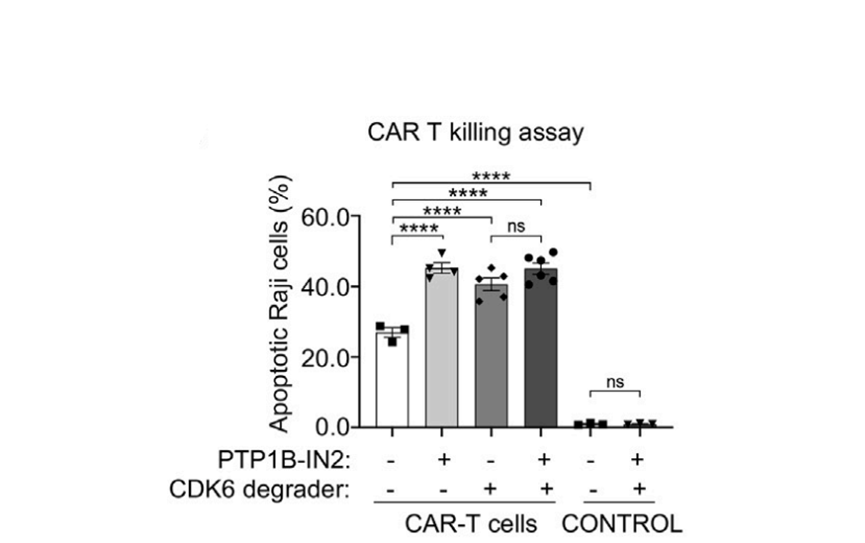
Apoptosis Analysis
-
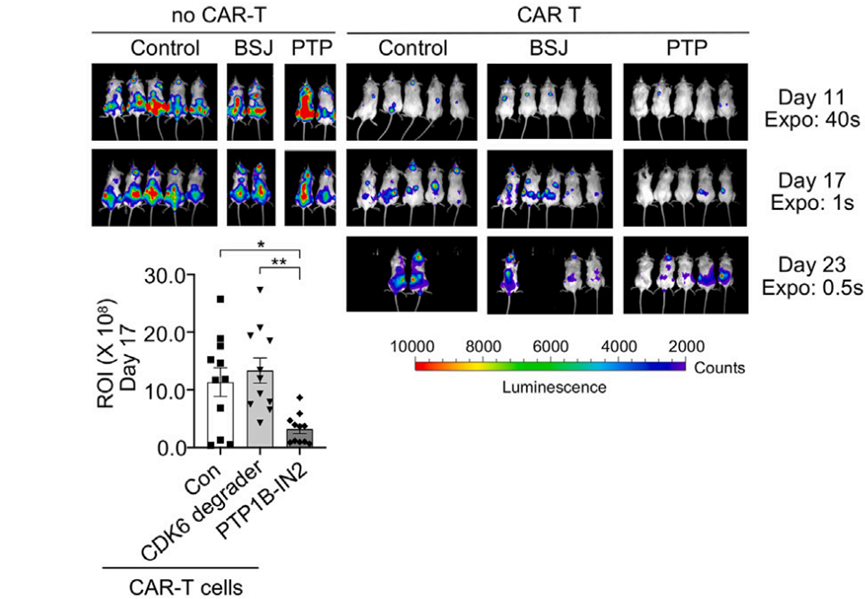
In Vivo Imaging


Biologische Aktivität
Beschreibung
IC50 & Target
IC50: 50 nM (PTP1B)[1]
In Vitro
PTP1B-IN-2 displays more than 40-fold selectivity for PTP1B over SHP-2 and LAR and 15-fold higher selectivity for PTP1B over the highly homologous TCPTP. PTP1B-IN-2 extends deep into the active site pocket, forming several hydrogen bonds and hydrophobic interactions with key residues of the catalytic site. The binding characteristics between PTP1B domain and ligand shows that PTP1B-IN-2 is an ABC type inhibitor which not only interacted with catalytic site but also B site and C site. PTP1B-IN-2 greatly enhances insulin-mediated IRβ phosphorylation at concentrations of 15 μM and 30 μM. Insulin-stimulated glucose uptake is also significantly increased in L6 myotubes treated with PTP1B-IN-2, and this increase is 16.0%, 19.0% and 38.1% at 5, 10 and 20 μM, respectively [1].
MedChemExpress (MCE) has not independently confirmed the accuracy of these methods. They are for reference only.


Chemical Information
-
CAS. Nr. 1919853-46-5
-
Appearance Solid
-
Molecular Weight 680.79
-
Formel C34H36N2O9S2
-
Color White to off-white
-
SMILES
O=S(N(C1=CC(C(OC)=O)=C(OCC2=CC=C(C)C=C2)C=C1)CC3=CC=C(N(S(C)(=O)=O)CC(OC)=O)C=C3)(CC4=CC=CC=C4)=O
-
Versand
Room temperature in continental US; may vary elsewhere.
-
Speicherung
Powder -20°C 3 years 4°C 2 years In solvent -80°C 2 years -20°C 1 year


Publications (5)
-
Journal Impact Factor
-
Most Recent
-
Acta Pharmacol Sin
Reduced intracellular chloride concentration impairs angiogenesis by inhibiting oxidative stress-mediated VEGFR2 activation. [Abstract]2021 Apr;42(4):560-572. PMID: 32694758 -
Cell Rep
Context-dependent inhibitory roles of RhoA in 3D invasive cell migration within the extracellular matrix. [Abstract]2025 Dec 6;44(12):116649. PMID: 41359424 -
Cell Rep
2023 Mar 30;42(4):112314. PMID: 37000627
PTP1B-IN-2 purchased from MedChemExpress. Usage Cited in: Cell Rep. 2023 Mar 30;42(4):112314. [Abstract]
IB using pY99 to detect phosphorylated CD3ζ immunoprecipitated from Jurkat cells treated with PTP1B-IN2 (1 μM, 24 h).
PTP1B-IN-2 purchased from MedChemExpress. Usage Cited in: Cell Rep. 2023 Mar 30;42(4):112314. [Abstract]
CAR T tumor killing assay was applied to examine the cytotoxicity of human T cells targeting Raji cells expressing GFP upon compound treatments, 1 μM PTP1B-IN2, 1 μM Palbo, or 10 μM BSJ-03–123 was applied.
PTP1B-IN-2 purchased from MedChemExpress. Usage Cited in: Cell Rep. 2023 Mar 30;42(4):112314. [Abstract]
Bioluminescence images of tumor progression in Raji tumor-bearing mice with/without receiving CAR T cells under treatment with BSJ-03–123 (50 mg/kg) or PTP1B-IN2 (5 mg/kg).
-
Sci Rep
Activation of IGF-1 pathway and suppression of atrophy related genes are involved in Epimedium extract (icariin) promoted C2C12 myotube hypertrophy. [Abstract]2021 May 24;11(1):10790. PMID: 34031457 -
Neuropharmacology
Cyclic neuronostatin regulates glucose homeostasis and food intake through GPR107 phosphorylation. [Abstract]2026 May 27:111026. PMID: 42208758


Lösungsmittel & Löslichkeit
In Vitro:
DMSO : ≥ 100 mg/mL (146.89 mM; Hygroscopic DMSO has a significant impact on the solubility of product, please use newly opened DMSO)
* "≥" means soluble, but saturation unknown.
Please refer to the solubility information to select the appropriate solvent. Once prepared, please aliquot and store the solution to prevent product inactivation from repeated freeze-thaw cycles.
Storage method and period of stock solution: -80°C, 2 years; -20°C, 1 year. When stored at -80°C, please use it within 2 years. When stored at -20°C, please use it within 1 year.
Please refer to the solubility information to select the appropriate solvent. Once prepared, please aliquot and store the solution to prevent product inactivation from repeated freeze-thaw cycles.
Storage method and period of stock solution: -80°C, 2 years; -20°C, 1 year. When stored at -80°C, please use it within 2 years. When stored at -20°C, please use it within 1 year.
Konzentration (Stammlösung) × Volumen (Stammlösung) = Konzentration (Ziellösung) × Volumen (Ziellösung)
In Vivo:
Select the appropriate dissolution method based on your experimental animal and administration route.
- For the following dissolution methods, please ensure to first prepare a clear stock solution using an In Vitro approach and then sequentially add co-solvents:
- To ensure reliable experimental results, the clarified stock solution can be appropriately stored based on storage conditions. As for the working solution for In Vivo experiments, it is recommended to prepare freshly and use it on the same day.
- The percentages shown for the solvents indicate their volumetric ratio in the final prepared solution. If precipitation or phase separation occurs during preparation, heat and/or sonication can be used to aid dissolution.
Add each solvent one by one: 10% DMSO 40% PEG300 5% Tween-80 45% Saline
Solubility: ≥ 2.5 mg/mL (3.67 mM); Clear solution
This protocol yields a clear solution of ≥ 2.5 mg/mL (saturation unknown).
Taking 1 mL working solution as an example, add 100 μL DMSO stock solution (25.0 mg/mL) to 400 μL PEG300, and mix evenly; then add 50 μL Tween-80 and mix evenly; then add 450 μL Saline to adjust the volume to 1 mL.
Preparation of Saline: Dissolve 0.9 g sodium chloride in ddH₂O and dilute to 100 mL to obtain a clear Saline solution.
In Vivo Dissolution Calculator
Please enter the basic information of animal experiments:
-
-
-
-
Recommended: Prepare an additional quantity of animals to account for potential losses during experiments.
Please enter your animal formula composition:
-
%DMSO +
Recommended: Keep the proportion of DMSO in working solution below 2% if your animal is weak.
-
%+
-
+%Tween-80 + +
-
%Saline +
The co-solvents required include: DMSO, . All of co-solvents are available by MedChemExpress (MCE). , Tween 80. All of co-solvents are available by MedChemExpress (MCE).
Working solution concentration: 0.22 mg/mL
Method for preparing stock solution: mg drug dissolved in μL DMSO. Stock solution concentration: mg/mL.
1. Take μL DMSO stock solution;
2. Add μL .
μL , mix evenly;
3. Then add μL Tween 80, mix evenly;
4. Then add μL
Please ensure that the stock solution in the first step is dissolved to a clear state, and add co-solvents in sequence. You can use ultrasonic heating (ultrasonic cleaner, recommended frequency 20-40 kHz), vortexing, etc. to assist dissolution.


Reinheit & Dokumentation
-
Data Sheet (276 KB)
-
SDS (393 KB)
- English - EN (393 KB)
- Français - FR (393 KB)
- Deutsch - DE (393 KB)
- Norwegian - NO (393 KB)
- Español - ES (393 KB)
- Swedish - SV (393 KB)
- Italian - IT (393 KB)
- Korean - KR (393 KB)
- Portuguese - PT (393 KB)
-
Handling Instructions (2659 KB)
Verweise


Complete Stock Solution Preparation Table
Please refer to the solubility information to select the appropriate solvent. Once prepared, please aliquot and store the solution to prevent product inactivation from repeated freeze-thaw cycles.
Storage method and period of stock solution: -80°C, 2 years; -20°C, 1 year. When stored at -80°C, please use it within 2 years. When stored at -20°C, please use it within 1 year.
| Optional Solvent | Concentration Solvent Mass | 1 mg | 5 mg | 10 mg | 25 mg |
|---|---|---|---|---|---|
| DMSO | 1 mM | 1.4689 mL | 7.3444 mL | 14.6888 mL | 36.7220 mL |
| 5 mM | 0.2938 mL | 1.4689 mL | 2.9378 mL | 7.3444 mL | |
| 10 mM | 0.1469 mL | 0.7344 mL | 1.4689 mL | 3.6722 mL | |
| 15 mM | 0.0979 mL | 0.4896 mL | 0.9793 mL | 2.4481 mL | |
| 20 mM | 0.0734 mL | 0.3672 mL | 0.7344 mL | 1.8361 mL | |
| 25 mM | 0.0588 mL | 0.2938 mL | 0.5876 mL | 1.4689 mL | |
| 30 mM | 0.0490 mL | 0.2448 mL | 0.4896 mL | 1.2241 mL | |
| 40 mM | 0.0367 mL | 0.1836 mL | 0.3672 mL | 0.9181 mL | |
| 50 mM | 0.0294 mL | 0.1469 mL | 0.2938 mL | 0.7344 mL | |
| 60 mM | 0.0245 mL | 0.1224 mL | 0.2448 mL | 0.6120 mL | |
| 80 mM | 0.0184 mL | 0.0918 mL | 0.1836 mL | 0.4590 mL | |
| 100 mM | 0.0147 mL | 0.0734 mL | 0.1469 mL | 0.3672 mL |


PTP1B-IN-2 Related Classifications
HY-100462 Related Classifications
 Powered by Bioz