Infection
-
Infection Related Products (18904)
Related Products (18904)

-
Antibodies (22)
-
Antifungal agent 44
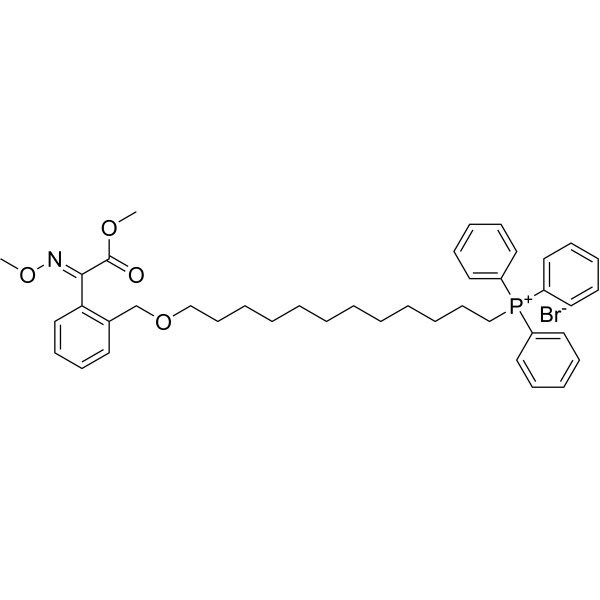 0 ImagesCat. No.: HY-151555
Antifungal agent 44 (compound 2A-5) is an antifungal agent, and shows excellent fungicidal activity superior to Kresoxim-methyl (HY-125776). Antifungal agent 44 shows fungicidal activity against Phytophthora capsici most remarkably, with an EC50 value of about 5 μM.
-
Antifungal agent 39
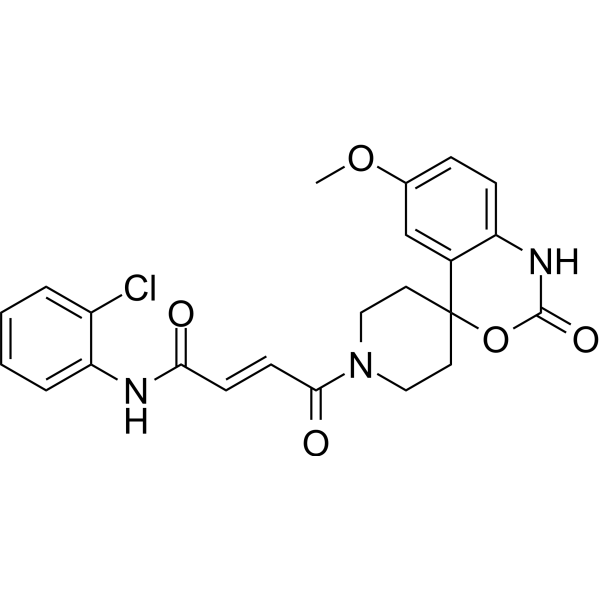 0 ImagesCat. No.: HY-151423CAS No.: 2725074-94-0
Antifungal agent 39 (Compound 9h) is a broad-spectrum antifungal agent.
-
ML406 (Standard)
 0 Images
ML406 (Standard) is the analytical standard of ML406. This product is intended for research and analytical applications. ML406 is a small molecule probe that shows anti-tubercular activity via M.tuberculosis BioA (DAPA synthase) enzyme inhibition with an IC50 of 30 nM. M.tuberculosis BioA is an enzyme involved in biotin biosynthesis in M.tuberculosis[1].
-
SIMR3030
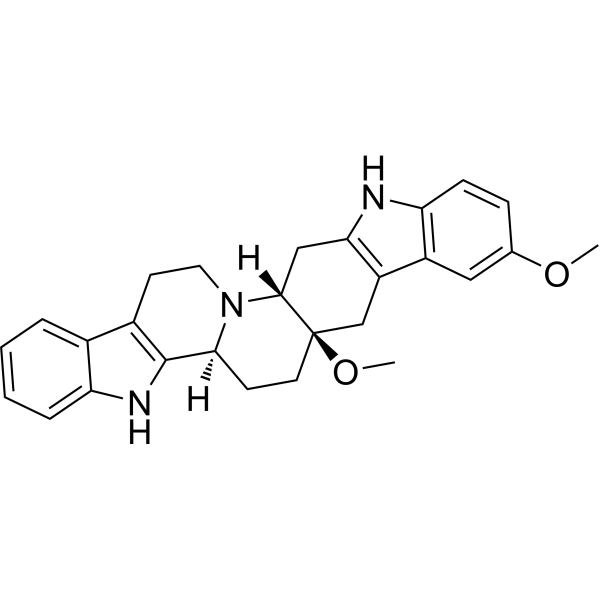 0 ImagesCat. No.: HY-149940CAS No.: 2708270-99-7
SIMR3030 is a potent SARS-CoV-2 PLpro inhibitor with an IC50 value of 0.0399 µg/mL. SIMR3030 shows antiviral activity. SIMR3030 decreases SARS-CoV spike, ORF1b, IFN-α, IL-6 mRNA expression. SIMR3030 exhibits a satisfactory safety profile in mice.
-
(Rac)-Golgicide A
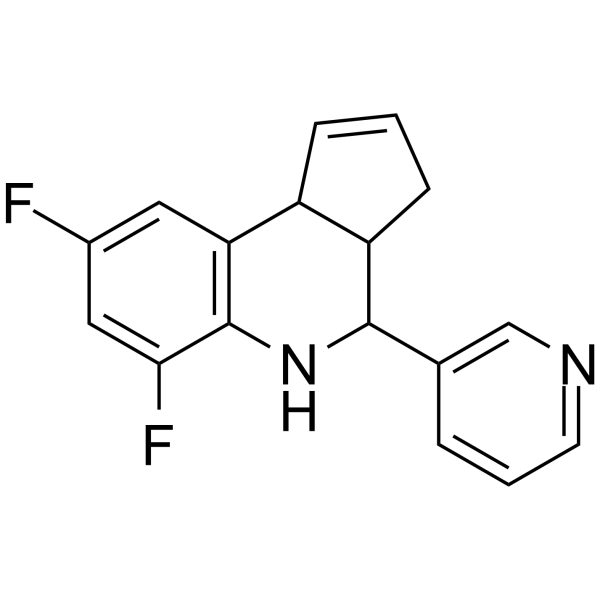 0 ImagesCat. No.: HY-100540ACAS No.: 1005036-73-6Synonyms: (Rac)-GCA
(Rac)-Golgicide A ((Rac)-GCA) is a racemate of Golgicide A. Golgicide A (GCA) is a potent, highly specific, and reversible inhibitor of the cis-Golgi ADP-ribosylation factor guanine nucleotide exchange factors (ArfGEF) GBF1.Golgicide A drastically reduced replication of coxsackievirus B3 (CVB3) and other human enterovirus species.
-
(Rac)-Bedaquiline
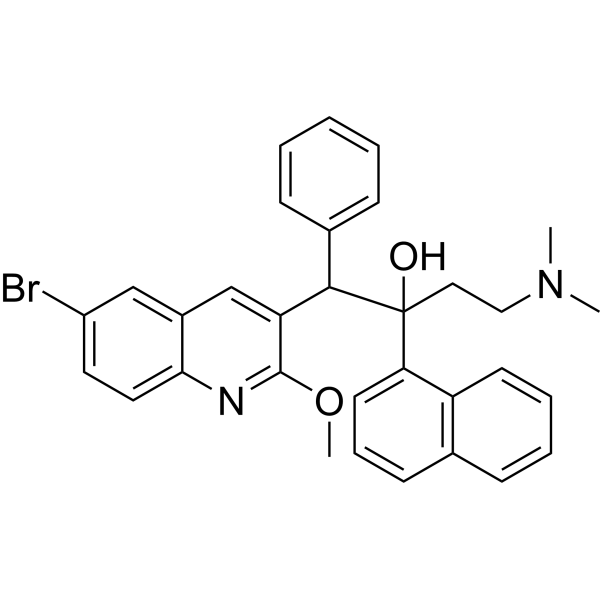 0 ImagesCat. No.: HY-14881BCAS No.: 654655-80-8Synonyms: (Rac)-TMC207; (Rac)-R207910
(Rac)-Bedaquiline is the racemate of Bedaquiline. Bedaquiline (TMC207) is a diarylquinoline agent and inhibits Mycobacterium tuberculosis (Mtb) F1FO-ATP synthase through targeting both the c- and the ε-subunit. Bedaquiline has uncoupler activity. Bedaquiline is used for the multi-agent resistant tuberculosis.
-
Dihydrocompactin
 0 ImagesCat. No.: HY-N15097CAS No.: 78366-44-6
Dihydrocompactin, an antifungal metabolite, is an inhibitor of 3-hydroxy-3-methylglutaryl coenzyme-A reductase (HMG-CoA reductase) from Penicillium citrinum.
-
Aurantimycin A
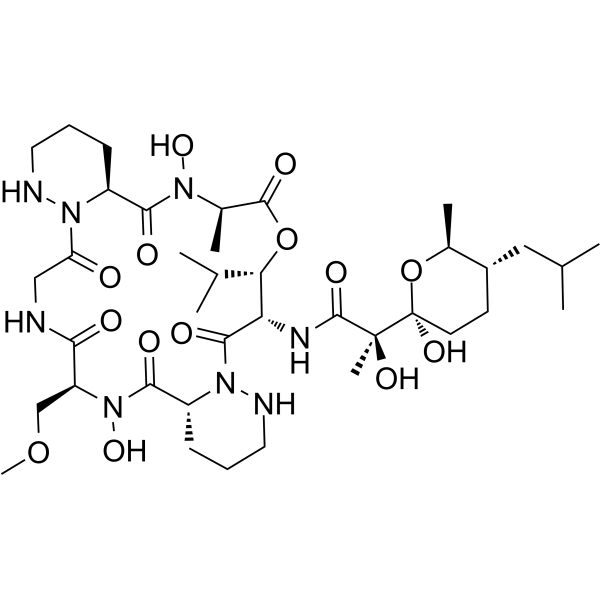 0 ImagesCat. No.: HY-P1699CAS No.: 162478-50-4
Aurantimycin A (Adipogen), a depsipeptide antibiotic, displays strong activity against Gram-positive bacteria. Aurantimycin A is a substrate of the LieAB transporter.
-
DL-Methionine-d3
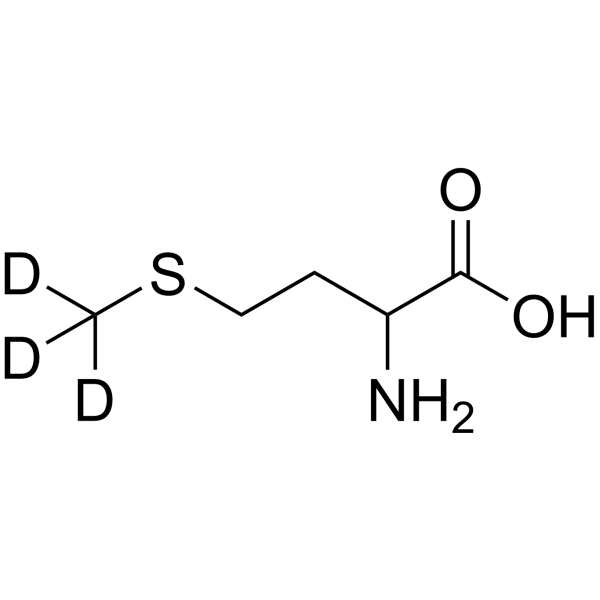 0 ImagesCat. No.: HY-N0325S3CAS No.: 284665-20-9
DL-Methionine-d3 is the deuterium labeled DL-Methionine. DL-Methionine is an essential amino acid containing sulfur with oxidative stress defense effects. DL-Methionine can be used for animal natural feed. DL-Methionine also kills H. rostochiensis on potato plants.
-
ZIKV-IN-4
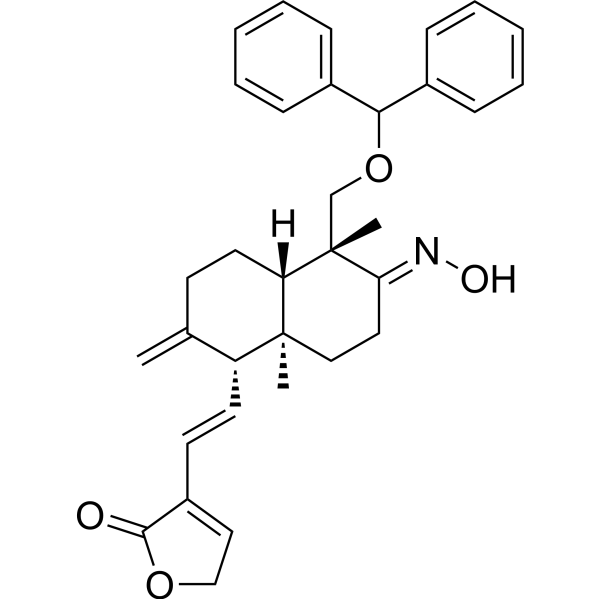 0 ImagesCat. No.: HY-151447CAS No.: 3033697-91-2
ZIKV-IN-4 (compound 5b) is a low-cytotoxicity and acid-stable anti-ZIKV agent (EC50=3.49 μM). ZIKV-IN-4 effectively inhibits the activity of ZIKV NS5 MTase.
-
Antibacterial agent 47
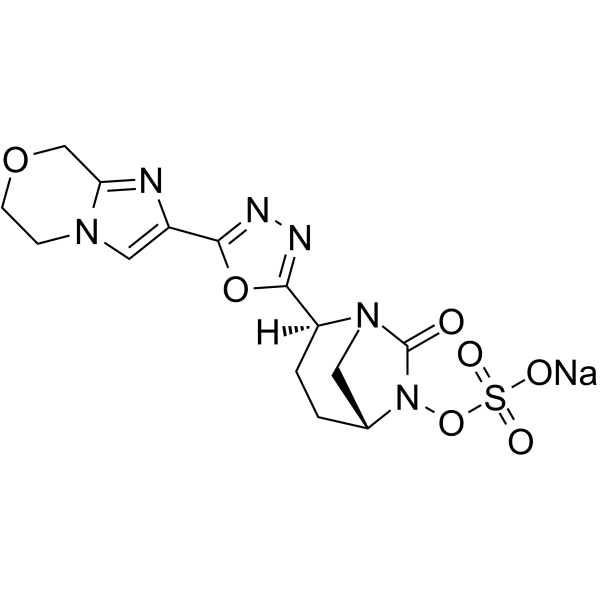 0 ImagesCat. No.: HY-139764CAS No.: 1426572-52-2
Antibacterial agent 47, an antibacterial agent, significantly lowers MIC value of antibacterial agent Ceftazidime.
-
Cefetamet-d3
 0 ImagesCat. No.: HY-W743473Synonyms: Ro 15-8074-d3; Deacetoxycefotaxime-d3
Cefetamet-d3 (Ro 15-8074-d3; Deacetoxycefotaxime-d3) is the deuterium labeled Cefetamet (HY-A0111). Cefetamet (Ro 15-8074) is a cephalosporin antibiotic and the active metabolite of Cefetamet pivoxil (HY-B1894A). Cefetamet binds to bacterial penicillin-binding protein (PBP) (IC50 for PBP3 in Escherichia coli W3110 is 2.5 μg/mL). Cefetamet has significant activity against Gram-negative bacteria such as Enterobacteriaceae, Neisseria species, and Haemophilus influenzae, as well as Gram-positive bacteria such as Streptococcus. Cefetamet kills and lyses Treponema pallidum. Cefetamet can be used in the research of respiratory tract, urinary tract, ear, nose and throat infections, and syphilis.
-
SB-140
 0 ImagesCat. No.: HY-181352
SB-140 is a selective, covalent PLpro inhibitor with an IC50 of ≤2.5 nM against SARS-CoV-2 PLpro. SB-140 has antiviral activity against SARS-CoV-2, MERS-CoV and SARS-CoV-1.
-
Arizonin B1
 0 ImagesCat. No.: HY-N14014CAS No.: 108890-89-7
Arizonin A1, a microbial metabolite, is an antibiotic with anti-Gram-positive bacterial activities.
-
ZINC04177596
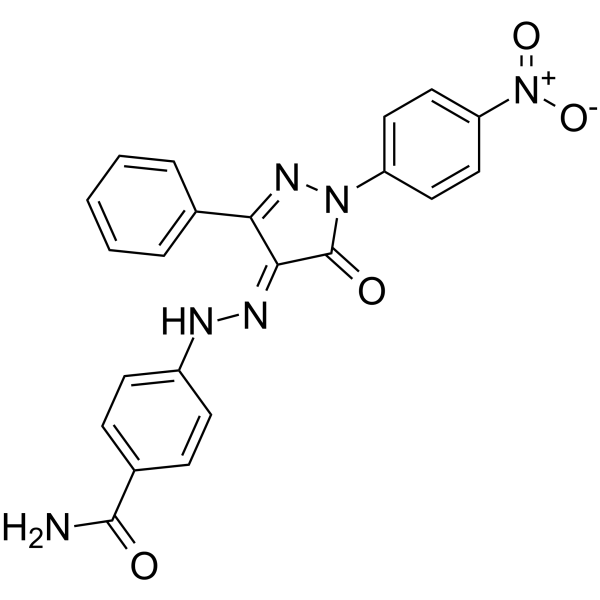 0 ImagesCat. No.: HY-119210CAS No.: 364052-84-6
-
HIV-1 Rev (34-50)
 0 ImagesCat. No.: HY-P1586CAS No.: 141237-50-5Synonyms: HIV-1 rev Protein (34-50)
-
Myxochelin A
 0 ImagesCat. No.: HY-122980CAS No.: 120243-02-9Synonyms: (S)-Myxochelin A
Myxochelin A is a microbial metabolite that has been found in A. disciformis and has diverse biological activities. It is active against Gram-positive bacteria, including B. cereus, S. aureus, and M. luteus, but not Gram-negative bacteria or fungi in an agar diffusion assay when used at a concentration of 80 μg/disc. Myxochelin A inhibits 5-lipoxygenase (5-LO) activity with an IC50 value of 1.9 μM for the recombinant human enzyme. It is cytotoxic to 26-L5 colon cancer cells when used at a concentration of 3 μg/mL.
-
Zintevir sodium
 0 ImagesCat. No.: HY-177670ASynonyms: AR177 sodium; T30177 sodium
Zintevir sodium is an antisense oligonucleotide that targets HIV-1 integrase.