



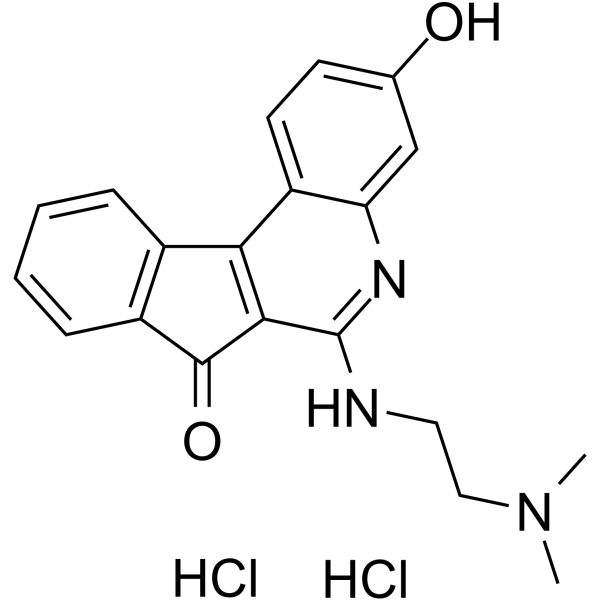
TAS-103 dihydrochloride
Based on 1 publication(s) in Google Scholar
TAS-103 dihydrochloride is a dual inhibitor of DNA topoisomerase I/II, used for cancer research.
For research use only. We do not sell to patients.
- Purity : 98.45%
- CAS No.: 174634-09-4
- Formula: C20H21Cl2N3O2
- Molecular Weight:406.31
-
Storage:
4°C, sealed storage, away from moisture
* In solvent : -80°C, 6 months; -20°C, 1 month (sealed storage, away from moisture)

To place orders, for customer services and technical support, please contact: MedChemExpress USA
Tel: 609-228-6898 E-mail: [email protected] [email protected]


-
 Biological Activity
-
Chemical Information
-
Solvent & Solubility
- Purity & Documentation
- References
-
 Help & FAQs


-
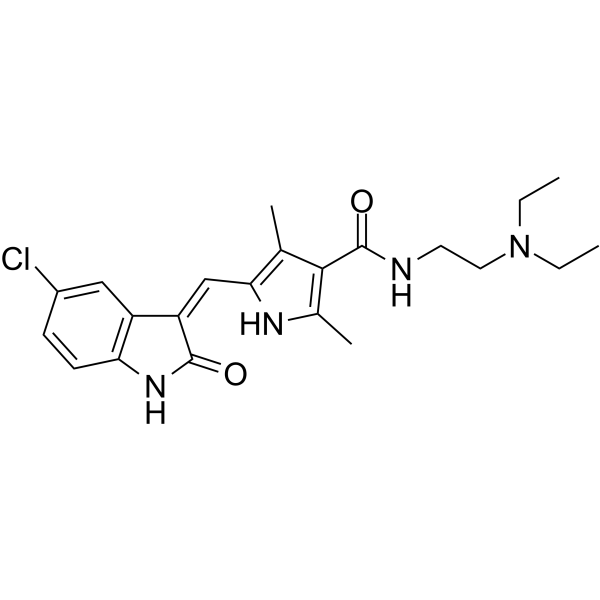
HY-112452
SU11652RTK Inhibitor -
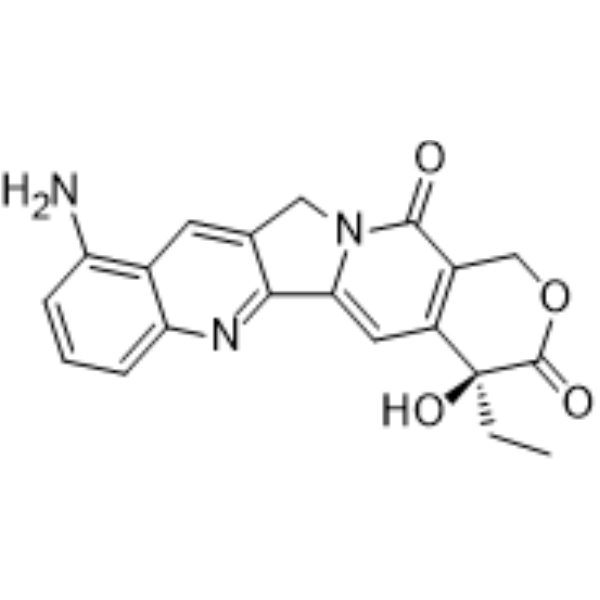
HY-100309
9-AminocamptothecinTopoisomerase I Inhibitor -
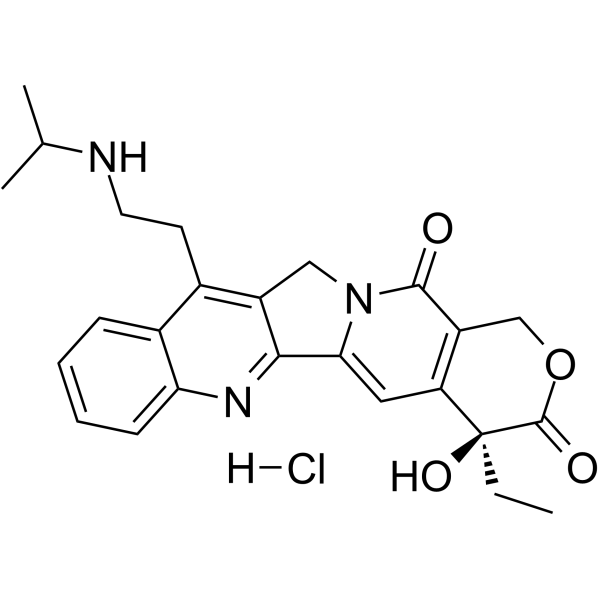
HY-13566A
Belotecan hydrochlorideTopoisomerase Inhibitor -
HY-13631A
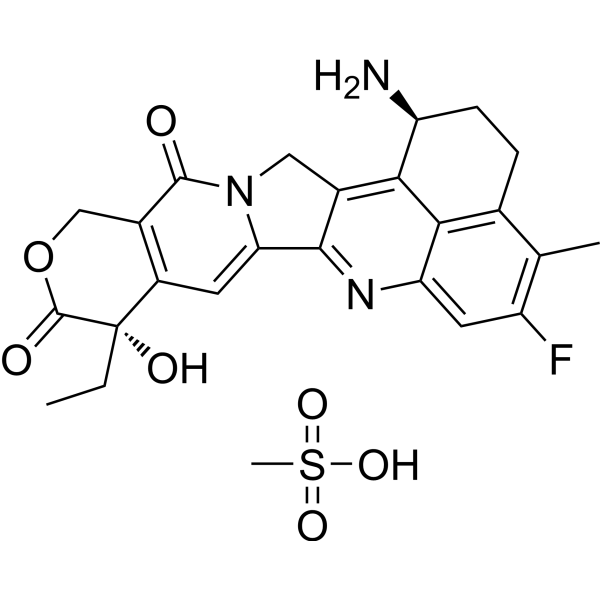
Exatecan mesylateTopoisomerase I Inhibitor -
HY-N2306
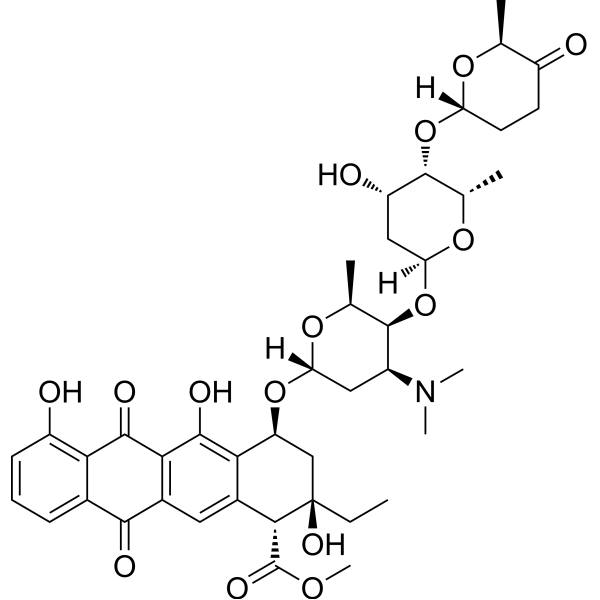
Aclacinomycin ATopoisomerase Inhibitor -
HY-13631AG
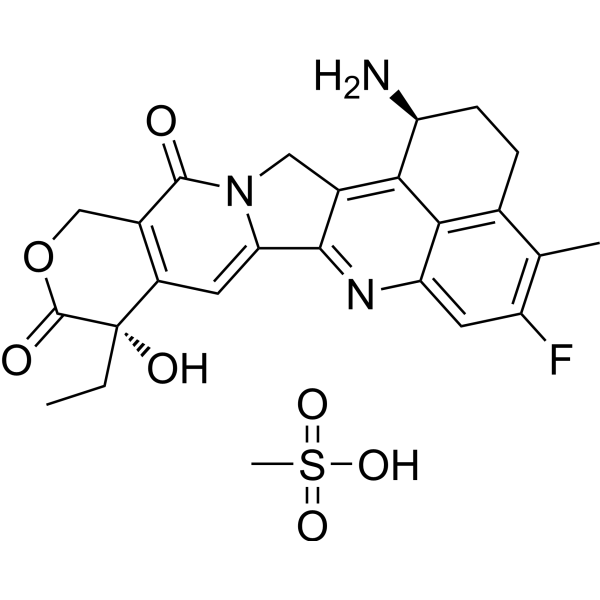
Exatecan mesylate (GMP)Topoisomerase I Inhibitor -
HY-118581
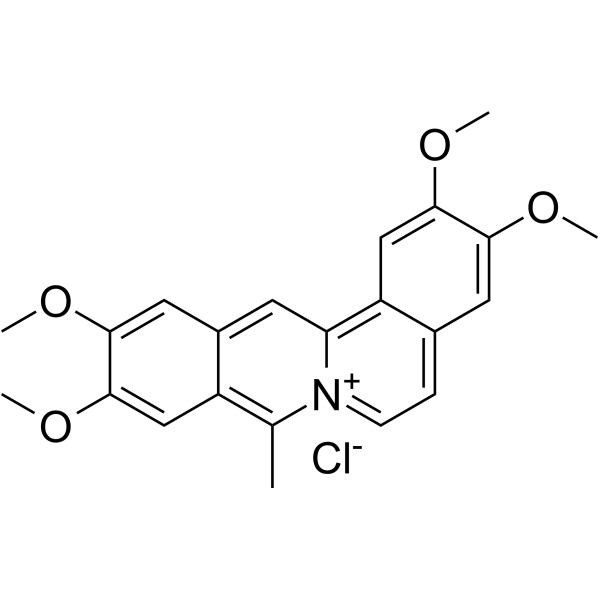
Coralyne chlorideAnti-Cancer Agent -
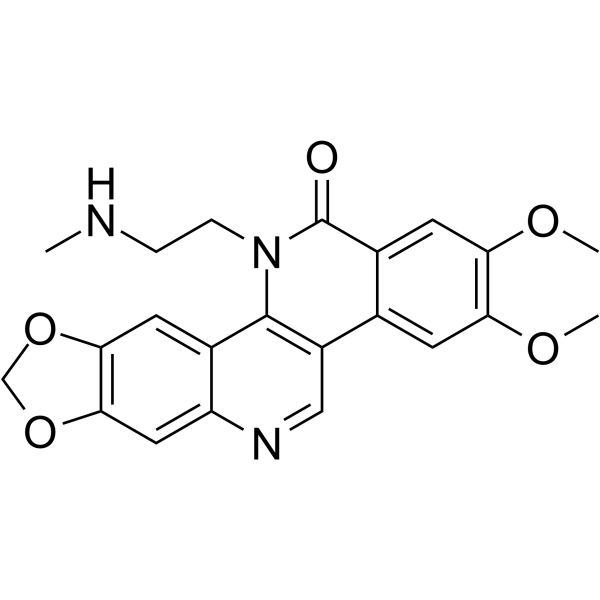
HY-16228
Genz-644282 -
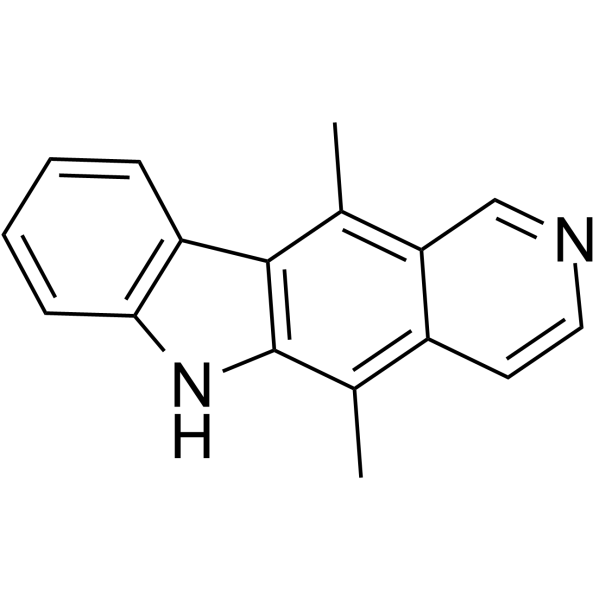
HY-15753
EllipticineTopoisomerase Inhibitor -
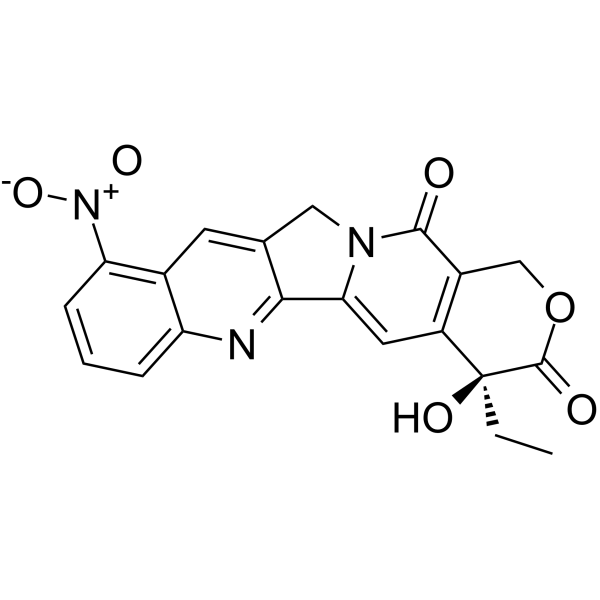
HY-13744
RubitecanTopoisomerase Inhibitor -
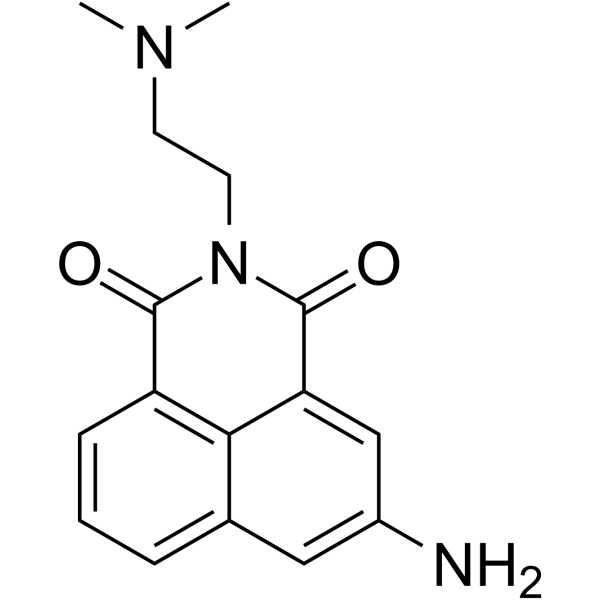
HY-10982
AmonafideTopoisomerase Inhibitor -
HY-13562A
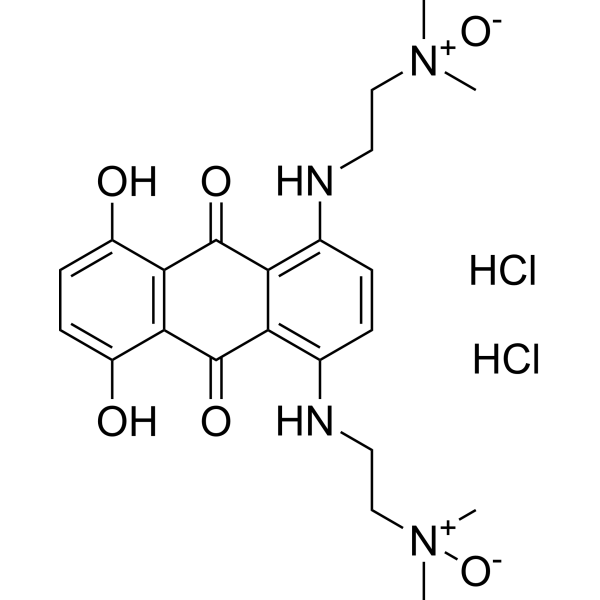
Banoxantrone dihydrochlorideTopoisomerase II Inhibitor
Publications Citing Use of MedChemExpress (MCE) TAS-103 dihydrochloride
MoreAll Topoisomerase Isoforms
More

Biological Activity
Description
IC50 & Target
[1]|
Topoisomerase I |
Topoisomerase II |
In Vitro
TAS-103 is a dual inhibitor of DNA topoisomerase I/II. TAS-103 (0.1-10 μM) is active on CCRF-CEM cells, with an IC50 value of 5 nM. TAS-103 (0.1 μM) significantly increases levels of topo IIα FITC immunofluorescence in individual CCRF-CEM cells[1]. TAS-103 (0.01-1 μM) is highly cytotoxic to Lewis lung carcinoma (LLC) cells, and Liposomal TAS-103 is almost as active as free TAS-103[2]. TAS-103 inhibits the viability of HeLa cells, with an IC50 of 40 nM. TAS-103 (10 μM) disrupts signal recognition particle (SRP) complex formation, and induces destabilization of SRP14 and SRP19 and its eventual degradation[3].
MedChemExpress (MCE) has not independently confirmed the accuracy of these methods. They are for reference only. .
In Vivo
MedChemExpress (MCE) has not independently confirmed the accuracy of these methods. They are for reference only.


Chemical Information
-
CAS No. 174634-09-4
-
Appearance Solid
-
Molecular Weight 406.31
-
Formula C20H21Cl2N3O2
-
Color Brown to orange
-
SMILES
O=C(C1=C2C3=CC=C(O)C=C3N=C1NCCN(C)C)C4=C2C=CC=C4.Cl.Cl
-
Synonyms
BMS-247615 dihydrochloride
-
Shipping
Room temperature in continental US; may vary elsewhere.
-
Storage
4°C, sealed storage, away from moisture
* In solvent : -80°C, 6 months; -20°C, 1 month (sealed storage, away from moisture)


Publications (1)
-
Journal Impact Factor
-
Most Recent
-
J Mol Med (Berl)
2019 Aug;97(8):1183-1193. PMID: 31201471


Solvent & Solubility
In Vitro:
H2O : 50 mg/mL (123.06 mM; Need ultrasonic)
Please refer to the solubility information to select the appropriate solvent. Once prepared, please aliquot and store the solution to prevent product inactivation from repeated freeze-thaw cycles.
Storage method and period of stock solution: -80°C, 6 months; -20°C, 1 month (sealed storage, away from moisture). When stored at -80°C, please use it within 6 months. When stored at -20°C, please use it within 1 month.
* Note: If you choose water as the stock solution, please dilute it to the working solution, then filter and sterilize it with a 0.22 μm filter before use.
Please refer to the solubility information to select the appropriate solvent. Once prepared, please aliquot and store the solution to prevent product inactivation from repeated freeze-thaw cycles.
Storage method and period of stock solution: -80°C, 6 months; -20°C, 1 month (sealed storage, away from moisture). When stored at -80°C, please use it within 6 months. When stored at -20°C, please use it within 1 month.
* Note: If you choose water as the stock solution, please dilute it to the working solution, then filter and sterilize it with a 0.22 μm filter before use.
Concentration (start) × Volume (start) = Concentration (final) × Volume (final)
In Vivo:
For the following dissolution methods, please prepare the working solution directly:
It is recommended to prepare fresh solutions and use them promptly within a short period of time.
The percentages shown for the solvents indicate their volumetric ratio in the final prepared solution. If precipitation or phase separation occurs during preparation, heat and/or sonication can be used to aid dissolution.
Add each solvent one by one: PBS
Solubility: 3.57 mg/mL (8.79 mM); Clear solution; Need ultrasonic and warming and heat to 60°C


Purity & Documentation
-
Data Sheet (284 KB)
-
SDS (643 KB)
- English - EN (643 KB)
- Français - FR (643 KB)
- Deutsch - DE (643 KB)
- Norwegian - NO (643 KB)
- Español - ES (643 KB)
- Swedish - SV (643 KB)
- Italian - IT (643 KB)
- Korean - KR (643 KB)
- Portuguese - PT (643 KB)
-
Handling Instructions (2659 KB)
References
[1]. Padget K, et al. An investigation into the formation of N- [2-(dimethylamino)ethyl]acridine-4-carboxamide (DACA) and 6-[2-(dimethylamino)ethylamino]- 3-hydroxy-7H-indeno[2, 1-C]quinolin-7-one dihydrochloride (TAS-103) stabilised DNA topoisomerase I and II [Content Brief]
[2]. Shimizu K, et al. Cancer chemotherapy by liposomal 6-[12-(dimethylamino)ethyl]aminol-3-hydroxy-7H-indeno[2,1-clquinolin-7-one dihydrochloride (TAS-103), a novel anti-cancer agent. Biol Pharm Bull. 2002 Oct;25(10):1385-7. [Content Brief]
[3]. Yoshida M, et al. A new mechanism of 6-((2-(dimethylamino)ethyl)amino)-3-hydroxy-7H-indeno(2,1-c)quinolin-7-one dihydrochloride (TAS-103) action discovered by target screening with drug-immobilized affinity beads. Mol Pharmacol. 2008 Mar;73(3):987-94. Epu [Content Brief]


Complete Stock Solution Preparation Table
Please refer to the solubility information to select the appropriate solvent. Once prepared, please aliquot and store the solution to prevent product inactivation from repeated freeze-thaw cycles.
Storage method and period of stock solution: -80°C, 6 months; -20°C, 1 month (sealed storage, away from moisture). When stored at -80°C, please use it within 6 months. When stored at -20°C, please use it within 1 month.
| Optional Solvent | Concentration Solvent Mass | 1 mg | 5 mg | 10 mg | 25 mg |
|---|---|---|---|---|---|
| H2O | 1 mM | 2.4612 mL | 12.3059 mL | 24.6117 mL | 61.5294 mL |
| 5 mM | 0.4922 mL | 2.4612 mL | 4.9223 mL | 12.3059 mL | |
| 10 mM | 0.2461 mL | 1.2306 mL | 2.4612 mL | 6.1529 mL | |
| 15 mM | 0.1641 mL | 0.8204 mL | 1.6408 mL | 4.1020 mL | |
| 20 mM | 0.1231 mL | 0.6153 mL | 1.2306 mL | 3.0765 mL | |
| 25 mM | 0.0984 mL | 0.4922 mL | 0.9845 mL | 2.4612 mL | |
| 30 mM | 0.0820 mL | 0.4102 mL | 0.8204 mL | 2.0510 mL | |
| 40 mM | 0.0615 mL | 0.3076 mL | 0.6153 mL | 1.5382 mL | |
| 50 mM | 0.0492 mL | 0.2461 mL | 0.4922 mL | 1.2306 mL | |
| 60 mM | 0.0410 mL | 0.2051 mL | 0.4102 mL | 1.0255 mL | |
| 80 mM | 0.0308 mL | 0.1538 mL | 0.3076 mL | 0.7691 mL | |
| 100 mM | 0.0246 mL | 0.1231 mL | 0.2461 mL | 0.6153 mL |
* Note: If you choose water as the stock solution, please dilute it to the working solution, then filter and sterilize it with a 0.22 μm filter before use.


TAS-103 dihydrochloride Related Classifications
HY-13758A Related Classifications
 Powered by Bioz