



TAS-103
Based on 1 publication(s) in Google Scholar
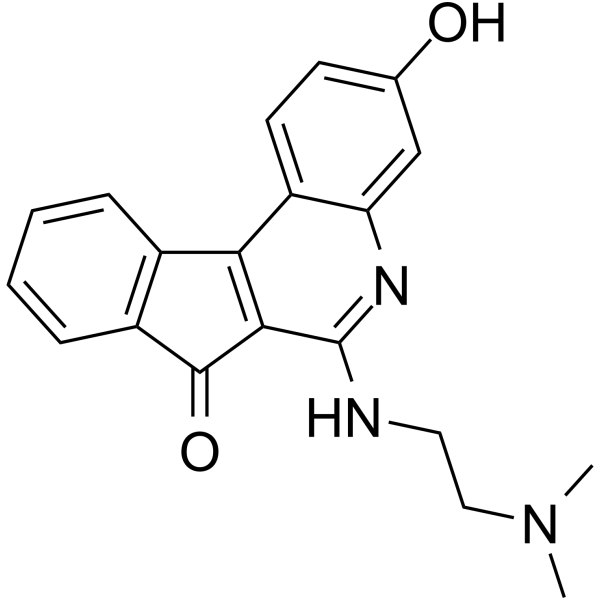
TAS-103 is a dual inhibitor of DNA topoisomerase I/II, used for cancer research.
For research use only. We do not sell to patients.
- Purity : 99.69%
- CAS No.: 174634-08-3
- Formula: C20H19N3O2
- Molecular Weight:333.38
-
Storage:Powder -20°C, 3 years , 4°C, 2 years ; In solvent -80°C, 6 months , -20°C, 1 month

To place orders, for customer services and technical support, please contact: MedChemExpress USA
Tel: 609-228-6898 E-mail: [email protected] [email protected]


-
 Biological Activity
-
Chemical Information
-
Solvent & Solubility
- Purity & Documentation
- References
-
 Help & FAQs


-
HY-13631A
Exatecan mesylateTopoisomerase I Inhibitor -
HY-15753
EllipticineTopoisomerase Inhibitor -
HY-100309
9-AminocamptothecinTopoisomerase I Inhibitor -
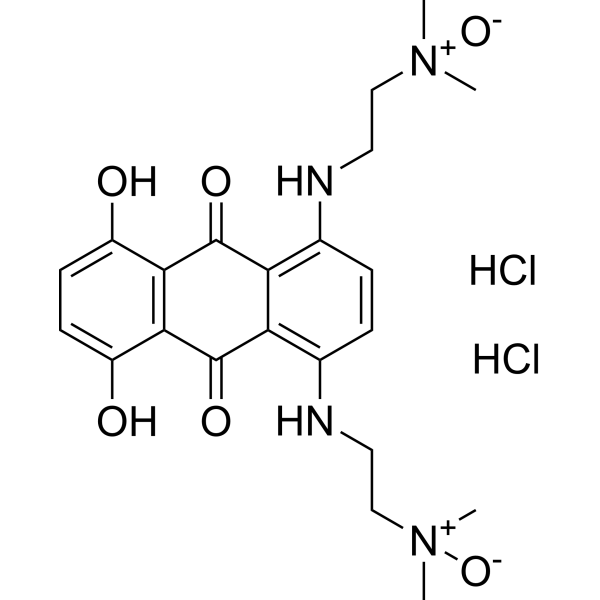
HY-13562A
Banoxantrone dihydrochlorideTopoisomerase II Inhibitor -
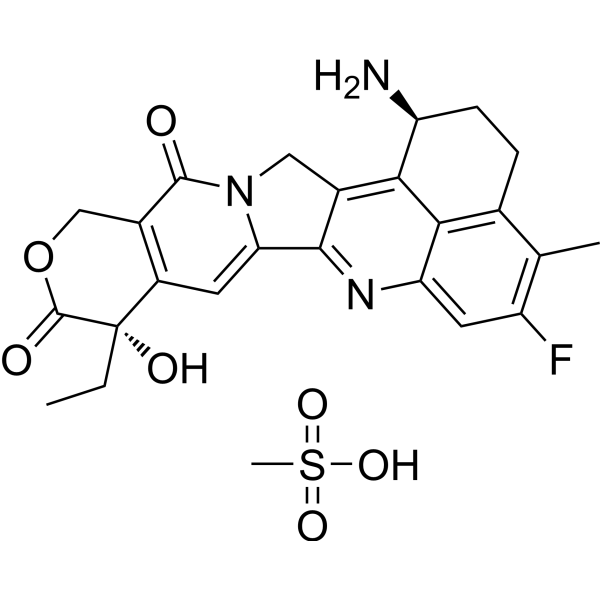
HY-13631AG
Exatecan mesylate (GMP)Topoisomerase I Inhibitor -
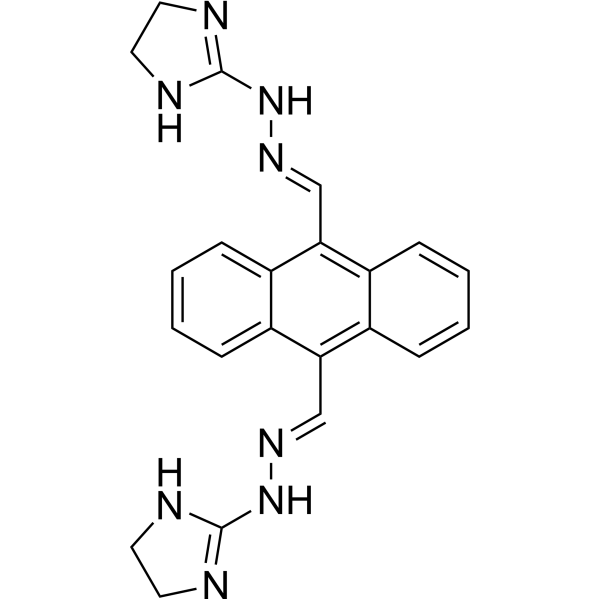
HY-100875
BisantreneAntitumor Agent -
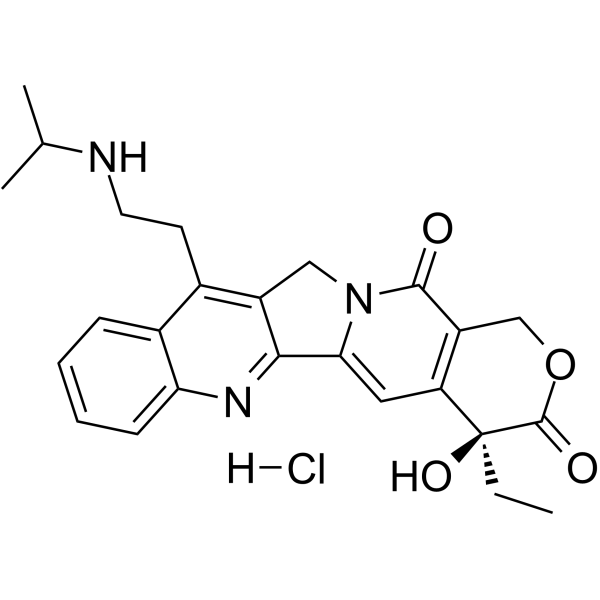
HY-13566A
Belotecan hydrochlorideTopoisomerase Inhibitor -
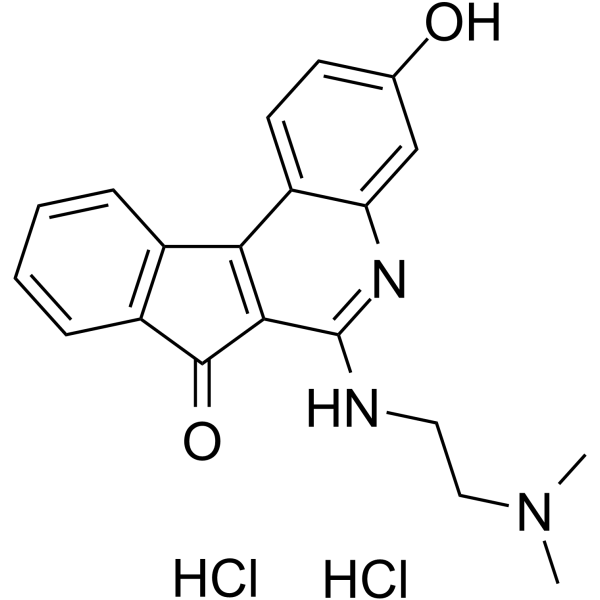
HY-13758A
TAS-103 dihydrochloride -
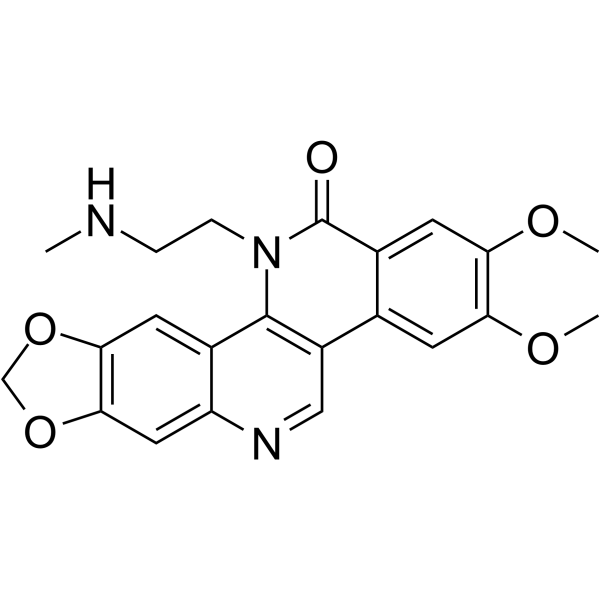
HY-16228
Genz-644282 -
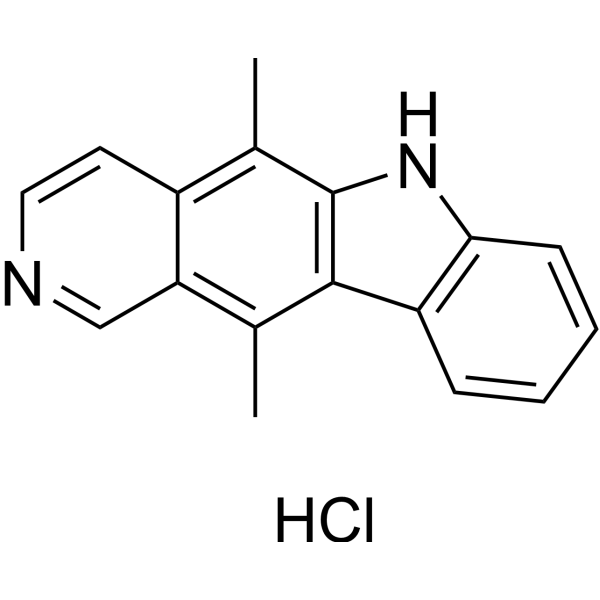
HY-15753A
Ellipticine hydrochlorideTopoisomerase Inhibitor -
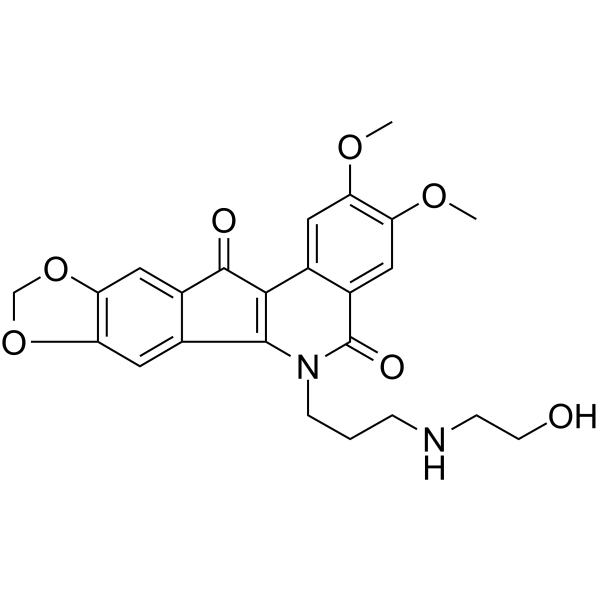
HY-U00248
LMP744 -
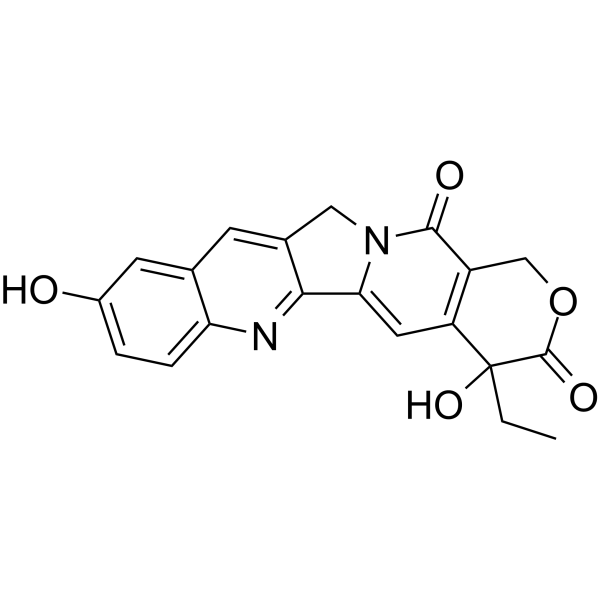
HY-N0275
(±)-10-HydroxycamptothecinTopoisomerase Inhibitor
Publications Citing Use of MedChemExpress (MCE) TAS-103
MoreAll Topoisomerase Isoforms
More

Biological Activity
Description
IC50 & Target
[1]|
Topoisomerase I |
Topoisomerase II |
Cellular Effect
|
Cell Line

|
Type | Value | Description | References |
|---|---|---|---|---|
| HL-60 | IC50 |
0.033 μM
Compound: 1a, TAS-103
|
Cytotoxicity against human mitoxantrone-sensitive HL60 cells after 72 hrs
Cytotoxicity against human mitoxantrone-sensitive HL60 cells after 72 hrs
|
[PMID: 18507368] |
| HL60/MX2 | IC50 |
2.7 μM
Compound: 1a, TAS-103
|
Cytotoxicity against mitoxantrone-resistant human HL60/MX2 cells after 72 hrs
Cytotoxicity against mitoxantrone-resistant human HL60/MX2 cells after 72 hrs
|
[PMID: 18507368] |
| KB | IC50 |
0.0096 μM
Compound: TAS-103
|
Antiproliferative activity against human KB cells
Antiproliferative activity against human KB cells
|
[PMID: 34052677] |
In Vitro
TAS-103 is a dual inhibitor of DNA topoisomerase I/II. TAS-103 (0.1-10 μM) is active on CCRF-CEM cells, with an IC50 value of 5 nM. TAS-103 (0.1 μM) significantly increases levels of topo IIα FITC immunofluorescence in individual CCRF-CEM cells[1]. TAS-103 (0.01-1 μM) is highly cytotoxic to Lewis lung carcinoma (LLC) cells, and Liposomal TAS-103 is almost as active as free TAS-103[2]. TAS-103 inhibits the viability of HeLa cells, with an IC50 of 40 nM. TAS-103 (10 μM) disrupts signal recognition particle (SRP) complex formation, and induces destabilization of SRP14 and SRP19 and its eventual degradation[3].
MedChemExpress (MCE) has not independently confirmed the accuracy of these methods. They are for reference only. .
In Vivo
MedChemExpress (MCE) has not independently confirmed the accuracy of these methods. They are for reference only.


Chemical Information
-
CAS No. 174634-08-3
-
Appearance Solid
-
Molecular Weight 333.38
-
Formula C20H19N3O2
-
Color Brown to reddish brown
-
SMILES
O=C(C1=C2C3=CC=C(O)C=C3N=C1NCCN(C)C)C4=C2C=CC=C4
-
Synonyms
BMS-247615
-
Shipping
Room temperature in continental US; may vary elsewhere.
-
Storage
Powder -20°C 3 years 4°C 2 years In solvent -80°C 6 months -20°C 1 month


Publications (1)
-
Journal Impact Factor
-
Most Recent
-
J Mol Med (Berl)
2019 Aug;97(8):1183-1193. PMID: 31201471


Solvent & Solubility
In Vitro:
DMSO : ≥ 120 mg/mL (359.95 mM; Hygroscopic DMSO has a significant impact on the solubility of product, please use newly opened DMSO)
* "≥" means soluble, but saturation unknown.
Please refer to the solubility information to select the appropriate solvent. Once prepared, please aliquot and store the solution to prevent product inactivation from repeated freeze-thaw cycles.
Storage method and period of stock solution: -80°C, 6 months; -20°C, 1 month. When stored at -80°C, please use it within 6 months. When stored at -20°C, please use it within 1 month.
Please refer to the solubility information to select the appropriate solvent. Once prepared, please aliquot and store the solution to prevent product inactivation from repeated freeze-thaw cycles.
Storage method and period of stock solution: -80°C, 6 months; -20°C, 1 month. When stored at -80°C, please use it within 6 months. When stored at -20°C, please use it within 1 month.
Concentration (start) × Volume (start) = Concentration (final) × Volume (final)
In Vivo:
Select the appropriate dissolution method based on your experimental animal and administration route.
- For the following dissolution methods, please ensure to first prepare a clear stock solution using an In Vitro approach and then sequentially add co-solvents:
- To ensure reliable experimental results, the clarified stock solution can be appropriately stored based on storage conditions. As for the working solution for In Vivo experiments, it is recommended to prepare freshly and use it on the same day.
- The percentages shown for the solvents indicate their volumetric ratio in the final prepared solution. If precipitation or phase separation occurs during preparation, heat and/or sonication can be used to aid dissolution.
Add each solvent one by one: 10% DMSO 40% PEG300 5% Tween-80 45% Saline
Solubility: ≥ 3 mg/mL (9.00 mM); Clear solution
This protocol yields a clear solution of ≥ 3 mg/mL (saturation unknown).
Taking 1 mL working solution as an example, add 100 μL DMSO stock solution (30.0 mg/mL) to 400 μL PEG300, and mix evenly; then add 50 μL Tween-80 and mix evenly; then add 450 μL Saline to adjust the volume to 1 mL.
Preparation of Saline: Dissolve 0.9 g sodium chloride in ddH₂O and dilute to 100 mL to obtain a clear Saline solution.
Add each solvent one by one: 10% DMSO 90% (20% SBE-β-CD in Saline)
Solubility: ≥ 3 mg/mL (9.00 mM); Clear solution
This protocol yields a clear solution of ≥ 3 mg/mL (saturation unknown).
Taking 1 mL working solution as an example, add 100 μL DMSO stock solution (30.0 mg/mL) to 900 μL 20% SBE-β-CD in Saline, and mix evenly.
Preparation of 20% SBE-β-CD in Saline (4°C, storage for one week): 2 g SBE-β-CD powder is dissolved in 10 mL Saline, completely dissolve until clear.
In Vivo Dissolution Calculator
Please enter the basic information of animal experiments:
-
-
-
-
Recommended: Prepare an additional quantity of animals to account for potential losses during experiments.
Please enter your animal formula composition:
-
%DMSO +
Recommended: Keep the proportion of DMSO in working solution below 2% if your animal is weak.
-
%+
-
+%Tween-80 + +
-
%Saline +
The co-solvents required include: DMSO, . All of co-solvents are available by MedChemExpress (MCE). , Tween 80. All of co-solvents are available by MedChemExpress (MCE).
Working solution concentration: 0.22 mg/mL
Method for preparing stock solution: mg drug dissolved in μL DMSO. Stock solution concentration: mg/mL.
1. Take μL DMSO stock solution;
2. Add μL .
μL , mix evenly;
3. Then add μL Tween 80, mix evenly;
4. Then add μL
Please ensure that the stock solution in the first step is dissolved to a clear state, and add co-solvents in sequence. You can use ultrasonic heating (ultrasonic cleaner, recommended frequency 20-40 kHz), vortexing, etc. to assist dissolution.


Purity & Documentation
-
Data Sheet (283 KB)
-
SDS (254 KB)
- English - EN (254 KB)
- Français - FR (254 KB)
- Deutsch - DE (254 KB)
- Norwegian - NO (254 KB)
- Español - ES (254 KB)
- Swedish - SV (254 KB)
- Italian - IT (254 KB)
- Korean - KR (254 KB)
- Portuguese - PT (254 KB)
-
Handling Instructions (2659 KB)
References
[1]. Padget K, et al. An investigation into the formation of N- [2-(dimethylamino)ethyl]acridine-4-carboxamide (DACA) and 6-[2-(dimethylamino)ethylamino]- 3-hydroxy-7H-indeno[2, 1-C]quinolin-7-one dihydrochloride (TAS-103) stabilised DNA topoisomerase I and II [Content Brief]
[2]. Shimizu K, et al. Cancer chemotherapy by liposomal 6-[12-(dimethylamino)ethyl]aminol-3-hydroxy-7H-indeno[2,1-clquinolin-7-one dihydrochloride (TAS-103), a novel anti-cancer agent. Biol Pharm Bull. 2002 Oct;25(10):1385-7. [Content Brief]
[3]. Yoshida M, et al. A new mechanism of 6-((2-(dimethylamino)ethyl)amino)-3-hydroxy-7H-indeno(2,1-c)quinolin-7-one dihydrochloride (TAS-103) action discovered by target screening with drug-immobilized affinity beads. Mol Pharmacol. 2008 Mar;73(3):987-94. Epu [Content Brief]


Complete Stock Solution Preparation Table
Please refer to the solubility information to select the appropriate solvent. Once prepared, please aliquot and store the solution to prevent product inactivation from repeated freeze-thaw cycles.
Storage method and period of stock solution: -80°C, 6 months; -20°C, 1 month. When stored at -80°C, please use it within 6 months. When stored at -20°C, please use it within 1 month.
| Optional Solvent | Concentration Solvent Mass | 1 mg | 5 mg | 10 mg | 25 mg |
|---|---|---|---|---|---|
| DMSO | 1 mM | 2.9996 mL | 14.9979 mL | 29.9958 mL | 74.9895 mL |
| 5 mM | 0.5999 mL | 2.9996 mL | 5.9992 mL | 14.9979 mL | |
| 10 mM | 0.3000 mL | 1.4998 mL | 2.9996 mL | 7.4990 mL | |
| 15 mM | 0.2000 mL | 0.9999 mL | 1.9997 mL | 4.9993 mL | |
| 20 mM | 0.1500 mL | 0.7499 mL | 1.4998 mL | 3.7495 mL | |
| 25 mM | 0.1200 mL | 0.5999 mL | 1.1998 mL | 2.9996 mL | |
| 30 mM | 0.1000 mL | 0.4999 mL | 0.9999 mL | 2.4997 mL | |
| 40 mM | 0.0750 mL | 0.3749 mL | 0.7499 mL | 1.8747 mL | |
| 50 mM | 0.0600 mL | 0.3000 mL | 0.5999 mL | 1.4998 mL | |
| 60 mM | 0.0500 mL | 0.2500 mL | 0.4999 mL | 1.2498 mL | |
| 80 mM | 0.0375 mL | 0.1875 mL | 0.3749 mL | 0.9374 mL | |
| 100 mM | 0.0300 mL | 0.1500 mL | 0.3000 mL | 0.7499 mL |


TAS-103 Related Classifications
HY-13758 Related Classifications
 Powered by Bioz