



Topoisomerase
Topoisomerases regulate DNA topology by resolving supercoils, knots, and catenanes generated during replication, transcription, chromatin remodeling, and other nucleic acid metabolic processes[1]. Mechanistically, these enzymes cleave one DNA strand through TOP1/TOP3 enzymes or both strands through TOP2 enzymes, forming transient cleavage complexes that permit DNA relaxation, decatenation, or strand passage before religation[1][2]. Human topoisomerases include TOP1, TOP1MT, TOP2A, TOP2B, TOP3A, and TOP3B, and these isoforms support genome stability, transcription, DNA replication, chromatin remodeling, and higher-order genome organization[3]. Compared with type I enzymes that cleave one DNA strand, type II topoisomerases generate temporary double-strand breaks and therefore play central roles in chromosome segregation, replication stress resolution, and transcription-linked chromatin topology[2][4]. Disease relevance arises when irreversible topoisomerase cleavage complexes become DNA-protein crosslinks coupled with DNA breaks, creating genomic damage associated with cancer and neurological disease[3][5]. In cancer research, TOP2A is linked to proliferation and drug response, whereas TOP2B contributes to DNA rearrangements and double-strand break formation after TOP2 poison exposure[6]. For experimental and therapeutic applications, topoisomerase inhibitors such as topotecan, irinotecan, etoposide, doxorubicin, and mitoxantrone stabilize cleavage complexes, induce DNA damage, and support studies of chemotherapy response, resistance, and genome repair pathways[1][5][7].
References:
- [1]. Sun Y, et al. Excision repair of topoisomerase DNA-protein crosslinks (TOP-DPC). DNA Repair (Amst). 2020 May;89:102837. [Content Brief]
- [2]. Maxwell T, et al. Topo2008: DNA topoisomerases in biology and medicine. Nucleic Acids Res. 2009 Feb;37(3):659-60. [Content Brief]
- [3]. Pommier Y, et al. Human topoisomerases and their roles in genome stability and organization. Nat Rev Mol Cell Biol. 2022 Jun;23(6):407-427. [Content Brief]
- [4]. Uusküla-Reimand L, et al. Untangling the roles of TOP2A and TOP2B in transcription and cancer. Sci Adv. 2022 Nov 4;8(44):eadd4920. [Content Brief]
- [5]. Swan RL, et al. Mechanisms to Repair Stalled Topoisomerase II-DNA Covalent Complexes. Mol Pharmacol. 2022 Jan;101(1):24-32. [Content Brief]
- [6]. Ma Y, et al. Regulation of topoisomerase II stability and activity by ubiquitination and SUMOylation: clinical implications for cancer chemotherapy. Mol Biol Rep. 2021 Sep;48(9):6589-6601. [Content Brief]
- [7]. Hevener K, et al. Recent developments in topoisomerase-targeted cancer chemotherapy. Acta Pharm Sin B. 2018 Oct;8(6):844-861. [Content Brief]
-
Topoisomerase Related Products (451)
Related Products (451)

-
Berberine chloride
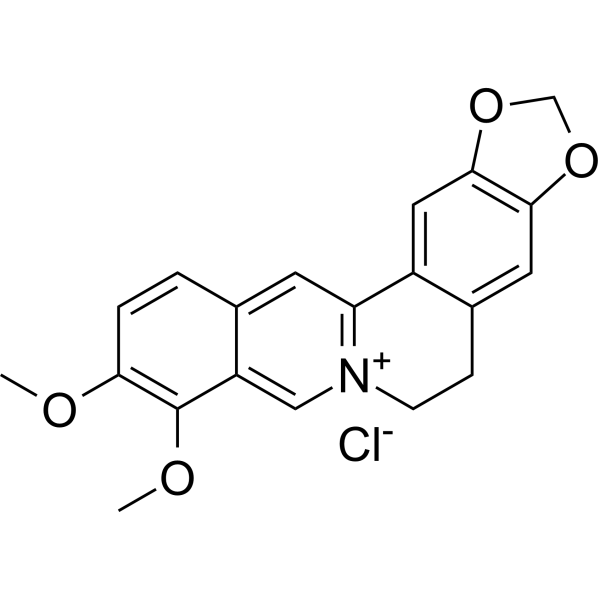 0 ImagesBerberine chloride is an alkaloid that acts as an antibiotic. Berberine chloride induces reactive oxygen species (ROS) generation and inhibits DNA topoisomerase. Antineoplastic properties.
-
Levofloxacin
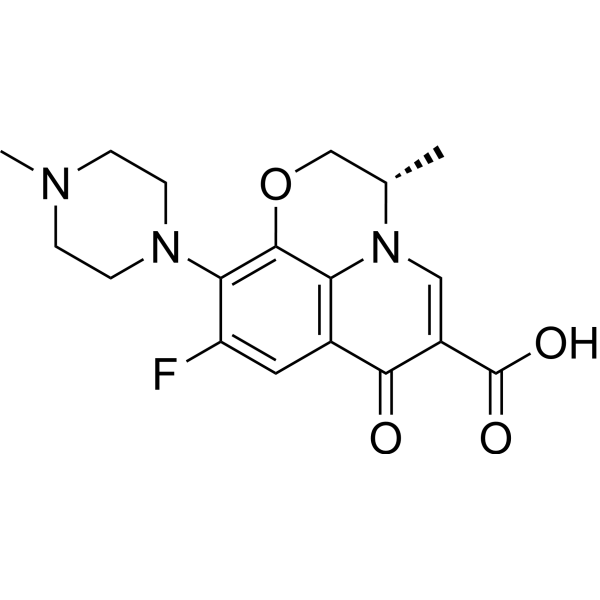 0 ImagesSynonyms: (-)-OfloxacinLevofloxacin ((-)-Ofloxacin) is an orally active antibiotic and is active against both Gram-positive and Gram-negative bacteria. Levofloxacin inhibits the DNA gyrase and topoisomerase IV. Levofloxacin can be used for chronic periodontitis, airway inflammation and BK Viremia research. Levofloxacin shows anti-orthopoxvirus activity.
-
Epirubicin hydrochloride
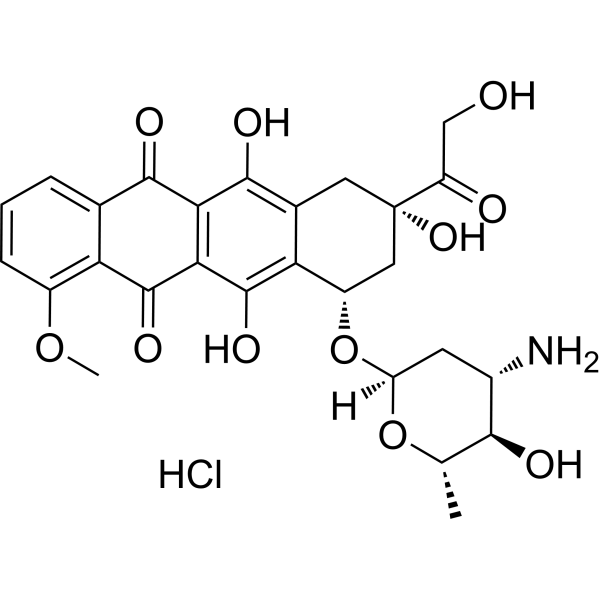 0 ImagesSynonyms: 4'-Epidoxorubicin hydrochlorideEpirubicin hydrochloride (4'-Epidoxorubicin hydrochloride), a semisynthetic L-arabino derivative of doxorubicin, has an antineoplastic agent by inhibiting Topoisomerase. Epirubicin hydrochloride inhibits DNA and RNA synthesis. Epirubicin hydrochloride is a Forkhead box protein p3 (Foxp3) inhibitor and inhibits regulatory T cell activity.
-
Doxorubicin hydrochloride (Standard)
 0 ImagesSynonyms: Hydroxydaunorubicin hydrochloride (Standard); ADR (Standard)Doxorubicin hydrochloride (Standard) is the analytical standard of Doxorubicin hydrochloride. This product is intended for research and analytical applications. Doxorubicin (Hydroxydaunorubicin) hydrochloride, a cytotoxic anthracycline antibiotic, is an anti-cancer chemotherapy agent. Doxorubicin hydrochloride is a potent human DNA topoisomerase I and topoisomerase II inhibitor with IC50s of 0.8 μM and 2.67 μM, respectively. Doxorubicin hydrochloride reduces basal phosphorylation of AMPK and its downstream target acetyl-CoA carboxylase. Doxorubicin hydrochloride induces apoptosis and autophagy.
-
Cu(II)-Elesclomol
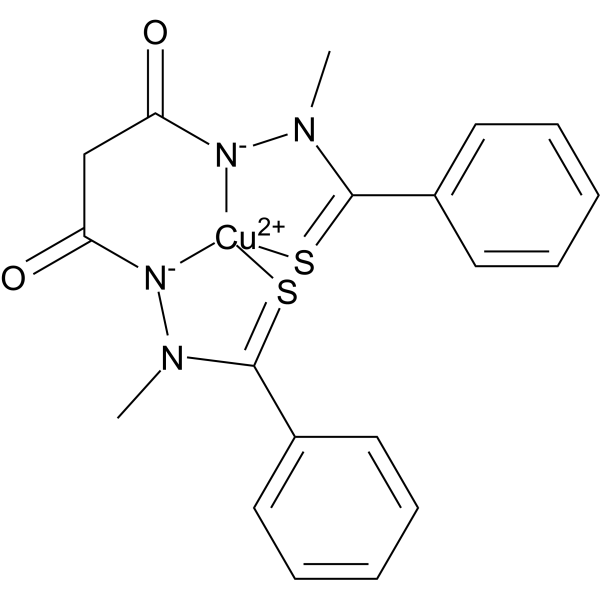 0 ImagesCu(II)-Elesclomol is a complex formed by Elesclomol (HY-12040) and Cu2+ (copper ions). Cu(II)-Elesclomol is also a weak inhibitor of DNA topoisomerase I. Cu(II)-Elesclomol exerts anticancer effects by inducing oxidative stress and DNA damage through copper chelation. Cu(II)-Elesclomol can inhibit tumor cell proliferation and induce cell cycle arrest and apoptosis. Cu(II)-Elesclomol can be used in the study of cancer.
-
Berberine sulfate
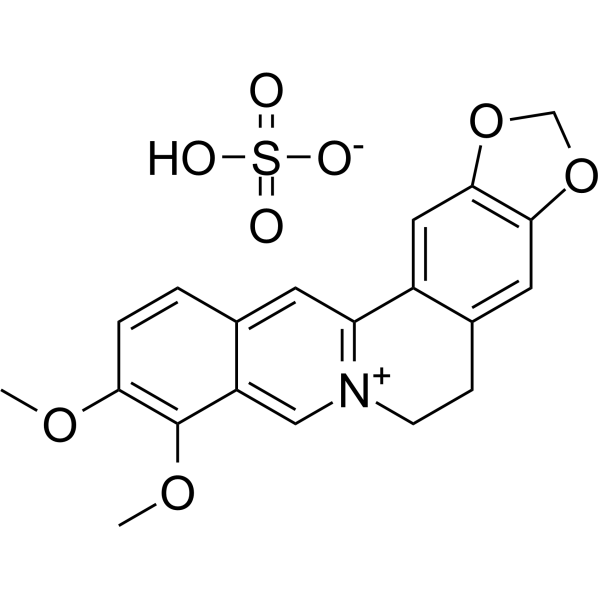 0 ImagesBerberine sulfate is an alkaloid isolated from the Chinese herbal medicine Huanglian, as an antibiotic. Berberine sulfate induces reactive oxygen species (ROS) generation and inhibits DNA topoisomerase. Berberine sulfate has antineoplastic properties. The sulfate form improves bioavailability.
-
Exatecan (Standard)
 0 ImagesSynonyms: DX-8951 (Standard)Exatecan (Standard) is the analytical standard of Exatecan. This product is intended for research and analytical applications. Exatecan (DX-8951) is a DNA topoisomerase I inhibitor, with an IC50 of 2.2 μM (0.975 μg/mL), and can be used in cancer research.
-
EIDD-1931
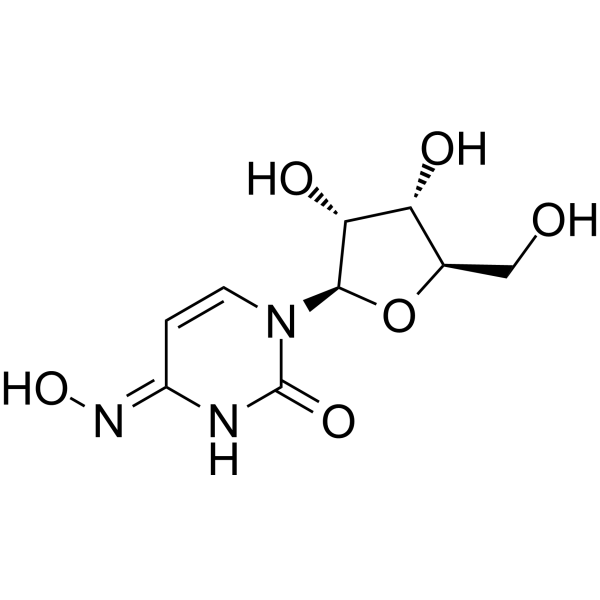 0 ImagesEIDD-1931 (Beta-d-N4-hydroxycytidine; NHC) is a novel nucleoside analog and behaves as a potent anti-virus agent. EIDD-1931 effectively inhibits the replication activity of venezuelan equine encephalitis virus (VEEV), Chikungunya virus (CHIKV) and hepatitis C virus (HCV).
-
Br-Val-Ala-NH2-bicyclo[1.1.1]pentane-7-MAD-MDCPT
![Br-Val-Ala-NH2-bicyclo[1.1.1]pentane-7-MAD-MDCPT](https://file.medchemexpress.com/product_pic/hy-148820.gif "Click to View Br-Val-Ala-NH2-bicyclo[1.1.1]pentane-7-MAD-MDCPT Product Detail") 0 ImagesBr-Val-Ala-NH2-bicyclo[1.1.1]pentane-7-MAD-MDCPT (Formula V) is a agent-linker conjugate that composed of a potent topoisomerase I inhibitor and a linker to make an antibody agent conjugate (ADC), ABBV-969.
0 ImagesBr-Val-Ala-NH2-bicyclo[1.1.1]pentane-7-MAD-MDCPT (Formula V) is a agent-linker conjugate that composed of a potent topoisomerase I inhibitor and a linker to make an antibody agent conjugate (ADC), ABBV-969.
-
Gepotidacin
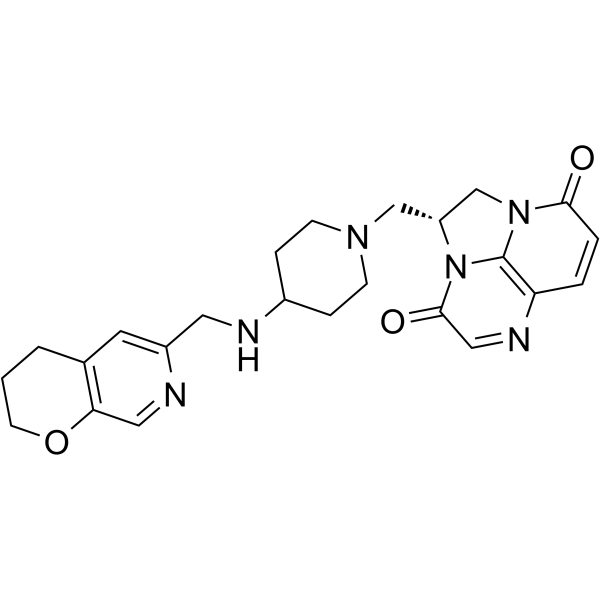 0 ImagesSynonyms: GSK2140944Gepotidacin (GSK2140944) is a novel triazaacenaphthylene bacterial type II topoisomerase inhibitor.
-
ADC Control Human IgG1-Deruxtecan (DAR 8)
 0 ImagesCat. No.: HY-164152APurity: 99.32%ADC Control Human IgG1-Deruxtecan (DAR 8) is a humanized monoclonal antibody that is an isotype control of ADC human IgG1-Deruxtecan and can inhibit DNA topoisomerase I. The antibody portion is Human IgG1 kappa, Isotype Control (HY-P99001), and the drug-linker conjugate for ADC is Deruxtecan (HY-13631E).
-
Nalidixic acid
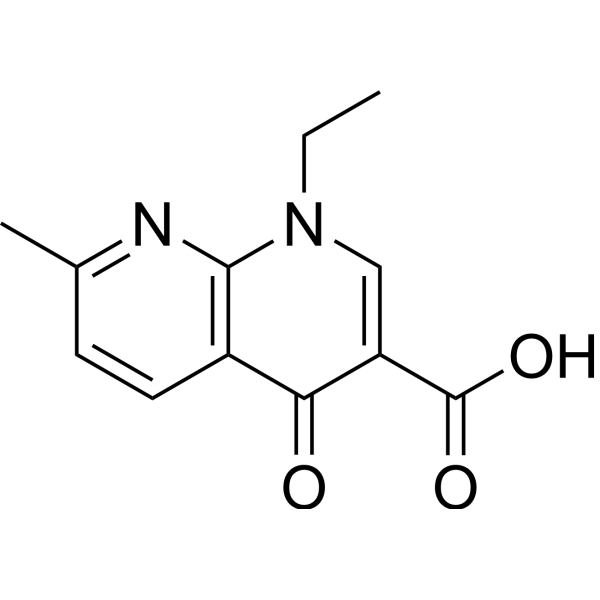 0 ImagesNalidixic acid, a quinolone antibiotic, is effective against both gram-positive and gram-negative bacteria. Nalidixic acid acts in a bacteriostatic manner in lower concentrations and is bactericidal in higher concentrations. Nalidixic acid inhibits a subunit of DNA gyrase and topoisomerase IV and reversibly blocks DNA replication in susceptible bacteria.
-
Aldoxorubicin
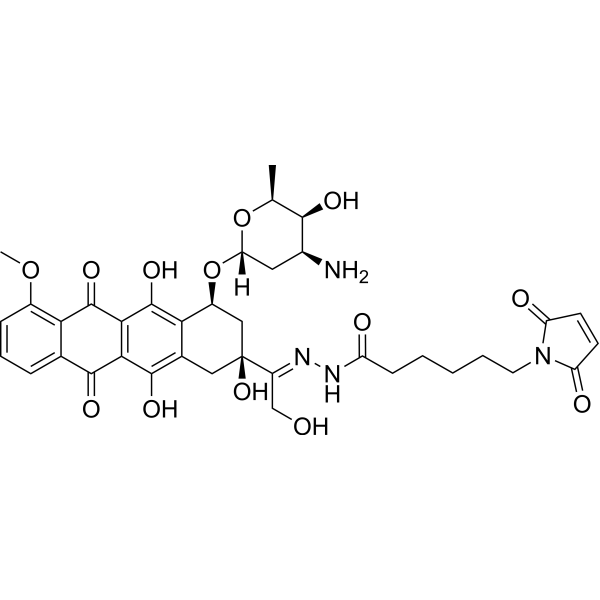 0 ImagesCat. No.: HY-16261CAS No.: 1361644-26-9Synonyms: INNO-206; DOXO-EMCHAldoxorubicin (INNO-206) is an albumin-binding proagent of Doxorubicin (DNA topoisomerase II inhibitor), which is released from albumin under acidic conditions. Aldoxorubicin (INNO-206) has potent antitumor activities in various cancer cell lines and in murine tumor models.
-
ADC Control Human IgG1-Deruxtecan (DAR 4)
 0 ImagesCat. No.: HY-164152ADC Control Human IgG1-Deruxtecan (DAR 4) is a humanized monoclonal antibody that is an isotype control of ADC human IgG1-Deruxtecan and can inhibit DNA topoisomerase I. The antibody portion is Human IgG1 kappa, Isotype Control (HY-P99001), and the drug-linker conjugate for ADC is Deruxtecan (HY-13631E).
-
Epirubicin
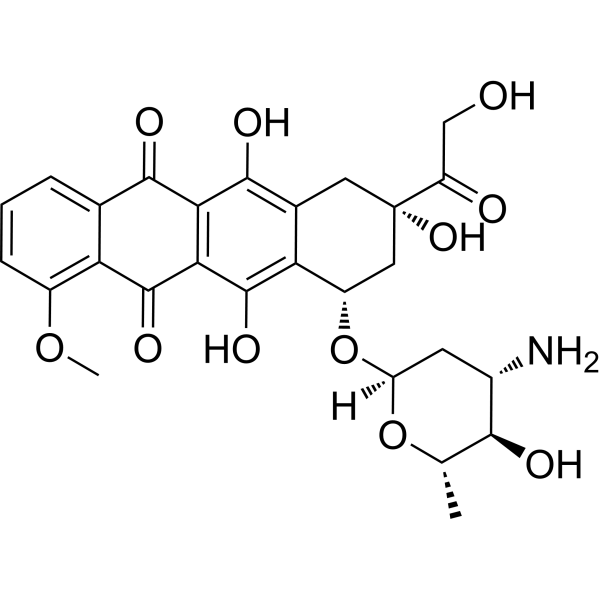 0 ImagesSynonyms: 4'-EpidoxorubicinEpirubicin (4'-Epidoxorubicin), a semisynthetic L-arabino derivative of doxorubicin, has an antineoplastic agent by inhibiting Topoisomerase. Epirubicin inhibits DNA and RNA synthesis. Epirubicin is a Forkhead box protein p3 (Foxp3) inhibitor and inhibits regulatory T cell activity.
-
Gly-Mal-GGFG-Deruxtecan 2-hydroxypropanamide
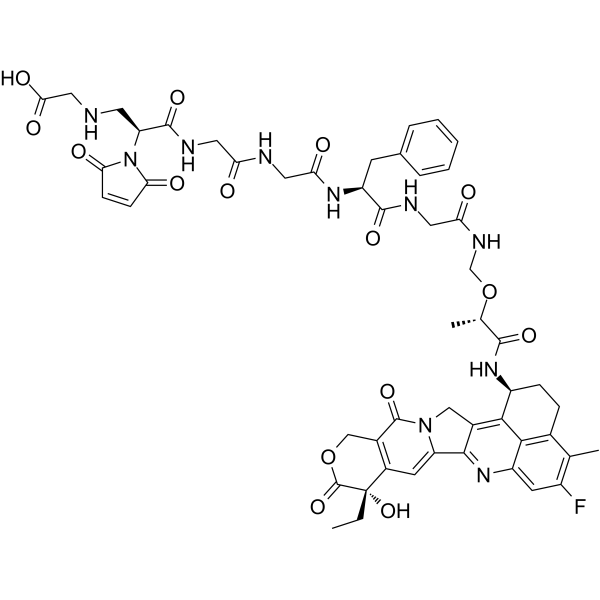 0 ImagesGly-Mal-GGFG-Deruxtecan 2-hydroxypropanamide is the drug-linker conjugate for ADC, containing ADC linker Gly-Mal-GGFG and ADC cytotoxin Deruxtecan 2-hydroxypropanamide.
-
Levofloxacin hydrate
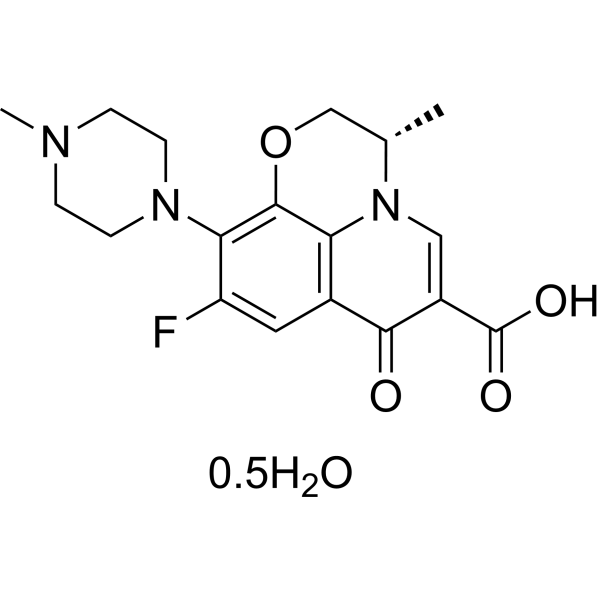 0 ImagesSynonyms: Levofloxacin hemihydrateLevofloxacin hydrate (Levofloxacin hemihydrate) is an orally active antibiotic and is active against both Gram-positive and Gram-negative bacteria. Levofloxacin hydrate inhibits the DNA gyrase and topoisomerase IV. Levofloxacin hydrate can be used for chronic periodontitis, airway inflammation and BK Viremia research. Levofloxacin hydrate shows anti-orthopoxvirus activity.

-
Berberine chloride hydrate
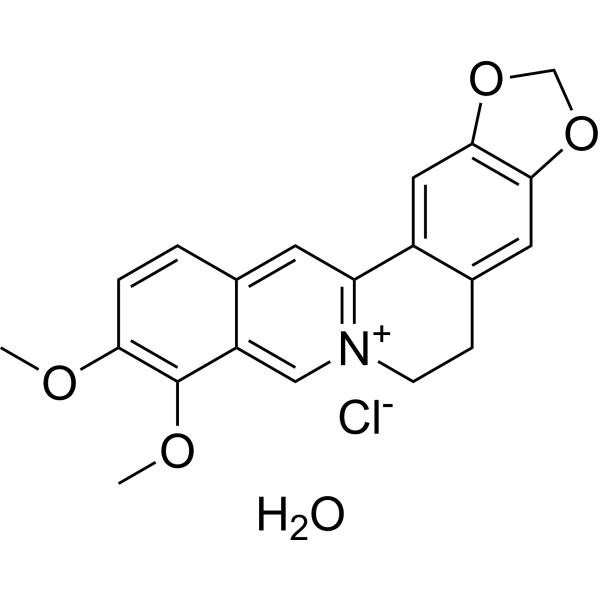 0 ImagesSynonyms: Natural Yellow 18 chloride hydrateBerberine chloride hydrate (Natural Yellow 18 chloride hydrate) is an alkaloid that acts as an antibiotic. Berberine chloride hydrate induces reactive oxygen species (ROS) generation and inhibits DNA topoisomerase. Antineoplastic properties.
-
ABBV-706
 0 ImagesCat. No.: HY-170554Purity: 99.71%ABBV-706 is a SEZ6-targeted topoisomerase 1 inhibitor Antibody-Drug Conjugates (ADCs), which is composed of the Linker-Payload conjugation (HY-148820) and the Anti-SEZ6 Antibody (SC17) (HY-P991041). ABBV-706 can inhibit cancer cells proliferation and induce DNA damage and G2/M arrest. ABBV-706 exhibits high efficacy against small cell lung cancer (SCLC), neuroendocrine tumors (NENs) and central nervous system (CNS) tumors.



