



Gepotidacin
Based on 12 publication(s) in Google Scholar
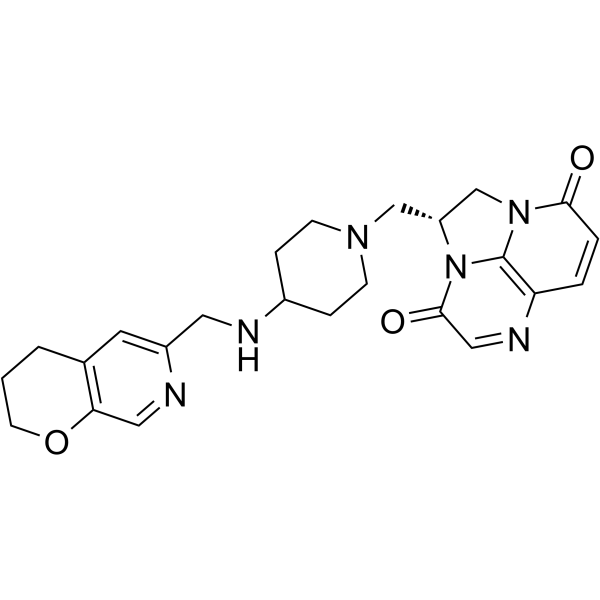
Gepotidacin (GSK2140944) is a novel triazaacenaphthylene bacterial type II topoisomerase inhibitor.
Nur für Forschungszwecke. Wir verkaufen nicht an Patienten.
- Reinheit : 99.92%
- CAS. Nr.: 1075236-89-3
- Formel: C24H28N6O3
- Molecular Weight:448.52
-
Speicherung:Powder -20°C, 3 years , 4°C, 2 years ; In solvent -80°C, 2 years , -20°C, 1 year

To place orders, for customer services and technical support, please contact: MedChemExpress USA
Tel: 609-228-6898 E-mail: [email protected] [email protected]


-
 Biologische Aktivität
-
Chemical Information
-
Lösungsmittel & Löslichkeit
- Reinheit & Dokumentation
- Verweise
-
 Help & FAQs


-
HY-17647
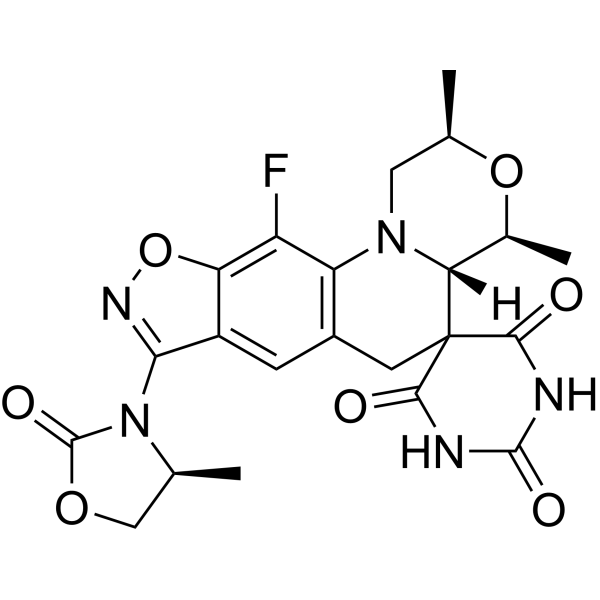
ZoliflodacinDNA gyrase/topoisomerase Inhibitor -
HY-13433
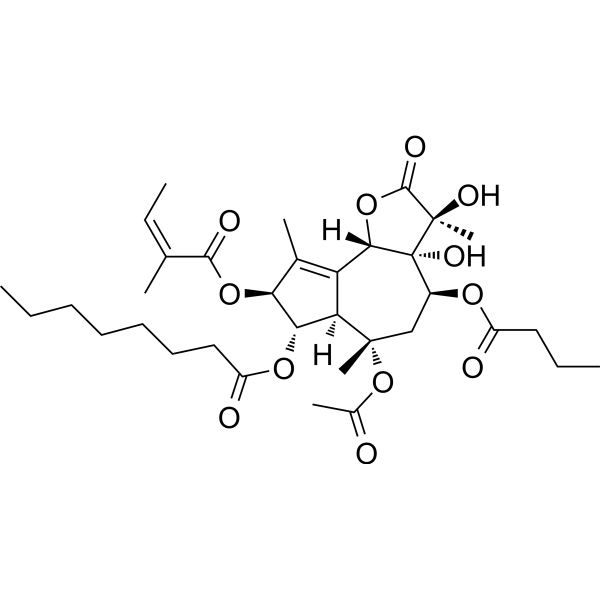
ThapsigarginER Stress Inducer -
HY-12495
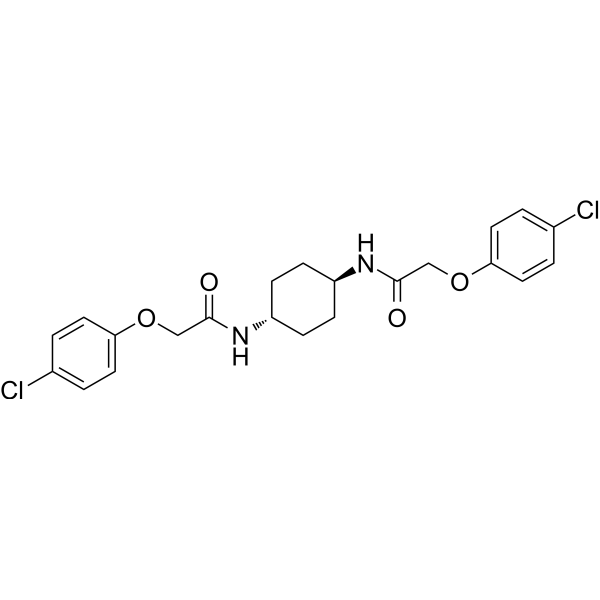
ISRIB (trans-isomer)PERK Inhiitor -
HY-17371
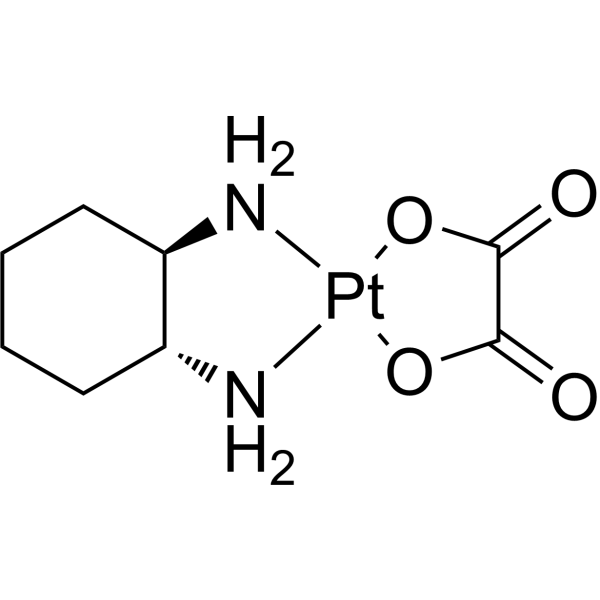
OxaliplatinDNA Synthesis Inhibitor -
HY-118759
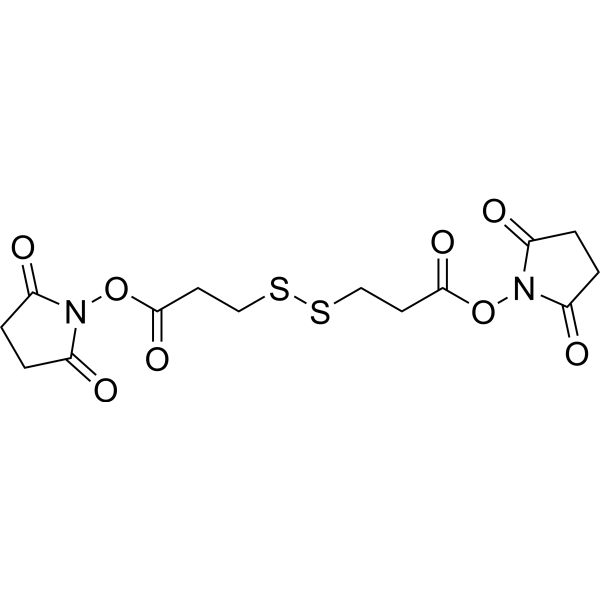
DSP CrosslinkerCrosslinker -

HY-16742R
Gepotidacin (Standard)Antibacterial Agent -
HY-N5038
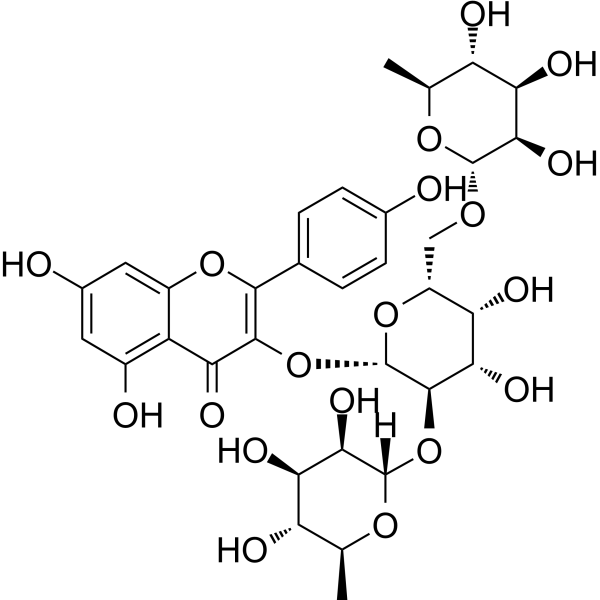
MauritianinNatural Product -
HY-K0301
Cell Counting Kit-8 -
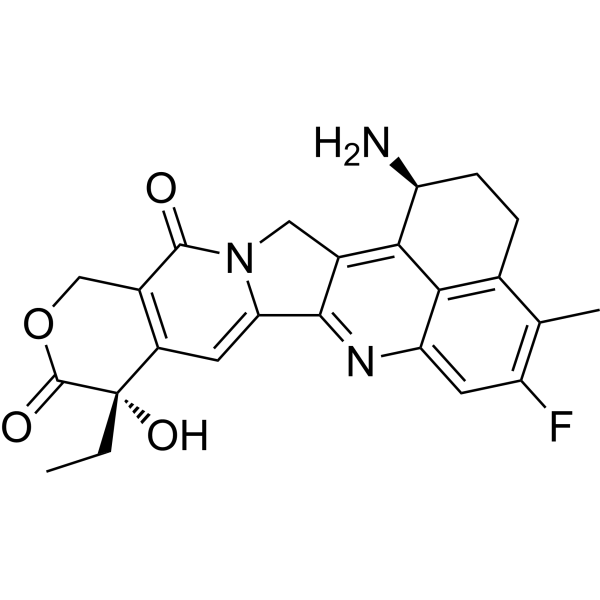
HY-13631
ExatecanTopoisomerase I Inhibitor -
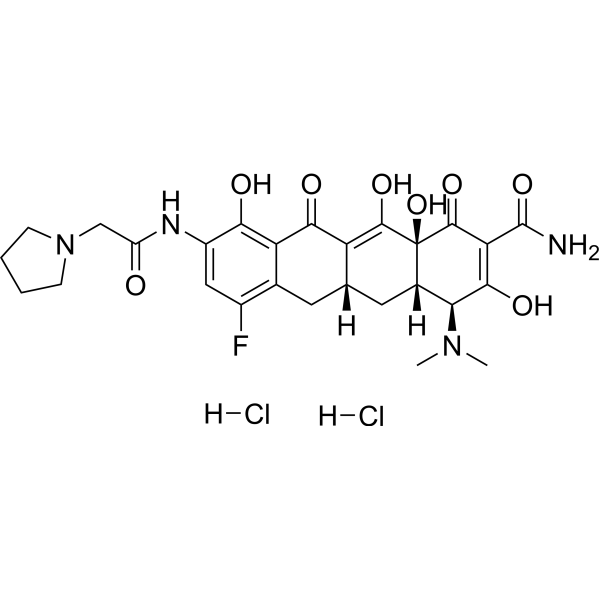
HY-16980A
Eravacycline dihydrochlorideAnti-Bacterial Agent -
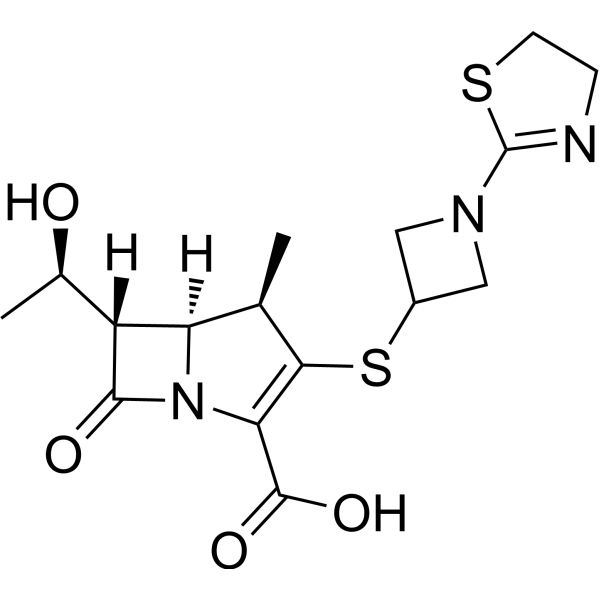
HY-A0076
TebipenemAntibacterial Agent -
HY-K0021
Phosphatase Inhibitor Cocktail I (100× in DMSO)
Publications Citing Use of MedChemExpress (MCE) Gepotidacin
More- Nat Microbiol. 2023 Mar;8(3):410-423. [Abstract]
- Cell Chem Biol. 2019 Sep 19;26(9):1274-1282.e4. [Abstract]
- PLoS Biol. 2020 Oct 5;18(10):e3000819. [Abstract]
- Antibiotics (Basel). 2022 Feb 1;11(2):192. [Abstract]
- ACS Infect Dis. 2026 Jan 9;12(1):363-375. [Abstract]
- ACS Infect Dis. 2024 Oct 11;10(10):3631-3639. [Abstract]
- Antimicrob Agents Chemother. 2026 Apr;70(4):e0170625. [Abstract]
- Antimicrob Agents Chemother. 2024 Dec 5;68(12):e0105124. [Abstract]
- Microbiol Spectr. 2022 Dec 21;10(6):e0205622. [Abstract]
- Vet Microbiol. 2023 Sep:284:109840. [Abstract]
- bioRxiv. 2026 Feb 23.
- University of Szeged. 2019 Jan.
 Customer Validation & Images

-
Gel Electrophoresis
-
Microbiological Assay
-
Microbiological Assay
-
Microbiological Assay
-
Microbiological Assay
Alle Antibiotic Isoform-spezifische Produkte anzeigen
MoreAlle Topoisomerase Isoform-spezifische Produkte anzeigen
More

Biologische Aktivität
Beschreibung
Cellular Effect
|
Cell Line

|
Type | Value | Description | References |
|---|---|---|---|---|
| HepG2 | IC50 |
>128 μg/mL
Compound: GEP
|
Cytotoxicity against human HepG2 cells assessed as reduction in cell viability for 24 hrs by Celltiter-Glo assay
Cytotoxicity against human HepG2 cells assessed as reduction in cell viability for 24 hrs by Celltiter-Glo assay
|
[PMID: 35231579] |
In Vitro
Gepotidacin is a novel, first-in-class, triazaacenaphthylene antibacterial that inhibits bacterial DNA gyrase and topoisomerase IV via a unique mechanism and has demonstrated in vitro activity against gram-negative and gram-positive bacterias , including drug-resistant strains, and also targets pathogens associated with other conventional and biothreat infections. The MIC50 and MIC90 for gepotidacin against the 25 N. gonorrhoeae isolates tested are 0.12 and 0.25 μg/mL, respectively[1]. The gepotidacin MIC90s are as follows (in μg/mL): Streptococcus pyogenes, 0.25; Escherichia coli, 2; Moraxella catarrhalis, ≤0.06; Streptococcus pneumoniae, 0.25; Haemophilus influenzae, 1; Clostridium perfringens, 0.5; and Shigella spp., 1[2]. Gepotidacin hasin vitroactivity against causative pathogens of acute bacterial skin and skin structure infections (ABSSSIs)[3].
MedChemExpress (MCE) has not independently confirmed the accuracy of these methods. They are for reference only. .
In Vivo
MedChemExpress (MCE) has not independently confirmed the accuracy of these methods. They are for reference only.
Clinical Trial
| NCT Number | Sponsor | Condition | Start Date |
Phase
|
|---|---|---|---|---|
| NCT01329991 | Plexxikon| | 2011-05 | PHASE1 |


Chemical Information
-
CAS. Nr. 1075236-89-3
-
Appearance Solid
-
Molecular Weight 448.52
-
Formel C24H28N6O3
-
Color White to yellow
-
SMILES
O=C(C=NC(C=C1)=C23)N3[C@H](CN4CCC(NCC5=CC(CCCO6)=C6C=N5)CC4)CN2C1=O
-
Synonyms
GSK2140944
-
Versand
Room temperature in continental US; may vary elsewhere.
-
Speicherung
Powder -20°C 3 years 4°C 2 years In solvent -80°C 2 years -20°C 1 year


Publications (12)
-
Journal Impact Factor
-
Most Recent
-
Nat Microbiol
Characterization of antibiotic resistomes by reprogrammed bacteriophage-enabled functional metagenomics in clinical strains. [Abstract]2023 Mar;8(3):410-423. PMID: 36759752 -
Cell Chem Biol
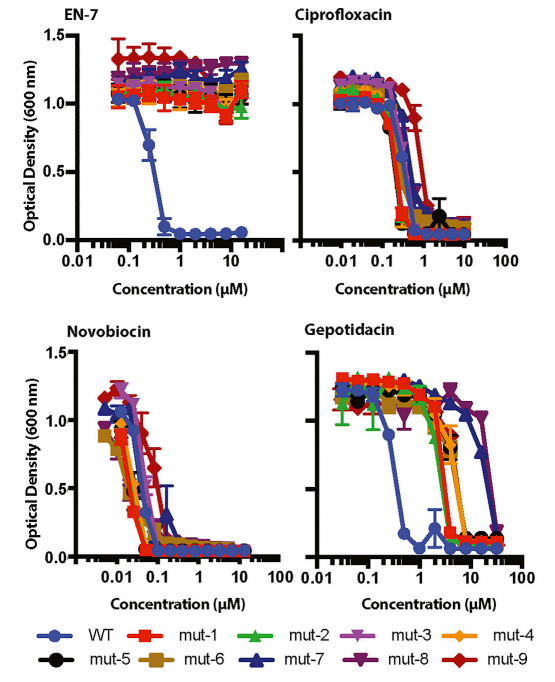
Discovery of a Novel DNA Gyrase-Targeting Antibiotic through the Chemical Perturbation of Streptomyces venezuelae Sporulation. [Abstract]2019 Sep 19;26(9):1274-1282.e4. PMID: 31279606
Gepotidacin purchased from MedChemExpress. Usage Cited in: Cell Chem Biol. 2019 Sep 19;26(9):1274-1282.e4. [Abstract]
Cross-Resistance of EN-7R Strains with Other Gyrase Inhibitors No observed cross-resistance between EN-7 and other gyrase-targeting antibiotics, ciprofloxacin and novobiocin; however, there is some cross-resistance to the NBTI Gepotidacin.
-
PLoS Biol
2020 Oct 5;18(10):e3000819. PMID: 33017402 -
Antibiotics (Basel)
Antibacterial Activity of the Novel Drug Gepotidacin against Stenotrophomonas maltophilia-An In Vitro and In Vivo Study. [Abstract]2022 Feb 1;11(2):192. PMID: 35203795
Gepotidacin purchased from MedChemExpress. Usage Cited in: Antibiotics (Basel). 2022 Feb 1;11(2):192. [Abstract]
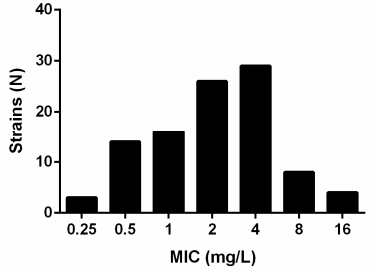
MIC (mg/L) distribution of N = 100 Stenotrophomonas maltophilia strains for Gepotidacin as found in broth microdilution after EUCAST.
-
ACS Infect Dis
Activities of the Novel Bacterial Topoisomerase Inhibitor OSUAB-0284 against the Biothreat Pathogen Bacillus anthracis and Its Type II Topoisomerases. [Abstract]2026 Jan 9;12(1):363-375. PMID: 41430688
Gepotidacin purchased from MedChemExpress. Usage Cited in: ACS Infect Dis. 2026 Jan 9;12(1):363-375. [Abstract]
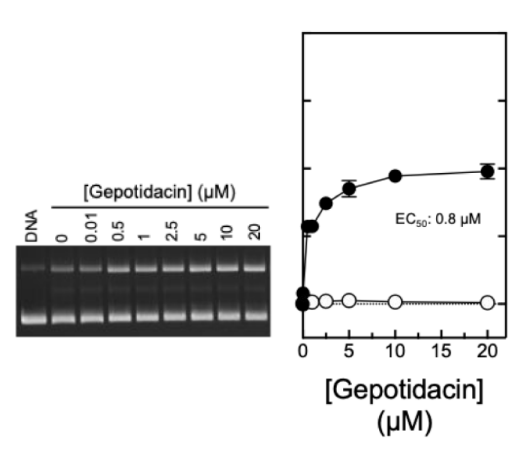
Gepotidacin induced primarily single-stranded DNA breaks mediated by B. anthracis gyrase.
-
ACS Infect Dis
Role of DNA Double-Strand Break Formation in Gyrase Inhibitor-Mediated Killing of Nonreplicating Persistent Mycobacterium tuberculosis in Caseum. [Abstract]2024 Oct 11;10(10):3631-3639. PMID: 39315541 -
Antimicrob Agents Chemother
Stepwise evolution and clonal enrichment of gepotidacin resistance in Neisseria gonorrhoeae. [Abstract]2026 Apr;70(4):e0170625. PMID: 41810969
Gepotidacin purchased from MedChemExpress. Usage Cited in: Antimicrob Agents Chemother. 2026 Apr;70(4):e0170625. [Abstract]
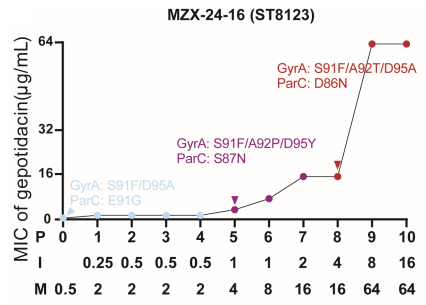
In vitro induction of Gepotidacin (18-24 h) resistance in N. gonorrhoeae ST8123 occurred. MZX-24-16 (ST8123 isolate with GyrA S91F/D95A and ParC E91G) was used.
-
Antimicrob Agents Chemother
Multidrug tolerance conferred by loss-of-function mutations in anti-sigma factor RshA of Mycobacterium abscessus. [Abstract]2024 Dec 5;68(12):e0105124. PMID: 39470195 -
Microbiol Spectr
Dioxane-Linked Novel Bacterial Topoisomerase Inhibitors Exhibit Bactericidal Activity against Planktonic and Biofilm Staphylococcus aureus In Vitro. [Abstract]2022 Dec 21;10(6):e0205622. PMID: 36250857
Gepotidacin purchased from MedChemExpress. Usage Cited in: Microbiol Spectr. 2022 Dec 21;10(6):e0205622. [Abstract]
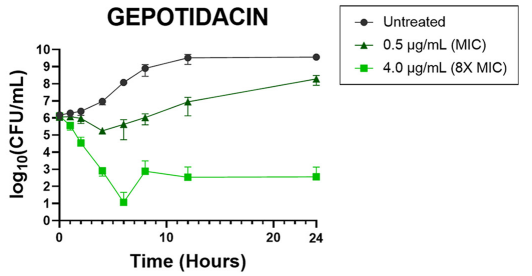
Time-kill kinetics of the novel bacterial topoisomerase inhibitor (NBTI) compound Gepotidacin and comparator agents for S. aureus were assessed.Untreated time (T) of 0 h, 1.67 × 10⁶ CFU/mL; untreated T of 24 h, 3.66 × 10⁹ CFU/mL.
-
Vet Microbiol
Antibacterial activity of novel bacterial topoisomerase inhibitors against key veterinary pathogens. [Abstract]2023 Sep:284:109840. PMID: 37531840 -
-


Lösungsmittel & Löslichkeit
In Vitro:
DMSO : 7.14 mg/mL (15.92 mM; Need ultrasonic; Hygroscopic DMSO has a significant impact on the solubility of product, please use newly opened DMSO)
Please refer to the solubility information to select the appropriate solvent. Once prepared, please aliquot and store the solution to prevent product inactivation from repeated freeze-thaw cycles.
Storage method and period of stock solution: -80°C, 2 years; -20°C, 1 year. When stored at -80°C, please use it within 2 years. When stored at -20°C, please use it within 1 year.
Please refer to the solubility information to select the appropriate solvent. Once prepared, please aliquot and store the solution to prevent product inactivation from repeated freeze-thaw cycles.
Storage method and period of stock solution: -80°C, 2 years; -20°C, 1 year. When stored at -80°C, please use it within 2 years. When stored at -20°C, please use it within 1 year.
Konzentration (Stammlösung) × Volumen (Stammlösung) = Konzentration (Ziellösung) × Volumen (Ziellösung)
In Vivo:
Select the appropriate dissolution method based on your experimental animal and administration route.
- For the following dissolution methods, please ensure to first prepare a clear stock solution using an In Vitro approach and then sequentially add co-solvents:
- To ensure reliable experimental results, the clarified stock solution can be appropriately stored based on storage conditions. As for the working solution for In Vivo experiments, it is recommended to prepare freshly and use it on the same day.
- The percentages shown for the solvents indicate their volumetric ratio in the final prepared solution. If precipitation or phase separation occurs during preparation, heat and/or sonication can be used to aid dissolution.
Add each solvent one by one: 10% DMSO 40% PEG300 5% Tween-80 45% Saline
Solubility: ≥ 0.71 mg/mL (1.58 mM); Clear solution
This protocol yields a clear solution of ≥ 0.71 mg/mL (saturation unknown).
Taking 1 mL working solution as an example, add 100 μL DMSO stock solution (7.1 mg/mL) to 400 μL PEG300, and mix evenly; then add 50 μL Tween-80 and mix evenly; then add 450 μL Saline to adjust the volume to 1 mL.
Preparation of Saline: Dissolve 0.9 g sodium chloride in ddH₂O and dilute to 100 mL to obtain a clear Saline solution.
Add each solvent one by one: 10% DMSO 90% (20% SBE-β-CD in Saline)
Solubility: ≥ 0.71 mg/mL (1.58 mM); Clear solution
This protocol yields a clear solution of ≥ 0.71 mg/mL (saturation unknown).
Taking 1 mL working solution as an example, add 100 μL DMSO stock solution (7.1 mg/mL) to 900 μL 20% SBE-β-CD in Saline, and mix evenly.
Preparation of 20% SBE-β-CD in Saline (4°C, storage for one week): 2 g SBE-β-CD powder is dissolved in 10 mL Saline, completely dissolve until clear.
In Vivo Dissolution Calculator
Please enter the basic information of animal experiments:
-
-
-
-
Recommended: Prepare an additional quantity of animals to account for potential losses during experiments.
Please enter your animal formula composition:
-
%DMSO +
Recommended: Keep the proportion of DMSO in working solution below 2% if your animal is weak.
-
%+
-
+%Tween-80 + +
-
%Saline +
The co-solvents required include: DMSO, . All of co-solvents are available by MedChemExpress (MCE). , Tween 80. All of co-solvents are available by MedChemExpress (MCE).
Working solution concentration: 0.22 mg/mL
Method for preparing stock solution: mg drug dissolved in μL DMSO. Stock solution concentration: mg/mL.
1. Take μL DMSO stock solution;
2. Add μL .
μL , mix evenly;
3. Then add μL Tween 80, mix evenly;
4. Then add μL
Please ensure that the stock solution in the first step is dissolved to a clear state, and add co-solvents in sequence. You can use ultrasonic heating (ultrasonic cleaner, recommended frequency 20-40 kHz), vortexing, etc. to assist dissolution.


Reinheit & Dokumentation
-
Data Sheet (278 KB)
-
SDS (393 KB)
- English - EN (393 KB)
- Français - FR (393 KB)
- Deutsch - DE (393 KB)
- Norwegian - NO (393 KB)
- Español - ES (393 KB)
- Swedish - SV (393 KB)
- Italian - IT (393 KB)
- Korean - KR (393 KB)
- Portuguese - PT (393 KB)
-
Handling Instructions (2659 KB)
Verweise
[1]. Farrell DJ, et al. In Vitro Activity of Gepotidacin (GSK2140944) against Neisseria gonorrhoeae. Antimicrob Agents Chemother. 2017 Feb 23;61(3). [Content Brief]
[2]. Biedenbach DJ, et al. In Vitro Activity of Gepotidacin, a Novel Triazaacenaphthylene Bacterial Topoisomerase Inhibitor, against a Broad Spectrum of Bacterial Pathogens. Antimicrob Agents Chemother. 2016 Jan 4;60(3):1918-23. [Content Brief]
[3]. O'Riordan W, et al. Efficacy, Safety, and Tolerability of Gepotidacin (GSK2140944) in the Treatment of Patients with Suspected or Confirmed Gram-Positive Acute Bacterial Skin and Skin Structure Infections. Antimicrob Agents Chemother. 2017 May 24;61(6). [Content Brief]
[4]. So W, et al. Pharmacodynamic Profile of GSK2140944 against Methicillin-Resistant Staphylococcus aureus in a Murine Lung Infection Model. Antimicrob Agents Chemother. 2015 Aug;59(8):4956-61. [Content Brief]


Complete Stock Solution Preparation Table
Please refer to the solubility information to select the appropriate solvent. Once prepared, please aliquot and store the solution to prevent product inactivation from repeated freeze-thaw cycles.
Storage method and period of stock solution: -80°C, 2 years; -20°C, 1 year. When stored at -80°C, please use it within 2 years. When stored at -20°C, please use it within 1 year.
| Optional Solvent | Concentration Solvent Mass | 1 mg | 5 mg | 10 mg | 25 mg |
|---|---|---|---|---|---|
| DMSO | 1 mM | 2.2296 mL | 11.1478 mL | 22.2956 mL | 55.7389 mL |
| 5 mM | 0.4459 mL | 2.2296 mL | 4.4591 mL | 11.1478 mL | |
| 10 mM | 0.2230 mL | 1.1148 mL | 2.2296 mL | 5.5739 mL | |
| 15 mM | 0.1486 mL | 0.7432 mL | 1.4864 mL | 3.7159 mL |


Gepotidacin Related Classifications
HY-16742 Related Classifications
 Powered by Bioz