



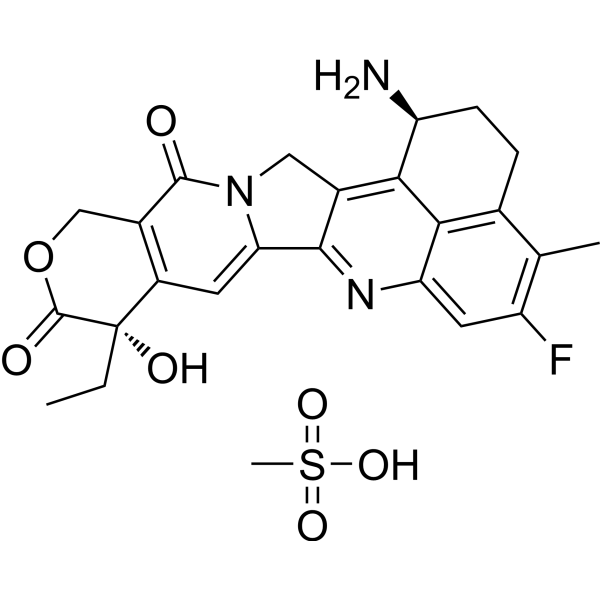
Exatecan mesylate
Based on 25 publication(s) in Google Scholar
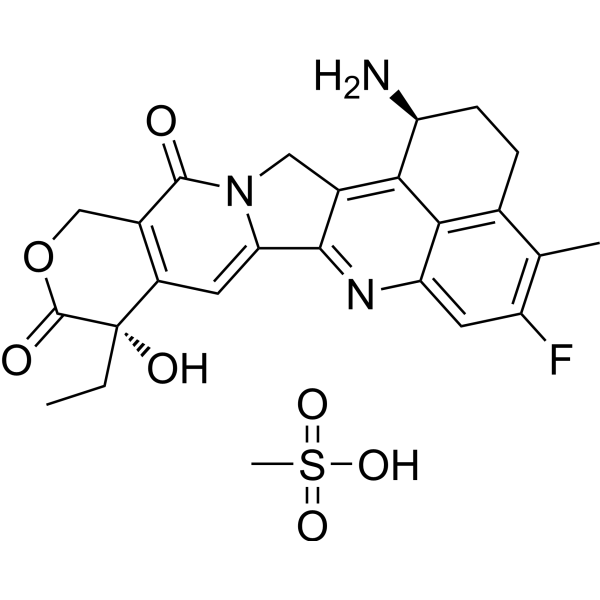
Exatecan mesylate (DX8951f) is a DNA topoisomerase I inhibitor, with an IC50 of 2.2 μM (0.975 μg/mL). Exatecan mesylate can be used in cancer research.
For research use only. We do not sell to patients.
- Assay : 101.1%
- CAS No.: 169869-90-3
- Formula: C25H26FN3O7S
- Molecular Weight:531.55
-
Storage:
4°C, sealed storage, away from moisture and light
* In solvent : -80°C, 1 year; -20°C, 6 months (sealed storage, away from moisture and light)

To place orders, for customer services and technical support, please contact: MedChemExpress USA
Tel: 609-228-6898 E-mail: [email protected] [email protected]


-
 Biological Activity
-
Chemical Information
-
Solvent & Solubility
- Purity & Documentation
- References
-
 Help & FAQs


-
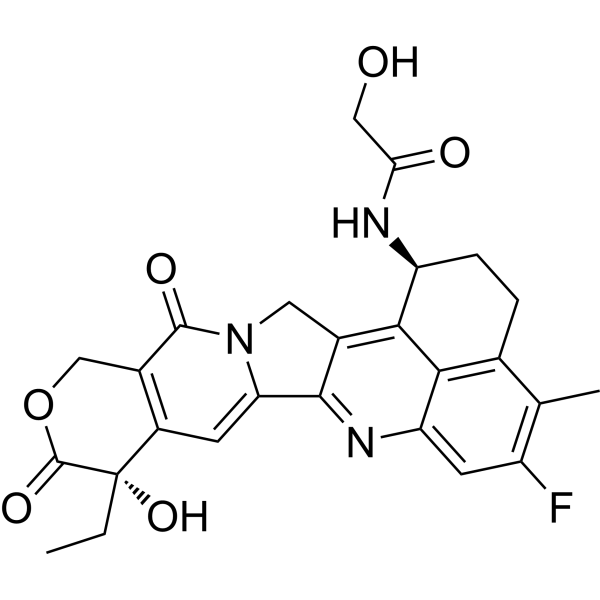
HY-13631D
DXdTopoisomerase I Inhibitor -
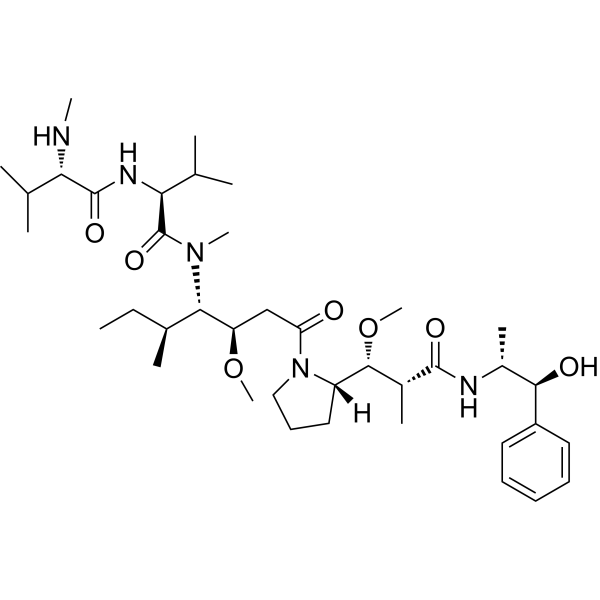
HY-15162
Monomethyl auristatin EAntimitotic Agent -
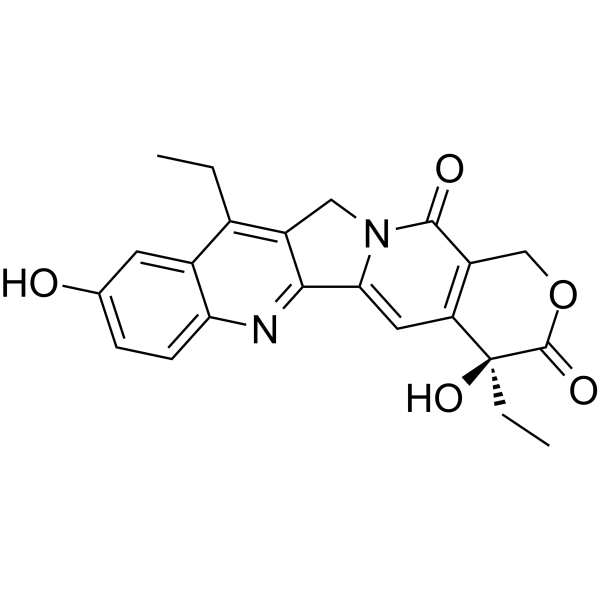
HY-13704
SN-38Topoisomerase I Inhibitor -
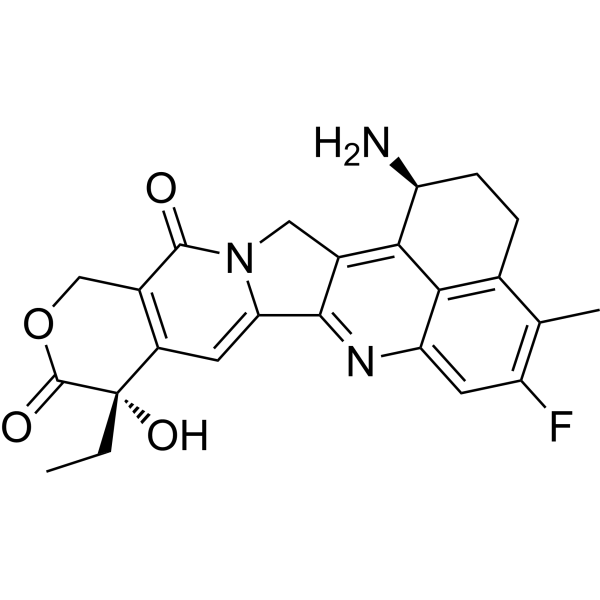
HY-13631
ExatecanTopoisomerase I Inhibitor -
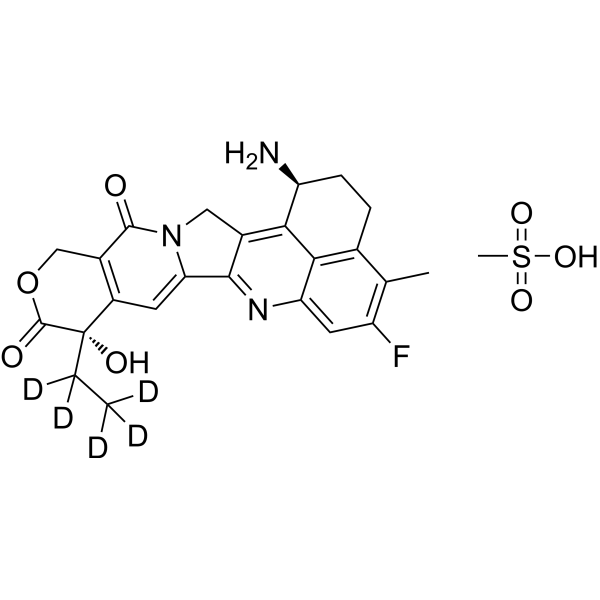
HY-13631AS
Exatecan-d5 mesylateStable Isotope -
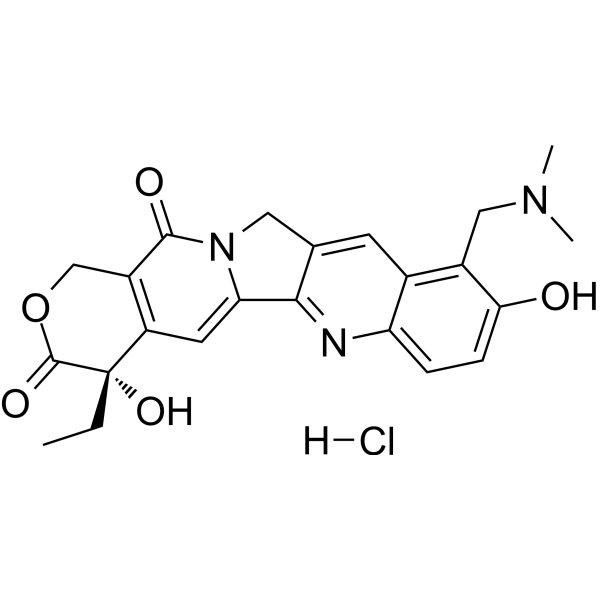
HY-13768A
Topotecan hydrochlorideTopoisomerase I Inhibitor -
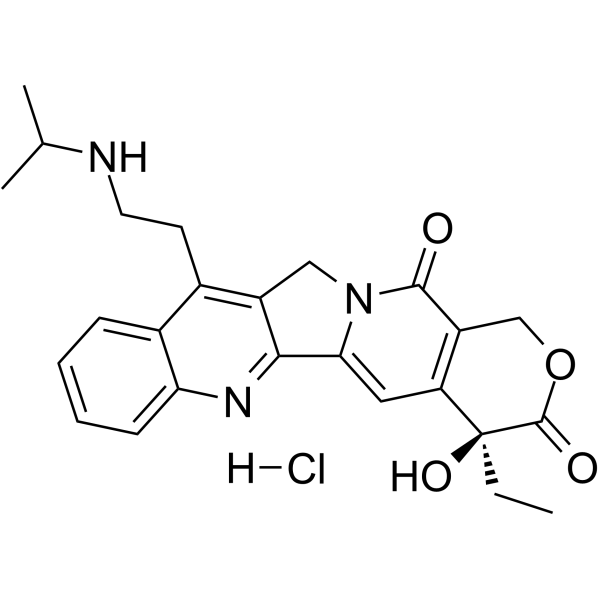
HY-13566A
Belotecan hydrochlorideTopoisomerase Inhibitor -
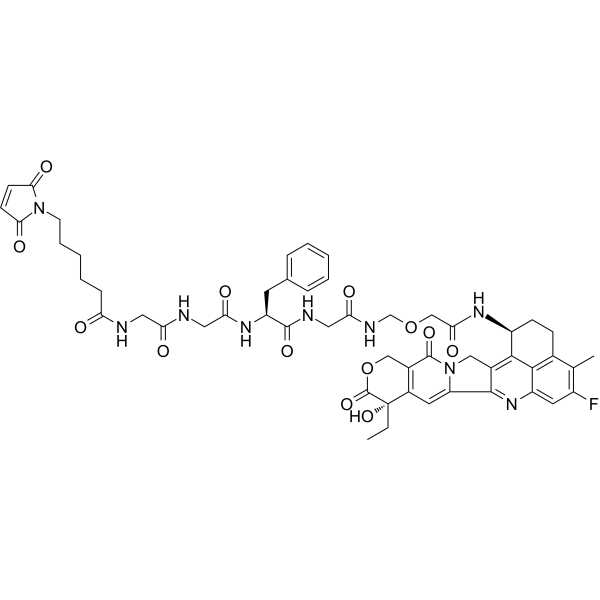
HY-13631E
DeruxtecanDrug-Linker Conjugates for ADC -
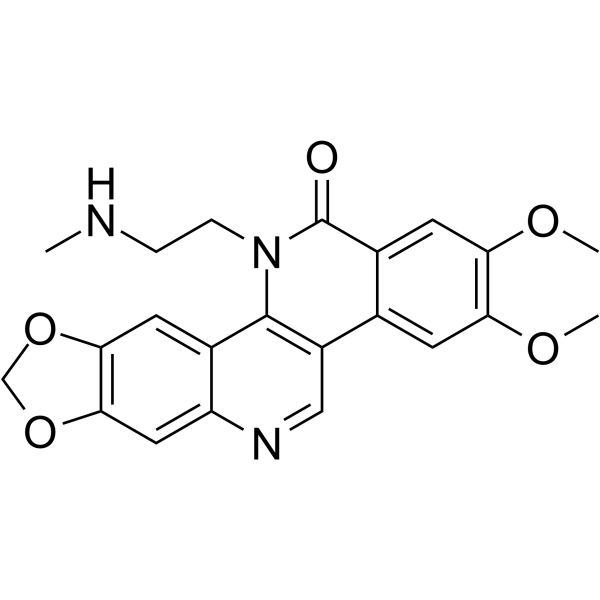
HY-16228
Genz-644282 -
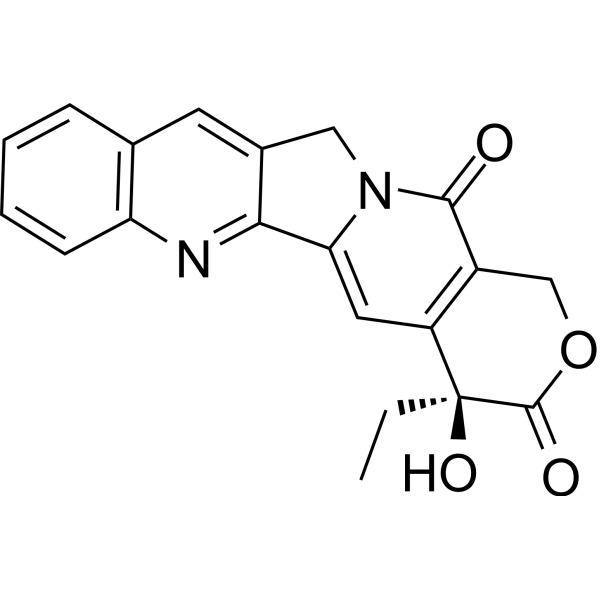
HY-16560
CamptothecinTopo I inhibitor -
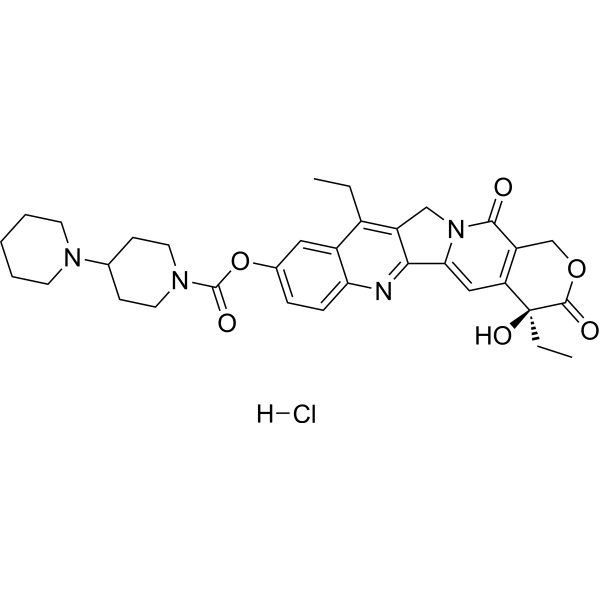
HY-16562A
Irinotecan hydrochlorideTopoisomerase I Inhibitor -
HY-13631AG
Exatecan mesylate (GMP)Topoisomerase I Inhibitor
Publications Citing Use of MedChemExpress (MCE) Exatecan mesylate
More- Nature. 2026 Jun 24.
- Nature. 2024 Apr;628(8007):416-423. [Abstract]
- Mol Cancer. 2025 Oct 13;24(1):253. [Abstract]
- Cancer Res. 2025 Oct 9. [Abstract]
- Acta Pharm Sin B. 2026 May 19.
- Acta Pharmacol Sin. 2025 Sep 10. [Abstract]
- Mol Cancer Ther. 2023 Sep 5;22(9):1013-1027. [Abstract]
- Pharmaceuticals (Basel). 2021 Mar 9;14(3):247. [Abstract]
- Mol Pharm. 2023 Jan 2;20(1):491-499. [Abstract]
- J Pharm Biomed Anal. 2025 Jun 15:258:116746. [Abstract]
- New J Chem. 2025 Jan 06.
- bioRxiv. 2026 Aug 26.
- Cornell University. 2025.
- Patent. US20250295798A1.
- Patent. US20250242044A1.
- Cornell University. 2025.
- Patent. US20250161473A1.
- Patent. US20250161295A1.
- Patent. US20240374749A1.
- Research Square Preprint. 2024 Nov 06.
- Patent. US20240216525A1.
- Patent. US20240191272A1.
- Patent. US20240190973A1.
- Patent. US20220162323A1.
- Patent. US20210009719A1.
 Customer Validation & Images

-
WB
-
In Vivo Efficacy Study
-
Cell Proliferation/Viability Assay
-
Histological Imaging/Staining
-
PK/PD Analysis
All Topoisomerase Isoforms
More

Biological Activity
Description
IC50 & Target
[1]|
Camptothecins |
In Vitro
Exatecan mesylate is a potent topoisomerase I inhibitor, with an IC50 of 0.975 μg/mL. Exatecan mesylate (DX-8951f) significantly inhibits the proliferation of several cancer cell lines, with mean GI50s of 2.02 ng/mL, 2.92 ng/mL, 1.53 ng/mL, and 0.877 ng/mL for breast cancer cells, colon cancer cells, stomach cancer cells and lung cancer cells, respectively[1]. Exatecan mesylate (DX-8951f) displays cytotoxic activities against PC-6, PC-6/SN2-5 cells, with mean GI50s of 0.186 and 0.395 ng/mL, respctively. Exatecan mesylate (34 nM) stabilizes DNA-TopoI complexes in PC-6 and PC-6/SN2-5 cells[3].
MedChemExpress (MCE) has not independently confirmed the accuracy of these methods. They are for reference only.
In Vivo
MedChemExpress (MCE) has not independently confirmed the accuracy of these methods. They are for reference only.


Chemical Information
-
CAS No. 169869-90-3
-
Appearance Solid
-
Molecular Weight 531.55
-
Formula C25H26FN3O7S
-
Color Light yellow to green yellow
-
SMILES
O=S(C)(O)=O.O=C1[C@](O)(CC)C2=C(CO1)C(N3CC4=C5C6=C(CC[C@@H]5N)C(C)=C(F)C=C6N=C4C3=C2)=O
-
Synonyms
DX8951f
-
Shipping
Room temperature in continental US; may vary elsewhere.
-
Storage
4°C, sealed storage, away from moisture and light
* In solvent : -80°C, 1 year; -20°C, 6 months (sealed storage, away from moisture and light)


Publications (25)
-
Journal Impact Factor
-
Most Recent
-
-
Nature
2024 Apr;628(8007):416-423. PMID: 38538786 -
Mol Cancer
Harnessing ExDNA for precision exatecan delivery in cancer: a novel antibody-drug conjugate approach. [Abstract]2025 Oct 13;24(1):253. PMID: 41077566
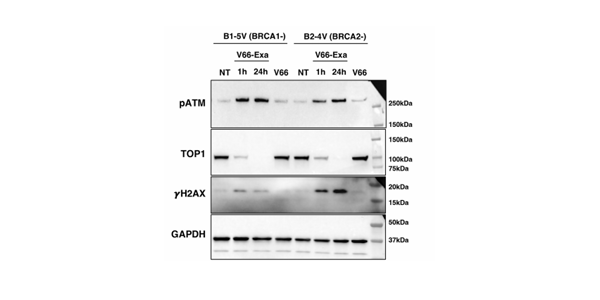
Exatecan mesylate purchased from MedChemExpress. Usage Cited in: Mol Cancer. 2025 Oct 13;24(1):253. [Abstract]
Western blot analysis of B1-5V (BRCA1-) and B2-4V (BRCA2-) cells treated with PBS (NT, no treatment), V66-exatecan (100 nM) ADC for 1-24 h, or V66 alone (24 h). In samples treated with V66-exatecan ADC, a time-dependent accumulation of DNA damage is observed, as indicated by the increased γH2AX and pATM signals, along with a time-dependent down-regulation of TOP1.
-
Cancer Res
2025 Oct 9. PMID: 41066595 -
-
Acta Pharmacol Sin
HER3 upregulation reduces DS-8201 sensitivity in HER2-positive tumor cells by ATR/CHK1/FoxO1 signaling cascade. [Abstract]2025 Sep 10. PMID: 40931042 -
Mol Cancer Ther
AMT-562, a Novel HER3-targeting Antibody-Drug Conjugate, Demonstrates a Potential to Broaden Therapeutic Opportunities for HER3-expressing Tumors. [Abstract]2023 Sep 5;22(9):1013-1027. PMID: 37302522
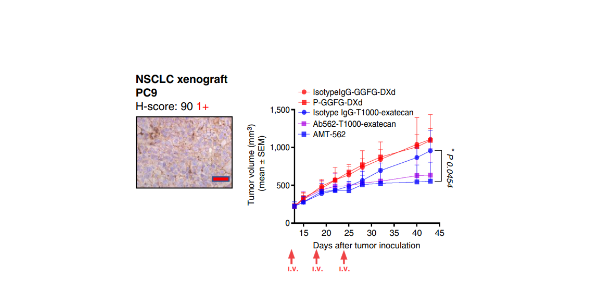
Exatecan mesylate purchased from MedChemExpress. Usage Cited in: Mol Cancer Ther. 2023 Sep 5;22(9):1013-1027. [Abstract]
In vivo efficacy of AMT-562, Ab562-T1000-Exatecan (10 mg/kg; i.v.), and P-GGFG-DXd in PC9 xenograft model.
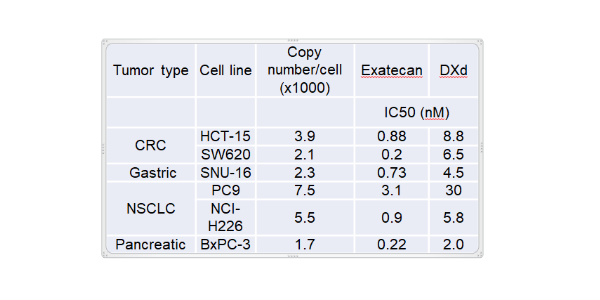
Exatecan mesylate purchased from MedChemExpress. Usage Cited in: Mol Cancer Ther. 2023 Sep 5;22(9):1013-1027. [Abstract]
In vitro cytotoxicity of Exatecan and DXd in HER3-expressing cells. Cells were incubated with a concentration series of Exatecan or DXd for 5 days. Cell viability was measured by CCK-8 and IC50 for each cell line was calculated from cell viability-concentration plot.
Exatecan mesylate purchased from MedChemExpress. Usage Cited in: Mol Cancer Ther. 2023 Sep 5;22(9):1013-1027. [Abstract]
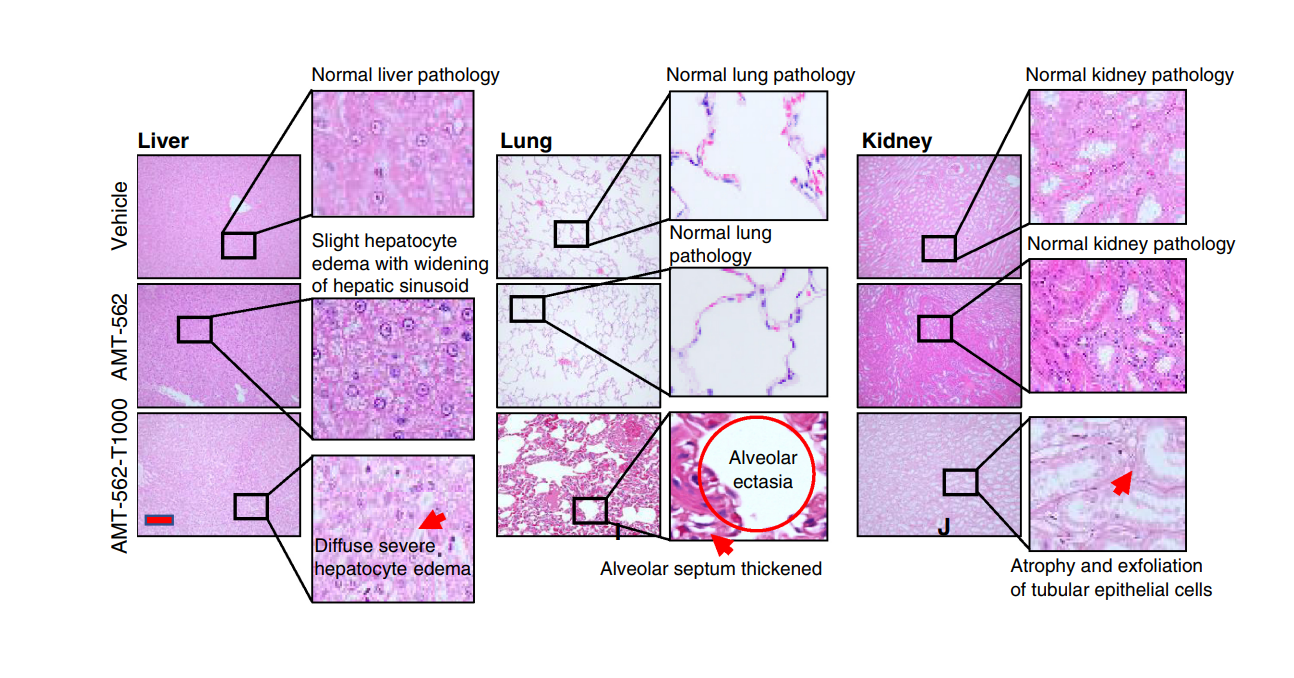
Representative hematoxylin and eosin staining of toxicity organs of AMT-562 and Ab562-T1000-Exatecan (ADC; 30 mg/kg; i.v.). Scale bar, 200 mm.
Exatecan mesylate purchased from MedChemExpress. Usage Cited in: Mol Cancer Ther. 2023 Sep 5;22(9):1013-1027. [Abstract]
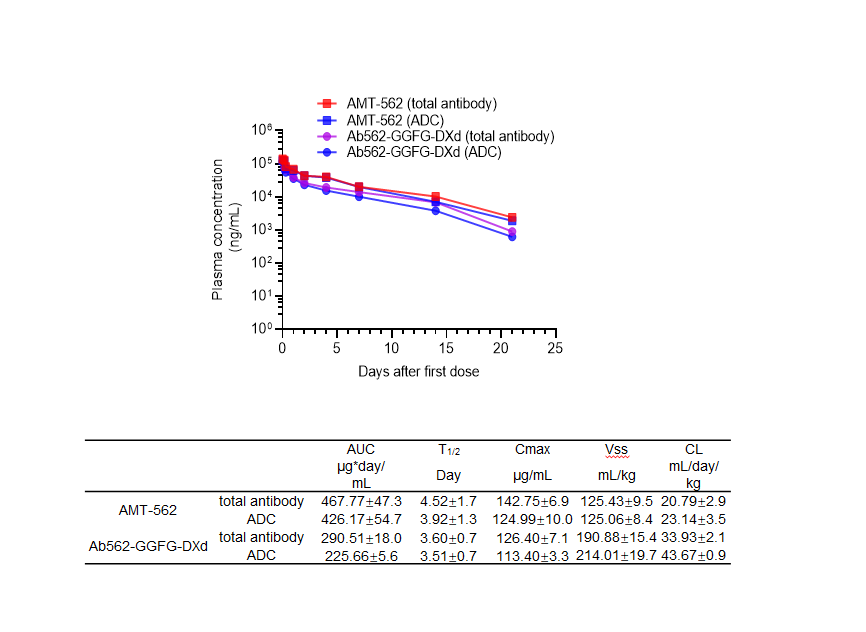
Single dose pharmacokinetic profiles of AMT-562 (ADC) and Ab562-GGFG-DXd in mice. ADCs were intravenously administered to mice at the dose of 10 mg/kg.
Exatecan mesylate purchased from MedChemExpress. Usage Cited in: Mol Cancer Ther. 2023 Sep 5;22(9):1013-1027. [Abstract]
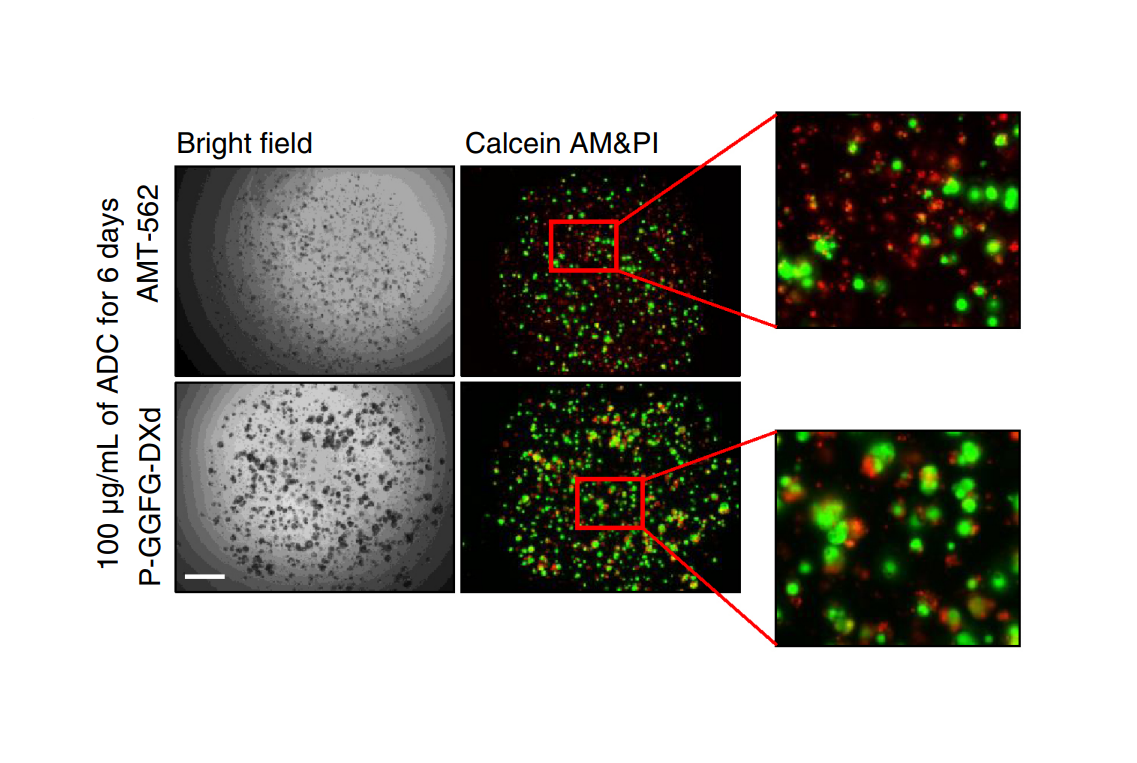
Patient-derived colon cancer organoids response to AMT-562 (ADC) and P-GGFG-DXd. Representative images of brightfield (left) and live/dead cells (right) for CO117 was shown. Colon cancer PDOs were treated with AMT-562 or P-GGFG-DXd at a serial concentration for 6 days. Live cells were stained by Calcein AM (green) and dead cells by PI (red).
-
Pharmaceuticals (Basel)
Exatecan Antibody Drug Conjugates Based on a Hydrophilic Polysarcosine Drug-Linker Platform. [Abstract]2021 Mar 9;14(3):247. PMID: 33803327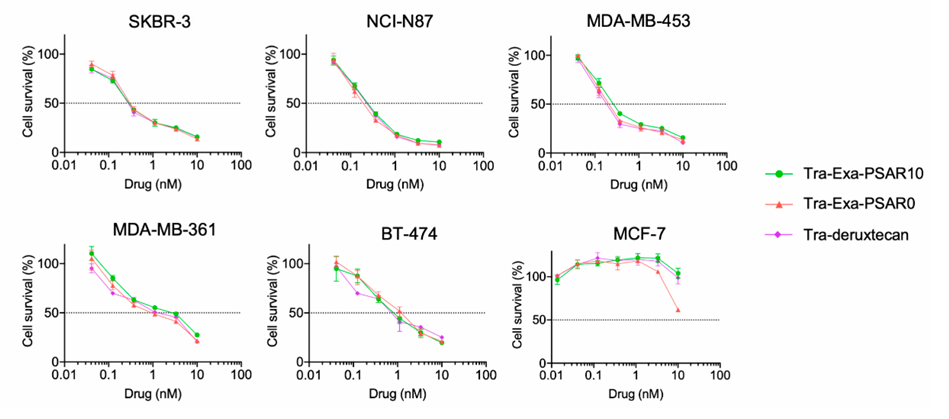
Exatecan mesylate purchased from MedChemExpress. Usage Cited in: Pharmaceuticals (Basel). 2021 Mar 9;14(3):247. [Abstract]
Tra-Exa-PSAR10 and Tra-Exa-PSAR0 (0.01-10 nM, 6 days). In vitro cytotoxicity of ADCs in breast and gastric HER2+ and HER2- (MCF-7) cancer cell lines after 6-day exposure to trastuzumab conjugates, as assayed by MTT assay, n = 3.
-
Mol Pharm
Identification of 5-Carboxyfluorescein as a Probe Substrate of SLC46A3 and Its Application in a Fluorescence-Based In Vitro Assay Evaluating the Interaction with SLC46A3. [Abstract]2023 Jan 2;20(1):491-499. PMID: 36458938 -
J Pharm Biomed Anal
Development and optimization of a high-throughput LC-MS/MS method for the simultaneous determination of Exatecan and its Cathepsin B-sensitive prodrug, and ARV-825 in rat plasma: Application to pharmacokinetic study. [Abstract]2025 Jun 15:258:116746. PMID: 39955884 -
-
-
-
-
-
-
-
-
-
-
-
-
-
-


Solvent & Solubility
In Vitro:
H2O : 10 mg/mL (18.81 mM; ultrasonic and warming and heat to 60°C)
DMSO : 7.41 mg/mL (13.94 mM; Need ultrasonic; Hygroscopic DMSO has a significant impact on the solubility of product, please use newly opened DMSO)
Please refer to the solubility information to select the appropriate solvent. Once prepared, please aliquot and store the solution to prevent product inactivation from repeated freeze-thaw cycles.
Storage method and period of stock solution: -80°C, 1 year; -20°C, 6 months (sealed storage, away from moisture and light). When stored at -80°C, please use it within 1 year. When stored at -20°C, please use it within 6 months.
* Note: If you choose water as the stock solution, please dilute it to the working solution, then filter and sterilize it with a 0.22 μm filter before use.
Please refer to the solubility information to select the appropriate solvent. Once prepared, please aliquot and store the solution to prevent product inactivation from repeated freeze-thaw cycles.
Storage method and period of stock solution: -80°C, 1 year; -20°C, 6 months (sealed storage, away from moisture and light). When stored at -80°C, please use it within 1 year. When stored at -20°C, please use it within 6 months.
* Note: If you choose water as the stock solution, please dilute it to the working solution, then filter and sterilize it with a 0.22 μm filter before use.
Concentration (start) × Volume (start) = Concentration (final) × Volume (final)


Purity & Documentation
-
Data Sheet (290 KB)
-
SDS (623 KB)
- English - EN (623 KB)
- Français - FR (623 KB)
- Deutsch - DE (623 KB)
- Norwegian - NO (623 KB)
- Español - ES (623 KB)
- Swedish - SV (623 KB)
- Italian - IT (623 KB)
- Korean - KR (623 KB)
- Portuguese - PT (623 KB)
-
Handling Instructions (2659 KB)
References
[1]. Mitsui I, et al. A new water-soluble camptothecin derivative, DX-8951f, exhibits potent antitumor activity against human tumors in vitro and in vivo. Jpn J Cancer Res. 1995 Aug;86(8):776-82. [Content Brief]
[2]. Sun FX, et al. Efficacy of camptothecin analog DX-8951f (Exatecan Mesylate) on human pancreatic cancer in an orthotopic metastatic model. Cancer Res. 2003 Jan 1;63(1):80-5. [Content Brief]
[3]. Joto N, et al. DX-8951f, a water-soluble camptothecin analog, exhibits potent antitumor activity against a human lung cancer cell line and its SN-38-resistant variant. Int J Cancer. 1997 Aug 7;72(4):680-6. [Content Brief]


Complete Stock Solution Preparation Table
Please refer to the solubility information to select the appropriate solvent. Once prepared, please aliquot and store the solution to prevent product inactivation from repeated freeze-thaw cycles.
Storage method and period of stock solution: -80°C, 1 year; -20°C, 6 months (sealed storage, away from moisture and light). When stored at -80°C, please use it within 1 year. When stored at -20°C, please use it within 6 months.
| Optional Solvent | Concentration Solvent Mass | 1 mg | 5 mg | 10 mg | 25 mg |
|---|---|---|---|---|---|
| DMSO / H2O | 1 mM | 1.8813 mL | 9.4065 mL | 18.8129 mL | 47.0323 mL |
| 5 mM | 0.3763 mL | 1.8813 mL | 3.7626 mL | 9.4065 mL | |
| 10 mM | 0.1881 mL | 0.9406 mL | 1.8813 mL | 4.7032 mL | |
| H2O | 15 mM | 0.1254 mL | 0.6271 mL | 1.2542 mL | 3.1355 mL |
* Note: If you choose water as the stock solution, please dilute it to the working solution, then filter and sterilize it with a 0.22 μm filter before use.


Exatecan mesylate Related Classifications
HY-13631A Related Classifications
 Powered by Bioz