



Ellipticine hydrochloride
Based on 5 publication(s) in Google Scholar
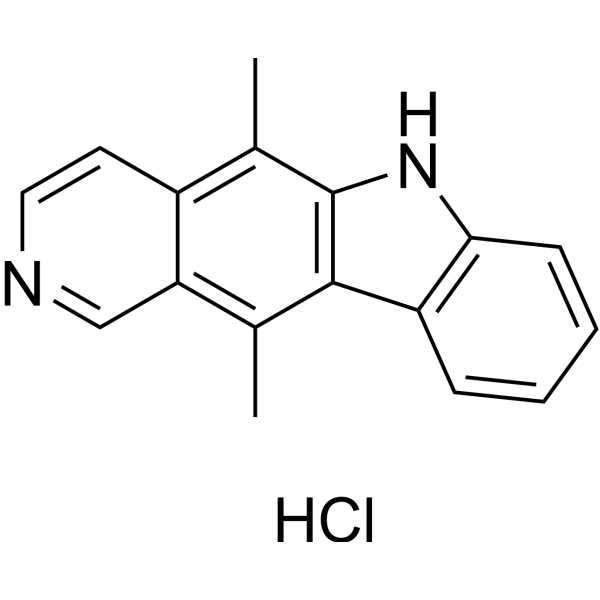
Ellipticine (NSC 71795) hydrochloride is a potent antineoplastic agent; inhibits DNA topoisomerase II activities.
For research use only. We do not sell to patients.
- Purity : 99.01%
- CAS No.: 5081-48-1
- Formula: C17H15ClN2
- Molecular Weight:282.77
-
Storage:
4°C, sealed storage, away from moisture
* In solvent : -80°C, 6 months; -20°C, 1 month (sealed storage, away from moisture)

To place orders, for customer services and technical support, please contact: MedChemExpress USA
Tel: 609-228-6898 E-mail: [email protected] [email protected]


-
 Biological Activity
-
Chemical Information
-
Solvent & Solubility
- Purity & Documentation
- References
-
 Help & FAQs


-
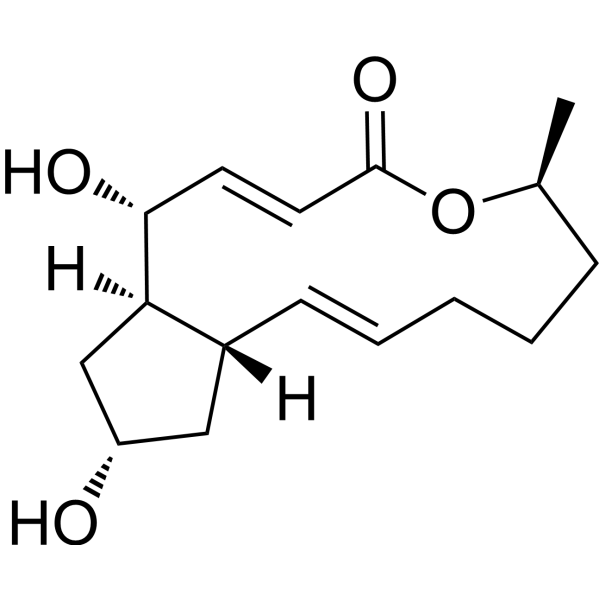
HY-16592
Brefeldin AProtein Transport Inhibitor -
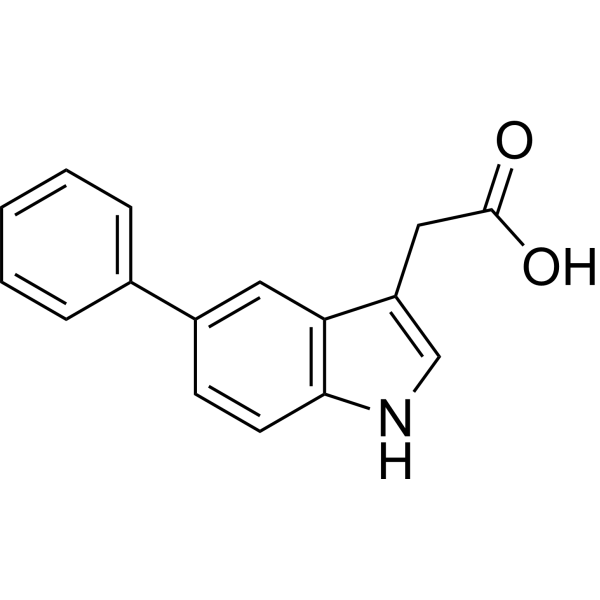
HY-134653
5-Ph-IAAAID2 Ligand -
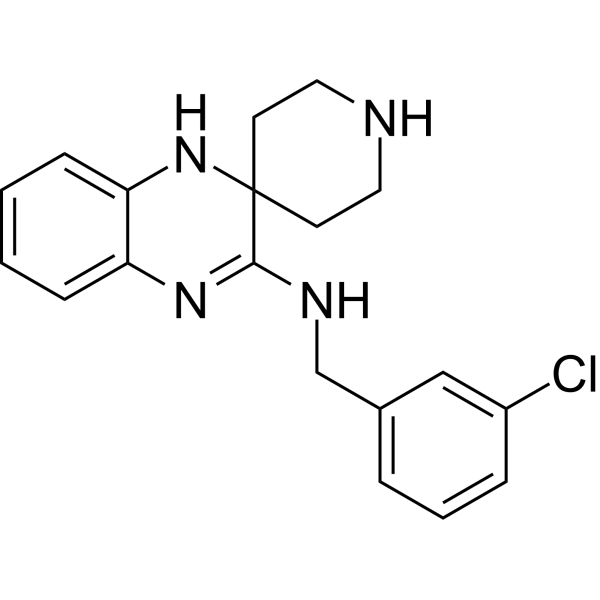
HY-12726
Liproxstatin-1Ferroptosis Inhibitor -
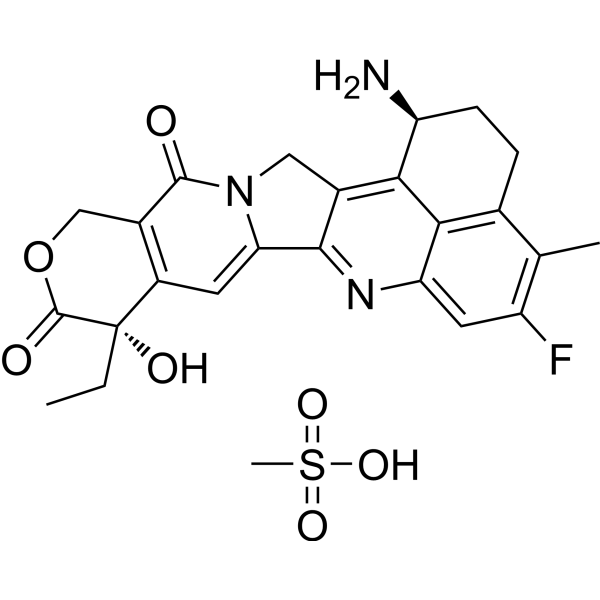
HY-13631A
Exatecan mesylateTopoisomerase I Inhibitor -
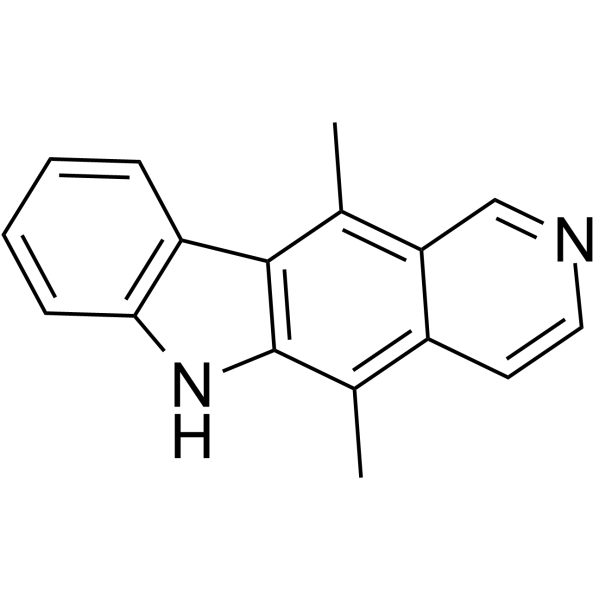
HY-15753
EllipticineTopoisomerase Inhibitor -

HY-15753AR
Ellipticine hydrochloride (Standard)Topoisomerase Inhibitor -
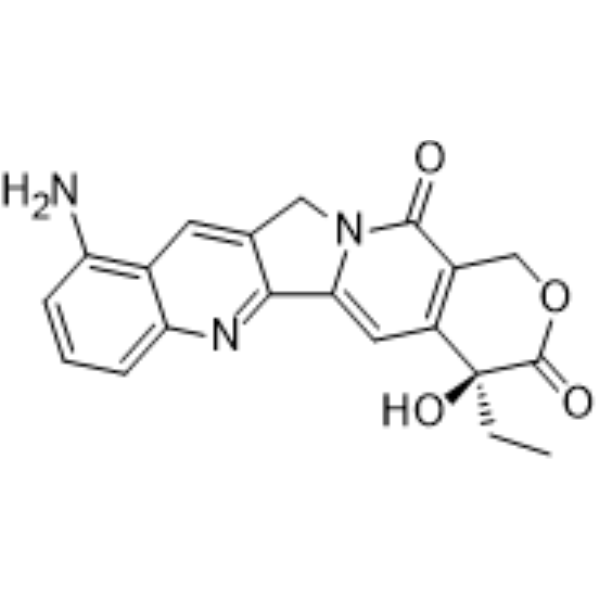
HY-100309
9-AminocamptothecinTopoisomerase I Inhibitor -
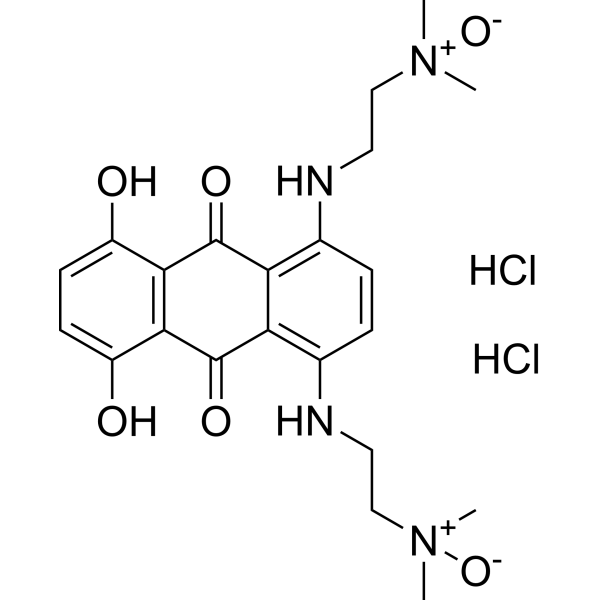
HY-13562A
Banoxantrone dihydrochlorideTopoisomerase II Inhibitor -
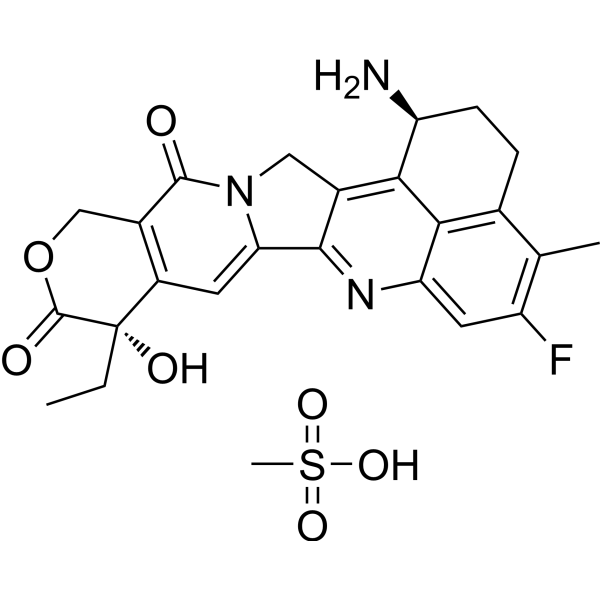
HY-13631AG
Exatecan mesylate (GMP)Topoisomerase I Inhibitor -
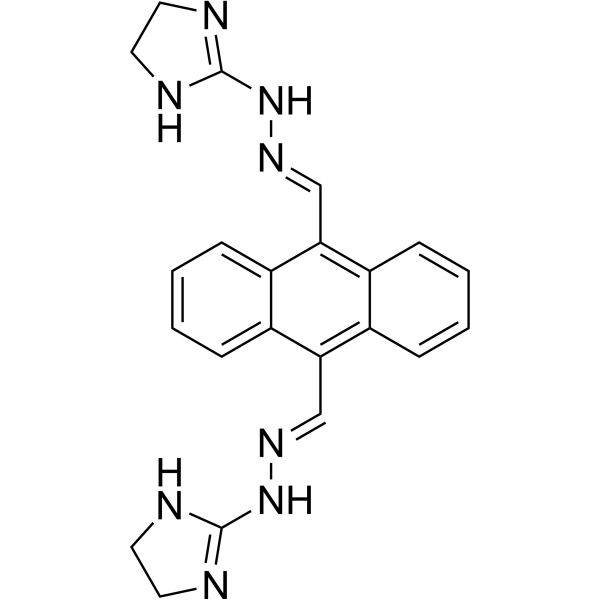
HY-100875
BisantreneAntitumor Agent -
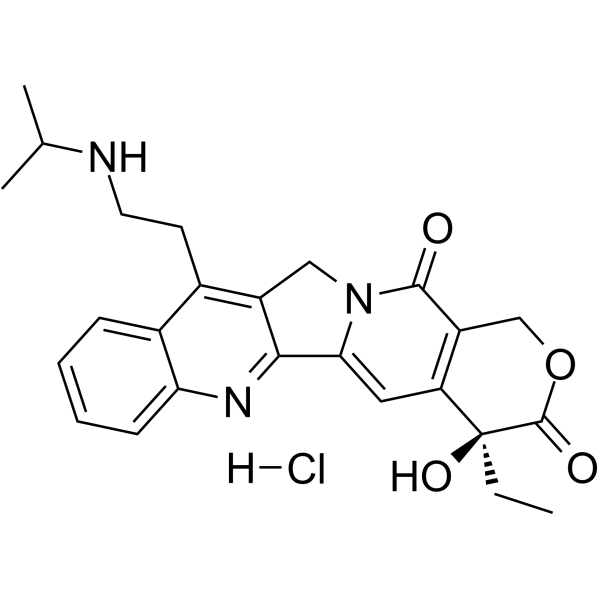
HY-13566A
Belotecan hydrochlorideTopoisomerase Inhibitor -
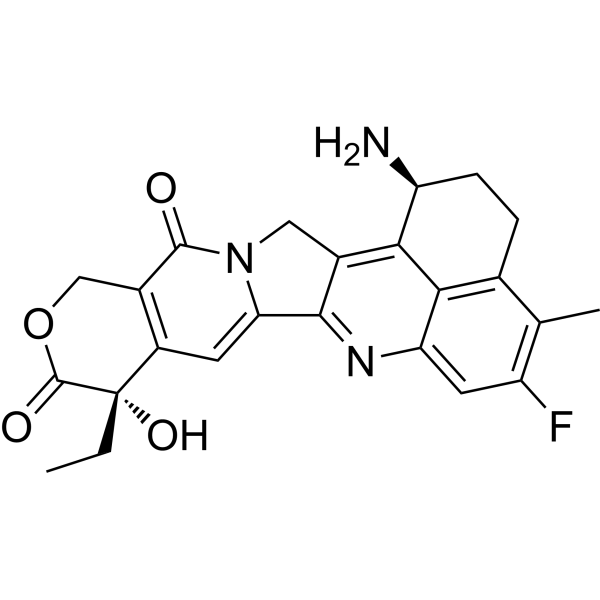
HY-13631
ExatecanTopoisomerase I Inhibitor
Publications Citing Use of MedChemExpress (MCE) Ellipticine hydrochloride
MoreAll Topoisomerase Isoforms
More

Biological Activity
Description
IC50 & Target
[1]|
Topoisomerase II |
In Vitro
Ellipticine (NSC 71795) is a potent antineoplastic agent exhibiting the multimodal mechanism of its action. The mechanisms of Ellipticine (NSC 71795) antitumor, mutagenic and cytotoxic activities are suggested to be intercalation into DNA and inhibition of DNA topoisomerase II activity. Another mode of Ellipticine (NSC 71795) action is the formation of covalent DNA adducts mediated by its oxidation with cytochromes P450 (CYP) and peroxidases[1]. Ellipticine (NSC 71795) can also act as an inhibitor or inducer of biotransformation enzymes, thereby modulating its own metabolism leading to its genotoxic and pharmacological effects. Treatment of cells with Ellipticine (NSC 71795) results in inhibition of cell growth and proliferation. This effect is associated with formation of two covalent Ellipticine (NSC 71795)-derived DNA adducts[2].
MedChemExpress (MCE) has not independently confirmed the accuracy of these methods. They are for reference only. .
In Vivo
MedChemExpress (MCE) has not independently confirmed the accuracy of these methods. They are for reference only.


Chemical Information
-
CAS No. 5081-48-1
-
Appearance Solid
-
Molecular Weight 282.77
-
Formula C17H15ClN2
-
Color Light yellow to yellow
-
SMILES
CC1=C(C=NC=C2)C2=C(C)C(N3)=C1C4=C3C=CC=C4.Cl
-
Synonyms
NSC 71795 hydrochloride
-
Structure Classification
-
Shipping
Room temperature in continental US; may vary elsewhere.
-
Storage
4°C, sealed storage, away from moisture
* In solvent : -80°C, 6 months; -20°C, 1 month (sealed storage, away from moisture)


Publications (5)
-
Journal Impact Factor
-
Most Recent
-
Cell
2026 Jun 11;189(12):3553-3570.e30. PMID: 42049018 -
J Adv Res
Postantibiotic leukocyte enhancement-mediated reduction of intracellular bacteria by macrophages. [Abstract]2024 Apr:58:117-128. PMID: 37290606 -
Blood Cancer Discov
2026 Jul 1;7(4):624-641. PMID: 42149820 -
J Cell Biol
2023 Jan 2;222(1):e202202110. PMID: 36282216 -
Front Cell Dev Biol
Time-Course Transcriptome Analysis for Drug Repositioning in Fusobacterium nucleatum-Infected Human Gingival Fibroblasts. [Abstract]2019 Sep 20:7:204. PMID: 31608279


Solvent & Solubility
In Vitro:
DMSO : 5.8 mg/mL (20.51 mM; Need ultrasonic and warming; Hygroscopic DMSO has a significant impact on the solubility of product, please use newly opened DMSO)
H2O : < 0.1 mg/mL (insoluble)
Please refer to the solubility information to select the appropriate solvent. Once prepared, please aliquot and store the solution to prevent product inactivation from repeated freeze-thaw cycles.
Storage method and period of stock solution: -80°C, 6 months; -20°C, 1 month (sealed storage, away from moisture). When stored at -80°C, please use it within 6 months. When stored at -20°C, please use it within 1 month.
Please refer to the solubility information to select the appropriate solvent. Once prepared, please aliquot and store the solution to prevent product inactivation from repeated freeze-thaw cycles.
Storage method and period of stock solution: -80°C, 6 months; -20°C, 1 month (sealed storage, away from moisture). When stored at -80°C, please use it within 6 months. When stored at -20°C, please use it within 1 month.
Concentration (start) × Volume (start) = Concentration (final) × Volume (final)
In Vivo:
Select the appropriate dissolution method based on your experimental animal and administration route.
- For the following dissolution methods, please ensure to first prepare a clear stock solution using an In Vitro approach and then sequentially add co-solvents:
- To ensure reliable experimental results, the clarified stock solution can be appropriately stored based on storage conditions. As for the working solution for In Vivo experiments, it is recommended to prepare freshly and use it on the same day.
- The percentages shown for the solvents indicate their volumetric ratio in the final prepared solution. If precipitation or phase separation occurs during preparation, heat and/or sonication can be used to aid dissolution.
Add each solvent one by one: 10% DMSO 40% PEG300 5% Tween-80 45% Saline
Solubility: ≥ 0.84 mg/mL (2.97 mM); Clear solution
This protocol yields a clear solution of ≥ 0.84 mg/mL (saturation unknown).
Taking 1 mL working solution as an example, add 100 μL DMSO stock solution (8.4 mg/mL) to 400 μL PEG300, and mix evenly; then add 50 μL Tween-80 and mix evenly; then add 450 μL Saline to adjust the volume to 1 mL.
Preparation of Saline: Dissolve 0.9 g sodium chloride in ddH₂O and dilute to 100 mL to obtain a clear Saline solution.
Add each solvent one by one: 10% DMSO 90% (20% SBE-β-CD in Saline)
Solubility: ≥ 0.84 mg/mL (2.97 mM); Clear solution
This protocol yields a clear solution of ≥ 0.84 mg/mL (saturation unknown).
Taking 1 mL working solution as an example, add 100 μL DMSO stock solution (8.4 mg/mL) to 900 μL 20% SBE-β-CD in Saline, and mix evenly.
Preparation of 20% SBE-β-CD in Saline (4°C, storage for one week): 2 g SBE-β-CD powder is dissolved in 10 mL Saline, completely dissolve until clear.
In Vivo Dissolution Calculator
Please enter the basic information of animal experiments:
-
-
-
-
Recommended: Prepare an additional quantity of animals to account for potential losses during experiments.
Please enter your animal formula composition:
-
%DMSO +
Recommended: Keep the proportion of DMSO in working solution below 2% if your animal is weak.
-
%+
-
+%Tween-80 + +
-
%Saline +
The co-solvents required include: DMSO, . All of co-solvents are available by MedChemExpress (MCE). , Tween 80. All of co-solvents are available by MedChemExpress (MCE).
Working solution concentration: 0.22 mg/mL
Method for preparing stock solution: mg drug dissolved in μL DMSO. Stock solution concentration: mg/mL. * In solvent : -80°C, 6 months; -20°C, 1 month (sealed storage, away from moisture)
1. Take μL DMSO stock solution;
2. Add μL .
μL , mix evenly;
3. Then add μL Tween 80, mix evenly;
4. Then add μL
Please ensure that the stock solution in the first step is dissolved to a clear state, and add co-solvents in sequence. You can use ultrasonic heating (ultrasonic cleaner, recommended frequency 20-40 kHz), vortexing, etc. to assist dissolution.


Purity & Documentation
-
Data Sheet (280 KB)
-
SDS (394 KB)
- English - EN (394 KB)
- Français - FR (394 KB)
- Deutsch - DE (394 KB)
- Norwegian - NO (394 KB)
- Español - ES (394 KB)
- Swedish - SV (394 KB)
- Italian - IT (394 KB)
- Korean - KR (394 KB)
- Portuguese - PT (394 KB)
-
Handling Instructions (2659 KB)
References
[1]. Stiborova M, et al. Molecular mechanisms of antineoplastic action of an anticancer drug ellipticine. Biomed Pap Med Fac Univ Palacky Olomouc Czech Repub. 2006 Jul;150(1):13-23. [Content Brief]
[2]. Stiborova M, et al. Ellipticine cytotoxicity to cancer cell lines - a comparative study. Interdiscip Toxicol. 2011 Jun;4(2):98-105. [Content Brief]
[3]. Stiborova M, et al. The anticancer drug ellipticine activated with cytochrome P450 mediates DNA damage determining its pharmacological efficiencies: studies with rats, Hepatic Cytochrome P450 Reductase Null (HRN?) mice and pure enzymes. Int J Mol Sci. 2014 Dec 25;16(1):284-306. [Content Brief]


Complete Stock Solution Preparation Table
Please refer to the solubility information to select the appropriate solvent. Once prepared, please aliquot and store the solution to prevent product inactivation from repeated freeze-thaw cycles.
Storage method and period of stock solution: -80°C, 6 months; -20°C, 1 month (sealed storage, away from moisture). When stored at -80°C, please use it within 6 months. When stored at -20°C, please use it within 1 month.
| Optional Solvent | Concentration Solvent Mass | 1 mg | 5 mg | 10 mg | 25 mg |
|---|---|---|---|---|---|
| DMSO | 1 mM | 3.5364 mL | 17.6822 mL | 35.3644 mL | 88.4111 mL |
| 5 mM | 0.7073 mL | 3.5364 mL | 7.0729 mL | 17.6822 mL | |
| 10 mM | 0.3536 mL | 1.7682 mL | 3.5364 mL | 8.8411 mL | |
| 15 mM | 0.2358 mL | 1.1788 mL | 2.3576 mL | 5.8941 mL | |
| 20 mM | 0.1768 mL | 0.8841 mL | 1.7682 mL | 4.4206 mL |


Ellipticine hydrochloride Related Classifications
HY-15753A Related Classifications
 Powered by Bioz