



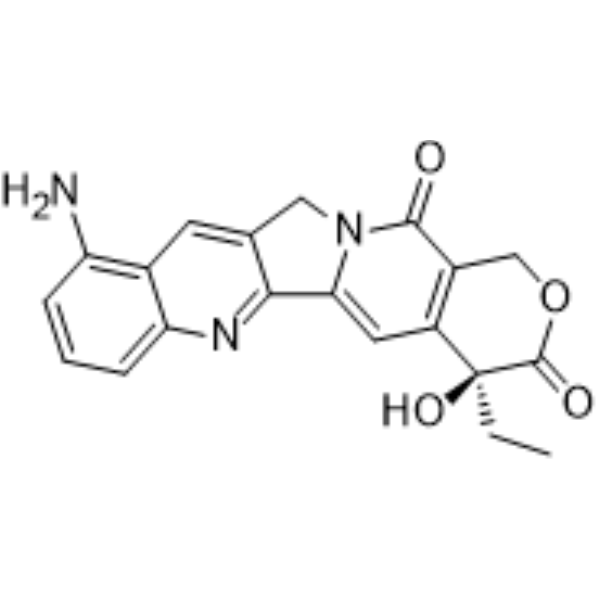
9-Aminocamptothecin
Based on 1 publication(s) in Google Scholar
9-Aminocamptothecin (9-Amino-CPT) is a topoisomerase I inhibitor with potent anticancer activity.
For research use only. We do not sell to patients.
- Purity : 98.80%
- CAS No.: 91421-43-1
- Formula: C20H17N3O4
- Molecular Weight:363.37
-
Storage:Powder -20°C, 3 years , 4°C, 2 years ; In solvent -80°C, 6 months , -20°C, 1 month

To place orders, for customer services and technical support, please contact: MedChemExpress USA
Tel: 609-228-6898 E-mail: [email protected] [email protected]


-
 Biological Activity
-
Chemical Information
-
Solvent & Solubility
- Purity & Documentation
- References
-
 Help & FAQs


-
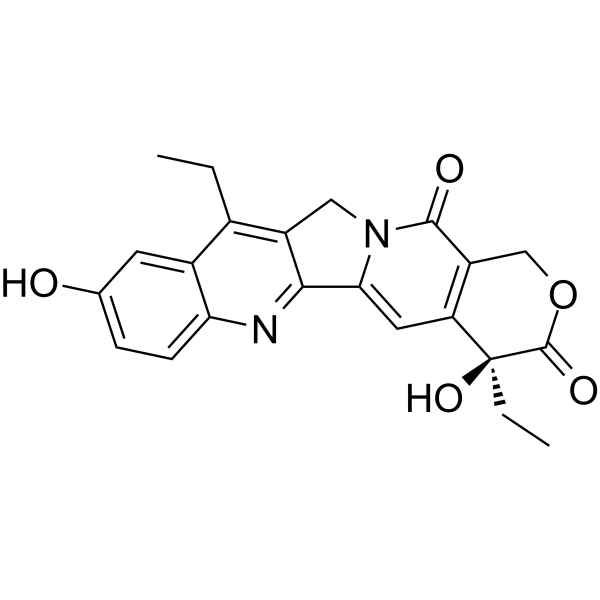
HY-13704
SN-38Topoisomerase I Inhibitor -
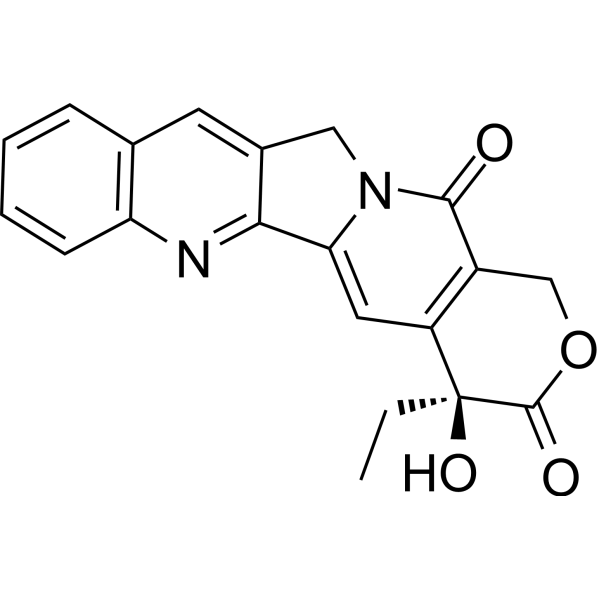
HY-16560
CamptothecinTopo I inhibitor -
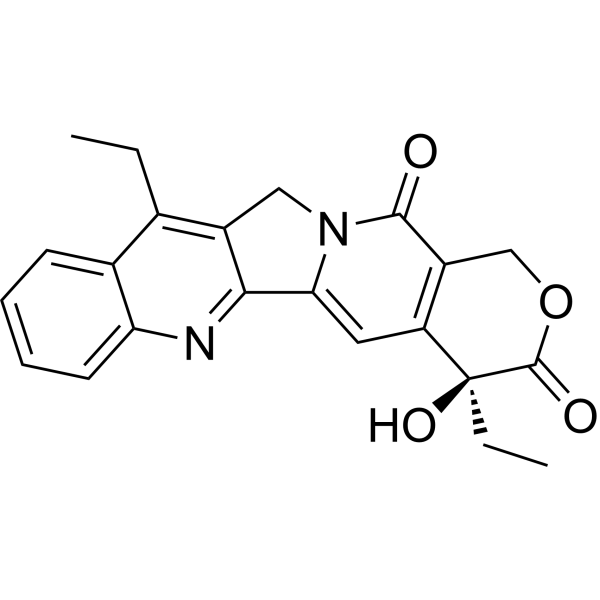
HY-N2108
7-EthylcamptothecinCamptothecin Derivative -
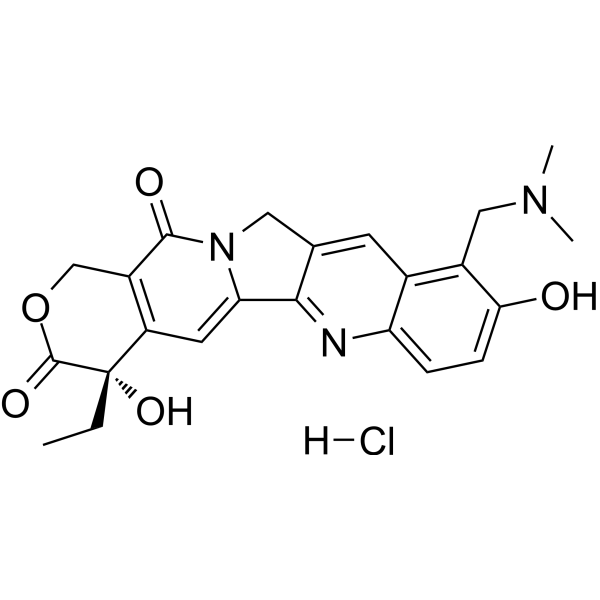
HY-13768A
Topotecan hydrochlorideTopoisomerase I Inhibitor -
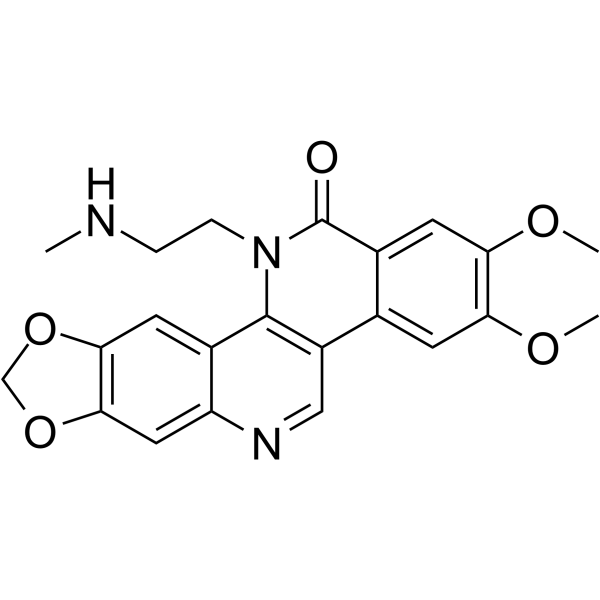
HY-16228
Genz-644282 -
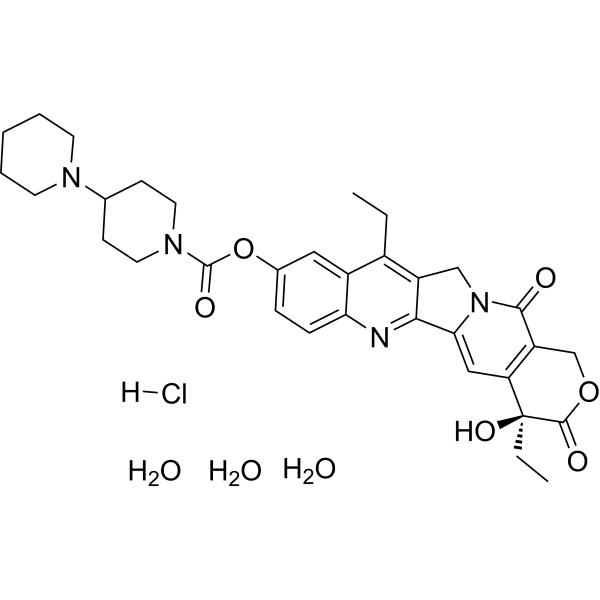
HY-16568
Irinotecan hydrochloride trihydrateTopoisomerase I Inhibitor -
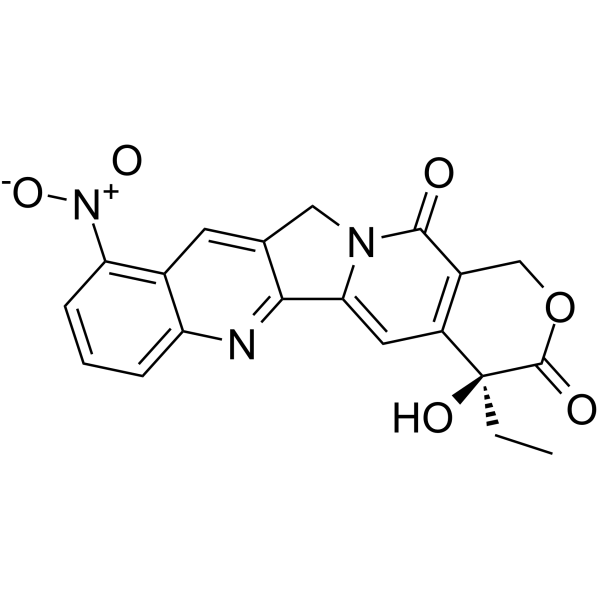
HY-13744
RubitecanTopoisomerase Inhibitor -
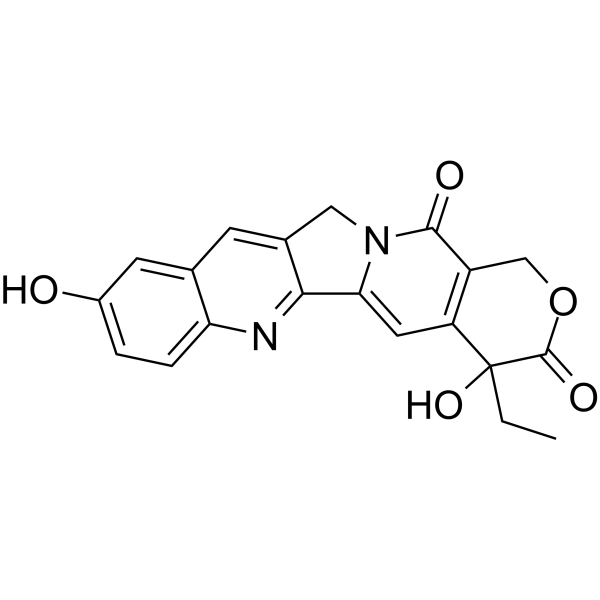
HY-N0275
(±)-10-HydroxycamptothecinTopoisomerase Inhibitor -
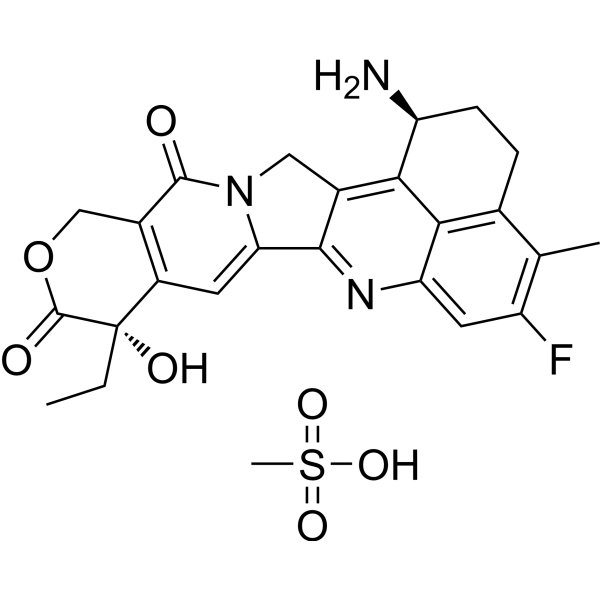
HY-13631A
Exatecan mesylateTopoisomerase I Inhibitor -
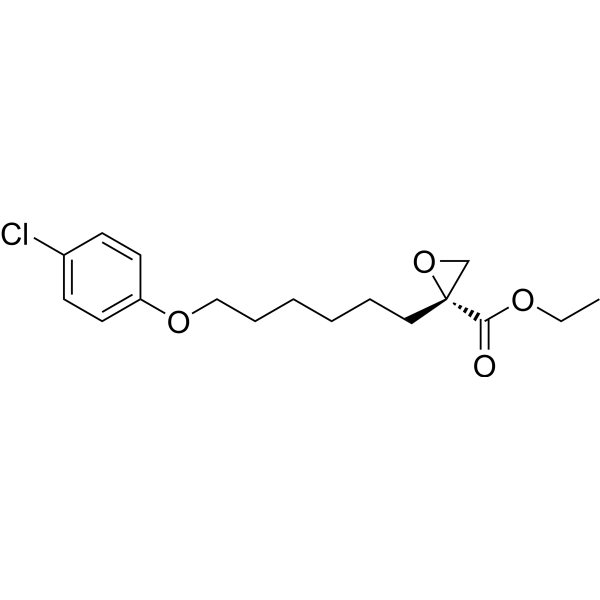
HY-50202
EtomoxirCPT1a Inhibitor -
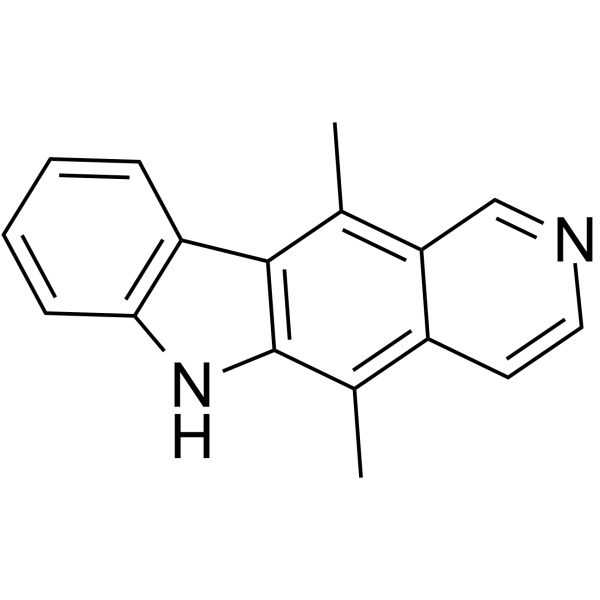
HY-15753
EllipticineTopoisomerase Inhibitor -
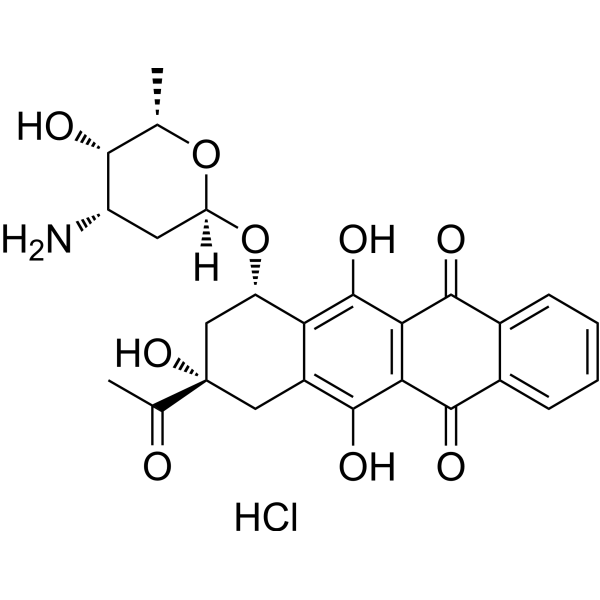
HY-17381
Idarubicin hydrochlorideTopo II Inhibitor
Publications Citing Use of MedChemExpress (MCE) 9-Aminocamptothecin
MoreAll Topoisomerase Isoforms
More

Biological Activity
Description
IC50 & Target
[1]|
Topoisomerase I |
Cellular Effect
|
Cell Line

|
Type | Value | Description | References |
|---|---|---|---|---|
| Bone marrow cell | IC50 |
1 nM
Compound: 9
|
Cytotoxicity against mouse bone marrow cell by CFU-GM assay
Cytotoxicity against mouse bone marrow cell by CFU-GM assay
|
[PMID: 21341674] |
| Bone marrow cell | IC50 |
90 nM
Compound: 9
|
Cytotoxicity against human bone marrow cell by CFU-GM assay
Cytotoxicity against human bone marrow cell by CFU-GM assay
|
[PMID: 21341674] |
| COLO 205 | IC50 |
6.6 nM
Compound: 5
|
Cytotoxicity expressed as the concentration that inhibited incorporation of [3H]thymidine into cellular DNA of human colorectal cells (COLO 205)
Cytotoxicity expressed as the concentration that inhibited incorporation of [3H]thymidine into cellular DNA of human colorectal cells (COLO 205)
|
[PMID: 10479293] |
| HepG2 | IC50 |
3.5 nM
Compound: 5
|
Cytotoxicity expressed as the concentration that inhibited incorporation of [3H]thymidine into cellular DNA of human hepatocellular cells (HepG2)
Cytotoxicity expressed as the concentration that inhibited incorporation of [3H]thymidine into cellular DNA of human hepatocellular cells (HepG2)
|
[PMID: 10479293] |
| HL-60 | IC50 |
0.11 μM
Compound: 5g
|
Inhibition of Topoisomerase I by cleavage complex formation in human HL-60 cells
Inhibition of Topoisomerase I by cleavage complex formation in human HL-60 cells
|
[PMID: 8410981] |
| HT-29 | IC50 |
7.4 nM
Compound: 5
|
Cytotoxicity expressed as the concentration that inhibited incorporation of [3H]thymidine into cellular DNA of human colorectal cells (HT-29)
Cytotoxicity expressed as the concentration that inhibited incorporation of [3H]thymidine into cellular DNA of human colorectal cells (HT-29)
|
[PMID: 10479293] |
| KB | ED50 |
0.02 μg/mL
Compound: 4
|
In vitro cytotoxic activity against KB cell culture.
In vitro cytotoxic activity against KB cell culture.
|
[PMID: 3656353] |
| L1210 | IC50 |
12 nM
Compound: 27
|
Inhibitory activity in mice bearing L1210 leukemia
Inhibitory activity in mice bearing L1210 leukemia
|
[PMID: 1846923] |
| L1210 | IC50 |
12.7 nM
Compound: 2
|
Concentration required to inhibit 50% of cell growth in L1210 murine leukemia cell line after 48 hr continuous treatment
Concentration required to inhibit 50% of cell growth in L1210 murine leukemia cell line after 48 hr continuous treatment
|
10.1016/S0960-894X(97)00105-4 |
| L1210 | IC50 |
12.7 nM
Compound: 2 (9-AC, 9-Amino Camptothecin)
|
Compound was tested in vitro for cytotoxicity against L1210 murine leukemia cells.
Compound was tested in vitro for cytotoxicity against L1210 murine leukemia cells.
|
10.1016/0960-894X(96)00083-2 |
| NCI-H928 | IC50 |
7.9 nM
Compound: 5
|
Cytotoxicity expressed as the concentration that inhibited incorporation of [3H]-thymidine into cellular DNA of human lung carcinoma cells (H928)
Cytotoxicity expressed as the concentration that inhibited incorporation of [3H]-thymidine into cellular DNA of human lung carcinoma cells (H928)
|
[PMID: 10479293] |
In Vitro
In human breast (MCF-7), bladder (MGH-U1), and colon (HT-29) cancer cell lines, 9-Aminocamptothecin cytotoxicity increases with both higher drug concentrations and longer exposure times. Minimal cell killing is also observed unless 9-Aminocamptothecin concentrations exceeds a threshold of 2.7 nm[1]. 9-Aminocamptothecin inhibits PC-3, PC-3M, DU145, and LNCaP cells with IC50 values of 34.1, 10, 6.5, and 8.9 nM, respectively after 96 h of drug exposure[2].
MedChemExpress (MCE) has not independently confirmed the accuracy of these methods. They are for reference only. .
In Vivo
MedChemExpress (MCE) has not independently confirmed the accuracy of these methods. They are for reference only.
Clinical Trial
| NCT Number | Sponsor | Condition | Start Date |
Phase
|
|---|---|---|---|---|
| NCT01329991 | Plexxikon| | 2011-05 | PHASE1 |


Chemical Information
-
CAS No. 91421-43-1
-
Appearance Solid
-
Molecular Weight 363.37
-
Formula C20H17N3O4
-
Color Light yellow to brown
-
SMILES
O=C1[C@](O)(CC)C2=C(CO1)C(N3CC4=CC5=C(N)C=CC=C5N=C4C3=C2)=O
-
Synonyms
9-Amino-20(S)-camptothecin; 9-Amino-CPT
-
Structure Classification
-
Initial Source
-
Shipping
Room temperature in continental US; may vary elsewhere.
-
Storage
Powder -20°C 3 years 4°C 2 years In solvent -80°C 6 months -20°C 1 month


Publications (1)
-
Journal Impact Factor
-
Most Recent


Solvent & Solubility
In Vitro:
DMSO : 3.33 mg/mL (9.16 mM; Need ultrasonic; Hygroscopic DMSO has a significant impact on the solubility of product, please use newly opened DMSO)
Please refer to the solubility information to select the appropriate solvent. Once prepared, please aliquot and store the solution to prevent product inactivation from repeated freeze-thaw cycles.
Storage method and period of stock solution: -80°C, 6 months; -20°C, 1 month. When stored at -80°C, please use it within 6 months. When stored at -20°C, please use it within 1 month.
Please refer to the solubility information to select the appropriate solvent. Once prepared, please aliquot and store the solution to prevent product inactivation from repeated freeze-thaw cycles.
Storage method and period of stock solution: -80°C, 6 months; -20°C, 1 month. When stored at -80°C, please use it within 6 months. When stored at -20°C, please use it within 1 month.
Concentration (start) × Volume (start) = Concentration (final) × Volume (final)
In Vivo:
Select the appropriate dissolution method based on your experimental animal and administration route.
- For the following dissolution methods, please ensure to first prepare a clear stock solution using an In Vitro approach and then sequentially add co-solvents:
- To ensure reliable experimental results, the clarified stock solution can be appropriately stored based on storage conditions. As for the working solution for In Vivo experiments, it is recommended to prepare freshly and use it on the same day.
- The percentages shown for the solvents indicate their volumetric ratio in the final prepared solution. If precipitation or phase separation occurs during preparation, heat and/or sonication can be used to aid dissolution.
Add each solvent one by one: 10% DMSO 40% PEG300 5% Tween-80 45% Saline
Solubility: ≥ 0.33 mg/mL (0.91 mM); Clear solution
This protocol yields a clear solution of ≥ 0.33 mg/mL (saturation unknown).
Taking 1 mL working solution as an example, add 100 μL DMSO stock solution (3.3 mg/mL) to 400 μL PEG300, and mix evenly; then add 50 μL Tween-80 and mix evenly; then add 450 μL Saline to adjust the volume to 1 mL.
Preparation of Saline: Dissolve 0.9 g sodium chloride in ddH₂O and dilute to 100 mL to obtain a clear Saline solution.
Add each solvent one by one: 10% DMSO 90% (20% SBE-β-CD in Saline)
Solubility: ≥ 0.33 mg/mL (0.91 mM); Clear solution
This protocol yields a clear solution of ≥ 0.33 mg/mL (saturation unknown).
Taking 1 mL working solution as an example, add 100 μL DMSO stock solution (3.3 mg/mL) to 900 μL 20% SBE-β-CD in Saline, and mix evenly.
Preparation of 20% SBE-β-CD in Saline (4°C, storage for one week): 2 g SBE-β-CD powder is dissolved in 10 mL Saline, completely dissolve until clear.
In Vivo Dissolution Calculator
Please enter the basic information of animal experiments:
-
-
-
-
Recommended: Prepare an additional quantity of animals to account for potential losses during experiments.
Please enter your animal formula composition:
-
%DMSO +
Recommended: Keep the proportion of DMSO in working solution below 2% if your animal is weak.
-
%+
-
+%Tween-80 + +
-
%Saline +
The co-solvents required include: DMSO, . All of co-solvents are available by MedChemExpress (MCE). , Tween 80. All of co-solvents are available by MedChemExpress (MCE).
Working solution concentration: 0.22 mg/mL
Method for preparing stock solution: mg drug dissolved in μL DMSO. Stock solution concentration: mg/mL.
1. Take μL DMSO stock solution;
2. Add μL .
μL , mix evenly;
3. Then add μL Tween 80, mix evenly;
4. Then add μL
Please ensure that the stock solution in the first step is dissolved to a clear state, and add co-solvents in sequence. You can use ultrasonic heating (ultrasonic cleaner, recommended frequency 20-40 kHz), vortexing, etc. to assist dissolution.


Purity & Documentation
-
Data Sheet (280 KB)
-
SDS (480 KB)
- English - EN (480 KB)
- Français - FR (480 KB)
- Deutsch - DE (480 KB)
- Norwegian - NO (480 KB)
- Español - ES (480 KB)
- Swedish - SV (480 KB)
- Italian - IT (480 KB)
- Korean - KR (480 KB)
- Portuguese - PT (480 KB)
-
Handling Instructions (2659 KB)
References
[1]. Li ML, et al. Pharmacological determinants of 9-aminocamptothecin cytotoxicity. Clin Cancer Res. 2001 Jan;7(1):168-74. [Content Brief]
[2]. de Souza PL, et al. 9-Aminocamptothecin: a topoisomerase I inhibitor with preclinical activity in prostate cancer. Clin Cancer Res. 1997 Feb;3(2):287-94. [Content Brief]
[3]. Jeha S, et al. Activity of oral and intravenous 9-aminocamptothecin in SCID mice engrafted with human leukemia. Leuk Lymphoma. 1998 Dec;32(1-2):159-64. [Content Brief]


Complete Stock Solution Preparation Table
Please refer to the solubility information to select the appropriate solvent. Once prepared, please aliquot and store the solution to prevent product inactivation from repeated freeze-thaw cycles.
Storage method and period of stock solution: -80°C, 6 months; -20°C, 1 month. When stored at -80°C, please use it within 6 months. When stored at -20°C, please use it within 1 month.
| Optional Solvent | Concentration Solvent Mass | 1 mg | 5 mg | 10 mg | 25 mg |
|---|---|---|---|---|---|
| DMSO | 1 mM | 2.7520 mL | 13.7601 mL | 27.5202 mL | 68.8004 mL |
| 5 mM | 0.5504 mL | 2.7520 mL | 5.5040 mL | 13.7601 mL |


9-Aminocamptothecin Related Classifications
HY-100309 Related Classifications
 Powered by Bioz