



CCR6
CCR6 (C-C chemokine receptor 6) is a class A G protein-coupled chemokine receptor that regulates leukocyte trafficking, immune homeostasis, and inflammatory cell recruitment through its highly selective interaction with CCL20.[1][2] CCR6 is expressed on immature dendritic cells, memory T cells, B cells, Th17 cells, and regulatory T cells, positioning the receptor at the interface between adaptive immunity and tissue-specific inflammatory responses.[1][3][4] Mechanistically, the CCR6-CCL20 axis directs chemotaxis and cellular localization within mucosal and epithelial tissues, where it contributes to immune surveillance and maintenance of barrier function.[2][5] In inflammatory disease models, CCR6 signaling promotes recruitment of Th17 cells and regulates the Th17/Treg balance, a process implicated in chronic intestinal inflammation, autoimmune disorders, and tissue injury.[1][2] Experimental studies in inflammatory bowel disease have demonstrated that disruption of CCR6-dependent signaling can reduce colonic inflammation and alter mucosal immune responses.[1][2] Compared with many chemokine receptors that interact with multiple ligands, CCR6 is distinguished by its largely exclusive, high-affinity interaction with CCL20, providing a comparatively specific model for studying chemokine-directed immune regulation.[1][4] Structural analyses further show that CCR6 functions as a seven-transmembrane receptor coupled primarily to Gi/o proteins, supporting mechanistic investigations of receptor activation and downstream signaling.[6] For experimental applications, the CCR6/CCL20 pathway is widely used to investigate immune-cell migration, inflammatory disease mechanisms, and the therapeutic potential of receptor-targeted antibodies designed to modulate pathological leukocyte recruitment.[1]
Verweise:
- [1]. Gómez-Melero S, et al. CCR6 as a Potential Target for Therapeutic Antibodies for the Treatment of Inflammatory Diseases. Antibodies (Basel). 2023 Apr 20;12(2):30. [Content Brief]
- [2]. Lee AY, et al. CC Chemokine Ligand 20 and Its Cognate Receptor CCR6 in Mucosal T Cell Immunology and Inflammatory Bowel Disease: Odd Couple or Axis of Evil? Front Immunol. 2013 Jul 15;4:194. [Content Brief]
- [3]. Schutyser E, et al. The CC chemokine CCL20 and its receptor CCR6. Cytokine Growth Factor Rev. 2003 Oct;14(5):409-26. [Content Brief]
- [4]. Wasilko DJ, et al. Structural basis for chemokine receptor CCR6 activation by the endogenous protein ligand CCL20. Nat Commun. 2020 Jun 15;11(1):3031. [Content Brief]
-
CCR6 Verwandte Produkte (7)
Verwandte Produkte (7)

-
Recombinant Proteins (2)
-
CCR6 antagonist 1
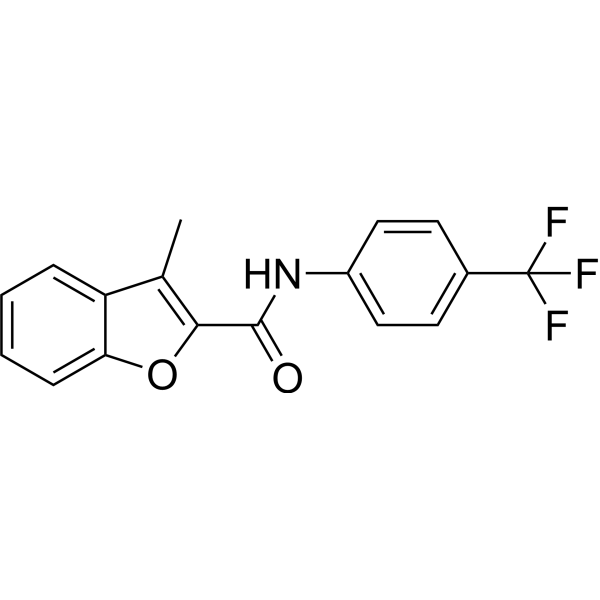 0 ImagesCCR6 antagonist 1 is a CCR6 antagonist that inhibits the CCL20/CCR6 axis. CCR6 antagonist 1 can be used in the research of autoimmune-mediated inflammatory diseases, such as inflammatory bowel diseases (IBDs).
-
CCR6 inhibitor 1
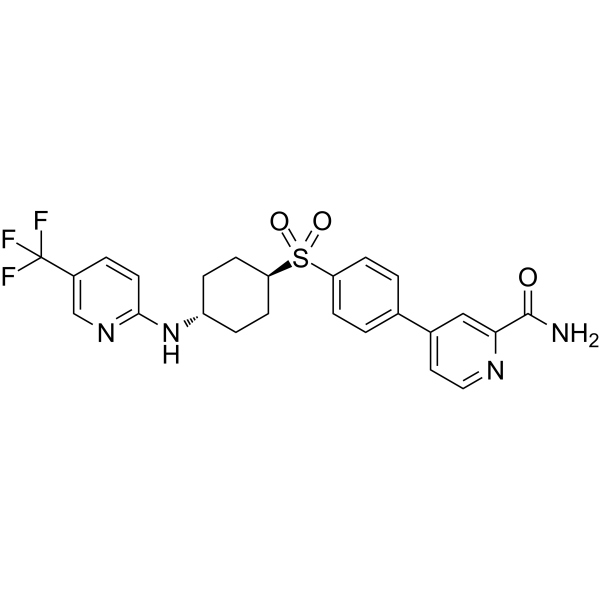 0 ImagesCCR6 inhibitor 1 is a potent and selective CCR6 inhibitor, with IC50s of 0.45 and 6 nM for monkey and human CCR6, much more selective at CCR6 over human CCR1 (IC50, > 30000 nM), and CCR7 (IC50, 9400 nM). CCR6 inhibitor 1 markedly blocks ERK phosphorylation. CCR6 inhibitor 1 is used in the research of autoimmune diseases and cancer.
-
PF-07054894
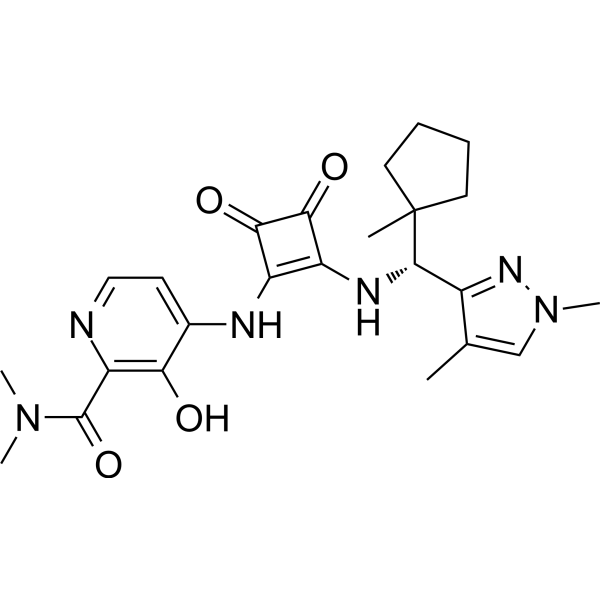 0 ImagesPF-07054894 is an orally active and potent C-C Chemoattractant Cytokine (Chemokine) Receptor 6 (CCR6) antagonist that blocks CCR6-mediated chemotaxis with an IC50 value of 5.7 nM in vitro. PF-07054894 targets G protein-coupled receptor (GPCR). PF-07054894 can be used in research of inflammatory bowel disease.
-
IDOR-1117-2520
 0 ImagesIDOR-1117-2520 is an orally active, potent, selective and reversible CCR6 antagonist. IDOR-1117-2520 antagonizes the CCL20-mediated calcium flow (IC50 = 63 nM) and inhibits β-arrestin recruitment to human CCR6 (IC50 = 30 nM) in cells expressing recombinant human CCR6. IDOR-1117-2520 is found to be a substrate of P-gp/MDR1. IDOR-1117-2520 can be used in the research of autoimmune diseases and skin inflammation.
-
(S)-IDOR-1117-2520
 0 ImagesArt. -Nr.: HY-162495AReinheit: 99.47%(S)-IDOR-1117-2520 is the S-isomer of IDOR-1117-2520 (HY-162495). IDOR-1117-2520 is an orally active, potent, selective and reversible CCR6 antagonist. IDOR-1117-2520 antagonizes the CCL20-mediated calcium flow (IC50 = 63 nM) and inhibits β-arrestin recruitment to human CCR6 (IC50 = 30 nM) in cells expressing recombinant human CCR6. IDOR-1117-2520 is found to be a substrate of P-gp/MDR1. IDOR-1117-2520 can be used in the research of autoimmune diseases and skin inflammation.
-
CCR6 antagonist 4
 0 ImagesArt. -Nr.: HY-176980CCR6 antagonist 4 (compound OXM1) is a potent and selective CC chemokine receptor 6 (CCR6) allosteric antagonist (IC50 = 158 nM). CCR6 antagonist 4 binds to an extracellular pocket and disrupts the receptor activation network. CCR6 antagonist 4 can be used for chronic inflammatory diseases research.
-
CCR6 antagonist 3
 0 ImagesArt. -Nr.: HY-176979CCR6 antagonist 3 (compound OXM2) is a potent and selective CC chemokine receptor 6 (CCR6) allosteric antagonist (IC50 = 166 nM). CCR6 antagonist 3 binds to an extracellular pocket and disrupts the receptor activation network. CCR6 antagonist 3 can be used for chronic inflammatory diseases research.




