



CCR7
CCR7 is a CC chemokine receptor that organizes primary immune responses by positioning T cells and dendritic cells within secondary lymphoid organs[1]. Mechanistically, CCL19 and CCL21 activate CCR7 to guide lymph-node homing, dendritic-cell migration, and T-cell priming[2][3]. In disease models, CCR7 supports melanoma lymph-node metastasis and CNS infiltration in T-cell leukemia, showing its relevance to tumor dissemination research[4][5]. Compared with related chemokine-receptor axes, CCR7 is defined by its paired ligands CCL19/CCL21 and their biased signaling, because CCL19 strongly promotes arrestin-mediated receptor endocytosis whereas CCL21 does not[6][7]. For experimental applications, anti-CCR7 antibodies reduced mantle-cell lymphoma growth and dissemination in xenograft models, supporting CCR7 blockade as a research tool for migration-dependent malignancy models[8].
References:
- [1]. Förster R, et al. CCR7 coordinates the primary immune response by establishing functional microenvironments in secondary lymphoid organs. Cell. 1999 Oct 1;99(1):23-33. [Content Brief]
- [2]. Förster R, et al. CCR7 and its ligands: balancing immunity and tolerance. Nat Rev Immunol. 2008 May;8(5):362-71. [Content Brief]
- [3]. Ohl L, et al. CCR7 governs skin dendritic cell migration under inflammatory and steady-state conditions. Immunity. 2004 Aug;21(2):279-88. [Content Brief]
- [4]. Wiley HE, et al. Expression of CC chemokine receptor-7 and regional lymph node metastasis of B16 murine melanoma. J Natl Cancer Inst. 2001 Nov 7;93(21):1638-43. [Content Brief]
- [5]. Buonamici S, et al. CCR7 signalling as an essential regulator of CNS infiltration in T-cell leukaemia. Nature. 2009 Jun 18;459(7249):1000-4. [Content Brief]
- [6]. Hauser MA, et al. Common and biased signaling pathways of the chemokine receptor CCR7 elicited by its ligands CCL19 and CCL21 in leukocytes. J Leukoc Biol. 2016 Jun;99(6):869-82. [Content Brief]
- [7]. Byers MA, et al. Arrestin 3 mediates endocytosis of CCR7 following ligation of CCL19 but not CCL21. J Immunol. 2008 Oct 1;181(7):4723-32. [Content Brief]
- [8]. Somovilla-Crespo B, et al. Anti-CCR7 therapy exerts a potent anti-tumor activity in a xenograft model of human mantle cell lymphoma. J Hematol Oncol. 2013 Dec 4;6:89. [Content Brief]
-
CCR7 Related Products (9)
Related Products (9)

-
Recombinant Proteins (1)
-
Antibodies (1)
-
CCR6 inhibitor 1
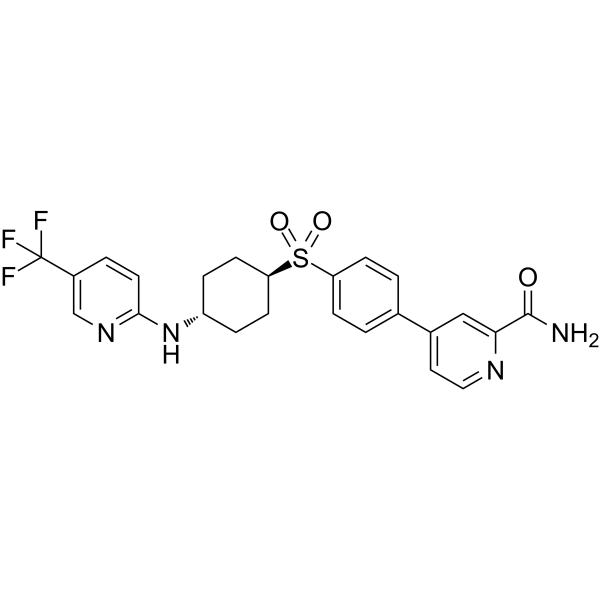 0 ImagesCCR6 inhibitor 1 is a potent and selective CCR6 inhibitor, with IC50s of 0.45 and 6 nM for monkey and human CCR6, much more selective at CCR6 over human CCR1 (IC50, > 30000 nM), and CCR7 (IC50, 9400 nM). CCR6 inhibitor 1 markedly blocks ERK phosphorylation. CCR6 inhibitor 1 is used in the research of autoimmune diseases and cancer.
-
Cosalane
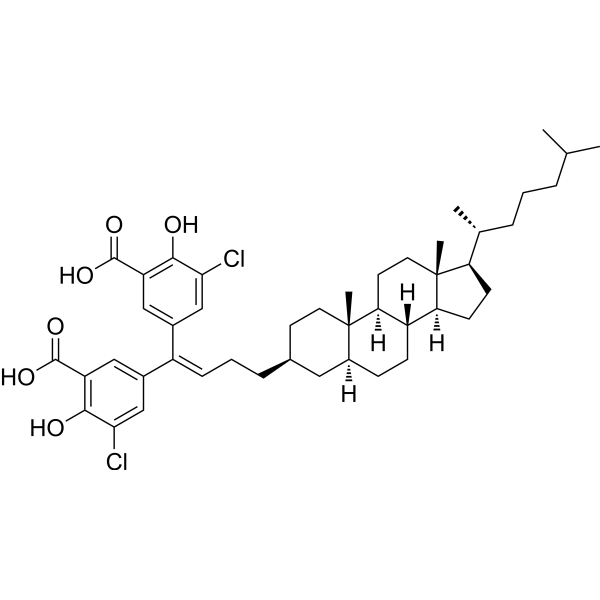 0 ImagesSynonyms: NSC 658586Cosalane (NSC 658586) is a CCR7 (IC50 = 2.43 μM) and CXCR2 antagonist (IC50 = 0.66 μM). Cosalane is an inhibitor of HIV replication with a wide range of activity against HIV-1 isolates, HIV-2, Rauscher murine leukemia virus, HSV-1, HSV-2 and human cytomegalovirus. Cosalane inhibits both attachment of gp120 to CD4. Cosalane inhibits human and murine CCR7 in response to both CCL19 and CCL21 agonists. Cosalane can be studied in research for HIV or attenuating acute graft-versus-host disease (aGVHD) in allogeneic hematopoietic stem cell transplantation (HSCT).
-
TL13-112
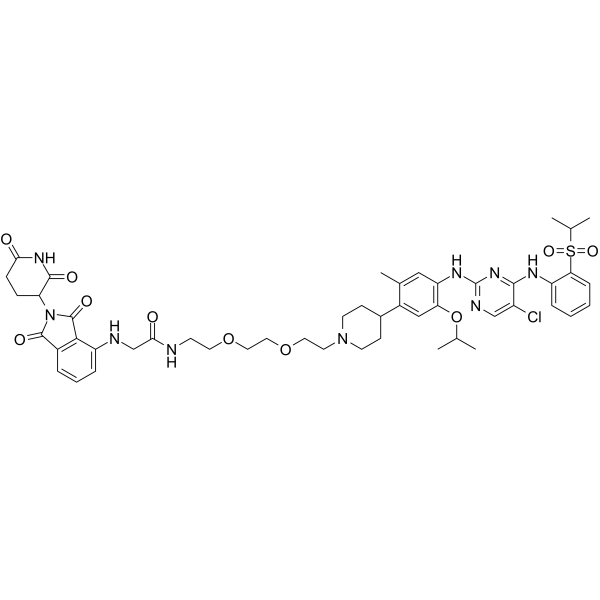 0 ImagesTL13-112 is a ALK PROTAC degrader. TL13-112 degrades the NPM-ALK protein by recruiting the CRBN E3 ligase, thereby blocking oncogenic signal transduction such as STAT3, ERK and AKT, and relieving the transcriptional repression of CD45, CCR7 and PI3Kδ. TL13-112 can be used in related research on anaplastic large cell lymphoma.
-
Calamenene
 0 ImagesCat. No.: HY-N10116ACAS No.: 483-77-2Calamenene is a sesquiterpene compound. Calamenene promotes dendritic cell maturation, upregulates CD1a, CD80, CD83, CD86, HLA-DR and CCR7 on the cell surface, reduces endocytic activity, enhances T cell-stimulating capacity, drives Th1 polarization through the secretion of IL-12, induces IFN-γ production, decreases IL-4 generation, and triggers intracellular Ca2+ mobilization as well as dendritic cell migration towards MIP-3β. Calamenene exerts bacteriostatic and bactericidal growth-inhibitory effects against pathogenic *Vibrio harveyi*. Calamenene can be used in studies related to cancer and bacterial infections.
-
TC6-D3
 0 ImagesTC6-D3 is a proteolysis-resistant peptide and also a CC chemokine receptor 7 (CCR7) inhibitor, with a Kd value of 403 nM against mouse targets. TC6-D3 blocks the interaction between CCR7 and its ligands CCL19 and CCL21, and inhibits the activation of the ERK1/2 pathway. TC6-D3 reduces the migratory capacity of tumor cells in vitro. TC6-D3 inhibits tumor growth and lymph node metastasis in vivo. TC6-D3 restores T cell cytotoxicity, promotes CD8+ T cell infiltration, and enhances anti-tumor immune responses. TC6-D3 can be used in studies related to lymph node metastasis.
-
Anti-Mouse CCR7/CD197 Antibody (C7Mab-2)
 0 ImagesCat. No.: HY-P992563Anti-Mouse CCR7/CD197 Antibody (C7Mab-2) is a rat-derived IgG2b kappa monoclonal antibody that selectively recognizes mouse CCR7. Anti-Mouse CCR7/CD197 Antibody (C7Mab-2) recognizes the extracellular loop domain of mCCR7 and was prepared by immunization with an extracellular loop peptide. Anti-Mouse CCR7/CD197 Antibody (C7Mab-2) binds with high affinity to cells overexpressing mCCR7, recognizes these cells in flow cytometry, and can be detected in immunohistochemistry of paraffin-embedded cell sections. Anti-Mouse CCR7/CD197 Antibody (C7Mab-2) can be used for CCR7-related assays, such as flow cytometry and immunohistochemistry.
-
CXCR2 antagonist 10
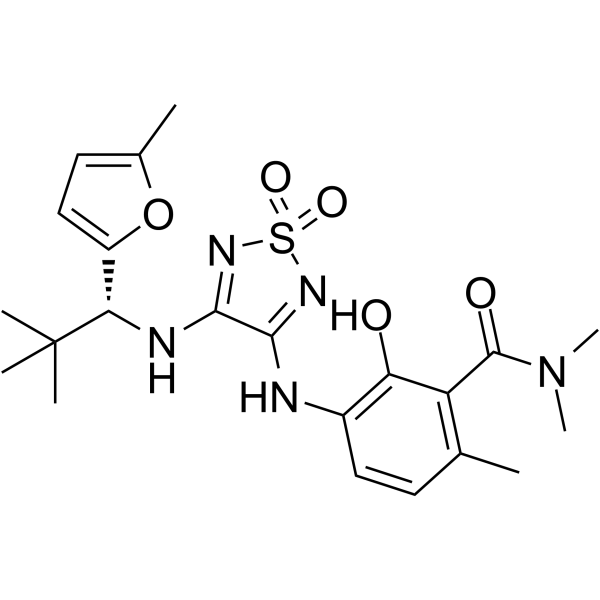
 0 ImagesCat. No.: HY-181681CXCR2 antagonist 10 (Compound 10b) is a CCR2 antagonist with an IC50 of 0.48 μM. CXCR2 antagonist 10 also exhibits antagonistic activity against CXCR2/CCR7, with IC50 values of 4.18 μM and 2.07 μM, respectively. CXCR2 antagonist 10 is applicable for cancer research.
-
SLW131
 0 ImagesSLW131 is a CCR7 antagonist with a Ki value of 9.85 nM. SLW131 inhibits CCL19-induced Go protein activation with an IC50 of 29.4 μM, and suppresses β-arrestin2 recruitment with an IC50 of 6.0 μM. SLW131 serves as a probe for investigating the biological functions of CCR7 in cells. SLW131 is applicable to research related to rheumatoid arthritis.




