



CA XIV
Carbonic anhydrase XIV (CA XIV) is a membrane-bound carbonic anhydrase first isolated from mouse kidney, and human CA14 was cloned and mapped as a distinct gene[1][2]. It supports CO₂/HCO₃⁻ conversion, linking extracellular acid-base regulation with bicarbonate handling in kidney, brain, retina, and skeletal muscle models[3][4][5][6][7][8][9]. Mechanistically, CA XIV contributes to extracellular buffering in brain and interacts with the AE3 Cl⁻/HCO₃⁻ exchanger, connecting enzyme activity to bicarbonate homeostasis in excitable tissues[5][8]. In disease-relevant models, CA XIV deficiency caused a functional defect in the retinal light response, while retinal studies localized CA XIV to retinal pigment epithelium, Müller cells, and astrocytes[6][7]. Compared with related isoforms, CA XIV differs from CA IV in brain buffering roles and from CA XIII/XV by being a membrane-associated isoform with distinct characterization and inhibition profiles[5][10]. For experimental applications, sulfonamides, natural polyphenols, and phenolic acids provide inhibitor classes for comparing CA XIV with mammalian isoforms I-XIV[10][11].
References:
- [1]. Mori K, et al. Isolation and characterization of CA XIV, a novel membrane-bound carbonic anhydrase from mouse kidney. J Biol Chem. 1999 May 28;274(22):15701-5. [Content Brief]
- [2]. Fujikawa-Adachi K, et al. Human carbonic anhydrase XIV (CA14): cDNA cloning, mRNA expression, and mapping to chromosome 1. Genomics. 1999 Oct 1;61(1):74-81. [Content Brief]
- [3]. Parkkila S, et al. Expression of membrane-associated carbonic anhydrase XIV on neurons and axons in mouse and human brain. Proc Natl Acad Sci U S A. 2001 Feb 13;98(4):1918-23. [Content Brief]
- [4]. Kaunisto K, et al. Carbonic anhydrase XIV: luminal expression suggests key role in renal acidification. Kidney Int. 2002 Jun;61(6):2111-8. [Content Brief]
- [5]. Shah GN, et al. Carbonic anhydrase IV and XIV knockout mice: roles of the respective carbonic anhydrases in buffering the extracellular space in brain. Proc Natl Acad Sci U S A. 2005 Nov 15;102(46):16771-6. [Content Brief]
- [6]. Nagelhus EA, et al. Carbonic anhydrase XIV is enriched in specific membrane domains of retinal pigment epithelium, Muller cells, and astrocytes. Proc Natl Acad Sci U S A. 2005 May 31;102(22):8030-5. [Content Brief]
- [7]. Ogilvie JM, et al. Carbonic anhydrase XIV deficiency produces a functional defect in the retinal light response. Proc Natl Acad Sci U S A. 2007 May 15;104(20):8514-9. [Content Brief]
- [8]. Casey JR, et al. Bicarbonate homeostasis in excitable tissues: role of AE3 Cl-/HCO3- exchanger and carbonic anhydrase XIV interaction. Am J Physiol Cell Physiol. 2009 Nov;297(5):C1091-102. [Content Brief]
- [9]. Wetzel P, et al. Carbonic anhydrase XIV in skeletal muscle: subcellular localization and function from wild-type and knockout mice. Am J Physiol Cell Physiol. 2007 Jul;293(1):C358-66. [Content Brief]
- [10]. Innocenti A, et al. Carbonic anhydrase inhibitors. Inhibition of mammalian isoforms I-XIV with a series of natural product polyphenols and phenolic acids. Bioorg Med Chem. 2010 Mar 15;18(6):2159-2164. [Content Brief]
All Product Categories
-
CA XIV Related Products (2)
Related Products (2)

-
Elsulfavirine
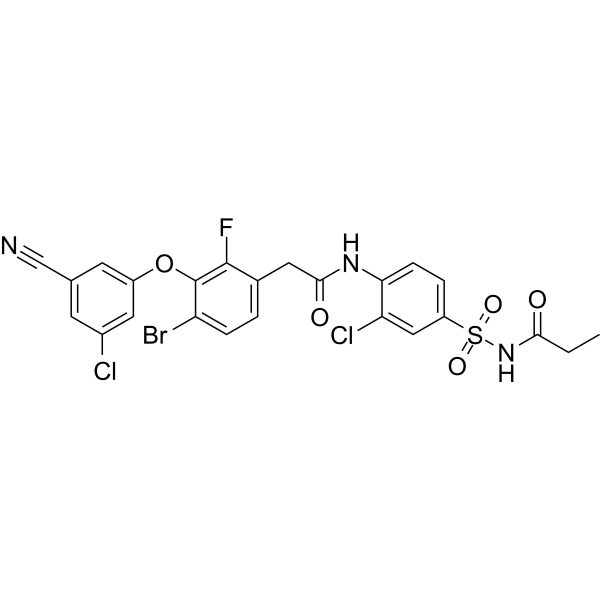 0 ImagesSynonyms: R-1206Elsulfavirine (R-1206) is an orally active human carbonic anhydrase (carbonic anhydrase, CA) inhibitor and an allosteric inhibitor of HIV-1 non-nucleoside reverse transcriptase (NNRT). Elsulfavirine also targets and blocks the interaction between adenylosuccinate lyase (ADSL) and insulin-induced gene proteins INSIG1/2, blocks SREBP-1-mediated de novo lipid synthesis, and inhibits the proliferation of liver cancer cells. The combination of Elsulfavirine and Lenvatinib (HY-10981) produces a synergistic anti-tumor effect. Elsulfavirine is converted into the active metabolite VM1500A in vivo, blocks the DNA polymerase activity of reverse transcriptase, and inhibits HIV-1 replication. Elsulfavirine exhibits a Ki of 1960 nM-52400 nM against human carbonic anhydrase isoforms including I, VII, VI, VA, VB, IX, XIII, XIV. Elsulfavirine is used in studies related to HIV-1 infection and liver cancer.
-
Elsulfavirine sodium
 0 ImagesCat. No.: HY-109056ACAS No.: 867365-40-0Synonyms: R-1206 sodiumElsulfavirine sodium (R-1206) is an orally active human carbonic anhydrase (carbonic anhydrase, CA) inhibitor and an allosteric inhibitor of HIV-1 non-nucleoside reverse transcriptase (NNRT). Elsulfavirine sodium also targets and blocks the interaction between adenylosuccinate lyase (ADSL) and insulin-induced gene proteins INSIG1/2, blocks SREBP-1-mediated de novo lipid synthesis, and inhibits the proliferation of liver cancer cells. The combination of Elsulfavirine sodium and Lenvatinib (HY-10981) produces a synergistic anti-tumor effect. Elsulfavirine sodium is converted into the active metabolite VM1500A in vivo, blocks the DNA polymerase activity of reverse transcriptase, and inhibits HIV-1 replication. Elsulfavirine sodium exhibits a Ki of 1960 nM-52400 nM against human carbonic anhydrase isoforms including I, VII, VI, VA, VB, IX, XIII, XIV. Elsulfavirine sodium is used in studies related to HIV-1 infection and liver cancer.



