



Elsulfavirine
Based on 2 publication(s) in Google Scholar
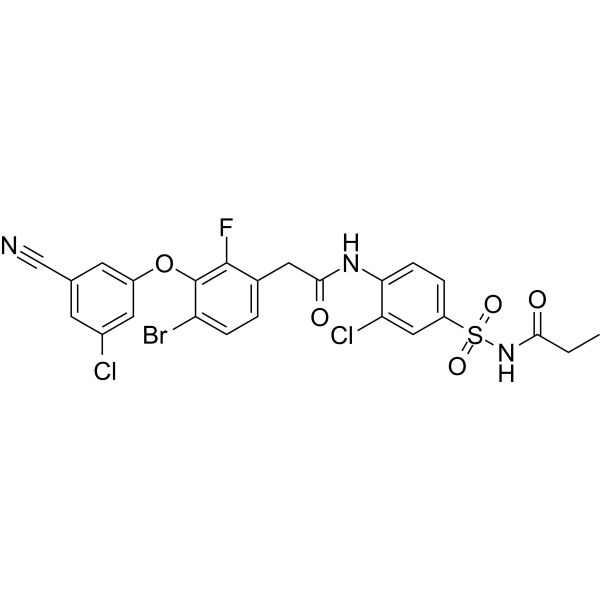
Elsulfavirine (R-1206) is an orally active human carbonic anhydrase (carbonic anhydrase, CA) inhibitor and an allosteric inhibitor of HIV-1 non-nucleoside reverse transcriptase (NNRT). Elsulfavirine also targets and blocks the interaction between adenylosuccinate lyase (ADSL) and insulin-induced gene proteins INSIG1/2, blocks SREBP-1-mediated de novo lipid synthesis, and inhibits the proliferation of liver cancer cells. The combination of Elsulfavirine and Lenvatinib (HY-10981) produces a synergistic anti-tumor effect. Elsulfavirine is converted into the active metabolite VM1500A in vivo, blocks the DNA polymerase activity of reverse transcriptase, and inhibits HIV-1 replication. Elsulfavirine exhibits a Ki of 1960 nM-52400 nM against human carbonic anhydrase isoforms including I, VII, VI, VA, VB, IX, XIII, XIV. Elsulfavirine is used in studies related to HIV-1 infection and liver cancer.
For research use only. We do not sell to patients.
- Purity : 99.90%
- CAS No.: 868046-19-9
- Formula: C24H17BrCl2FN3O5S
- Molecular Weight:629.28
-
Storage:Powder -20°C, 3 years ; In solvent -80°C, 6 months , -20°C, 1 month

To place orders, for customer services and technical support, please contact: MedChemExpress USA
Tel: 609-228-6898 E-mail: [email protected] [email protected]


-
 Biological Activity
-
Chemical Information
-
Solvent & Solubility
- Protocols
- Purity & Documentation
- References
-
 Help & FAQs


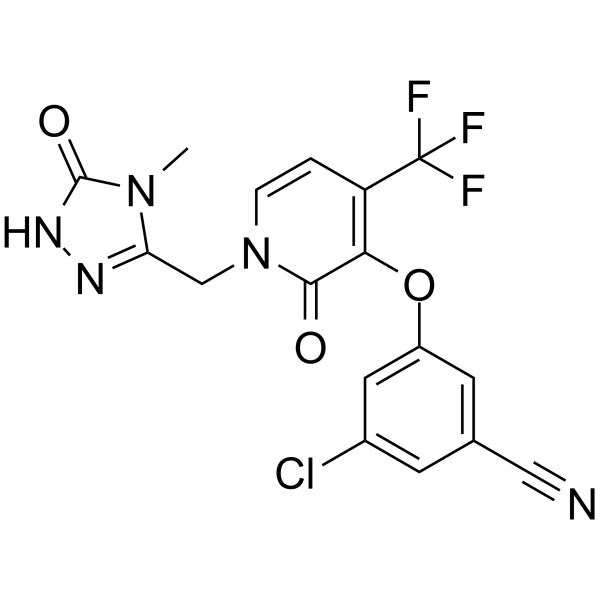

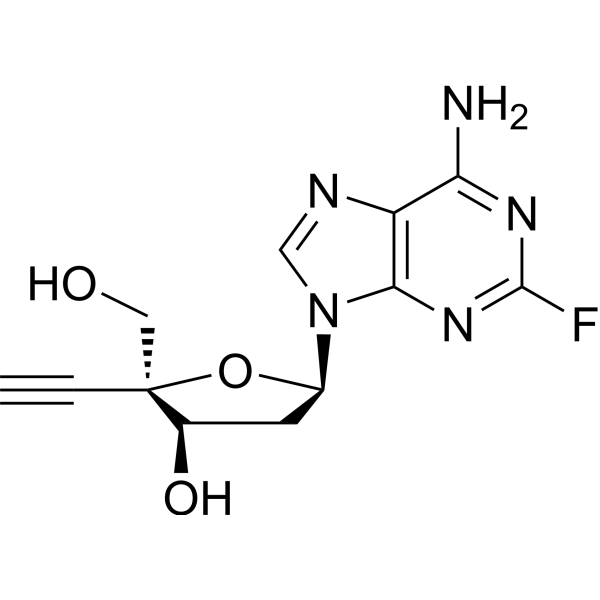

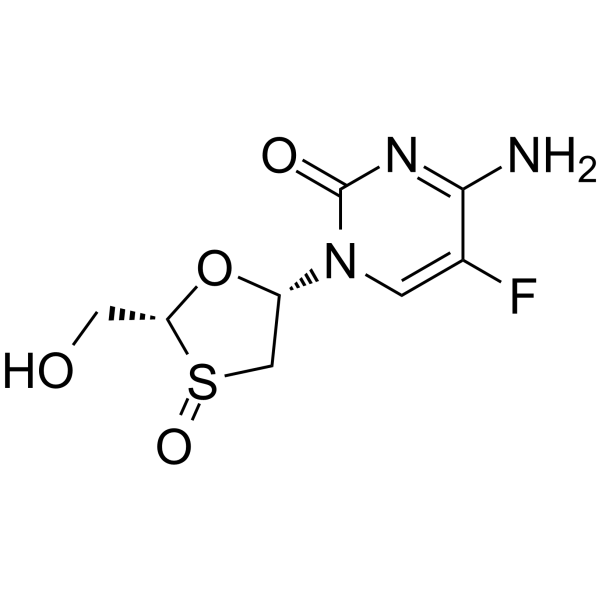
Publications Citing Use of MedChemExpress (MCE) Elsulfavirine
More

Biological Activity
Description
IC50 & Target
|
HIV-1
|
hCA I 52400 nM (Ki) |
CA VII 2390 nM (Ki) |
CA VI 5670 nM (Ki) |
CA VA 4290 nM (Ki) |
CA VB 14200 nM (Ki) |
hCA IX 6650 nM (Ki) |
CA XIII 4820 nM (Ki) |
CA XIV 1960 nM (Ki) |
In Vitro
Elsulfavirine (10 μM; 1 h) significantly blocks high glucose-induced interaction between ADSL and INSIG1/2 in Huh7 cells, inhibits the cleavage activation and nuclear translocation of SREBP-1, blocks SRE-driven luciferase transcriptional activity, and suppresses the activation of the SREBP lipogenic pathway[2].
Elsulfavirine (10 μM; 12 h) significantly inhibits high glucose-induced translocation of SCAP from the endoplasmic reticulum to the Golgi apparatus in Huh7 cells, downregulates the mRNA expression levels of SREBP-1 downstream lipogenic target genes FASN, ACACA, SCD, and GPAM, reduces the number of intracellular lipid droplets, and inhibits high glucose-induced intracellular lipid accumulation[2].
Elsulfavirine (10 μM; 8 h) significantly inhibits the conversion of 14C-glucose to triglycerides and fatty acids in Huh7 cells, and blocks the de novo lipid synthesis process in cells[2].
VM-1500A, the active metabolite of Elsulfavirine (with a serum-corrected EC50 of approximately 13.8 nM), potently inhibits the replication of HIV-1 clinical isolates in in vitro cell models[3].
MedChemExpress (MCE) has not independently confirmed the accuracy of these methods. They are for reference only.
-
Cell Line:Huh7 human hepatocellular carcinoma cells
-
Concentration:10 μM (elsulfavirine), 20 μM (tezacaftor), 100 μM (pyrithioxin) as control compounds
-
Incubation Time:1 h pre-treatment before high-glucose stimulation
-
Result:Markedly suppressed the cleavage and activation of SREBP-1 induced by high glucose in Huh7 cells, while it did not affect the phosphorylation of ADSL at S407 mediated by PKCε.
In contrast, the control compounds tezacaftor and pyrithioxin showed no significant inhibitory effect on SREBP-1 cleavage.
-
Cell Line:Huh7 human hepatocellular carcinoma cells
-
Concentration:10 μM
-
Incubation Time:12 h co-treatment with high glucose
-
Result:Significantly downregulated the high glucose-induced mRNA expression of SREBP-1 downstream lipogenic target genes, including FASN, ACACA, SCD and GPAM, in Huh7 cells.
In Vivo
Combination treatment with Elsulfavirine (10 mg/kg; oral administration; once daily for 20 consecutive days) and Lenvatinib (HY-10981) (administered via the same regimen as Elsulfavirine) exerts a synergistic inhibitory effect on hepatocellular carcinoma tumor growth in a nude mouse subcutaneous xenograft model of Huh7 cells, and achieves a better efficacy than monotherapy[2].
MedChemExpress (MCE) has not independently confirmed the accuracy of these methods. They are for reference only.
-
Animal Model:Male athymic BALB/c nude mice (6-week-old) with subcutaneous xenograft hepatocellular carcinoma (HCC) model established by subcutaneous inoculation of 1 × 10⁶ Huh7 cells in the right flank[2]
-
Dosage:10 mg/kg
-
Administration:Administered via gavage once daily for 20 consecutive days, starting on day 7 after tumor cell inoculation; with 10 mg/kg lenvatinib or not.
-
Result:As for monotherapy:
Significantly inhibited the growth of HCC xenografts in nude mice, reduced the expression of proliferation marker Ki-67 in tumor tissues, increased the level of tumor cell apoptosis, and downregulated the protein expression of SREBP-1 and lipogenesis-related enzymes including FASN and ACLY in tumor tissues, compared with the vehicle control group.
As for combination:
Exerted a synergistic inhibitory effect on HCC tumor growth, with a more significant reduction in tumor volume and weight, lower Ki-67 expression, higher tumor cell apoptosis, and more pronounced downregulation of SREBP-1, FASN and ACLY in tumor tissues, compared with the Elsulfavirine or lenvatinib monotherapy groups.
Clinical Trial
| NCT Number | Sponsor | Condition | Start Date |
Phase

|
|---|---|---|---|---|
| NCT01329991 | 2011-05 | PHASE1 |


Chemical Information
-
CAS No. 868046-19-9
-
Appearance Solid
-
Molecular Weight 629.28
-
Formula C24H17BrCl2FN3O5S
-
Color White to off-white
-
SMILES
O=C(NC1=CC=C(S(=O)(NC(CC)=O)=O)C=C1Cl)CC2=CC=C(Br)C(OC3=CC(C#N)=CC(Cl)=C3)=C2F
-
Synonyms
R-1206
-
Shipping
Room temperature in continental US; may vary elsewhere.
-
Storage
Powder -20°C 3 years In solvent -80°C 6 months -20°C 1 month


Publications (2)
-
Journal Impact Factor
-
Most Recent
-
Nat Commun
INSIG1/2 succination mediated by the moonlighting function of ADSL promotes lipogenesis and liver tumorigenesis. [Abstract]2026 Mar 15;17(1):4002. PMID: 41833955 -
Anal Chem
Exposome-Scale Investigation of Cl-/Br-Containing Chemicals Using High-Resolution Mass Spectrometry, Multistage Machine Learning, and Cloud Computing. [Abstract]2025 Jun 3;97(21):11099-11109. PMID: 40401576


Solvent & Solubility
In Vitro:
DMSO : 62.5 mg/mL (99.32 mM; Need ultrasonic; Hygroscopic DMSO has a significant impact on the solubility of product, please use newly opened DMSO)
Please refer to the solubility information to select the appropriate solvent. Once prepared, please aliquot and store the solution to prevent product inactivation from repeated freeze-thaw cycles.
Storage method and period of stock solution: -80°C, 6 months; -20°C, 1 month. When stored at -80°C, please use it within 6 months. When stored at -20°C, please use it within 1 month.
Please refer to the solubility information to select the appropriate solvent. Once prepared, please aliquot and store the solution to prevent product inactivation from repeated freeze-thaw cycles.
Storage method and period of stock solution: -80°C, 6 months; -20°C, 1 month. When stored at -80°C, please use it within 6 months. When stored at -20°C, please use it within 1 month.
Concentration (start) × Volume (start) = Concentration (final) × Volume (final)
In Vivo:
Select the appropriate dissolution method based on your experimental animal and administration route.
- For the following dissolution methods, please ensure to first prepare a clear stock solution using an In Vitro approach and then sequentially add co-solvents:
- To ensure reliable experimental results, the clarified stock solution can be appropriately stored based on storage conditions. As for the working solution for In Vivo experiments, it is recommended to prepare freshly and use it on the same day.
- The percentages shown for the solvents indicate their volumetric ratio in the final prepared solution. If precipitation or phase separation occurs during preparation, heat and/or sonication can be used to aid dissolution.
Add each solvent one by one: 10% DMSO 90% (20% SBE-β-CD in Saline)
Solubility: 2.08 mg/mL (3.31 mM); Suspended solution; Need ultrasonic
This protocol yields a suspended solution of 2.08 mg/mL. Suspended solution can be used for oral and intraperitoneal injection.
Taking 1 mL working solution as an example, add 100 μL DMSO stock solution (20.8 mg/mL) to 900 μL 20% SBE-β-CD in Saline, and mix evenly.
Preparation of 20% SBE-β-CD in Saline (4°C, storage for one week): 2 g SBE-β-CD powder is dissolved in 10 mL Saline, completely dissolve until clear.
In Vivo Dissolution Calculator
Please enter the basic information of animal experiments:
-
-
-
-
Recommended: Prepare an additional quantity of animals to account for potential losses during experiments.
Please enter your animal formula composition:
-
%DMSO +
Recommended: Keep the proportion of DMSO in working solution below 2% if your animal is weak.
-
%+
-
+%Tween-80 + +
-
%Saline +
The co-solvents required include: DMSO, . All of co-solvents are available by MedChemExpress (MCE). , Tween 80. All of co-solvents are available by MedChemExpress (MCE).
Working solution concentration: 0.22 mg/mL
Method for preparing stock solution: mg drug dissolved in μL DMSO. Stock solution concentration: mg/mL.
1. Take μL DMSO stock solution;
2. Add μL .
μL , mix evenly;
3. Then add μL Tween 80, mix evenly;
4. Then add μL
Please ensure that the stock solution in the first step is dissolved to a clear state, and add co-solvents in sequence. You can use ultrasonic heating (ultrasonic cleaner, recommended frequency 20-40 kHz), vortexing, etc. to assist dissolution.


Purity & Documentation
-
Data Sheet (280 KB)
-
SDS (396 KB)
- English - EN (396 KB)
- Français - FR (396 KB)
- Deutsch - DE (396 KB)
- Norwegian - NO (396 KB)
- Español - ES (396 KB)
- Swedish - SV (396 KB)
- Italian - IT (396 KB)
- Korean - KR (396 KB)
- Portuguese - PT (396 KB)
-
Handling Instructions (2659 KB)
References


Complete Stock Solution Preparation Table
Please refer to the solubility information to select the appropriate solvent. Once prepared, please aliquot and store the solution to prevent product inactivation from repeated freeze-thaw cycles.
Storage method and period of stock solution: -80°C, 6 months; -20°C, 1 month. When stored at -80°C, please use it within 6 months. When stored at -20°C, please use it within 1 month.
| Optional Solvent | Concentration Solvent Mass | 1 mg | 5 mg | 10 mg | 25 mg |
|---|---|---|---|---|---|
| DMSO | 1 mM | 1.5891 mL | 7.9456 mL | 15.8912 mL | 39.7279 mL |
| 5 mM | 0.3178 mL | 1.5891 mL | 3.1782 mL | 7.9456 mL | |
| 10 mM | 0.1589 mL | 0.7946 mL | 1.5891 mL | 3.9728 mL | |
| 15 mM | 0.1059 mL | 0.5297 mL | 1.0594 mL | 2.6485 mL | |
| 20 mM | 0.0795 mL | 0.3973 mL | 0.7946 mL | 1.9864 mL | |
| 25 mM | 0.0636 mL | 0.3178 mL | 0.6356 mL | 1.5891 mL | |
| 30 mM | 0.0530 mL | 0.2649 mL | 0.5297 mL | 1.3243 mL | |
| 40 mM | 0.0397 mL | 0.1986 mL | 0.3973 mL | 0.9932 mL | |
| 50 mM | 0.0318 mL | 0.1589 mL | 0.3178 mL | 0.7946 mL | |
| 60 mM | 0.0265 mL | 0.1324 mL | 0.2649 mL | 0.6621 mL | |
| 80 mM | 0.0199 mL | 0.0993 mL | 0.1986 mL | 0.4966 mL |


Elsulfavirine Related Classifications
HY-109056 Related Classifications
 Powered by Bioz
Keywords
- Elsulfavirine
- 868046-19-9
- R-1206
- R1206
- R 1206
- Drug Intermediate
- HIV
- Reverse Transcriptase
- Carbonic Anhydrase
- human carbonic anhydrase VA
- human carbonic anhydrase I
- human carbonic anhydrase VB
- human carbonic anhydrase VI
- HIV-1 infections
- human carbonic anhydrase XIII
- human carbonic anhydrase XIV
- human carbonic anhydrase VII
- human carbonic anhydrase IX
- human carbonic anhydrase II
- Inhibitor
- inhibitor
- inhibit