



CA XIII
CA XIII is a cytosolic carbonic anhydrase isozyme that catalyzes CO2 hydration and is expressed in several normal tissues[1]. Mechanistically, recombinant mouse CA XIII showed catalytic activity similar to mitochondrial CA V and cytosolic CA I, supporting its role in physiological acid-base processes[1]. In colorectal mucosa, CA XIII expression is down-regulated in tumor cells compared with normal tissue, and the lowest signal was detected in carcinoma samples[2]. Compared with related cytosolic isoforms, CA XIII showed a unique and widespread distribution pattern distinct from CA I, CA II, and CA III[1]. Structurally, human CA XIII has high similarity to cytosolic isozymes but active-site differences support isozyme-specific inhibitor design[3]. For experimental applications, CA XIII is efficiently inhibited by sulfonamide inhibitors, including acetazolamide, while intrinsic thermodynamic studies support structure-activity analysis of CA XIII inhibitor binding[1][4].
References:
- [1]. Lehtonen J, et al. Characterization of CA XIII, a novel member of the carbonic anhydrase isozyme family. J Biol Chem. 2004 Jan 23;279(4):2719-27. [Content Brief]
- [2]. Kummola L, et al. Expression of a novel carbonic anhydrase, CA XIII, in normal and neoplastic colorectal mucosa. BMC Cancer. 2005 Apr 18;5:41. [Content Brief]
- [3]. Di Fiore A, et al. Crystal structure of human carbonic anhydrase XIII and its complex with the inhibitor acetazolamide. Proteins. 2009 Jan;74(1):164-75. [Content Brief]
- [4]. Baranauskienė L, et al. Intrinsic thermodynamics of ethoxzolamide inhibitor binding to human carbonic anhydrase XIII. BMC Biophys. 2012 Jun 7;5:12. [Content Brief]
All Product Categories
-
CA XIII Related Products (2)
Related Products (2)

-
Elsulfavirine
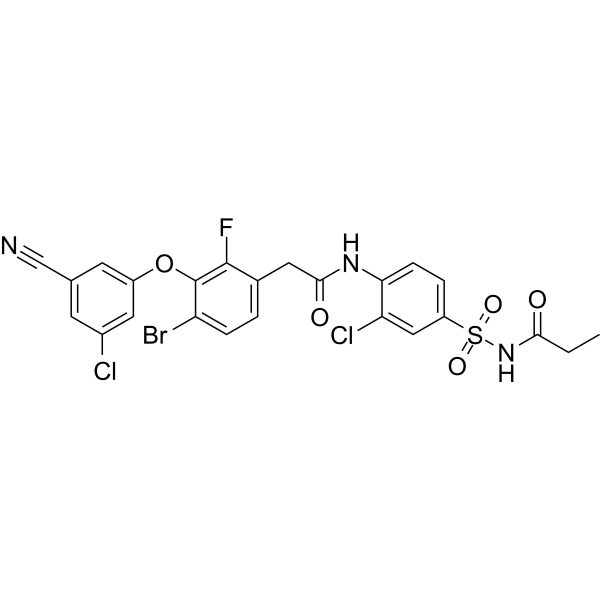 0 ImagesSynonyms: R-1206Elsulfavirine (R-1206) is an orally active human carbonic anhydrase (carbonic anhydrase, CA) inhibitor and an allosteric inhibitor of HIV-1 non-nucleoside reverse transcriptase (NNRT). Elsulfavirine also targets and blocks the interaction between adenylosuccinate lyase (ADSL) and insulin-induced gene proteins INSIG1/2, blocks SREBP-1-mediated de novo lipid synthesis, and inhibits the proliferation of liver cancer cells. The combination of Elsulfavirine and Lenvatinib (HY-10981) produces a synergistic anti-tumor effect. Elsulfavirine is converted into the active metabolite VM1500A in vivo, blocks the DNA polymerase activity of reverse transcriptase, and inhibits HIV-1 replication. Elsulfavirine exhibits a Ki of 1960 nM-52400 nM against human carbonic anhydrase isoforms including I, VII, VI, VA, VB, IX, XIII, XIV. Elsulfavirine is used in studies related to HIV-1 infection and liver cancer.
-
Elsulfavirine sodium
 0 ImagesCat. No.: HY-109056ACAS No.: 867365-40-0Synonyms: R-1206 sodiumElsulfavirine sodium (R-1206) is an orally active human carbonic anhydrase (carbonic anhydrase, CA) inhibitor and an allosteric inhibitor of HIV-1 non-nucleoside reverse transcriptase (NNRT). Elsulfavirine sodium also targets and blocks the interaction between adenylosuccinate lyase (ADSL) and insulin-induced gene proteins INSIG1/2, blocks SREBP-1-mediated de novo lipid synthesis, and inhibits the proliferation of liver cancer cells. The combination of Elsulfavirine sodium and Lenvatinib (HY-10981) produces a synergistic anti-tumor effect. Elsulfavirine sodium is converted into the active metabolite VM1500A in vivo, blocks the DNA polymerase activity of reverse transcriptase, and inhibits HIV-1 replication. Elsulfavirine sodium exhibits a Ki of 1960 nM-52400 nM against human carbonic anhydrase isoforms including I, VII, VI, VA, VB, IX, XIII, XIV. Elsulfavirine sodium is used in studies related to HIV-1 infection and liver cancer.



