



UCHL1
UCHL1 (ubiquitin C-terminal hydrolase L1) is a neuronal deubiquitinase belonging to the peptidase C12 family that hydrolyzes ubiquitin C-terminal adducts and contributes to monoubiquitin homeostasis within the ubiquitin-proteasome system (UPS)[1][2]. UCHL1 is highly enriched in neurons and neuroendocrine cells, where it participates in ubiquitin processing and protein quality control, linking its activity to cellular proteostasis and neuronal function[1][2]. Mechanistically, UCHL1 regulates the stability and turnover of specific protein substrates through its deubiquitinating activity, thereby influencing signaling pathways associated with cell survival, protein degradation, and stress responses[1]. Dysregulation of UCHL1 has been implicated in neurodegenerative disorders, including Parkinson’s disease, and pathogenic variants can lead to progressive neurodegenerative phenotypes characterized by motor and neurological dysfunction[2][3]. In addition to nervous system disorders, aberrant UCHL1 expression has been reported in several cancers and fibrotic diseases, supporting a broader role for UCHL1 in pathological tissue remodeling and cell signaling regulation[2][4]. Compared with the closely related isoform UCHL3, UCHL1 exhibits a more restricted neuronal and neuroendocrine expression pattern and is widely used as a marker of neuronal identity and neurodegeneration-related processes[2]. For experimental applications, the small-molecule inhibitor LDN57444 has been used to suppress UCHL1 activity and has demonstrated efficacy in reducing UCHL1-dependent fibrotic responses in disease models, providing a useful pharmacological tool for mechanistic studies of UCHL1 signaling[4].
References:
- [1]. Lucidi A, et al. Emergency delivery in pregnancies at high probability of placenta accreta spectrum on prenatal imaging: a systematic review and meta-analysis. Am J Obstet Gynecol MFM. 2024 Oct;6(10):101432. [Content Brief]
- [2]. Lei Q, et al. Ubiquitin C-terminal hydrolase L1 (UCHL1) regulates post-myocardial infarction cardiac fibrosis through glucose-regulated protein of 78 kDa (GRP78). Sci Rep. 2020 Jun 30;10(1):10604. [Content Brief]
All Product Categories
-
UCHL1 Related Products (4)
Related Products (4)

-
GK13S
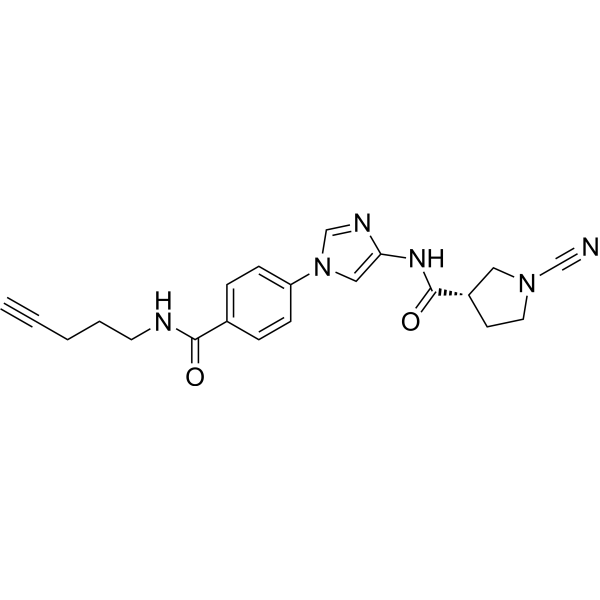 0 ImagesCat. No.: HY-153627Purity: 99.09%GK13S is a deubiquitinase UCHL1 ligand and inhibitor. GK13S inhibits recombinant and cellular UCHL1. GK13S reduces levels of monoubiquitin in human glioblastoma cells. GK13S is a click chemistry reagent, it contains an Alkyne group and can undergo copper-catalyzed azide-alkyne cycloaddition (CuAAc) with molecules containing Azide groups.
-
8RK64
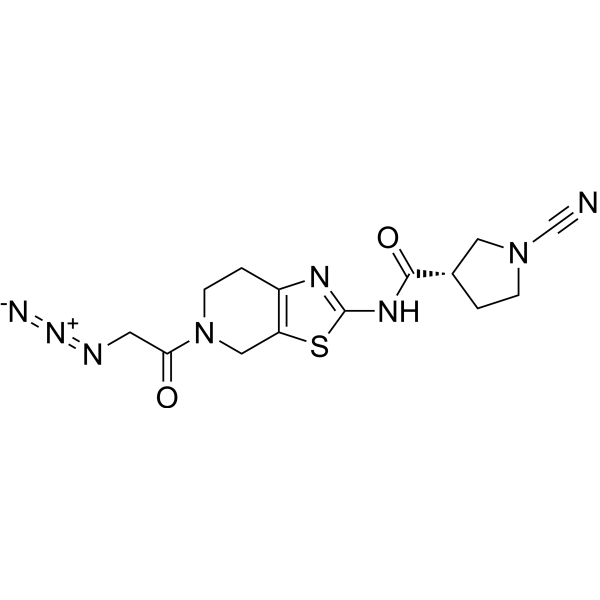 0 Images8RK64 is a UCHL1 inhibitor that covalently binds the active-site cysteine residue to form an isothiourea adduct, with selectivity over UCHL3, UCHL5, and other cysteine DUBs. 8RK64 inhibits human UCHL1 with an IC50 of 0.32 μM. 8RK64 is an azide-containing precursor usable as a two-step activity-based probe via click chemistry. 8RK64 can be used for the research of Parkinson's disease.
-
Z-VAE(OMe)-FMK
 0 ImagesCat. No.: HY-P0112CAS No.: 1027141-02-1Z-VAE (OMe)-FMK is a selective inhibitor of UCHL1, with better selectivity over UCHL3 and UCHL5. Z-VAE (OMe)-FMK binds to the active site cleft, covalently modifies the active site cysteine C90 to form a thioether bond, binds to inactive UCHL1 with a misaligned catalytic triad, and acts via a two-step addition-folding/migration/displacement mechanism. Z-VAE (OMe)-FMK stabilizes interactions through hydrogen bonding with oxyanion hole residues and van der Waals interactions with surrounding residues. Z-VAE (OMe)-FMK can be used in research related to colorectal cancer, lung cancer, pancreatic cancer, and Alzheimer's disease.



