



Fungal
An antifungal agent is a drug that selectively eliminates fungal pathogens from a host with minimal toxicity to the host.
Classes: 1. Polyene Antifungal Drugs: Amphotericin, nystatin, and pimaricin interact with sterols in the cell membrane (ergosterol in fungi, cholesterol in humans) to form channels through which small molecules leak from the inside of the fungal cell to the outside. 2. Azole Antifungal Drugs: Fluconazole, itraconazole, and ketoconazole inhibit cytochrome P450-dependent enzymes (particularly C14-demethylase) involved in the biosynthesis of ergosterol, which is required for fungal cell membrane structure and function. 3. Allylamine and Morpholine Antifungal Drugs: lylamines (naftifine, terbinafine) inhibit ergosterol biosynthesis at the level of squalene epoxidase. The morpholine drug, amorolfine, inhibits the same pathway at a later step. 4. Antimetabolite Antifungal Drugs: 5-Fluorocytosine acts as an inhibitor of both DNA and RNA synthesis via the intracytoplasmic conversion of 5-fluorocytosine to 5-fluorouracil.
All Product Categories
-
Fungal Related Products (2736)
Related Products (2736)

-
Antibodies (1)
-
Related Compound Screening Libraries (1)
-
(E,E)-Farnesol (Standard)
 0 ImagesSynonyms: trans,trans-Farnesol (Standard); (2E,6E)-Farnesol (Standard)(E,E)-Farnesol (Standard) (trans,trans-Farnesol (Standard)) is the analytical standard of (E,E)-Farnesol (HY-Y0248). This product is intended for research and analytical applications. (E,E)-Farnesol (trans,trans-Farnesol) is a quorum-sensing molecule of Candida species. (E,E)-Farnesol can inhibit the growth, metabolism and biofilm formation of various Candida species, and affect their morphology and invasiveness.
-
Antifungal agent 116
 0 ImagesCat. No.: HY-169174Antifungal agent 116 (compund 1a) has broad-spectrum antifungal activity.
-
CYP51-IN-5
 0 ImagesCat. No.: HY-136755CAS No.: 1155361-03-7CYP51-IN-5 is a cytochrome P450 14α-demethylase (CYP51) inhibitor and an antifungal (fungal) agent belonging to the triazole derivative class. CYP51-IN-5 is applicable to the research of Candida albicans, Cryptococcus neoformans, Candida parapsilosis, Candida tropicalis, Trichophyton rubrum, Candida krusei and Microsporum gypseum.
-
Crocacin A
 0 ImagesCat. No.: HY-N14038CAS No.: 157698-34-5
-
Dehydroacetic acid sodium (Standard)
 0 ImagesSynonyms: Sodium dehydroacetate (Standard)Dehydroacetic acid (sodium) (Standard) is the analytical standard of Dehydroacetic acid (sodium). This product is intended for research and analytical applications. Dehydroacetic acid sodium, a pyrone derivative acts as an antibacterial and antifungal agent. Dehydroacetic acid possess phytotoxic activity.
-
Antifungal agent 139
 0 ImagesCat. No.: HY-179411CAS No.: 25847-29-4Antifungal agent 139 (Compound li) is an antifungal agent that exhibits antifungal activity against Colletotrichum gloeosporioides by inhibiting CgSfu1 and CgRidA. Antifungal agent 139 completely inhibits mycelial growth, spore germination, and appressorium formation, with an EC50 of 18 μg/mL. Antifungal agent 139 can completely block the pathogen's infection of host plants (such as linden trees, cypress trees). Antifungal agent 139 can be used for research on anthrax.
-
Pyrametostrobin
 0 ImagesCat. No.: HY-W715370CAS No.: 915410-70-7Pyrametostrobin is a strobilurin fungicide used to protect crops from fungal infection. Pyrametostrobin can be applied to research related to cucumber powdery mildew, powdery mildew, rust, downy mildew and blight.
-
Phomopsinone A
 0 ImagesCat. No.: HY-N19907CAS No.: 1374428-43-9Phomopsinone A is an Antifungal agent. Phomopsinone A is isolated from Phomopsis sp. Phomopsinone A exhibits activity against plant and crop pathogens Pyricularia oryzae, Septoria tritici and Botrytis cinerea. Phomopsinone A can be used in the research of plant/crop fungal diseases.
-
Nikkomycin Lz
 0 ImagesCat. No.: HY-N14923CAS No.: 242149-97-9Nikkomycin Lz is a nucleoside peptide antifungal compound isolated from genetically engineered Streptomyces tendae TU901. Nikkomycin Lz has antifungal activity against Candida albicans.
-
1,5-Dimethylnaphthalene
 0 ImagesCat. No.: HY-W094881CAS No.: 571-61-91,5-Dimethylnaphthalene is a volatile organic compound. 1,5-Dimethylnaphthalene is a good marker for B. cinerea quantification. 1,5-dimethylnaphthalene is highly positively correlated to B. cinerea infection levels in Chardonnay berries.
-
Fluoxastrobin-d4
 0 ImagesCat. No.: HY-W741041CAS No.: 1246833-67-9Fluoxastrobin-d4 is the deuterium labeled Fluoxastrobin. Fluoxastrobin is a fungicide agent.
-
Nerol-d6
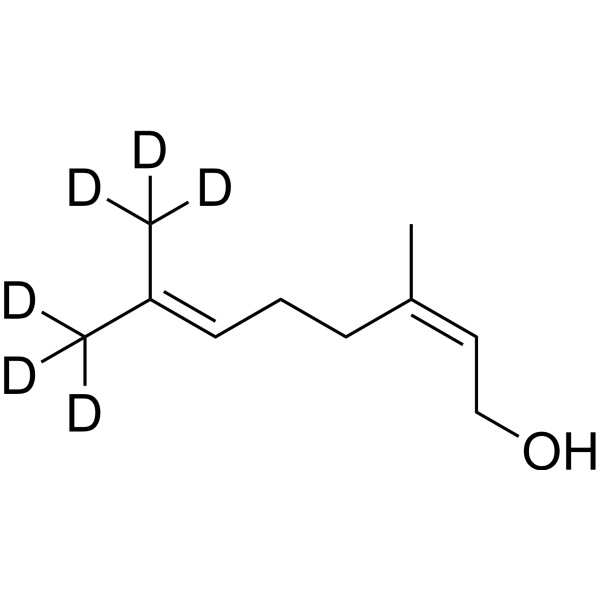 0 ImagesCat. No.: HY-N7063S1CAS No.: 66063-45-4
-
Neobulgarone A
 0 ImagesCat. No.: HY-N14807CAS No.: 315209-15-5Neobulgarone A is an anthraquinone derivative of Neobulgaria pura HA A07-97, a fungus of the ascomycetes class. Neobulgarone A can inhibit the formation of Appressorium in Magnaporthe grisea and has weak cytotoxicity without antifungal, antibacterial or phytotoxicity.
-
MoTPS1-IN-1
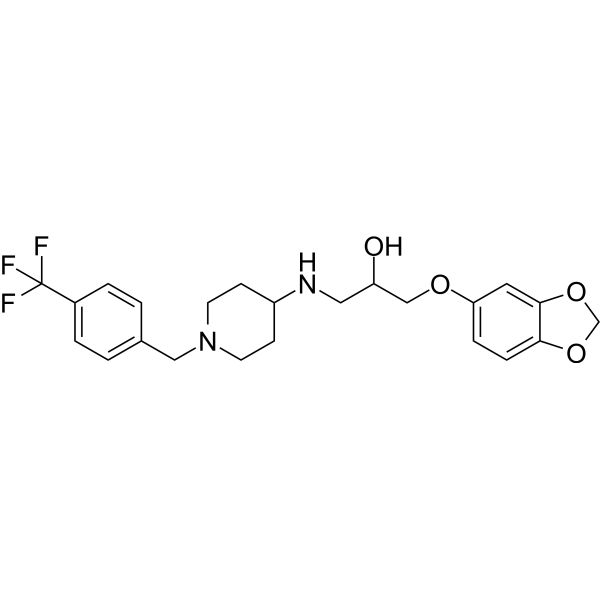 0 ImagesMoTPS1-IN-1 (Compound j11), an antifungal agent, is a MoTPS1 inhibitor. MoTPS1-IN-1 acts by interation with Glu396 in MoTPS1. MoTPS1-IN-1 inhibits pathogenicity of M. oryzae.
-
Scytalidin
 0 ImagesCat. No.: HY-N13929CAS No.: 39012-16-3Scytalidin is a terpenoid antibiotic with antifungal effect.
-
Pradimicin T2
 0 ImagesCat. No.: HY-N14437CAS No.: 149598-63-0Pradimicin T2 is an antibiotic. Pradimicin T2 has activity against filamentous fungi and yeast-like fungi.
-
Xanthobaccin A
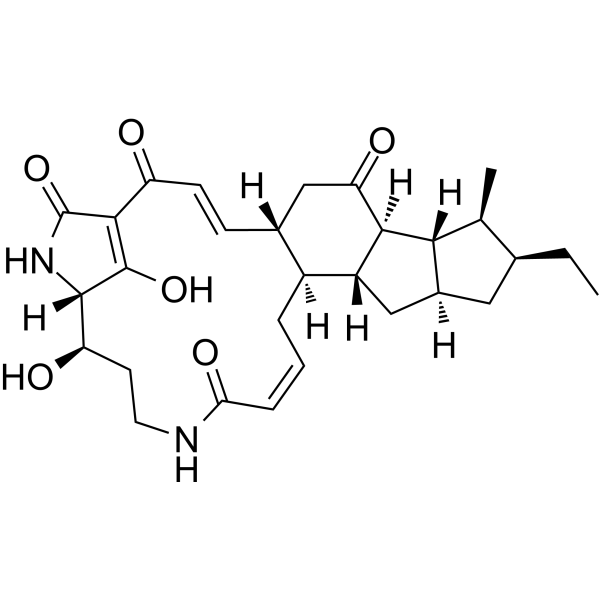 0 ImagesCat. No.: HY-122955CAS No.: 227596-81-8Xanthobaccin A is a potent antibiotic that can be isolated from the culture fluid of Stenotrophomonas sp. strain SB-K88. Xanthobaccin A exhibits activity against fungi and G+ bacteria, induces zoospore immobilization and lysis, inhibits mycelial growth. Xanthobaccin A can be used for the research of beet damping-off disease, bacterial and fungal infection.

-
PKR-IN-1
 0 ImagesCat. No.: HY-168446CAS No.: 3057531-75-3PKR-IN-1 (Compound 5s) is a pyruvate kinase (PK) inhibitor that has antifungal activity, with an EC50 of 0.21 μg/mL for R. solani.
-
Antifungal agent 130
 0 ImagesCat. No.: HY-173428Antifungal agent 130 (Compound A7) is an orally active antifungal agent. Antifungal agent 130 has good antifungal activity against Candida albicans (MIC = 0.12 ng/mL) and Cryptococcus neoformans (MIC = 0.12 ng/mL) and has excellent antivirulence effect. Antifungal agent 130 exerts its antifungal effect by disrupting the iron homeostasis of fungal cells and inducing oxidative stress damage. Antifungal agent 130 can inhibit the formation of fungal virulence factors (such as biofilm, capsule, urease and melanin). Antifungal agent 130 has good antifungal effect and can be used in the study of drug-resistant fungal infections.




