



GABA Receptor
Gamma-aminobutyric acid Receptor; γ-Aminobutyric acid Receptor
GABA receptors are a class of receptors that respond to the neurotransmitter gamma-aminobutyric acid (GABA), the chief inhibitory neurotransmitter in the vertebrate central nervous system. There are two classes of GABA receptors: GABAA and GABAB. GABAA receptors are ligand-gated ion channels (also known as ionotropic receptors), whereas GABAB receptors are G protein-coupled receptors (also known asmetabotropic receptors). It has long been recognized that the fast response of neurons to GABA that is blocked by bicuculline and picrotoxin is due to direct activation of an anion channel. This channel was subsequently termed the GABAA receptor. Fast-responding GABA receptors are members of family of Cys-loop ligand-gated ion channels. A slow response to GABA is mediated by GABAB receptors, originally defined on the basis of pharmacological properties.
All Product Categories
-
GABA Receptor Inhibitors
(152)
View all products
-
GABA Receptor Agonists
(189)
View all products
-
GABA Receptor Antagonists
(136)
View all products
-
GABA Receptor Activators
(69)
View all products
-
GABA Receptor Modulators
(93)
View all products
-
GABA Receptor Controls
(4)
View all products
-
GABA Receptor Ligands
(16)
View all products
-
GABA Receptor Related Products (777)
Related Products (777)

-
Antibodies (14)
-
Related Compound Screening Libraries (1)
-
Primidone-d5
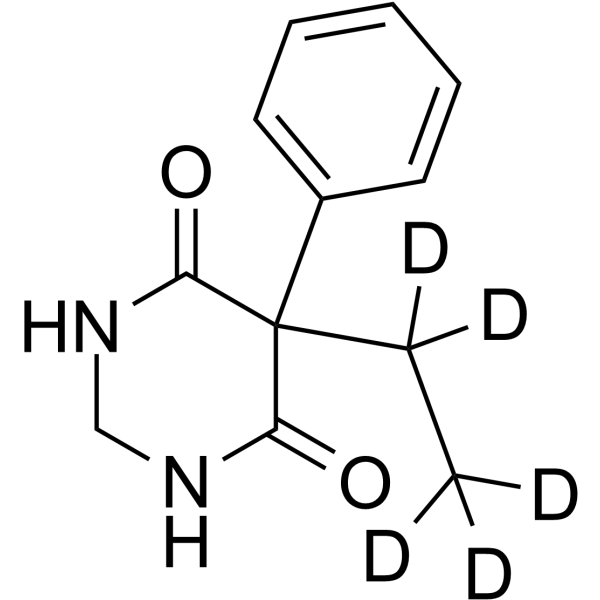 0 ImagesPrimidone-d5 is the deuterium labeled Primidone. Primidone is the orally active inhibitor for TRPM3 (IC50 = 0.6 μM), RIP kinase and voltage-gated sodium channel, and the antagonist for GABA receptor. Primidone can be used as the analgesic and anticonvulsant agent.
-
Baclofen-d4
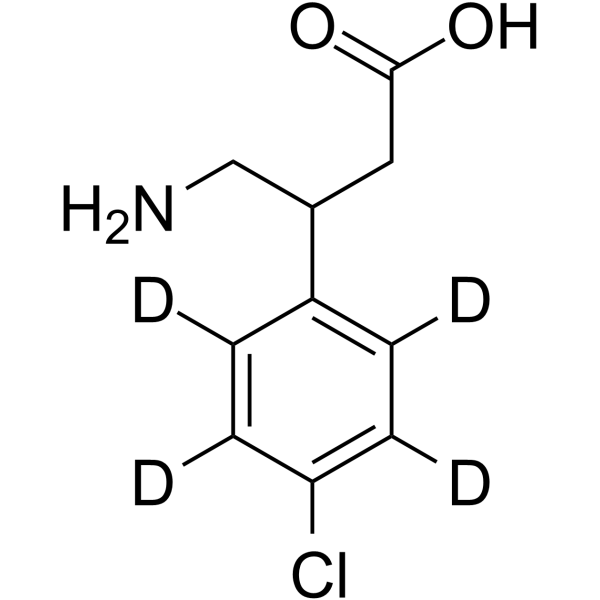 0 ImagesBaclofen-d4 is the deuterium labeled Baclofen. Baclofen, a lipophilic derivative of γ-aminobutyric acid (GABA), is an orally active, selective metabotropic GABAB receptor (GABABR) agonist. Baclofen mimics the action of GABA and produces slow presynaptic inhibition through the GABAB receptor. Baclofen has high blood brain barrier penetrance. Baclofen has the potential for muscle spasticity research.
-
Acamprosate-d6 calcium
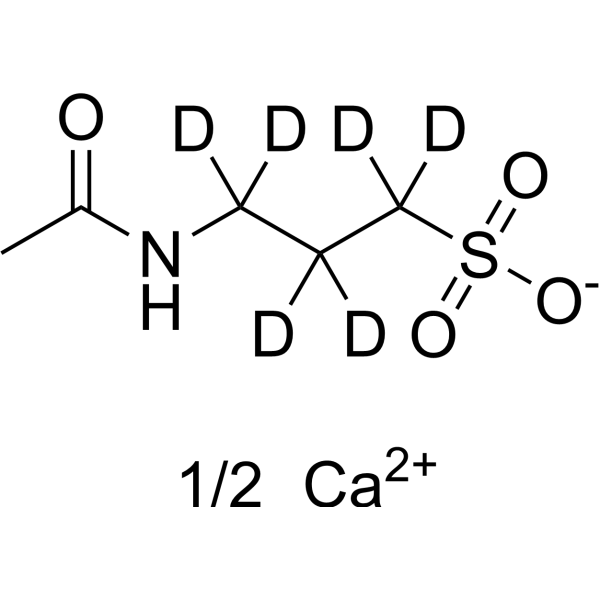 0 ImagesCat. No.: HY-110233SCAS No.: 1225580-91-5Acamprosate-d6 (calcium) is the deuterium labeled Acamprosate calcium. Acamprosate calcium (Campral EC) is a GABA receptor agonist and modulator of glutamatergic systems.
-
Alpidem-d14
 0 ImagesCat. No.: HY-W013150SCAS No.: 1189962-23-9Alpidem-d14 is the deuterium labeled Alpidem (HY-W013150). Alpidem, an anxiolytic agent, is an orally active and brain-penetrant GABAA receptor ligand, binds to α1β2γ2 subunit-containing GABAA receptors (IC50 of 17 nM) over α5β2γ2 subunit-containing GABAA receptors (IC50 of >10 μM). Alpidem modulates calcium-induced mitochondrial permeability transition, induces glutathione depletion and hepatocyte necrosis, potentiates TNF-α toxicity, inhibits marble-burying and locomotor activity, enhances stressed rodent feeding behavior, and exerts anticonvulsant effects. Alpidem can be used for the research of anxiety, anxiety disorders, and convulsions.
-
SB-205384
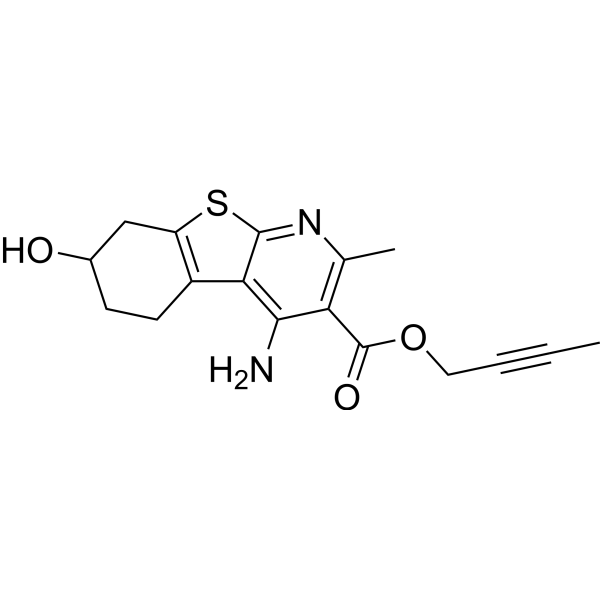 0 ImagesCat. No.: HY-103501CAS No.: 160296-13-9SB-205384 is a GABAA receptor modulator. The primary effect of SB-205384 on GABAA-activated currents is a prolonged response decay half-life upon removal of the agonist.
-
TB-21007
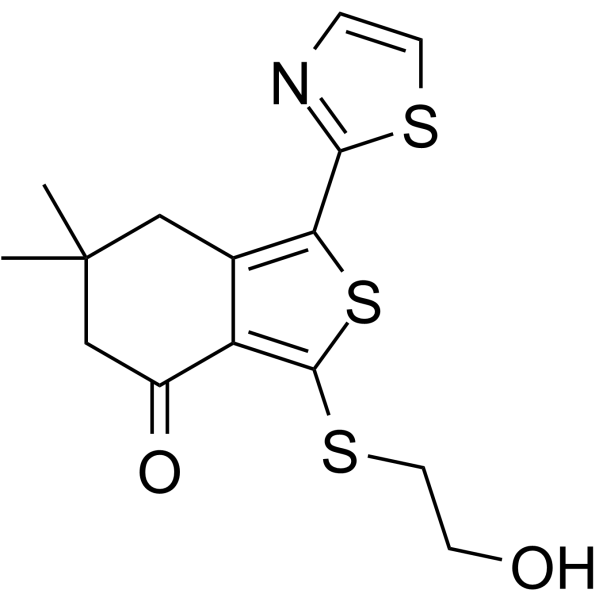 0 ImagesTB-21007 is a selective and brain penetrant α5 subunit-containing GABAA receptor inverse agonist with Kis of 1.6 nM, 20 nM, 16 nM, and 20 nM for α5, α1, α2 and α3 subtypes, respectively. TB-21007 enhances cognition in rats.
-
DSP-0565
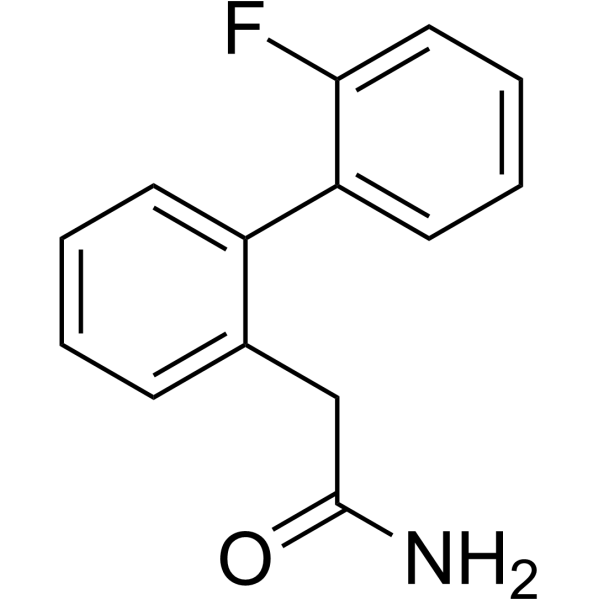 0 ImagesCat. No.: HY-114300CAS No.: 1226855-28-2DSP-0565 (compound 17a) is a strong, broad-spectrum anti-epileptic agent (AED) candidate with unique GABAergic function. DSP-0565 shows anti-convulsant activity in various models (scPTZ, MES, 6 Hz and amygdala kindling) with good safety margin.
-
SCH 50911 hydrochloride
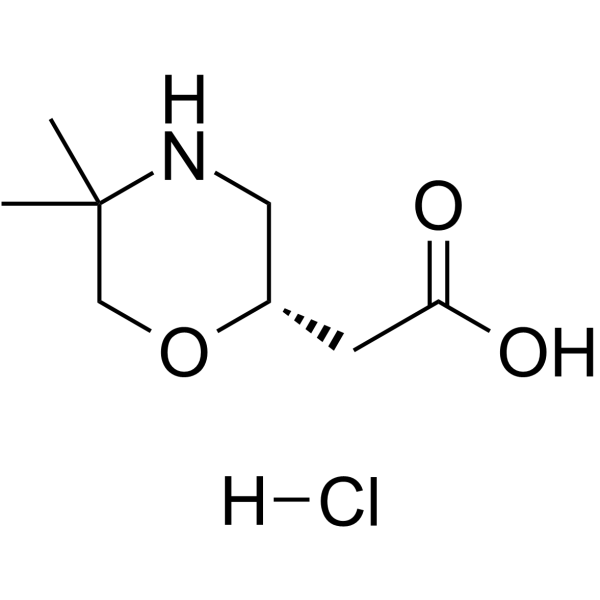 0 ImagesCat. No.: HY-12783CAS No.: 160415-07-6SCH 50911 dihydrochloride is a selective, orally active, blood-brain barrier permeable GABA-B receptor (GABA-B Receptor) antagonist with an IC50 of 1.1 μM in rats. SCH 50911 dihydrochloride blocks baclofen-induced antitussive effects, regulates neuronal firing and GABA release. SCH 50911 dihydrochloride promotes spontaneous seizures during withdrawal in ethanol-dependent rats, alters reward-related neurotransmission, and reduces or suppresses lever responding and self-administration behaviors of alcohol and sucrose in rats. SCH 50911 dihydrochloride is applicable to research related to ethanol withdrawal syndrome, absence epilepsy and alcohol use disorder.
-
Scoulerine hydrochloride
 0 ImagesCat. No.: HY-N1255ACAS No.: 51486-68-1Synonyms: (-)-Scoulerine hydrochloride; Discretamine hydrochlorideScoulerine ((-)-Scoulerine; Discretamine) hydrochloride is a multi-target inhibitor with anti-tumor and antioxidant activities. Scoulerine hydrochloride mainly targets the PI3K/Akt/mTOR signaling axis and α1D-adrenergic receptor, disrupts microtubule structure, and induces cell cycle arrest and apoptosis. Scoulerine hydrochloride effectively inhibits mitochondrial dehydrogenase activity, targets GABA receptors and BACE1, and suppresses the proliferation, migration, invasion, epithelial-mesenchymal transition and stem cell properties of cancer cells. Scoulerine hydrochloride also exhibits multiple pharmacological activities including anti-Plasmodium falciparum, antibacterial, antiemetic and antitussive effects, and regulates endoplasmic reticulum stress and mitochondrial function (modulates Bax, Bcl-2 and cytochrome c). Scoulerine hydrochloride is applicable to research related to leukemia, ovarian cancer, and colorectal cancer.
-
Topiramate lithium
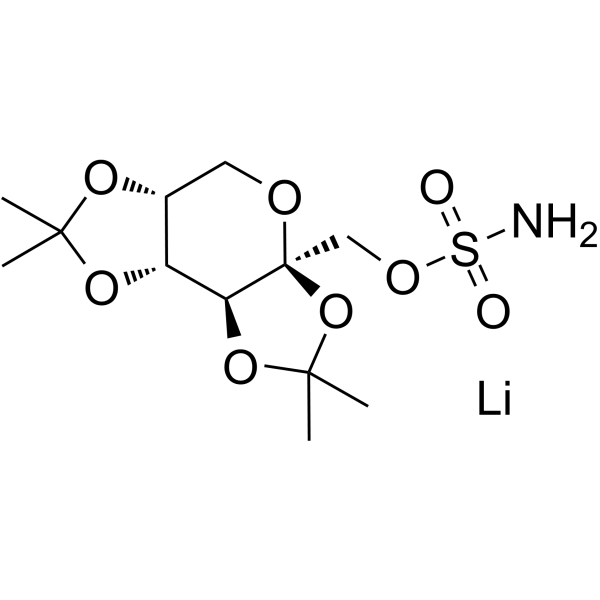 0 ImagesCat. No.: HY-B0122ACAS No.: 488127-53-3Synonyms: McN 4853 lithium; RWJ 17021 lithiumTopiramate (McN 4853) lithium is a broad-spectrum antiepileptic agent. Topiramate lithium is a GluR5 receptor antagonist. Topiramate produces its antiepileptic effects through enhancement of GABAergic activity, inhibition of kainate/AMPA receptors, inhibition of voltage-sensitive sodium and calcium channels, increases in potassium conductance, and inhibition of carbonic anhydrase.
-
ZK-91296
 0 ImagesCat. No.: HY-19006CAS No.: 83910-34-3ZK-91296 is a GABA receptor agonist with anxiolytic activity. ZK-91296 can reduce anxiety in animals without causing sedation. ZK-91296 may have pharmacological selectivity for interaction with specific types of benzodiazepine receptors.
-
Flufiprole
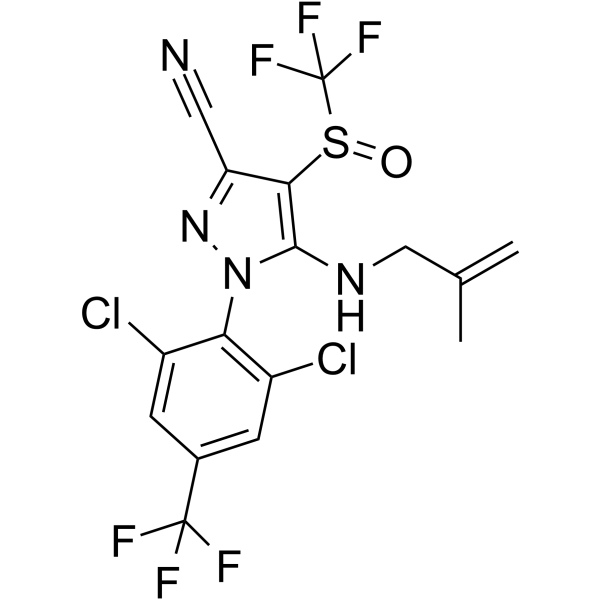 0 ImagesCat. No.: HY-116702CAS No.: 704886-18-0Flufiprole is a nonsystemic phenylpyrazole insecticide targeting the GABA receptor used in the rice field. Flufiprole is excellent in controlling a wide range of pests.
-
Anticonvulsant agent 9
 0 ImagesCat. No.: HY-170930Anticonvulsant agent 9 (compound 4f) is an α1β2γ2 GABAA receptors activator. Anticonvulsant agent 9 activatesα1β2γ2 GABAA receptors with an EC50 of 1.24 μM. Anticonvulsant agent 9 inhibits the inactivation of Nav1.2 channels. Anticonvulsant agent 9 exhibits significant anticonvulsant activities.
-
Tigolaner-d4
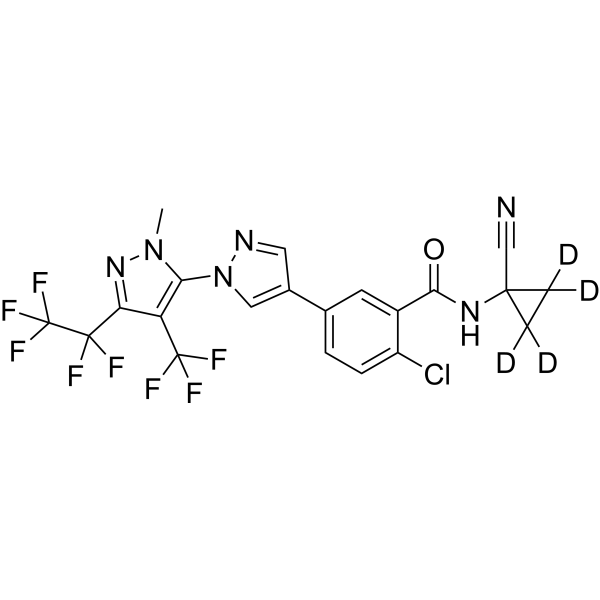 0 ImagesCat. No.: HY-109077STigolaner-d4 is deuterium labeled Tigolaner. Tigolaner (BAY-1272858) acts on γ-aminobutyric acid (GABA) and glutamate-gated chloride channels. Tigolaner has antiparasitic activity.
-
EF-1502
 0 ImagesCat. No.: HY-118931CAS No.: 684645-54-3EF-1502 is a potent and selective GABA transporter inhibitor with GAT1 and BGT1 inhibitory activity. EF-1502 produces a synergistic anti-epileptic effect when used in combination with Tiagabine (HY-B0696), a compound used to suppress epileptic seizures. The dosing combination of EF-1502 exhibited reduced anti-epileptic efficacy and dyskinesia when used with THIP (HY-10232). The mechanism of EF-1502 differs significantly from Tiagabine, suggesting a unique role in the inhibitory strategy.
-
Tiagabine-d5 (hydrochloride)
 0 ImagesCat. No.: HY-158252SCAS No.: 1253297-72-1Synonyms: NO050328-d5 hydrochloride; NO328-d5 hydrochloride; TGB-d5 hydrochlorideTiagabine-d5 (hydrochloride) is deuterium labeled Tiagabine (hydrochloride). Tiagabine hydrochloride (NO050328; NO328; TGB) is an orally active, highly selective, and reversible GAT-1 inhibitor and anticonvulsant that crosses the blood-brain barrier. By blocking the reuptake of GABA in neurons and glial cells, tiagabine increases extracellular GABA levels to enhance inhibitory signal transduction, thereby exerting multiple activities such as anticonvulsant, neuroprotective, and antioxidant effects. Tiagabine hydrochloride exhibits linear pharmacokinetic properties. Although it is metabolized by CYP3A and has a high protein binding rate, it carries a low risk of cognitive impairment. Tiagabine hydrochloride is widely used in research on related diseases including epilepsy (including refractory partial seizures), alcohol withdrawal symptoms, and Huntington's disease.
-
Ro19-4603
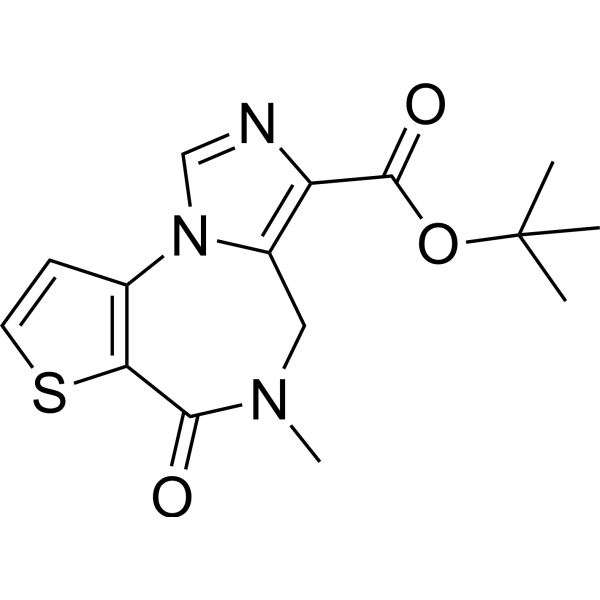 0 ImagesCat. No.: HY-103500CAS No.: 99632-94-7Ro19-4603 is a benzodiazepine inverse agonist. Ro19-4603 antagonizes ethanol (EtOH) intake in alcohol-preferring rats.
-
CPP-115
 0 ImagesCat. No.: HY-116910CAS No.: 640897-20-7CPP-115 is a GABA transaminase inactivator with higher affinity and lower retinal toxicity than Vigabatrin (HY-15399). CPP-115 increases brain GABA levels by inhibiting GABA transaminase catabolism. CPP-115 can be used in the study of drug addiction and infantile spasms.
-
Profadol hydrochloride
 0 ImagesCat. No.: HY-105627ACAS No.: 2324-94-9Synonyms: CI-572 hydrochlorideProfadol (CI-572) hydrochloride is a potent analgesic agent. Profadol is a µ-opioid receptor (MOR) agonist. Profadol hydrochloride activates the γ-aminobutyric acid (GABA) receptors and inhibits the N-methyl-D-aspartate (NMDA) receptor. Profadol increases the mRNA and protein expression of MOR.
-
Bicuculline (Standard)
 0 ImagesBicuculline (Standard) is the analytical standard of Bicuculline. This product is intended for research and analytical applications. Bicuculline ((+)-Bicuculline) is A competing neurotransmitter GABAA receptor antagonist (IC50=2 μM). Bicuculline also blocks Ca2+ activating potassium (SK) channels and subsequently blocks slow post-hyperpolarization (slow AHP). Bicuculline has anticonvulsant activity. Bicuculline can be used to induce seizures in mice.




