



Glycosidase
Glycosidase
Glycosidase are a class of enzymes which catalyze the hydrolysis of glycosidic bonds. In living organisms, Glycosidase are involved in carbohydrate metabolism. They can degrade polysaccharides such as starch and glycogen into monosaccharides, providing energy for cells. Glycosidase also participate in the synthesis and modification of biological macromolecules such as glycoproteins and glycolipids, playing a crucial role in cell recognition and signal transduction. Additionally, in plants and microorganisms, Glycosidase are involved in the metabolism of cell wall polysaccharide components, affecting cell growth, differentiation, and morphogenesis. Gene mutations of Glycosidase can trigger genetic diseases, leading to abnormal metabolism in the body and damage to organ functions. Changes in their activity are associated with various diseases such as diabetes, infectious diseases, and tumors, and can influence the occurrence and development of diseases[1][2].
References:
- [1]. Wang X, et al. Metabolites extracted from microorganisms as potential inhibitors of glycosidases (α-glucosidase and α-amylase): A review. Front Microbiol. 2022 Nov 17;13:1050869.
- [2]. Ohtsubo K, et al. Glycosylation in cellular mechanisms of health and disease. Cell. 2006 Sep 8;126(5):855-67. [Content Brief]
All Product Categories
-
Glycosidase Inhibitors
(456)
View all products
-
Glycosidase Antagonist
(1)
View all products
-
Glycosidase Activators
(20)
View all products
-
Glycosidase Modulators
(8)
View all products
-
Glycosidase Chemical
(1)
View all products
-
Glycosidase Inducers
(2)
View all products
-
Glycosidase Degrader
(1)
View all products
-
Glycosidase Controls
(6)
View all products
-
Glycosidase Substrates
(25)
View all products
-
Glycosidase Ligands
(3)
View all products
-
Glycosidase Related Products (697)
Related Products (697)

-
Antibodies (3)
-
α-Glucosidase-IN-94
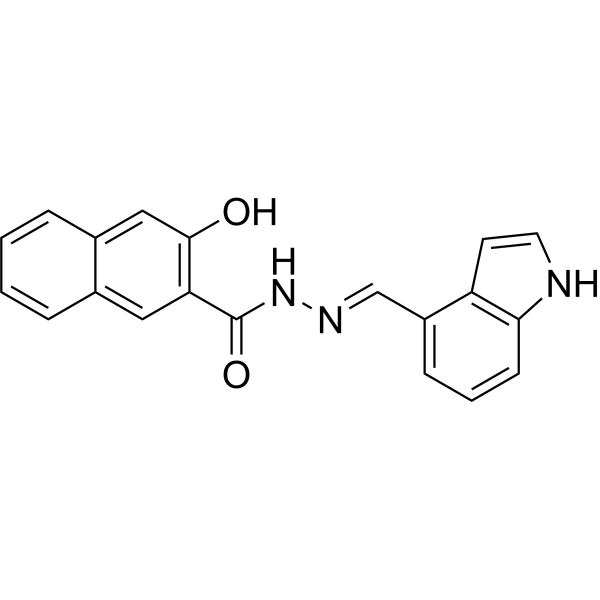
 0 ImagesCat. No.: HY-174840α-Glucosidase-IN-94 (Compound 6e) is a potent α-glucosidase inhibitor with an IC50 value of 0.1412 mM. α-Glucosidase-IN-94 is promising for research of type 2 diabetes.
-
Trehalose-6-phosphate hydrolase, Bacillus subtilis
 0 ImagesCat. No.: HY-E70898ATrehalose-6-phosphate hydrolase, Bacillus subtilis (EC 3.2.1.93), belongs to the hydrolase family and is a glycosidase that hydrolyzes O- and S-glycoside compounds. Trehalose-6-phosphate hydrolase participates in the metabolism of starch and sucrose. Its substrates are α,α'-trehalose-6-phosphate and water, and its products are D-glucose and D-glucose-6-phosphate.
-
Endoglycosidase CC
 0 ImagesCat. No.: HY-E70880ASynonyms: EndoCCEndoglycosidase CC (EndoCC), an endoglycosidase, is a substrate of glycopeptide.
-
α-Glucosidase-IN-17
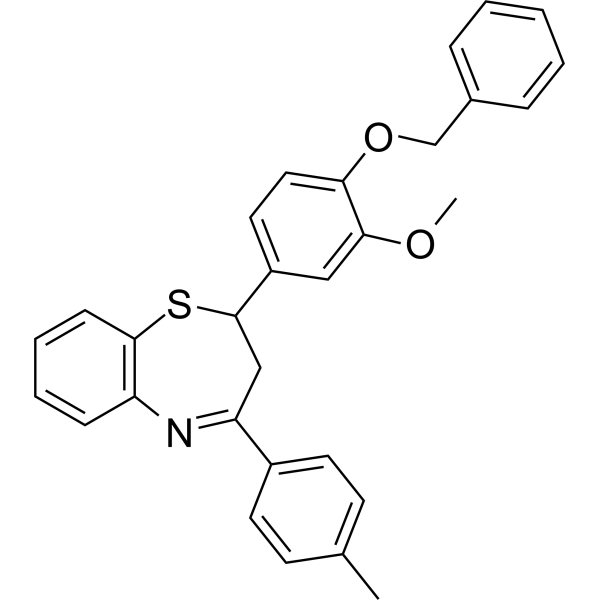 0 ImagesCat. No.: HY-151141CAS No.: 2820424-84-6α-Glucosidase-IN-17 (Compound 12B) is a potent, orally active α-glucosidase inhibitor with an IC50 of 3.79 μM. α-Glucosidase-IN-17 shows antidiabetic activity.
-
Antidiabetic agent 5
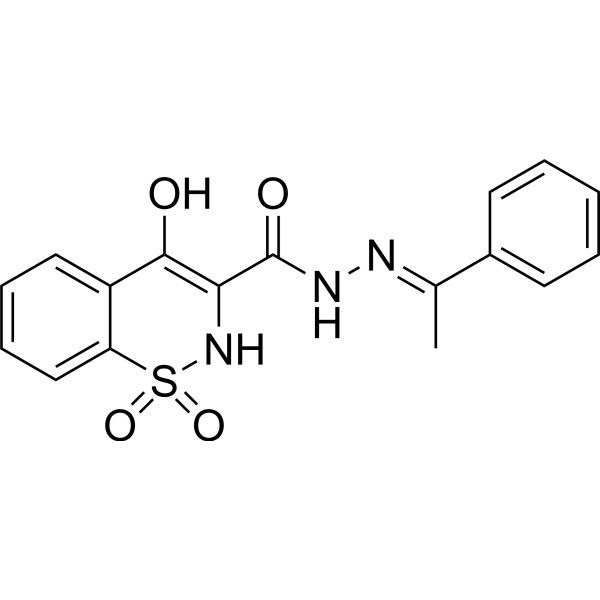 0 ImagesCat. No.: HY-161429CAS No.: 2152667-21-3Antidiabetic agent 5 (compound S1) is a antidiabetic agent. Antidiabetic agent 5 inhibits the activity of α-glucosidase and α-amylase with IC50 values of 3.91,8.89 μM,respectively. Antidiabetic agent 5 decreases sugar levels. Antidiabetic agent 5 has the potential for the research of type-II diabetes.
-
Euphomilone C
 0 ImagesCat. No.: HY-N21564CAS No.: 2906095-92-7Euphomilone C is a rearranged rosane-type diterpenoid with a 7/5/6 fused tricyclic skeleton that can be found in whole plants of Euphorbia milii Des Moul.
-
α-Glucosidase-IN-21
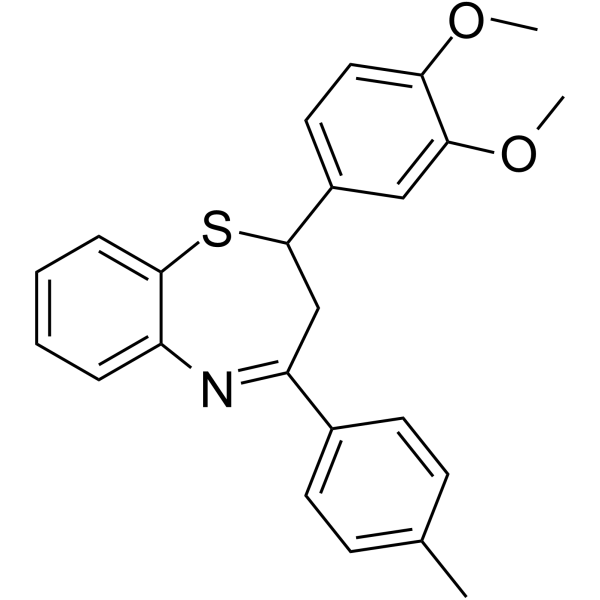 0 ImagesCat. No.: HY-151145CAS No.: 321686-01-5α-Glucosidase-IN-21 (Compound 2B) is a potent, orally active α-glucosidase inhibitor with an IC50 of 2.62 μM. α-Glucosidase-IN-21 shows anti-diabetic activity.
-
α-Glucosidase-IN-112
 0 ImagesCat. No.: HY-181353α-Glucosidase-IN-112 is an α-glucosidase inhibitor with an IC50 of 2.03 μM and a Ki of 0.44 μM. α-Glucosidase-IN-112 exerts antioxidant effects by scavenging ABTS+ free radicals. α-Glucosidase-IN-112 exerts antiproliferative effects by inhibiting the proliferation of bladder cancer cells. α-Glucosidase-IN-112 can be used in research related to type 2 diabetes and bladder cancer.
-
Dextranase, Penicillium sp.
 0 ImagesCat. No.: HY-P2840ADextranase, Penicillium sp. belongs to glycoside hydrolase family 49. It catalyzes the hydrolysis of α-1,6-glycosidic linkages in dextran via a single-displacement reaction, ultimately releasing shorter isomaltooligosaccharides. Dextranase, Penicillium sp. reduces the molecular size of dextran, inhibits the formation of insoluble dextran and dental plaque, and decreases the viscosity of dextran-contaminated sugar juice. Dextranase, Penicillium sp. can be used in relevant research in fields such as chemical production, including beer manufacturing, feed additives, and toothpaste formulations.
-
α-Glucosidase-IN-120
 0 ImagesCat. No.: HY-187171α-Glucosidase-IN-120 is an α-glucosidase (α-glucosidase) inhibitor that effectively inhibits α-glucosidase from Saccharomyces cerevisiae (IC50 = 12.01 μM, Ki = 21 μM). α-Glucosidase-IN-120 shows higher selectivity for α-glucosidase than for α-amylase and does not inhibit α-amylase activity. α-Glucosidase-IN-120 exhibits no significant cytotoxicity. α-Glucosidase-IN-120 can be used in the research of type 2 diabetes.
-
HPA-IN-3
 0 ImagesCat. No.: HY-184684HPA-IN-3 (compound 5) is a heparanase (HPA) inhibitor with an IC50 of 11.27 μM against human targets. HPA-IN-3 binds to the active site of HPA, and its structural features enhance binding stability and affinity. HPA-IN-3 reduces the levels of proinflammatory cytokines. HPA-IN-3 maintains organ morphology. HPA-IN-3 improves the survival rate of mice with sepsis induced by cecal ligation and puncture. HPA-IN-3 can be used in studies related to sepsis.
-
Anti-Heparanase Antibody
 0 ImagesCat. No.: HY-P992234

-
Gambogin
 0 ImagesCat. No.: HY-182460CAS No.: 173792-67-1Gambogin is an α-glucosidase inhibitor, found in the resin and dry latex of Garcinia hanburyi. Gambogin exists as an inseparable diastereomeric pair of C-2 epimers (8a and 8b), with 8a having an α-glucosidase inhibitory IC50 of 209.2 μM and 8b showing α-glucosidase inhibitory IC50 > 300 μM. Gambogin can be used for the research of type 2 diabetes and cervical cancer.
-
2,3-Indolobetulin
 0 ImagesCat. No.: HY-138992CAS No.: 2365493-59-82,3-Indolobetulin is a pentacyclic triterpene and a derivative of betulin. 2,3-Indolobetulin can be used in the synthesis of α-glucosidase inhibitors.
-
α-Glucosidase-IN-20
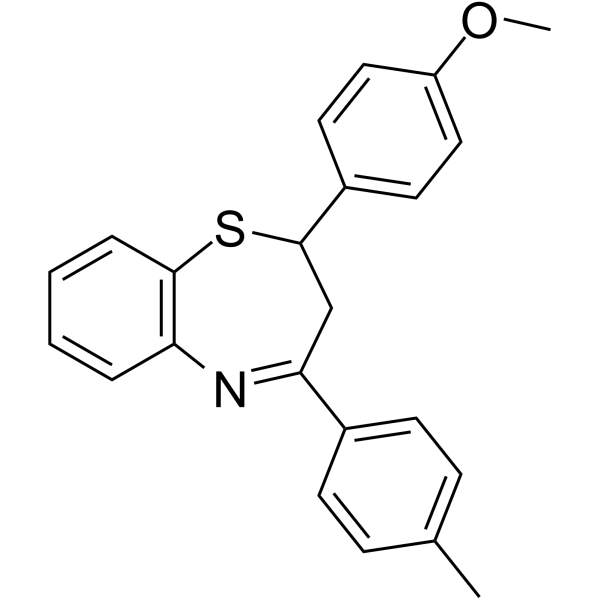 0 ImagesCat. No.: HY-151144CAS No.: 420809-56-9α-Glucosidase-IN-20 (Compound 3B) is a potent, orally active α-glucosidase inhibitor with an IC50 of 3.01 μM. α-Glucosidase-IN-20 shows anti-diabetic activity.
-
Glycyrrhisoflavone (Standard)
 0 ImagesCat. No.: HY-N3962RCAS No.: 116709-70-7Glycyrrhisoflavone (Standard) is the analytical standard of Glycyrrhisoflavone. This product is intended for research and analytical applications. Glycyrrhisoflavone, an active prenylflavonoid, inhibits α-glucosidase.
-
β-Galactosidase Mutein, E. coli
 0 ImagesCat. No.: HY-E70890β-Galactosidase Mutein, E. coli is a hydrolase enzyme that catalyzes the hydrolysis of β-galactosides into monosaccharides. Substrates of different β-galactosidases include ganglioside GM1, lactosylceramides, lactose, and various glycoproteins.
-
β-L-Rhamnosidase
 0 ImagesCat. No.: HY-E71307β-L-Rhamnosidase (EC 3.2.1.43) belongs to the family of hydrolases, to be specific those glycosidases that hydrolyse O-and S-glycosyl compounds.




