



Glycosidase Substrate
- 1
- 2
-
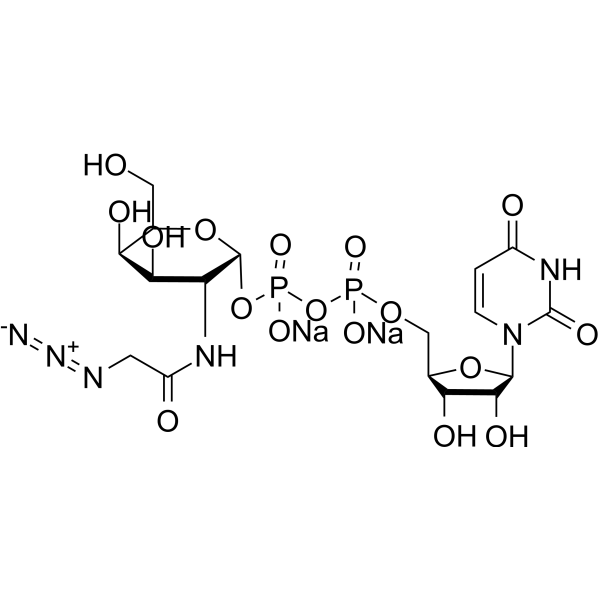
UDP-GalNAz disodium
 0 ImagesSynonyms: UDP-N-azidoacetylgalactosamine disodium
UDP-GalNAz (UDP-N-azidoacetylgalactosamine) disodium is the analogue of UDP-GalNAc disodium (HY-114365). UDP-GalNAc disodium is the donor substrate of many N-acetylgalactosaminyltransferases, enzymes which transfer GalNAc from the nucleotide sugar to a saccharide or peptide acceptor. UDP-GalNAz disodium is a click chemistry reagent, it contains an Azide group and can undergo copper-catalyzed azide-alkyne cycloaddition reaction (CuAAc) with molecules containing Alkyne groups. It can also undergo strain-promoted alkyne-azide cycloaddition (SPAAC) reactions with molecules containing DBCO or BCN groups.
-
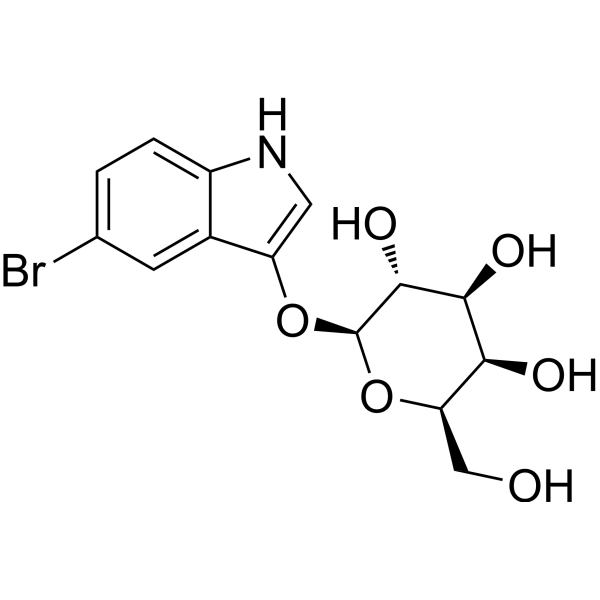
5-Bromo-3-indolyl β-D-galactopyranoside
 0 ImagesSynonyms: Bluo-Gal
5-Bromo-3-indolyl β-D-galactopyranoside (Bluo-Gal) is a chromogenic substrate for β-galactosidase. 5-Bromo-3-indolyl β-D-galactopyranoside is hydrolyzed by the enzyme to generate a 5-bromoindole intermediate, which is further oxidized to form an insoluble blue precipitate. 5-Bromo-3-indolyl β-D-galactopyranoside can specifically recognize bacterial β-galactosidases (such as the product of the Escherichia coli lacZ gene) and reacts at pH 7.4, making it suitable for light and electron microscopic observations. 5-Bromo-3-indolyl β-D-galactopyranoside can be used in histochemical detection of reporter gene expression in transgenic organisms, such as the localization analysis of β-galactosidase activity in mouse embryos or muscle tissues.
-
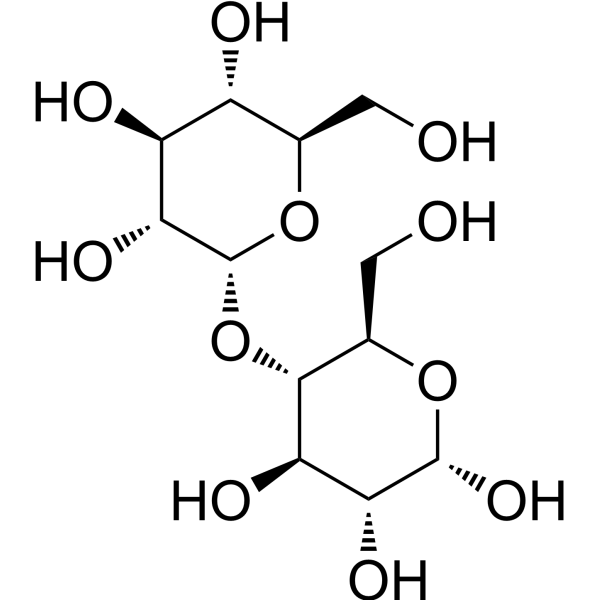
Maltose
 0 Images
Maltose is a disaccharide composed of two glucose molecules linked together. Maltose is an endogenous metabolic product in plants, yeast, or bacteria, and it participates in carbon source storage and metabolism. Maltose is a key core metabolite and main transport form in the temporary starch degradation, carbon output, and subsequent sucrose synthesis metabolism of the night chloroplast. In X. dendrorhous, maltose can act as a sugar donor and is converted into isomaltulose by α-glucosidase). Maltose can act as a osmotic agent, supporting continuous capillary ultrafiltration and preventing severe metabolic disorders.
-
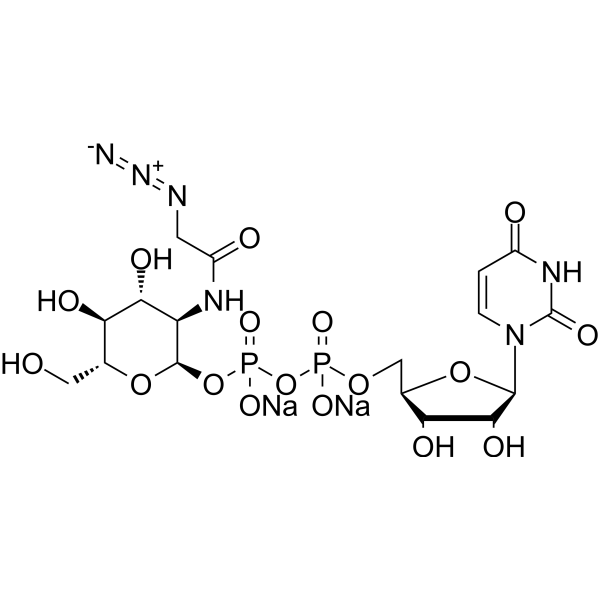
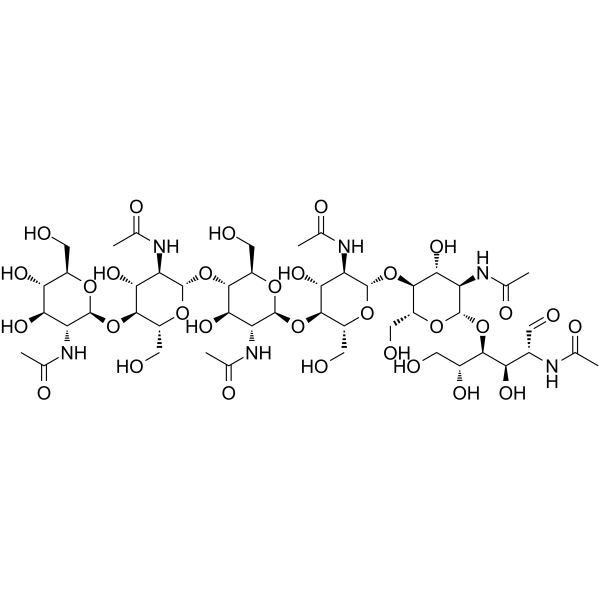
UDP-GlcNAz disodium
 0 Images
UDP-GlcNAz disodium is the analogue of UDP-GlcNAc disodium (HY-112174). UDP-GlcNAc disodium is the donor substrate of many N-acetylgalactosaminyltransferases, enzymes which transfer GlcNAc from the nucleotide sugar to a saccharide or peptide acceptor. UDP-GlcNAc disodium is a click chemistry reagent, it contains an Azide group and can undergo copper-catalyzed azide-alkyne cycloaddition reaction (CuAAc) with molecules containing Alkyne groups. It can also undergo strain-promoted alkyne-azide cycloaddition (SPAAC) reactions with molecules containing DBCO or BCN groups.
-
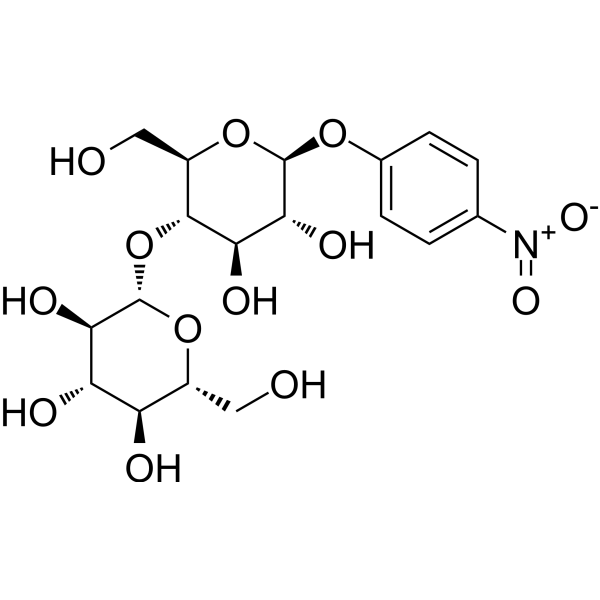
4-Nitrophenyl β-D-Cellobioside
 0 Images
4-Nitrophenyl β-D-Cellobioside (p-Nitrophenyl β-D-cellobioside) is a cellotriose analog. 4-Nitrophenyl β-D-Cellobioside is hydrolyzed by β-glucosidases such as TxGH116 and ThCel7B. 4-Nitrophenyl β-D-Cellobioside can also be hydrolyzed by exoglucanases and endoglucanases to produce p-nitrophenol (PNP). 4-Nitrophenyl β-D-Cellobioside can be used to detect cellulase activity.
-
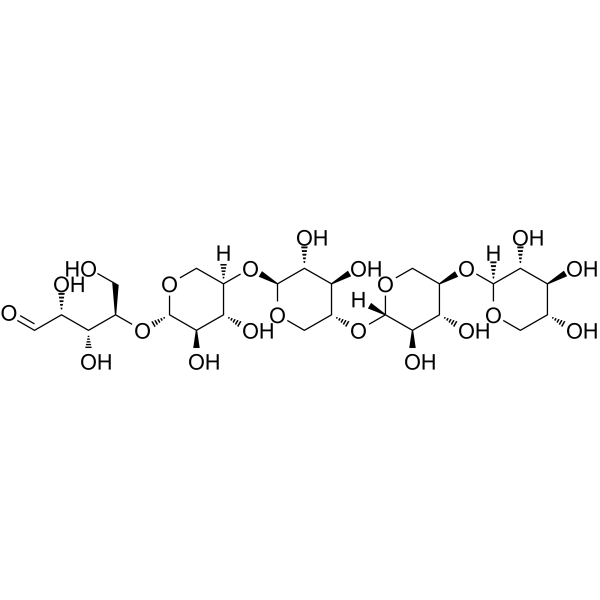
1,4-b-D-Xylopentaose
 0 Images
1,4-b-D-Xylopentaose is a linear pentasaccharide composed of 5 β-D-xylose units linked via 1,4-glycosidic bonds, and serves as a specific substrate for barley α-L-arabinofuranosidase.
-
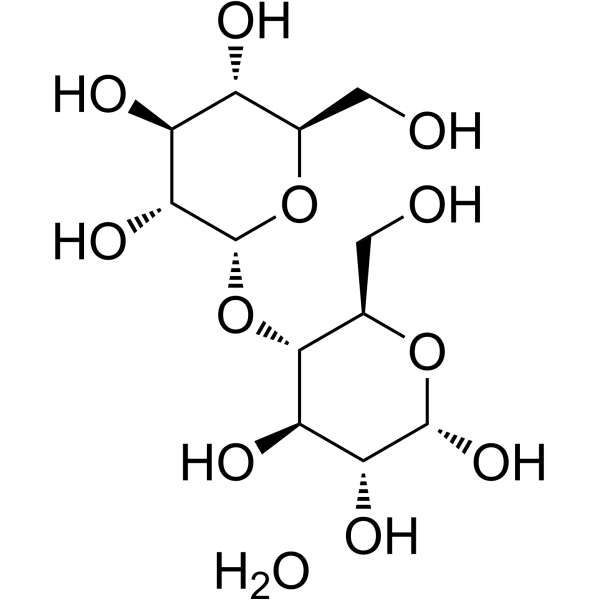
Maltose monohydrate
 0 Images
Maltose monohydrate is a disaccharide composed of two glucose molecules linked together. Maltose monohydrate is an endogenous metabolic product in plants, yeast, or bacteria, and it participates in carbon source storage and metabolism. Maltose monohydrate is a key core metabolite and main transport form in the temporary starch degradation, carbon output, and subsequent sucrose synthesis metabolism of the night chloroplast. In X. dendrorhous, maltose can act as a sugar donor and is converted into isomaltulose by α-glucosidase. Maltose monohydrate can act as a osmotic agent, supporting continuous capillary ultrafiltration and preventing severe metabolic disorders.
-
Glucosylceramide (gaucher's spleen)
 0 ImagesSynonyms: Glucocerebrosides; Gaucher cerebroside; GluCers (gaucher's spleen)
Glucosylceramide (Glucocerebrosides) (gaucher's spleen) is a glycosphingolipid and primary substrate of acid β-glycosidase, suppresses tyrosine phosphorylation of insulin receptor and IRS-1, disrupts insulin signaling cascade and triggers pancreatic β-cell dysfunction. Glucosylceramide (Gaucher's spleen) accumulates in rodents and induces obesity and insulin resistance, restores systemic glucose homeostasis and insulin sensitivity when synthesis is suppressed. Glucosylceramide (Gaucher's spleen) accumulates in the brain of chronic neuronopathic Gaucher disease mice with age and can be applied for research on insulin resistance, type 2 diabetes mellitus and chronic neuronopathic Gaucher disease.
-
p-Nitrophenyl α-L-fucoside
 0 ImagesSynonyms: PNP α-L-Fuc
p-Nitrophenyl α-L-fucoside (PNP α-L-Fuc) is a specific substrate of Pecten maximus α-L-fucosidase, with a Km value of 650 µM. p-Nitrophenyl α-L-fucoside serves as a substrate for ClAgl29A and ClAgl29B. Enzymatic hydrolysis of p-Nitrophenyl α-L-fucoside releases p-nitrophenol and α-L-fucose, where the latter undergoes mutarotation over time to form β-L-fucose. p-Nitrophenyl α-L-fucoside is not the preferred substrate for ClAgl29A and ClAgl29B.
-
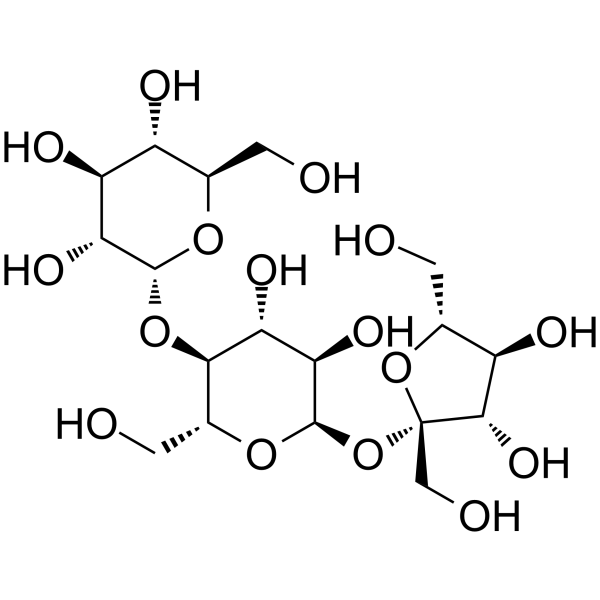
Erlose
 0 Images
Erlose is a trisaccharide sucrose derivative and low-calorie sweetener synthesized from glucose and sucrose via an α-glucosidase-mediated transglycosylation reaction. Erlose is often used as a marker to identify whether honey is adulterated with artificial sucrose. Erlose has approximately half the sweetness of sucrose but a similar taste, and it effectively inhibits crystal formation and browning reactions during food heat treatment.
-
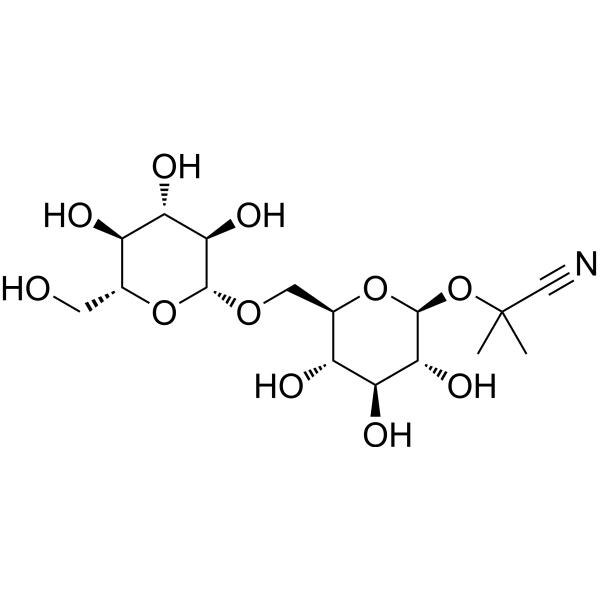
Linustatin
 0 Images
Linustatin is a cyanogenic glycoside compound. Linustatin serves as the natural substrate of the specific β-diglucosidase Linustatinase.
-
4-Aminophenyl-β-D-galactopyranoside, 98%
 0 ImagesSynonyms: 4-Aminophenyl-beta-D-galactopyranoside, 98%
4-Aminophenyl-β-D-galactopyranoside, 98% is a highly efficient substrate for β-galactosidase. It is specifically hydrolyzed by this enzyme to release galactose and electroactive p-aminophenol. 4-Aminophenyl-β-D-galactopyranoside, 98% is widely used in colorimetric and electrochemical assays for detecting β-galactosidase activity and determining enzyme kinetics, such as in biosensing fields including cellular senescence, pathogen and contaminant detection. In addition, since β-galactosidase is often overexpressed in primary ovarian cancer, 4-Aminophenyl-β-D-galactopyranoside, 98% can also be applied to related research on primary ovarian cancer.
-
Allyl α-D-galactopyranoside
 0 Images
Allyl α-D-galactopyranoside is an α-galactoside and acceptor/donor substrate for transgalactosylation reactions. Allyl α-D-galactopyranoside acts as an acceptor substrate in α-galactosidase-catalyzed transgalactosylation, and serves as a donor substrate to form longer α-galactosyl-containing oligosaccharides. Allyl α-D-galactopyranoside serves as a model compound for investigating the catalytic mechanism and substrate specificity of glycoside hydrolases and glycosyltransferases.
-
4-Nitrophenyl β-D-mannopyranoside
 0 ImagesSynonyms: p-Nitrophenyl β-D-Mannopyranoside
4-Nitrophenyl β-D-mannopyranoside is a useful substrate for β-D-mannopyranosidase. 4-Nitrophenyl β-D-mannopyranoside is also a substrate for GH1-glucosidase (EaBgl1A) and α-L-rhamnosidase.
-
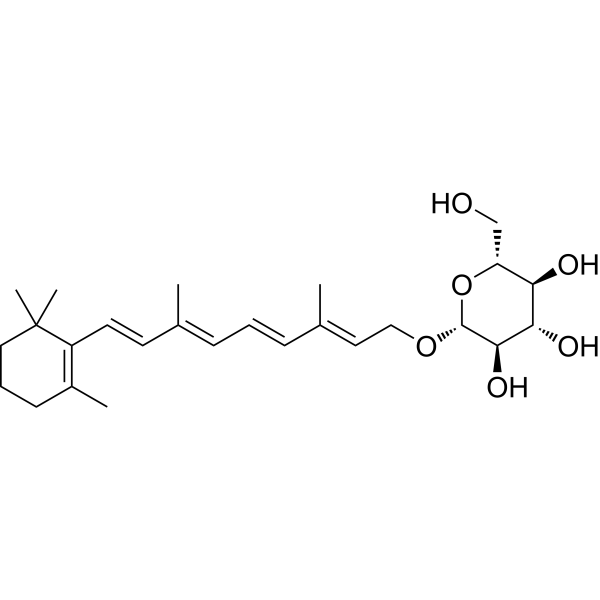
Retinyl glucoside
 0 ImagesCat. No.: HY-A0058CAS No.: 136778-12-6Synonyms: Retinyl β-D-glucoside
Retinyl glucoside (Retinyl β-D-glucoside) is a lipid β-D-glucoside of retinol, and also serves as a substrate for broad-spectrum β-glucosidase (β-glucosidase). Retinyl glucoside can be hydrolyzed by guinea pig hepatocyte cytosolic and membrane-associated β-glucosidases as well as almond β-glucosidase to release retinol and glucose, but it is not hydrolyzed by human placental glucocerebrosidase. Retinyl glucoside can be used in the research of Gaucher's disease.
-
p-Nitrophenyl β-D-lactoside
 0 Images
p-Nitrophenyl β-D-lactoside is a substrate of β-lactosidase and can be used to determine β-lactosinase activity. p-Nitrophenyl β-D-lactoside is a substrate of cellobiohydrolase. p-Nitrophenyl β-D-lactoside is a class of biochemical reagents used in glycobiology research.
-
UDP-GlcNAz
 0 ImagesCat. No.: HY-145934BCAS No.: 608514-41-6
UDP-GlcNAz is the analogue of UDP-GlcNAc disodium (HY-112174). UDP-GlcNAc disodium is the donor substrate of many N-acetylgalactosaminyltransferases, enzymes which transfer GlcNAc from the nucleotide sugar to a saccharide or peptide acceptor. UDP-GlcNAc disodium is a click chemistry reagent, it contains an Azide group and can undergo copper-catalyzed azide-alkyne cycloaddition reaction (CuAAc) with molecules containing Alkyne groups. It can also undergo strain-promoted alkyne-azide cycloaddition (SPAAC) reactions with molecules containing DBCO or BCN groups.
-
2-Methylbutyl β-D-glucopyranoside
 0 Images
2-Methylbutyl β-D-glucopyranoside is a glycoside in apple fruit. 2-Methylbutyl β-D-glucopyranoside serves as an aroma precursor that can be enzymatically hydrolyzed to release volatile 2-methylbutanol. 2-Methylbutyl β-D-glucopyranoside is promising for research of food flavor chemistry.
-
NIR-BG2
 0 ImagesCat. No.: HY-165424CAS No.: 3036456-18-2
NIR-BG2 is a fluorescent indicator targeting senescence-associated β-galactosidase (SA-β-Gal). NIR-BG2 contains a hemicyanine fluorophore caged by SA-β-Gal; cleavage of its β-galactosyl group by SA-β-Gal generates an electrophilic quinone methide, which can form covalent bonds with adjacent proteins to achieve long-term signal retention. NIR-BG2 activates a near-infrared fluorescent signal upon recognition of SA-β-Gal. NIR-BG2 can be used for non-invasive in vivo imaging of cellular senescence in mouse xenograft models. The excitation/emission wavelengths are 675/708 nm.
- 1
- 2



