



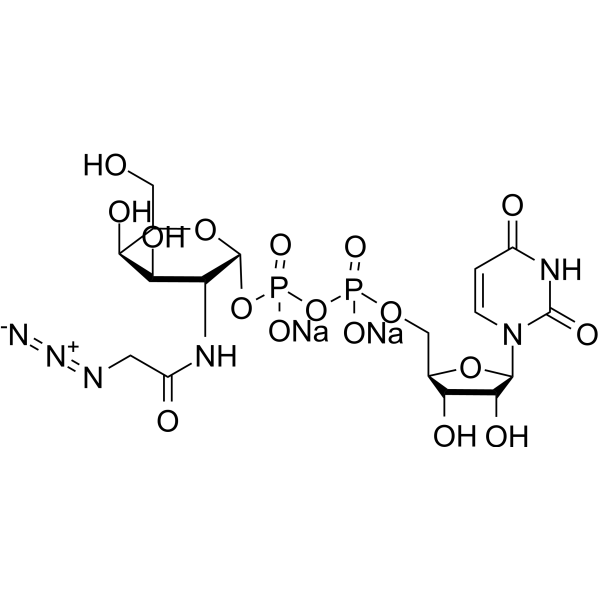
UDP-GalNAz disodium
Based on 1 publication(s) in Google Scholar
UDP-GalNAz (UDP-N-azidoacetylgalactosamine) disodium is the analogue of UDP-GalNAc disodium (HY-114365). UDP-GalNAc disodium is the donor substrate of many N-acetylgalactosaminyltransferases, enzymes which transfer GalNAc from the nucleotide sugar to a saccharide or peptide acceptor. UDP-GalNAz disodium is a click chemistry reagent, it contains an Azide group and can undergo copper-catalyzed azide-alkyne cycloaddition reaction (CuAAc) with molecules containing Alkyne groups. It can also undergo strain-promoted alkyne-azide cycloaddition (SPAAC) reactions with molecules containing DBCO or BCN groups.
For research use only. We do not sell to patients.
- Purity : 99.89%
- CAS No.: 653600-61-4
- Formula: C17H24N6Na2O17P2
- Molecular Weight:692.33
-
Storage:
4°C, sealed storage, away from moisture and light
* In solvent : -80°C, 6 months; -20°C, 1 month (sealed storage, away from moisture and light)

To place orders, for customer services and technical support, please contact: MedChemExpress USA
Tel: 609-228-6898 E-mail: [email protected] [email protected]


-
 Biological Activity
-
Chemical Information
-
Solvent & Solubility
- Purity & Documentation
- References
-
 Help & FAQs


-

HY-E70289
Bovin beta-1,4-galactosyltransferase 1 (Y289L) -
HY-N7033
UDP-glucuronic acid trisodium -

HY-N7033R
UDP-glucuronic acid trisodium (Standard) -
HY-E70069
Endo S2, Streptococcus pyogenes -
HY-112174
UDP-GlcNAc disodium -
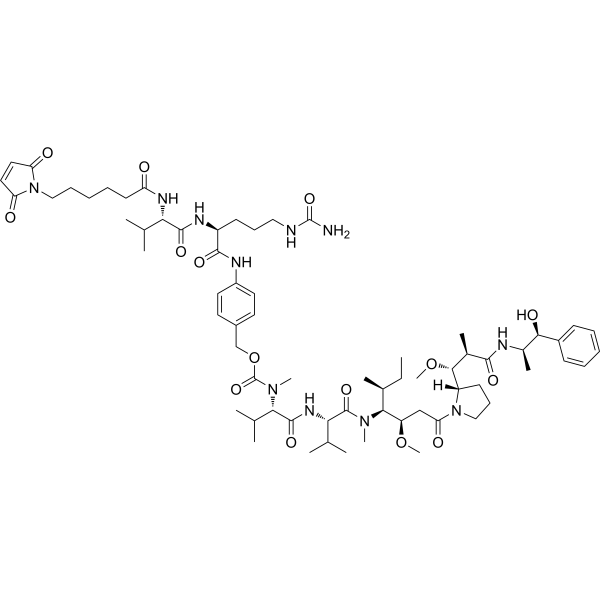
HY-15575
VcMMAE -
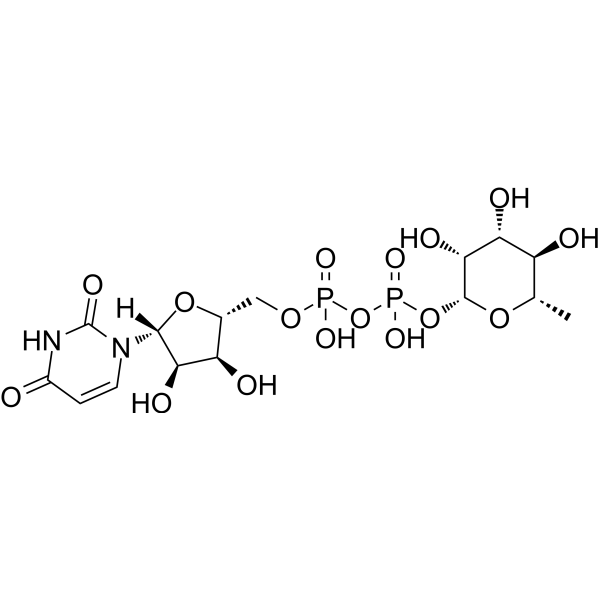
HY-N10573
UDP-rhamnose -
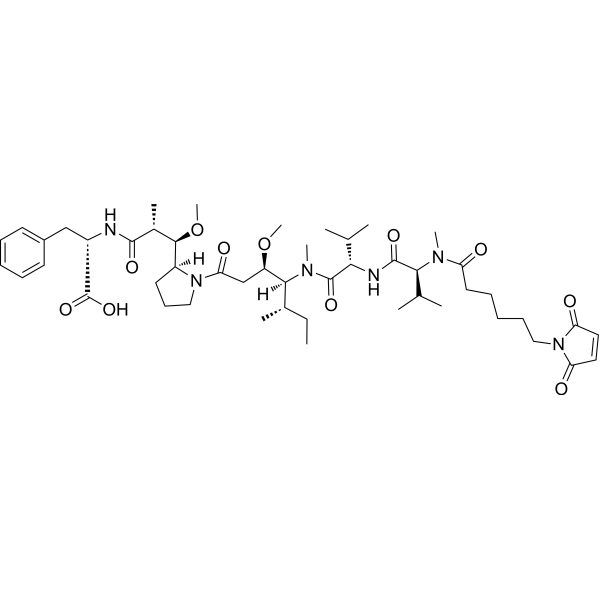
HY-15578
McMMAF -
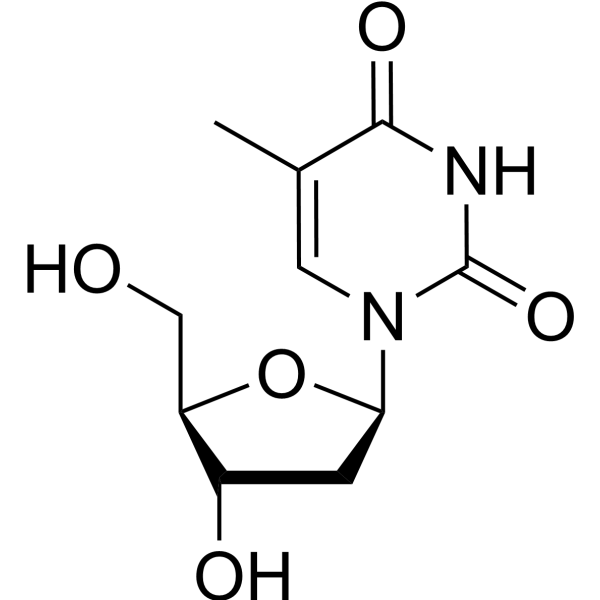
HY-N1150
Thymidine -
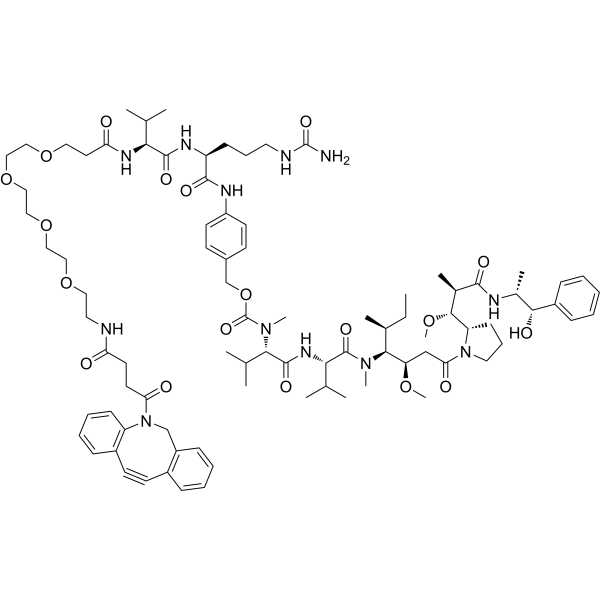
HY-136314
DBCO-PEG4-VC-PAB-MMAE -
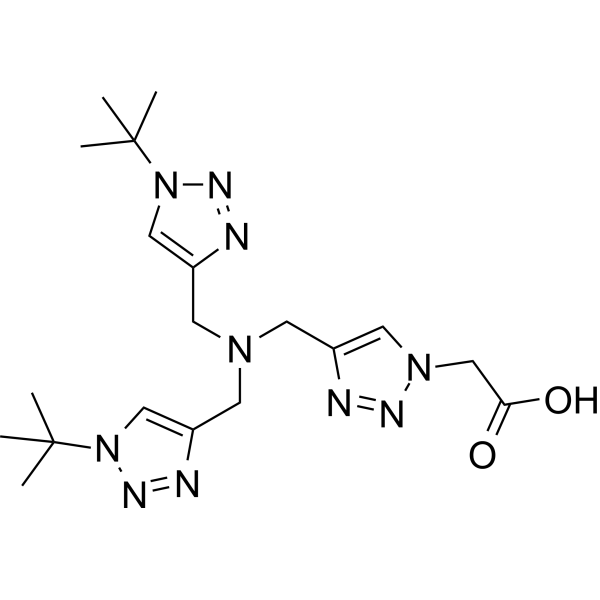
HY-100486
BTTAA -
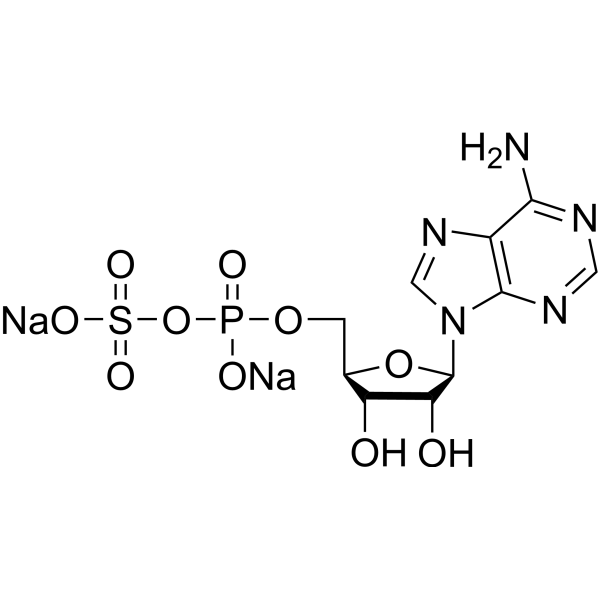
HY-113606
Adenosine 5'-phosphosulfate disodium
Publications Citing Use of MedChemExpress (MCE) UDP-GalNAz disodium
More

Biological Activity
Description
In Vitro
UDP-GalNAz disodium can be used as a substrate for GalNAc-Ts, and be transferred by GalNAc-Ts to Ser, Thr, and Tyr residues of proteins to form O-GalNAc glycosylation[6].
UDP-GalNAz disodium can react with other chemical groups, such as bioorthogonal azide-alkyne cycloaddition reactions, to introduce chemical handles onto glycoproteins. UDP-GalNAz disodium can thereby be used for research of glycosylation proteins[6].
MedChemExpress (MCE) has not independently confirmed the accuracy of these methods. They are for reference only.


Chemical Information
-
CAS No. 653600-61-4
-
Appearance Solid
-
Molecular Weight 692.33
-
Formula C17H24N6Na2O17P2
-
Color White to off-white
-
SMILES
O[C@H]1[C@@H](O)[C@H](N2C(NC(C=C2)=O)=O)O[C@@H]1COP(OP(O[C@@H]3[C@H](NC(CN=[N+]=[N-])=O)[C@@H](O)[C@@H](O)[C@@H](CO)O3)(O[Na])=O)(O[Na])=O
-
Synonyms
UDP-N-azidoacetylgalactosamine disodium
-
Shipping
Room temperature in continental US; may vary elsewhere.
-
Storage
4°C, sealed storage, away from moisture and light
* In solvent : -80°C, 6 months; -20°C, 1 month (sealed storage, away from moisture and light)


Publications (1)
-
Journal Impact Factor
-
Most Recent


Solvent & Solubility
In Vitro:
DMSO : 100 mg/mL (144.44 mM; ultrasonic and warming and heat to 60°C; Hygroscopic DMSO has a significant impact on the solubility of product, please use newly opened DMSO)
H2O : 100 mg/mL (144.44 mM; Need ultrasonic)
Please refer to the solubility information to select the appropriate solvent. Once prepared, please aliquot and store the solution to prevent product inactivation from repeated freeze-thaw cycles.
Storage method and period of stock solution: -80°C, 6 months; -20°C, 1 month (sealed storage, away from moisture and light). When stored at -80°C, please use it within 6 months. When stored at -20°C, please use it within 1 month.
* Note: If you choose water as the stock solution, please dilute it to the working solution, then filter and sterilize it with a 0.22 μm filter before use.
Please refer to the solubility information to select the appropriate solvent. Once prepared, please aliquot and store the solution to prevent product inactivation from repeated freeze-thaw cycles.
Storage method and period of stock solution: -80°C, 6 months; -20°C, 1 month (sealed storage, away from moisture and light). When stored at -80°C, please use it within 6 months. When stored at -20°C, please use it within 1 month.
* Note: If you choose water as the stock solution, please dilute it to the working solution, then filter and sterilize it with a 0.22 μm filter before use.
Concentration (start) × Volume (start) = Concentration (final) × Volume (final)
In Vivo:
Select the appropriate dissolution method based on your experimental animal and administration route.
- For the following dissolution methods, please ensure to first prepare a clear stock solution using an In Vitro approach and then sequentially add co-solvents:
- To ensure reliable experimental results, the clarified stock solution can be appropriately stored based on storage conditions. As for the working solution for In Vivo experiments, it is recommended to prepare freshly and use it on the same day.
- The percentages shown for the solvents indicate their volumetric ratio in the final prepared solution. If precipitation or phase separation occurs during preparation, heat and/or sonication can be used to aid dissolution.
Add each solvent one by one: 10% DMSO 40% PEG300 5% Tween-80 45% Saline
Solubility: ≥ 2.5 mg/mL (3.61 mM); Clear solution
This protocol yields a clear solution of ≥ 2.5 mg/mL (saturation unknown).
Taking 1 mL working solution as an example, add 100 μL DMSO stock solution (25.0 mg/mL) to 400 μL PEG300, and mix evenly; then add 50 μL Tween-80 and mix evenly; then add 450 μL Saline to adjust the volume to 1 mL.
Preparation of Saline: Dissolve 0.9 g sodium chloride in ddH₂O and dilute to 100 mL to obtain a clear Saline solution.
Add each solvent one by one: 10% DMSO 90% (20% SBE-β-CD in Saline)
Solubility: ≥ 2.5 mg/mL (3.61 mM); Clear solution
This protocol yields a clear solution of ≥ 2.5 mg/mL (saturation unknown).
Taking 1 mL working solution as an example, add 100 μL DMSO stock solution (25.0 mg/mL) to 900 μL 20% SBE-β-CD in Saline, and mix evenly.
Preparation of 20% SBE-β-CD in Saline (4°C, storage for one week): 2 g SBE-β-CD powder is dissolved in 10 mL Saline, completely dissolve until clear.
In Vivo Dissolution Calculator
Please enter the basic information of animal experiments:
-
-
-
-
Recommended: Prepare an additional quantity of animals to account for potential losses during experiments.
Working solution concentration: 0.22 mg/mL
This product has good water solubility, please refer to the measured solubility data in water/PBS/Saline for details.


Purity & Documentation
-
Data Sheet (290 KB)
-
SDS (254 KB)
- English - EN (254 KB)
- Français - FR (254 KB)
- Deutsch - DE (254 KB)
- Norwegian - NO (254 KB)
- Español - ES (254 KB)
- Swedish - SV (254 KB)
- Italian - IT (254 KB)
- Korean - KR (254 KB)
- Portuguese - PT (254 KB)
-
Handling Instructions (2659 KB)
References
[1]. Hang HC, et al. Probing glycosyltransferase activities with the Staudinger ligation. J Am Chem Soc. 2004;126(1):6-7. [Content Brief]
[2]. Bourgeaux V, et al. Two-step enzymatic synthesis of UDP-N-acetylgalactosamine. Bioorg Med Chem Lett. 2005;15(24):5459-5462. [Content Brief]
[4]. Lo PW, et al. O-GlcNAcylation regulates the stability and enzymatic activity of the histone methyltransferase EZH2. Proc Natl Acad Sci U S A. 2018;115(28):7302-7307. [Content Brief]
[5]. Vanessa Bourgeaux, et al. Two-step enzymatic synthesis of UDP-N-acetylgalactosamine. Bioorg Med Chem Lett. 2005 Dec 15;15(24):5459-62. [Content Brief]
[6]. Choi J, et al., Engineering Orthogonal Polypeptide GalNAc-Transferase and UDP-Sugar Pairs. J Am Chem Soc. 2019 Aug 28;141(34):13442-13453. [Content Brief]


Complete Stock Solution Preparation Table
Please refer to the solubility information to select the appropriate solvent. Once prepared, please aliquot and store the solution to prevent product inactivation from repeated freeze-thaw cycles.
Storage method and period of stock solution: -80°C, 6 months; -20°C, 1 month (sealed storage, away from moisture and light). When stored at -80°C, please use it within 6 months. When stored at -20°C, please use it within 1 month.
| Optional Solvent | Concentration Solvent Mass | 1 mg | 5 mg | 10 mg | 25 mg |
|---|---|---|---|---|---|
| DMSO / H2O | 1 mM | 1.4444 mL | 7.2220 mL | 14.4440 mL | 36.1099 mL |
| 5 mM | 0.2889 mL | 1.4444 mL | 2.8888 mL | 7.2220 mL | |
| 10 mM | 0.1444 mL | 0.7222 mL | 1.4444 mL | 3.6110 mL | |
| 15 mM | 0.0963 mL | 0.4815 mL | 0.9629 mL | 2.4073 mL | |
| 20 mM | 0.0722 mL | 0.3611 mL | 0.7222 mL | 1.8055 mL | |
| 25 mM | 0.0578 mL | 0.2889 mL | 0.5778 mL | 1.4444 mL | |
| 30 mM | 0.0481 mL | 0.2407 mL | 0.4815 mL | 1.2037 mL | |
| 40 mM | 0.0361 mL | 0.1805 mL | 0.3611 mL | 0.9027 mL | |
| 50 mM | 0.0289 mL | 0.1444 mL | 0.2889 mL | 0.7222 mL | |
| 60 mM | 0.0241 mL | 0.1204 mL | 0.2407 mL | 0.6018 mL | |
| 80 mM | 0.0181 mL | 0.0903 mL | 0.1805 mL | 0.4514 mL | |
| 100 mM | 0.0144 mL | 0.0722 mL | 0.1444 mL | 0.3611 mL |
* Note: If you choose water as the stock solution, please dilute it to the working solution, then filter and sterilize it with a 0.22 μm filter before use.


UDP-GalNAz disodium Related Classifications
HY-145934 Related Classifications
 Powered by Bioz