



ASH1L/KMT2H
ASH1L (absent, small, or homeotic-like 1; KMT2H) is a histone-lysine N-methyltransferase that catalyzes H3K36 methylation, regulating transcriptional elongation and chromatin structure[1][2]. Mechanistically, ASH1L participates in epigenetic programming of neurodevelopment by modulating gene expression critical for neuronal differentiation and synaptic function[1][2]. Dysregulation or loss-of-function variants in ASH1L have been associated with intellectual disability, autism spectrum disorder, and attention deficit hyperactivity disorder, highlighting its role in human neurodevelopmental disorders[1]. Compared with other KMT2 family members, ASH1L exhibits specificity for H3K36 methylation and distinct genomic localization, indicating functional divergence from KMT2A/B/D isoforms[2][3]. In experimental models, ASH1L depletion alters neural progenitor proliferation and differentiation, providing a platform to study neurodevelopmental mechanisms and potential therapeutic targets[1]. While direct small-molecule agonists or inhibitors of ASH1L remain under investigation, modulation of H3K36 methylation indirectly via epigenetic compounds offers a potential approach for mechanistic studies and phenotypic rescue[2][3]. Therefore, ASH1L represents a critical epigenetic regulator with isoform-specific activity and translational relevance in both disease modeling and targeted research applications[1][3].
References:
- [1]. Wang Q, et al. The Histone-Lysine N-Methyltransferase (KMT2) Family in Health and Disease. MedComm (2020). 2026 Apr 9;7:e70728. [Content Brief]
- [2]. Zhu J, et al. A Pan-Cancer Study of KMT2 Family as Therapeutic Targets in Cancer. J Oncol. 2022 Jan 11;2022:3982226. [Content Brief]
- [3]. Liao B, et al. Novel heterozygous ASH1L nonsense variant involved in mild intellectual disability. Front Neurol. 2025 Jan 20;16:1524532. [Content Brief]
All Product Categories
-
ASH1L/KMT2H Related Products (4)
Related Products (4)

-
AS-99 TFA
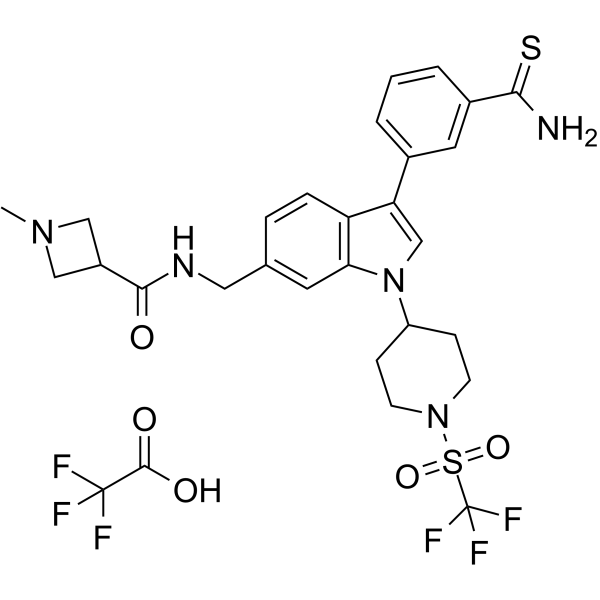 0 ImagesAS-99 TFA is a first-in-class, potent and selective ASH1L histone methyltransferase inhibitor (IC50= 0.79 μM, Kd= 0.89 μM) with anti-leukemic activity. AS-99 TFA blocks cell proliferation, induces apoptosis and differentiation, downregulates MLL fusion target genes, and reduces the leukemia burden in vivo.
-
AS-85
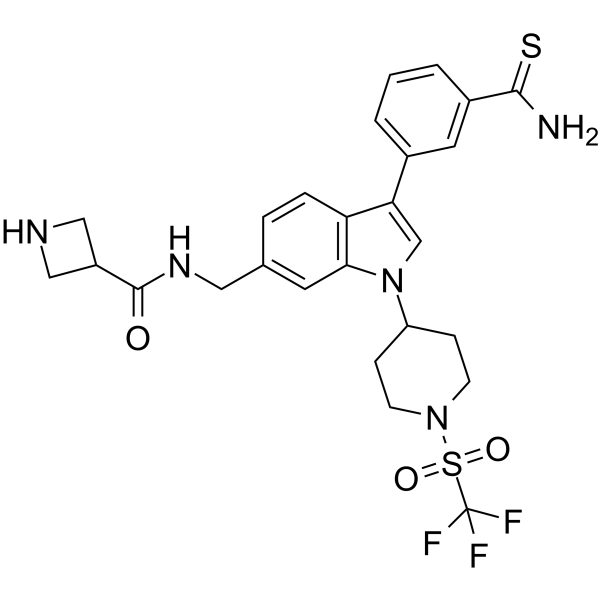 0 ImagesAS-85 is a potent ASH1L histone methyltransferase inhibitor (IC50=0.6 μM) with anti-leukemic activity. AS-85 strongly binds to the ASH1L SET domain, with the Kd value of 0.78 μM.
-
AS-99 free base
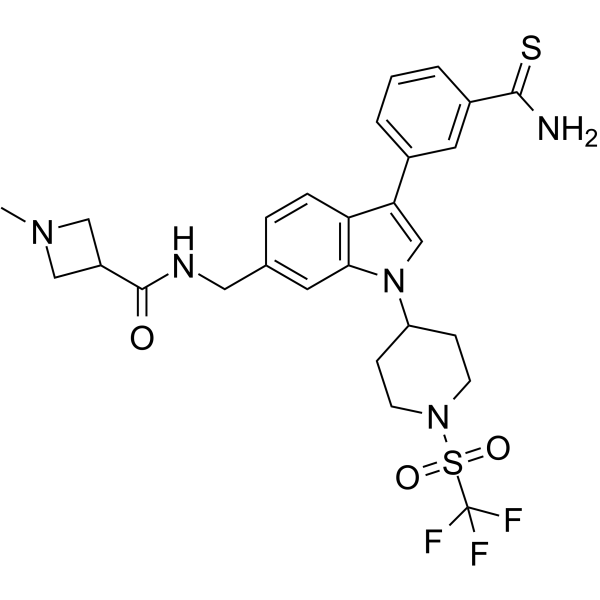 0 ImagesAS-99 is a first-in-class, potent and selective ASH1L histone methyltransferase inhibitor (IC50= 0.79 µM, Kd= 0.89 µM) with anti-leukemic activity. AS-99 blocks cell proliferation, induces apoptosis and differentiation, downregulates MLL fusion target genes, and reduces the leukemia burden in vivo.
-
AS-99
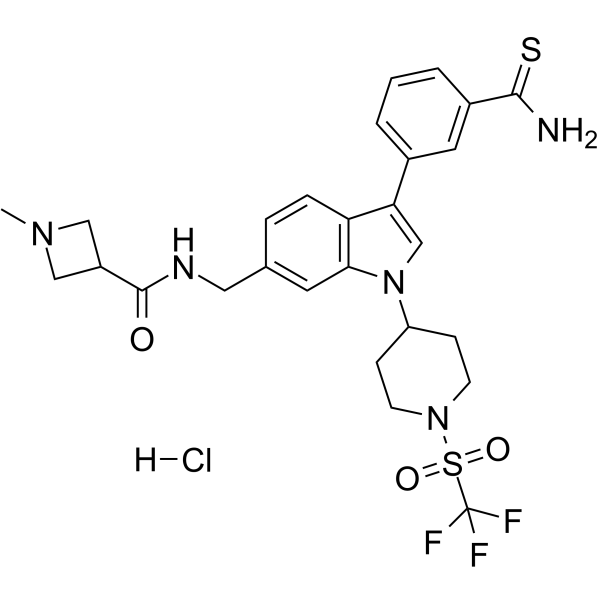 0 ImagesCat. No.: HY-141429CAS-99 is a first-in-class, potent, and selective ASH1L histone methyltransferase inhibitor (IC50= 0.79 μM, Kd= 0.89 μM) with anti-leukemic activity. AS-99 blocks cell proliferation, induces apoptosis and differentiation, downregulates MLL fusion target genes, and reduces the leukemia burden in vivo.



