



RNF4
RING finger protein 4 (RNF4) functions as a SUMO-targeted ubiquitin ligase, regulating protein stability and post-translational modification[1]. Mechanistically, RNF4 recognizes phosphorylated transcription factors such as c-Myc, β-catenin, c-Jun, and N-ICD, stabilizing them via atypical polyubiquitin chains and chromatin docking[2]. This stabilization enhances Wnt- and Notch-dependent gene expression, contributing to tumorigenesis and supporting cancer cell survival[2][3]. RNF4 also modulates nuclear-cytoplasmic transport and SUMO-dependent degradation of PML-RARα in acute promyelocytic leukemia models, thereby influencing the therapeutic response to arsenic trioxide[4][5]. In metabolic disease models, RNF4 promotes SUMOylation and ubiquitin-mediated degradation of hypoxia-inducible factor-2α (HIF-2α), enhancing PPARα signaling, reducing lipid accumulation, inflammation, and hepatocyte apoptosis, and mitigating nonalcoholic fatty liver disease progression[1]. Compared with related isoforms, RNF4 exhibits distinct substrate specificity through its arginine-rich motif and RING domain, enabling selective stabilization of phosphorylated oncogenic targets rather than broad SUMOylated proteins[2][4]. Experimental applications exploit RNF4 inhibitors or genetic knockdown to dissect its roles in cancer proliferation, DNA replication, and metabolic regulation[3][1]. Collectively, RNF4 integrates post-translational modification, protein stabilization, and transcriptional regulation, making it a pivotal target for both oncological and metabolic research.
References:
- [1]. Huang X, et al. PRMT5-mediated RNF4 methylation promotes therapeutic resistance of APL cells to As2O3 by stabilizing oncoprotein PML-RARα. Cell Mol Life Sci. 2022 May 27;79(6):319. [Content Brief]
- [2]. Thomas JJ, et al. RNF4-Dependent Oncogene Activation by Protein Stabilization. Cell Rep. 2016 Sep 20;16(12):3388-3400. [Content Brief]
- [3]. Hands KJ, et al. PML isoforms in response to arsenic: high-resolution analysis of PML body structure and degradation. J Cell Sci. 2014 Jan 15;127(Pt 2):365-75. [Content Brief]
- [4]. Her J, et al. RNF4 sustains Myc-driven tumorigenesis by facilitating DNA replication. J Clin Invest. 2024 Mar 26;134(10):e167419. [Content Brief]
- [5]. Yang L, et al. RING Finger Protein 4 (RNF4) Reduces Nonalcoholic Fatty Liver Disease Accumulation by Promoting the SUMOylation of HIF-2α and Regulating the PPARα Signaling Pathway. IUBMB Life. 2025 Aug;77(8):e70047. [Content Brief]
-
RNF4 Related Products (2)
Related Products (2)

-
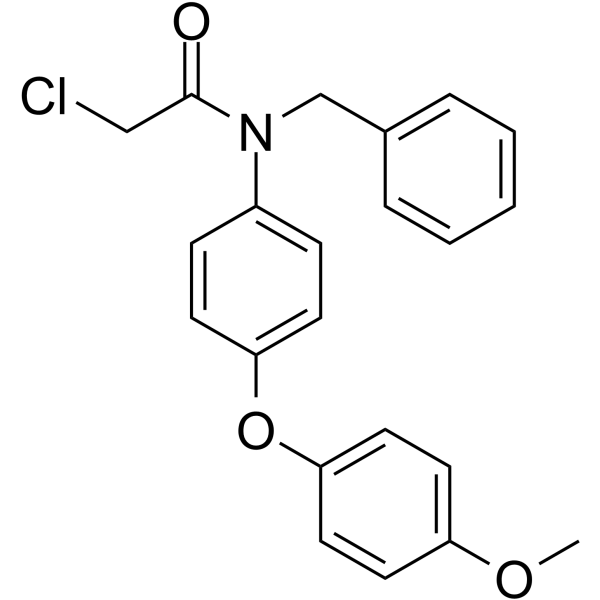
E3 ligase Ligand 81
 0 ImagesCat. No.: HY-184508E3 ligase Ligand 81 is a VHL E3 ubiquitin ligase ligand and constitutes the VHL ligand moiety of R4VPL3-1 (HY-184506). R4VPL3-1 is a PROTAC-like bifunctional degrader linking RNF4 and VHL; it binds to and modifies GPX4, thereby inhibiting its anti-ferroptotic function. R4VPL3-1 induces iron-dependent lipid peroxidation and rapid ferroptosis-mediated cell death in cancer cells. E3 ligase Ligand 81 can be used in research related to targeted protein degradation and tumors such as melanoma.



