



β-Tubulin
β-Tubulin forms the α/β-tubulin heterodimer that polymerizes into microtubules, supporting cell division, intracellular transport, axon formation, and cilia function[1]. Mechanistically, β-tubulin carries the exchangeable and hydrolysable nucleotide site; β-tubulin-bound GTP hydrolysis after lattice incorporation drives microtubule dynamic instability[2]. Therefore, β-tubulin biology connects structural cytoskeleton organization with mitotic spindle function and microtubule-dependent intracellular trafficking[1][2]. In disease models, TUBB3 mutations produce malformation of cortical development and neuronal migration defects, linking βIII-tubulin to neurodevelopmental research[3]. In cancer models, class III β-tubulin overexpression confers resistance to paclitaxel and vinorelbine, while siRNA-mediated downregulation increases sensitivity to these drugs[4]. Compared with class I β-tubulin, class III β-tubulin shows 92% similarity, carries Arg^277 instead of Ser^277, and this substitution alters the loop associated with stable paclitaxel binding[4]. For experimental applications, colchicine-site agents including 2-MeOE2, colchicine, STX140, ENMD1198, and STX243 retained efficacy despite altered class III β-tubulin expression, supporting binding-site-focused inhibitor selection in taxane-refractory breast cancer models[4]. Microtubule-targeted drugs can suppress microtubule dynamics without changing microtubule mass, producing mitotic block and apoptosis[5].
References:
- [1]. Nsamba ET, et al. Tubulin isotypes optimize distinct spindle positioning mechanisms during yeast mitosis. J Cell Biol. 2021 Dec 6;220(12):e202010155. [Content Brief]
- [2]. Zhou J, et al. Structural insights into the mechanism of GTP initiation of microtubule assembly. Nat Commun. 2023 Sep 25;14(1):5980. [Content Brief]
- [3]. Poirier K, et al. Mutations in the neuronal ß-tubulin subunit TUBB3 result in malformation of cortical development and neuronal migration defects. Hum Mol Genet. 2010 Nov 15;19(22):4462-73. [Content Brief]
- [4]. Stengel C, et al. Class III beta-tubulin expression and in vitro resistance to microtubule targeting agents. Br J Cancer. 2010 Jan 19;102(2):316-24. [Content Brief]
- [5]. Jordan MA, et al. Microtubules as a target for anticancer drugs. Nat Rev Cancer. 2004 Apr;4(4):253-65. [Content Brief]
All Product Categories
-
β-Tubulin Related Products (13)
Related Products (13)

- 1
-
Combretastatin A4
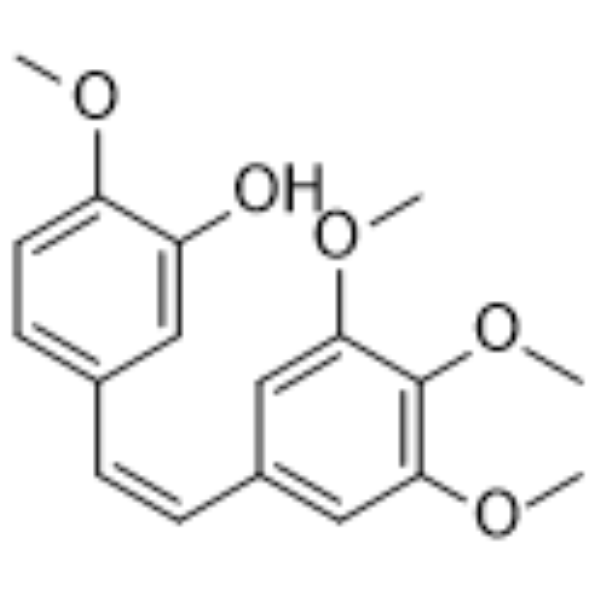 0 ImagesSynonyms: CRC 87-09Combretastatin A4 is a microtubule-targeting agent that binds β-tubulin with Kd of 0.4 μM.
-
Parbendazole
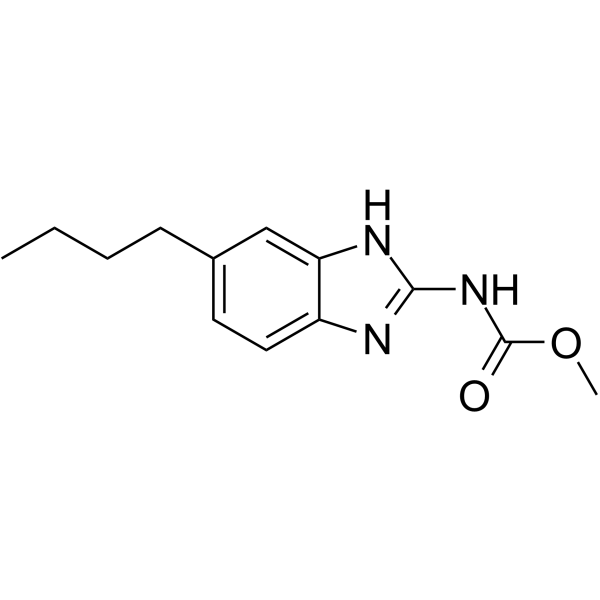 0 ImagesSynonyms: SKF 29044Parbendazole (SKF‑29044) is an orally active benzimidazole carbamate compound with multiple biological activities. Parbendazole binds to free tubulin and inhibits microtubule polymerization; it also activates the JNK/c‑Jun signaling axis and upregulates the expression of the downstream axonal repulsion factor Sema3A. Parbendazole upregulates KAL-1 mRNA expression, reduces nerve growth factor levels, and promotes the terminal differentiation of normal human epidermal keratinocytes. Parbendazole induces apoptosis in differentiated acute myeloid leukemia monocytes and exerts antileukemic activity in a mouse xenograft model of acute myeloid leukemia. Parbendazole exhibits broad-spectrum anthelmintic activity against various animal nematodes. Parbendazole is used in research related to acute myeloid leukemia and parasitic infections.
-
Taccalonolide AJ
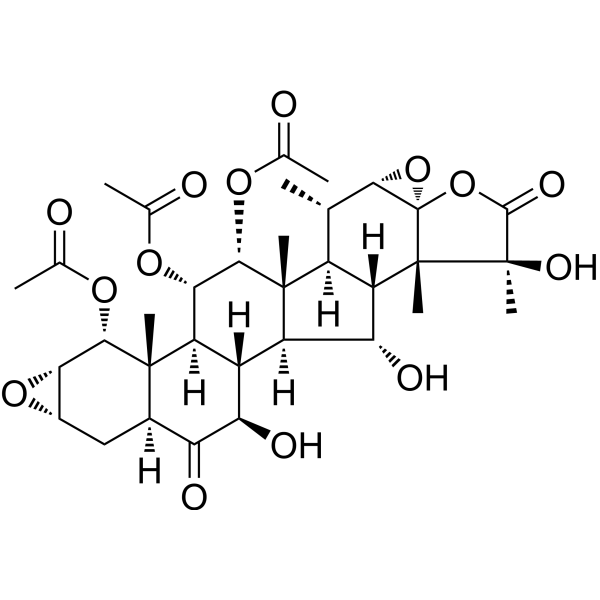 0 ImagesTaccalonolide AJ is a microtubule stabilizer and antiproliferative agent with an IC50 of 4.2 nM against β-tubulin (β-tubulin) D226. Taccalonolide AJ increases cellular microtubule density, induces microtubule bundling, triggers G2/M cell cycle arrest with abnormal mitotic spindles, and inhibits cancer cell proliferation. Taccalonolide AJ can be used in the research of oral cancer, breast cancer, solid tumors, as well as tumors resistant to Paclitaxel (HY-B0015) and Doxorubicin (HY-15142A).
-
Parbendazole-d3
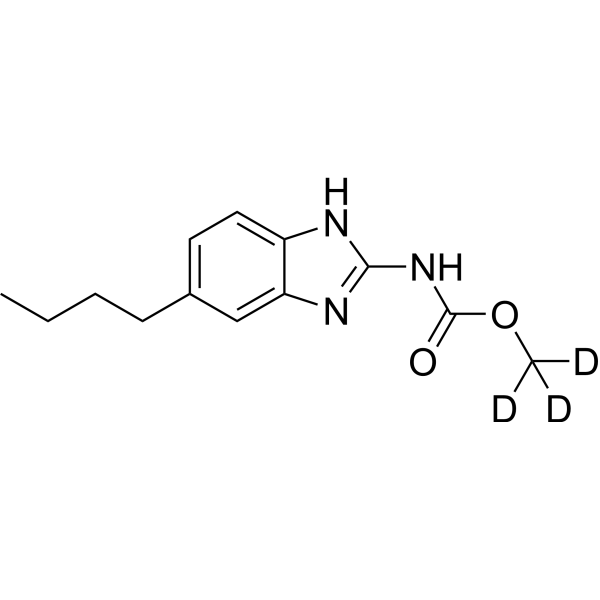 0 ImagesCat. No.: HY-115364SCAS No.: 1613439-58-9Synonyms: SKF 2904-d3Parbendazole-d3 (SKF 2904-d3) is the deuterated-labeled Parbendazole (HY-115364). Parbendazole (SKF‑29044) is an orally active benzimidazole carbamate compound with multiple biological activities. Parbendazole binds to free tubulin and inhibits microtubule polymerization; it also activates the JNK/c‑Jun signaling axis and upregulates the expression of the downstream axonal repulsion factor Sema3A. Parbendazole upregulates KAL-1 mRNA expression, reduces nerve growth factor levels, and promotes the terminal differentiation of normal human epidermal keratinocytes. Parbendazole induces apoptosis in differentiated acute myeloid leukemia monocytes and exerts antileukemic activity in a mouse xenograft model of acute myeloid leukemia. Parbendazole exhibits broad-spectrum anthelmintic activity against various animal nematodes. Parbendazole is used in research related to acute myeloid leukemia and parasitic infections.
-
Tubulin degrader 1
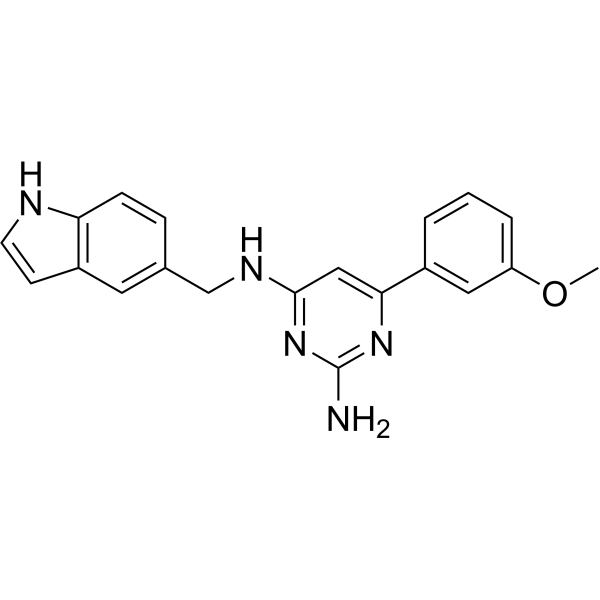 0 ImagesCat. No.: HY-161324Tubulin degrader 1, a derivative of BML284 (HY-19987), is an orally active Tubulin degrader with anti-tumor cell proliferation activity. Tubulin degrader 1 binds to the colchicine-binding site of β-tubulin, inhibits tubulin polymerization and promotes tubulin degradation. Tubulin degrader 1 inhibits microtubule polymerization, induces G2/M cell cycle arrest and apoptosis. Tubulin degrader 1 suppresses tumor growth in ovarian cancer xenograft models, induces anti-proliferative activity against tumor cells and overcomes multidrug resistance. Tubulin degrader 1 can be used in research related to various cancers including ovarian cancer.
-
Les-6666
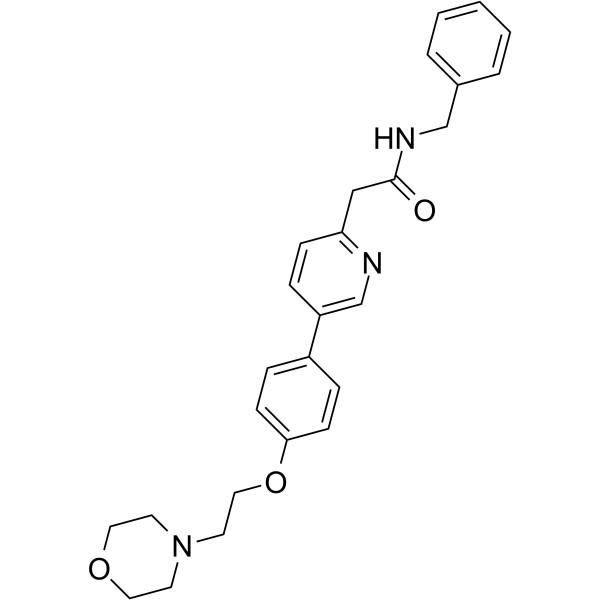
 0 ImagesCat. No.: HY-184708Les-6666 is a β-tubulin inhibitor. Les-6666 exerts antiproliferative, pro-apoptotic, cell cycle arrest and migration-inhibitory effects, and suppresses DNA synthesis. Les-6666 can be used in the research of pancreatic cancer.
-
Tubulin degrader 2
 0 ImagesCat. No.: HY-161641Tubulin degrader 2 is a tubulin HyT degrader and tubulin polymerization inhibitor, with a DC50 of 4.9 μM against α-tubulin in MCF-7 cells and an IC50 of 7.5 μM for the polymerization of purified recombinant tubulin. Tubulin degrader 2 binds to the colchicine-binding site of tubulin, induces proteasome-dependent degradation of α-tubulin and β-tubulin, inhibits the polymerization of purified recombinant tubulin, and triggers microtubule disruption and cell cycle arrest in cancer cells. Tubulin degrader 2 exhibits antitumor activity in a breast cancer allograft mouse model. Tubulin degrader 2 can be applied in the research of breast cancer, lung cancer, and colorectal cancer.
-
Bcl-2-IN-26
 0 ImagesCat. No.: HY-184443CAS No.: 3119834-80-6Bcl-2-IN-26 is an inhibitor targeting β-tubulin and BCL-2. Bcl-2-IN-26 disrupts the intracellular microtubule network and interferes with cell mitosis, inducing G2/M phase cell cycle arrest. Bcl-2-IN-26 suppresses antiapoptotic BCL-2 function via p53 upregulation, thereby triggering mitochondrial dysfunction, elevated ROS production and robust tumor cell apoptosis. Bcl-2-IN-26 can be used in lung cancer research.
-
Parbendazole (Standard)
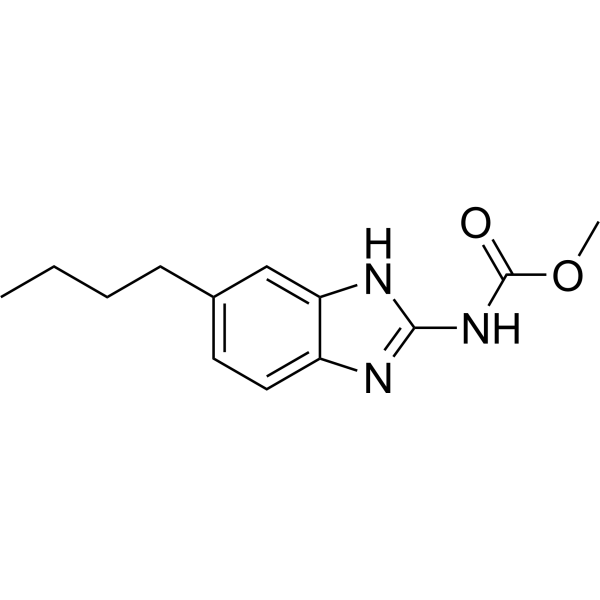 0 ImagesSynonyms: SKF 29044 (Standard)Parbendazole (Standard) (SKF 29044 (Standard)) is the analytical standard of Parbendazole (HY-115364). This product is intended for research and analytical applications. Parbendazole (SKF‑29044) is an orally active benzimidazole carbamate compound with multiple biological activities. Parbendazole binds to free tubulin and inhibits microtubule polymerization; it also activates the JNK/c‑Jun signaling axis and upregulates the expression of the downstream axonal repulsion factor Sema3A. Parbendazole upregulates KAL-1 mRNA expression, reduces nerve growth factor levels, and promotes the terminal differentiation of normal human epidermal keratinocytes. Parbendazole induces apoptosis in differentiated acute myeloid leukemia monocytes and exerts antileukemic activity in a mouse xenograft model of acute myeloid leukemia. Parbendazole exhibits broad-spectrum anthelmintic activity against various animal nematodes. Parbendazole is used in research related to acute myeloid leukemia and parasitic infections.
-
WX-132-18B
 0 ImagesCat. No.: HY-138008CAS No.: 1415262-07-5WX-132-18B is a tubulin inhibitor with an IC50 of 0.45-0.99 nM. WX-132-18B selectively binds to the colchicine-binding site on tubulin, reduces microtubule content via depolymerization, and inhibits tubulin polymerization. WX-132-18B induces tumor cell cycle arrest, apoptosis and changes in nuclear membrane permeability, and decreases mitochondrial membrane potential. WX-132-18B exhibits antiproliferative activity against endothelial cells and human tumor cells, and inhibits the proliferation and growth of xenograft tumors in mice. WX-132-18B can be used in research related to sarcoma, non-small cell lung cancer, gastric cancer and breast cancer.
-
QW-5-70
 0 ImagesCat. No.: HY-183632QW-5-70 is a potent colchicine‑site tubulin inhibitor that blocks tubulin polymerization. QW-5-70 induces mitotic and G2/M cell cycle arrest, triggers mitochondrial apoptosis, and suppresses cancer cell colony formation and migration. QW-5-70 overcomes P‑glycoprotein‑mediated multidrug resistance and inhibits drug‑resistant tumor growth. QW-5-70 demonstrates strong in vitro and in vivo antitumor efficacy in neuroblastoma and prostate cancer models. QW-5-70 can be used for the research of high-risk neuroblastoma and castration-resistant prostate cancer.
-
Parbendazole hydrochloride
 0 ImagesCat. No.: HY-115364ACAS No.: 83601-81-4Synonyms: SKF 29044 hydrochlorideParbendazole hydrochloride (SKF‑29044 hydrochloride) is an orally active benzimidazole carbamate compound with multiple biological activities. Parbendazole hydrochloride binds to free tubulin and inhibits microtubule polymerization; it also activates the JNK/c‑Jun signaling axis and upregulates the expression of the downstream axonal repulsion factor Sema3A. Parbendazole hydrochloride upregulates KAL-1 mRNA expression, reduces nerve growth factor levels, and promotes the terminal differentiation of normal human epidermal keratinocytes. Parbendazole hydrochloride induces apoptosis in differentiated acute myeloid leukemia monocytes and exerts antileukemic activity in a mouse xenograft model of acute myeloid leukemia. Parbendazole hydrochloride exhibits broad-spectrum anthelmintic activity against various animal nematodes. Parbendazole hydrochloride is used in research related to acute myeloid leukemia and parasitic infections.
- 1



