



Arrestin-2/β-Arrestin 1
β-Arrestins, including β-arrestin 1 (ARRB1) and β-arrestin 2 (ARRB2), are multifunctional intracellular proteins that regulate G protein-coupled receptor (GPCR) desensitization, trafficking, and signal scaffolding[1][2][3]. Mechanistically, β-arrestin 1 modulates ERK/STAT3 signaling and contributes to collagen crosslinking during renal fibrosis via the AT1R-β-arrestin pathway[4]. In cancer models, β-arrestin 1 over-expression correlates with nuclear localization, increased VEGF expression, and poor prognosis in lung adenocarcinoma and gastric adenocarcinoma, suggesting a role in tumor progression and angiogenesis[5][6][1]. β-Arrestin 1 also interacts with opioid receptor signaling, where its expression in peripheral blood leukocytes changes during morphine treatment and may serve as a pharmacodynamic biomarker[7]. In metabolic and endocrine contexts, β-arrestin 1 levels influence affective symptoms in type 2 diabetes and are reduced in gestational diabetes, linking it to insulin resistance and atherogenicity[8][9]. Compared with β-arrestin 2, β-arrestin 1 shows distinct subcellular distribution and isoform-specific interactions with nuclear signaling components, influencing transcriptional regulation and receptor-mediated endocytosis[10][11]. Agonists or inhibitors targeting β-arrestins, such as SII or Tanshinone IIA, have been used experimentally to modulate inflammatory signaling and receptor-mediated pathways for therapeutic evaluation[3][4]. Collectively, β-arrestin 1 exhibits isoform-specific functions in cellular signaling, disease pathophysiology, and experimental biomarker development.
References:
- [1]. Li X, et al. Subcellular localization of β-arrestin1 and its prognostic value in lung adenocarcinoma. Medicine (Baltimore). 2017 Nov;96(45):e8450. [Content Brief]
- [2]. Wang LG, et al. Expression of β-arrestin 1 in gastric cardiac adenocarcinoma and its relation with progression. Asian Pac J Cancer Prev. 2012;13(11):5671-5. [Content Brief]
- [3]. Karavidha KK, et al. β-Arrestin 2 (ARRB2) Polymorphism is Associated With Adverse Consequences of Chronic Heroin Use. Am J Addict. 2021 Jul;30(4):351-357. [Content Brief]
- [4]. Marioni G, et al. β-Arrestin-1 expression and epithelial-to-mesenchymal transition in laryngeal carcinoma. Int J Biol Markers. 2019 Mar;34(1):33-40. [Content Brief]
- [5]. Lashen SA, et al. β-arrestin-2 predicts the clinical response to β-blockers in cirrhotic portal hypertension patients: A prospective study. World J Hepatol. 2022 Feb 27;14(2):429-441. [Content Brief]
- [6]. Al-Hakeim HK, et al. Intersections between Copper, β-Arrestin-1, Calcium, FBXW7, CD17, Insulin Resistance and Atherogenicity Mediate Depression and Anxiety Due to Type 2 Diabetes Mellitus: A Nomothetic Network Approach. J Pers Med. 2022 Jan 1;12(1):23. [Content Brief]
- [7]. Matsuoka H, et al. Expression changes in arrestin β 1 and genetic variation in catechol-O-methyltransferase are biomarkers for the response to morphine treatment in cancer patients. Oncol Rep. 2012 May;27(5):1393-9. [Content Brief]
- [8]. Oğlak SC, et al. The reduced serum concentrations of β-arrestin-1 and β-arrestin-2 in pregnancies complicated with gestational diabetes mellitus. J Matern Fetal Neonatal Med. 2022 Dec;35(25):10017-10024. [Content Brief]
- [9]. Tang J, et al. Inhibitory effect of tanshinone IIA on inflammatory response in rheumatoid arthritis through regulating β-arrestin 2. Exp Ther Med. 2019 May;17(5):3299-3306. [Content Brief]
- [10]. Lundgren K, et al. Stromal expression of β-arrestin-1 predicts clinical outcome and tamoxifen response in breast cancer. J Mol Diagn. 2011 May;13(3):340-51. [Content Brief]
- [11]. Zhang X, et al. SO041 The effect and mechanism of the LOX in AT1R/β-arrestin biased pathway induced renal interstitial fibrosis. Nephrol Dial Transplant. 2020;35(Suppl 3):gfaa139.SO041.
-
Arrestin-2/β-Arrestin 1 Related Products (6)
Related Products (6)

-
TRV-120027
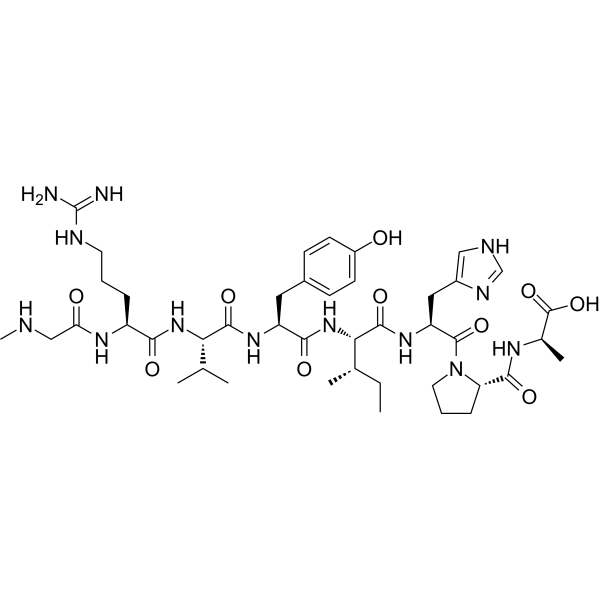 0 ImagesSynonyms: TRV027TRV120027, a β-arrestin-1-biased agonist of the angiotensin II receptor type 1 (AT1R), engages β-arrestins while blocking G-protein signaling. TRV120027 induces acute catecholamine secretion through cation channel subfamily C3 (TRPC3) coupling, promotes the formation of a macromolecular complex composed of AT1R-β-arrestin-1-TRPC3-PLCγ at the plasma membrane. TRV120027 inhibits angiotensin II-mediated vasoconstriction and increases cardiomyocyte contractility. TRV120027 has the potential for the acute decompensated heart failure (ADHF) treatment.
-
TRV0109101
 0 ImagesCat. No.: HY-120925CAS No.: 1401027-29-9TRV0109101 is a μ-opioid peptide receptor (MOPR) selective agonist (KD = 70 nM) with blood-brain barrier permeability. TRV0109101 selectively promotes G protein signaling pathway coupling while reducing the recruitment of β-arrestin. TRV0109101 inhibits opioid-induced mechanical hyperalgesia and induces antinociceptive tolerance. TRV0109101 is applicable for pain-related research.
-
B-007
 0 ImagesCat. No.: HY-183777B-007 is an AplnR agonist with G protein-biased signaling (EC50 = 11.6 nM). B-007 activates the G protein pathway while abolishing β-arrestin1 and β-arrestin2 signaling. B-007 serves as a scaffold for development of G protein-biased apelin receptor agonists. B-007 can be used for the research of heart failure.
-
ID110460001
 0 ImagesCat. No.: HY-W399025CAS No.: 1110883-26-5ID110460001 is a full agonist of μ-opioid receptor and an agonist of δ-opioid receptor. ID110460001 exhibits high intrinsic efficacy for G protein pathway activation of μ-opioid receptor, and this property is not affected by the reduction in receptor quantity. ID110460001 acts only as a very weak partial agonist in the β-arrestin-2 pathway of both receptors, and binds to μ-opioid receptor via a specific mode. The efficacy of ID110460001 in the G protein pathway of δ-opioid receptor is sensitive to changes in receptor quantity. ID110460001 can be used in pain-related research.
-
BMS-986331
 0 ImagesBMS-986331 is an orally active selective N-Formyl Peptide Receptor 2 (FPR2) agonist with an EC50 of 0.5 nM in humans and 1 nM in rats. BMS-986331 activates Gαi2, GαoA, Gα12, Gα13 signaling pathways, recruits β-arrestin1 and β-arrestin2, and inhibits downstream cAMP. BMS-986331 induces the expression and release of the pro-resolution cytokine IL-10. BMS-986331 improves cardiac structure and function in a rat model of heart failure induced by permanent coronary artery occlusion. BMS-986331 can be used for the research of heart failure.
-
RKN5755
 0 ImagesCat. No.: HY-187689CAS No.: 1005056-10-9RKN5755 is a β-arrestin1 inhibitor and a selective inhibitor of activated fibroblasts. RKN5755 binds to β-arrestin1 and interferes with the cofilin signaling pathway mediated by this protein to block its function. RKN5755 not only inhibits the enhanced migratory effect of fibroblasts co-cultured with cancer cells, but also prevents the inhibitory effect of EP3 agonists on the EP2 receptor-induced elevation of tetrodotoxin-resistant sodium currents in mouse dorsal root ganglion neurons. RKN5755 is widely used in research on related diseases such as cancer metastasis and pain.



