



Insecticide
Insecticide
Insecticides refer to any toxic substances used to kill insects, which exert toxic effects on pests through different mechanisms, thereby achieving the purpose of controlling pest populations and protecting crops and human health. Insecticides have both chemical and biological origins and can be classified into organochlorine insecticides, organophosphorus insecticides, carbamate insecticides, and mineral insecticides based on their chemical properties. Insecticides interact with different target and non-target sites, including receptors, enzymes, and many other known and unknown molecules. Most insecticides are neurotoxicants that target the nervous system, but they can also affect other organs and body systems. Insecticides are metabolized through different metabolic pathways and often serve as biomarkers of exposure in the form of their parent compounds or metabolites. The toxicity of insecticides can be acute, subacute, or chronic, depending on the duration of exposure and the dose involved. Therefore, selecting sensitive, accurate, and validated biomarkers of exposure, effects, and susceptibility appears to be a challenging task.
Insecticides are widely used in agriculture, horticulture, forestry, gardening, homes, offices, and other fields[1][2].
All Product Categories
-
Insecticide Related Products (523)
Related Products (523)

-
Resmethrin-d5
 0 ImagesCat. No.: HY-114558SSynonyms: Benzofuroline-d5; Isathrine-d5; Resmethrin-d5 (mixture of isomers)Resmethrin-d5 (Benzofuroline-d5) is the deuterium labeled Resmethrin (HY-114558). Resmethrin (Benzofuroline) is a reproductively toxic compound that inhibits spermatogenesis and induces apoptosis of germ cells in mouse testis culture in vitro, but has no significant toxicity to supporting cells and interstitial cells.
-
Flufenoxuron-d3
 0 ImagesCat. No.: HY-B2009SFlufenoxuron-d3 is the deuterium labeled Flufenoxuron (HY-B2009). Flufenoxuron is a chitin synthesis inhibitor that is used as a benzoylurea insecticide. Flufenoxuron decreases chitin synthesis, molting, and egg hatching, preventing development in insects.
-
Pellitorine (Standard)
 0 ImagesCat. No.: HY-N3097RCAS No.: 18836-52-7Pellitorine (Standard) is the analytical standard of Pellitorine (HY-N3097). Pellitorine is a bioactive natural amide compound. Pellitorine can competitively antagonize the activation of TRPV1 by Capsaicin (HY-10448), thereby reducing pain signal transmission. Pellitorine improves cognitive dysfunction by upregulating the BDNF-ERK1/2-CREB and Nrf2-HO-1 pathways. Pellitorine exerts anti-inflammatory and anti-sepsis effects by inhibiting the release of high mobility group protein B1 (HMGB1) and the expression of RAGE/TLR4. Pellitorine exerts its antithrombotic effect by prolonging the clotting time, inhibiting the activity of clotting factors and thrombin. Pellitorine inhibits lipid peroxidation and resists ferroptosis by upregulating GPX4 and DHODH. Pellitorine kills Aedes aegypti mosquito larvae by inhibiting V-type H⁺-ATPase and aquaporin 4 (AaAQP4). Pellitorine exhibits anti-cancer activity (e.g., leukemia and breast cancer) and has inhibitory effects on certain bacteria.
-
Spirostan-3-ol
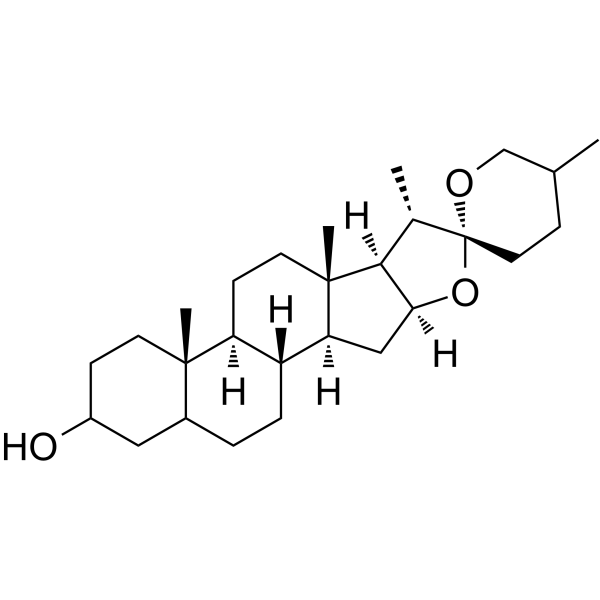 0 ImagesCat. No.: HY-N0073ACAS No.: 82597-74-8Spirostan-3-ol is a useful tool to keep bees away from areas recently treated with toxic insecticides.
-
Azamethiphos
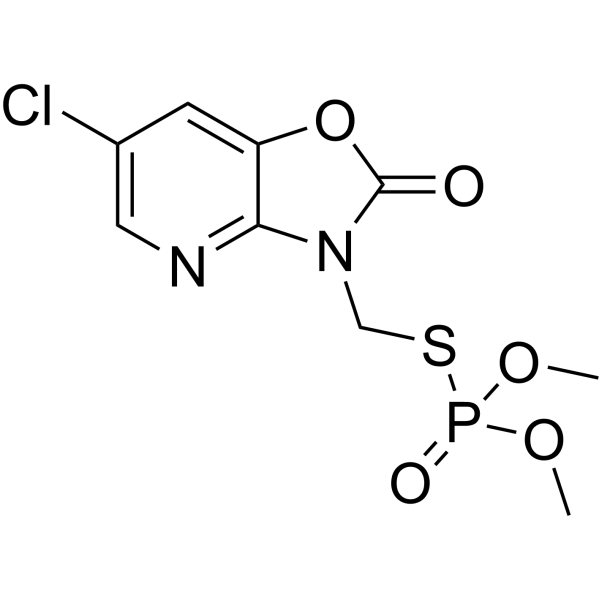 0 ImagesAzamethiphos is an acetylcholinesterase inhibitor and insecticide. Azamethiphos covalently binds to acetylcholinesterase via phosphorylation, inhibits its activity, causes acetylcholine to accumulate in cholinergic synapses, triggers uncontrolled excitation of cholinergic sites, induces paralysis and leads to death. Azamethiphos can be used as a bath insecticide in salmonid aquaculture to control sea lice infestations, and it exerts acute toxicity to European lobster larvae, including mortality and movement disorders.
-
Propoxur-d3
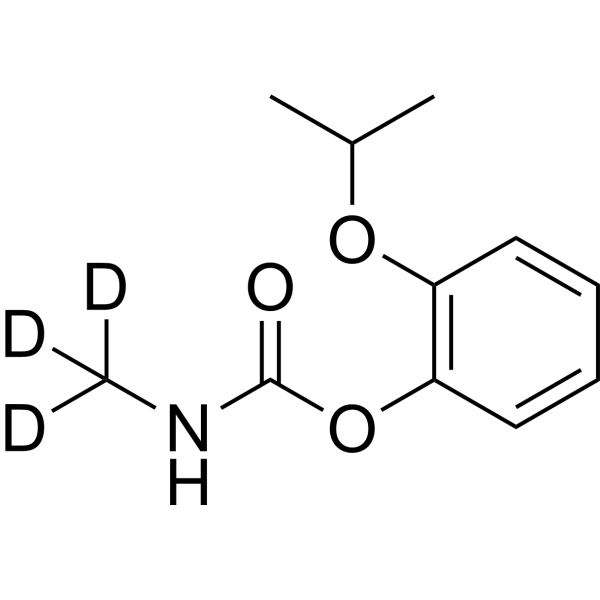 0 ImagesCat. No.: HY-B0916SCAS No.: 1219798-56-7Propoxur-d3 is the deuterated form of Propoxur (HY-B0916). Propoxur is a reversible, competitive, orally active AChE inhibitor that can cross the blood-brain barrier. Propoxur inhibits AChE activity to induce neurotoxicity, while promoting MMP-2 expression and enhancing tumor cell migration and invasion by inducing intracellular ROS generation and activating the ERK/Nrf2 signaling pathway. On the one hand, Propoxur inhibits AChE, leading to acetylcholine accumulation and causing neurological dysfunction; on the other hand, it promotes Nrf2 nuclear translocation through ROS-dependent ERK1/2 phosphorylation, and upregulates MMP-2 and other invasion-related proteins. Propoxur is also a carbamate insecticide used to combat turf, forestry, and household pests.
-
25-Azacoprostane
 0 ImagesCat. No.: HY-177745CAS No.: 37106-88-0Synonyms: 5β-Cholan-24-dimethylamine25-Azacoprostane (5β-Cholan-24-dimethylamine) is an azasteroid. 25-Azacoprostane has significant inhibitory activity against the molting and metamorphosis processes of various insects. 25-Azacoprostane can be used as insecticide.
-
Profenofos-d3
 0 ImagesCat. No.: HY-W753485CAS No.: 2140327-42-8Profenofos-d3 is the deuterium labeled Profenofos (HY-B0832). Profenofos is an insecticida used on field crops, vegetables, and fruit crops. Profenofos is an acetylcholinesterase (AChE) inhibitor, with neurotoxicity.
-
Azamethiphos (Standard)
 0 ImagesCat. No.: HY-114899RCAS No.: 35575-96-3Azamethiphos (Standard) is the analytical standard of Azamethiphos (HY-114899). This product is intended for research and analytical applications. Azamethiphos is an acetylcholinesterase inhibitor and insecticide. Azamethiphos covalently binds to acetylcholinesterase via phosphorylation, inhibits its activity, causes acetylcholine to accumulate in cholinergic synapses, triggers uncontrolled excitation of cholinergic sites, induces paralysis and leads to death. Azamethiphos can be used as a bath insecticide in salmonid aquaculture to control sea lice infestations, and it exerts acute toxicity to European lobster larvae, including mortality and movement disorders.
-
Fluvalinate-d5
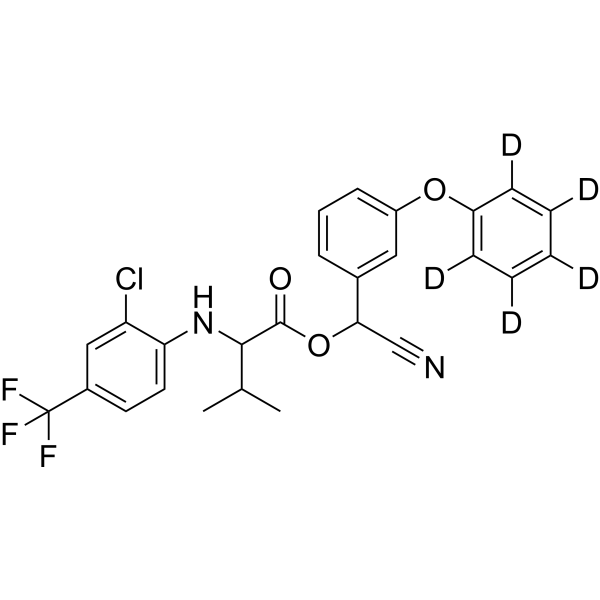 0 ImagesCat. No.: HY-123320SFluvalinate-d5 is the deuterated-labeled Fluvalinate (HY-123320). Fluvalinate is an orally active acaricide classified as a sodium channel inhibitor. Fluvalinate delays sodium channel closure, prolongs cell membrane depolarization, inhibits the excitability of honeybee brain neurons, and exerts a central nervous system inhibitory effect. Fluvalinate negatively affects the learning ability, memory ability, sucrose responsiveness, and survival of honeybees. Fluvalinate potentiates pentobarbital-induced hypnosis, reduces spontaneous activity in mice, and decreases the total white blood cell count and absolute lymphocyte count in mice. Fluvalinate induces acute toxic symptoms in rats, acts as a cholinergic stimulant, and induces the production of hepatic enzymes in rats. Fluvalinate causes the death of Varroa jacobsoni sensitive to τ-Fluvalinate (HY-B2021). Fluvalinate can be used in studies related to mite pest control.
-
Nikkomycin M
 0 ImagesCat. No.: HY-122996CAS No.: 77368-62-8Nikkomycin M is used as an insecticide.
-
Insecticidal agent 22
 0 ImagesCat. No.: HY-176042Insecticidal agent 22 (Compound A13) is an insecticide, with LC50s of 1.4 and 9.9 μg/mL for diamondback moth (Plutella xylostella) and fall armyworm (Spodoptera frugiperda), respectively. Insecticidal agent 22 can be used as a low-toxicity alternative to Fluralaner (HY-16973).
-
14α-Hydroxy Paspalinine
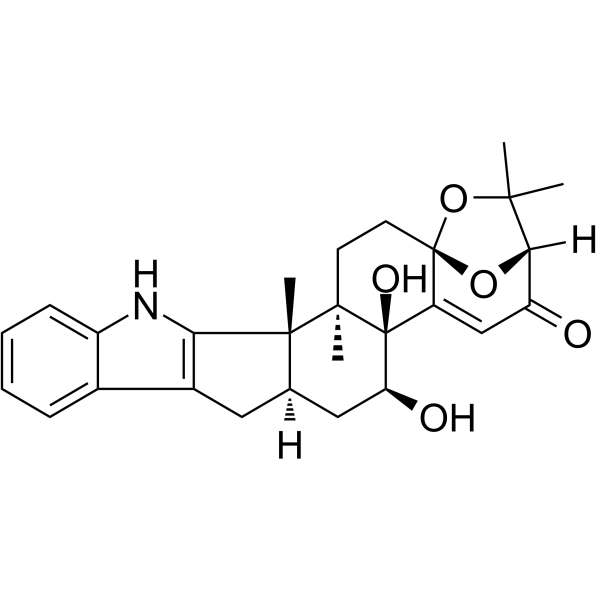 0 ImagesCat. No.: HY-123519CAS No.: 151341-77-414α-Hydroxy Paspalinine is a paspalinine derivative with antiinsectan activity from the sclerotia of Aspergillus nomius.
-
Type A Allatostatin I
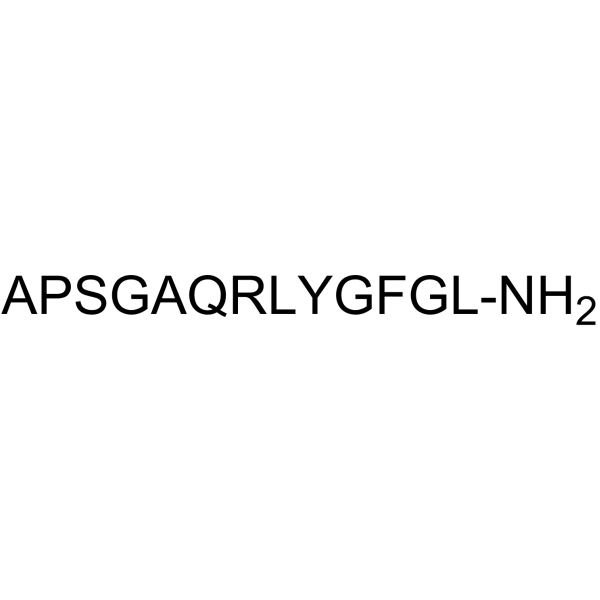 0 ImagesCat. No.: HY-P1882CAS No.: 123209-95-0Type A Allatostatin I is a tridecapeptide. Allatostatins are pleiotropic neuropeptides for inhibition of juvenile hormone synthesis in insects.
-
6''-O-β-D-Apiofuranosylastragalin
 0 ImagesCat. No.: HY-N16837CAS No.: 946827-13-06''-O-β-D-Apiofuranosylastragalin (compound 1) is a flavonoid glycoside that can be naturally extracted from the methanol extract of fresh leaves of Solidago altissima L. (a plant of the genus Solidago in the Asteraceae family). The related methanol extract exhibits antifeedant activity against Thrips palmi and can be used in the research of natural antifeedants for agricultural pest control.
-
Lavandulyl senecioate
 0 ImagesCat. No.: HY-N7739CAS No.: 23960-07-8Lavandulyl senecioate is a senecioyl ester of lavandulol.Lavandulyl senecioate’s (S)-enantiomer serves as the sex pheromone of the vine mealybug (Planococcus ficus). Lavandulyl senecioate can be used in research related to pest control.

-
Insecticidal agent 23
 0 ImagesCat. No.: HY-172794CAS No.: 3031757-63-5Insecticidal agent 23 (compound 17) has antischistosomal efficacy and low toxicity. Insecticidal agent 23 exhibits potent in vitro activity against adult S. japonicum, with an LC50 (72 h) value of 25.31 μM.
-
Iso-Kaempferol
 0 ImagesCat. No.: HY-189091CAS No.: 210560-14-8Iso-Kaempferol is a flavonoid insecticide, with a LC50 of 1.4541 mg/mL against 4th-instar larvae of Plutella xylostella.
-
Avermectin A2b
 0 ImagesCat. No.: HY-136897CAS No.: 65195-54-2Avermectin A2b is an avermectin. Avermectins are produced during the fermentation of the actinomycete Streptomyces avermitilis. Avermectins possess anthelmintic and insecticidal properties, and are commonly used as insecticides for the control of pests and parasitic worms.



