



Inositol hexakisphosphate kinase
Inositol hexakisphosphate kinases (IP6Ks) catalyze the conversion of inositol hexakisphosphate (InsP6) into the high-energy pyrophosphate 5-IP7, thereby modulating intracellular phosphate homeostasis and energy metabolism[1][2][3]. Mechanistically, IP6Ks regulate phosphate export via interaction with the SPX domain of the phosphate transporter XPR1, influencing cellular ATP levels and phosphate flux[1]. Among the three mammalian isoforms, IP6K1 exhibits unique control over metabolic processes, including insulin signaling inhibition in adipose tissue and promotion of high-fat diet-induced hyperinsulinemia, whereas IP6K2 and IP6K3 have distinct tissue-specific expression and functional profiles[2][3][4]. In immune cells, IP6K1 limits phosphatidylinositol-(3,4,5)-trisphosphate signaling, thereby modulating neutrophil chemotaxis, phagocytosis, and NADPH oxidase activity, with pharmacological inhibition enhancing these responses[5]. In the central nervous system, IP6Ks contribute to synaptic vesicle recycling, Akt/GSK3 signaling, neuronal migration, autophagy, and nuclear translocation, implicating them in behavioral and developmental outcomes[6][4]. Compared with related isoforms, IP6K1 and IP6K3 differentially affect exocytosis and endocytosis of vesicular glutamate transporters, indicating isoform-specific roles in neurotransmission[6]. Experimental studies employing the pan-IP6K inhibitor TNP have demonstrated the ability to ameliorate metabolic dysfunctions, including obesity, insulin resistance, and fatty liver, highlighting therapeutic potential[2]. Collectively, these findings emphasize IP6Ks as critical regulators of phosphate and energy homeostasis, immune function, neural signaling, and metabolic disease models[3][4].
References:
- [1]. Wilson MS, et al. The inositol hexakisphosphate kinases IP6K1 and -2 regulate human cellular phosphate homeostasis, including XPR1-mediated phosphate export. J Biol Chem. 2019 Jul 26;294(30):11597-11608. [Content Brief]
- [2]. Prasad A, et al. Inositol hexakisphosphate kinase 1 regulates neutrophil function in innate immunity by inhibiting phosphatidylinositol-(3,4,5)-trisphosphate signaling. Nat Immunol. 2011 Jun 19;12(8):752-60. [Content Brief]
- [3]. Mukherjee S, et al. Targeting the Inositol Pyrophosphate Biosynthetic Enzymes in Metabolic Diseases. Molecules. 2020 Mar 19;25(6):1403. [Content Brief]
- [4]. Chakraborty A. The inositol pyrophosphate pathway in health and diseases. Biol Rev Camb Philos Soc. 2018 May;93(2):1203-1227. doi: 10.1111/brv.12392. Epub 2017 Dec 27. PMID: 29282838; PMCID: PMC6383672. et al. The inositol pyrophosphate pathway in health and diseases. Biol Rev Camb Philos Soc. 2018 May;93(2):1203-1227. [Content Brief]
- [5]. Li H, et al. Inositol hexakisphosphate kinases differentially regulate trafficking of vesicular glutamate transporters 1 and 2. Front Cell Neurosci. 2022 Jul 22;16:926794. [Content Brief]
- [6]. Heitmann T, et al. The Role of Inositol Hexakisphosphate Kinase in the Central Nervous System. Biomolecules. 2023 Aug 28;13(9):1317. [Content Brief]
All Product Categories
-
Inositol hexakisphosphate kinase Related Products (3)
Related Products (3)

-
SC-919
 0 ImagesSynonyms: LI-2124SC-919 is an orally active IP6K inhibitor, with an IC50 of < 5.2 nM against IP6K1, < 3.8 nM against IP6K2, and 0.65 nM against IP6K3. By inhibiting the activity of IP6K, SC-919 reduces intracellular IP7 levels, thereby suppressing XPR1-mediated cellular phosphate efflux. SC-919 increases intracellular phosphate and ATP levels while reducing phosphate entry into the bloodstream, thus decreasing plasma phosphate levels. SC-919 can be used in research related to chronic kidney disease and hyperphosphatemia.
-
IP6K-IN-2
 0 ImagesIP6K-IN-2 is an inositol hexakisphosphate kinase (IP6K1) inhibitor that inhibits IP6K1 enzyme activity with an IC50 value of 110 nM. IP6K-IN-2 can be used for the research of neurological disease and CNS disorders.
-
IP6K2-IN-1
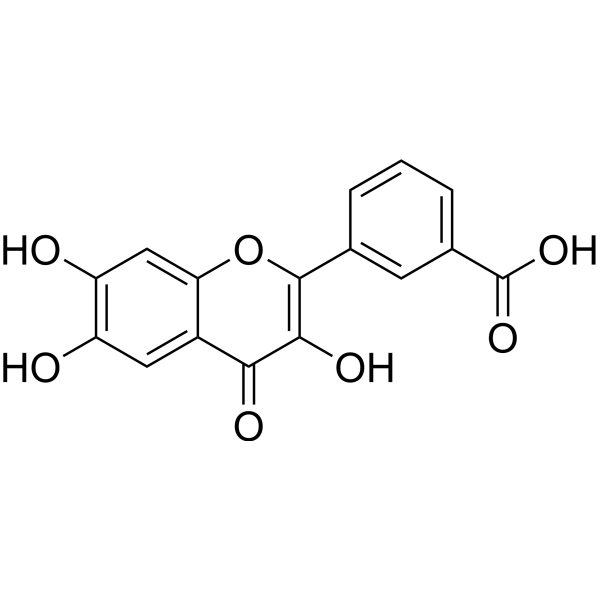 0 ImagesIP6K2-IN-1 is a selective flavonoid-based IP6K2 inhibitor with an IC50 value of 0.55 μM. IP6K2-IN-1 shows higher inhibitory potency against IP6K2 than IP6K1 and IP6K3. IP6K2-IN-1 can be utilised as a hit compound for further structural modifications of IP6K2 inhibitors.



