



Isotope-Labeled Compounds
Isotope-labeled compounds are chemical substances in which some atoms in their molecules are replaced by isotope atoms. The range of stable isotope products can cover from gases to complex molecules. Isotope-labeled compounds could provide a site-specific investigation of structures, making molecules easily detectable by mass spectrometry and NMR, and maintaining the physico-chemical properties of the target molecule at the same time.
MCE isotope-labeled compounds are all stable isotope-labeled compounds and are non-radioactive labeled substances. MCE isotope-labeled compounds are unique tools for identifying and understanding biological and chemical processes. Stable isotope-labeled products are now getting more and more popular among scientists. The scope of application is gradually penetrating into various scientific fields, such as life sciences, food and medicine, agriculture, environment, geology, etc. Stable isotope-labeled compounds have a wide range of applications in the Life Science areas, such as Metabolomics, Proteomics, Clinical studies, Deuterium drugs, etc.
All Product Categories
-
Isotope-Labeled Compounds Related Products (11100)
Related Products (11100)

-
Lodoxamide-15N2,d2
 0 ImagesCat. No.: HY-W755511CAS No.: 2733832-83-0Synonyms: U-42585E free acid-15N2,d2Lodoxamide-15N2,d2 (U-42585E (free acid)-15N2,d2) is the deuterium and 15N-labeled Lodoxamide (HY-14270). Lodoxamide (U-42585E free acid) is an antiallergic compound acting as a mast-cell stabilizer for the treatment of asthma and allergic conjunctivitis.
-
CML-d3
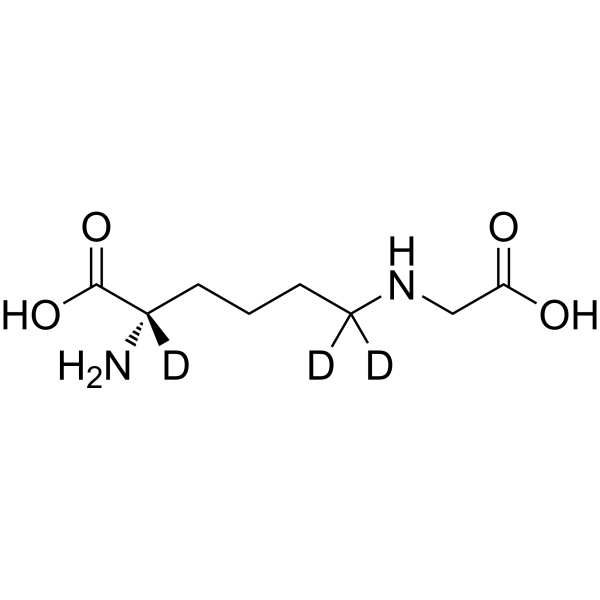 0 ImagesSynonyms: N6-(Carboxymethyl)-L-lysine-d3; Nε-(1-Carboxymethyl)-L-lysine-d3CML-d3 is the deuterium labeled CML.
-
Dabigatran-d7
 0 ImagesCat. No.: HY-10163S5CAS No.: 2512224-24-5Synonyms: BIBR 953-d7; BIBR 953ZW-d7Dabigatran-d7 (BIBR 953-d7; BIBR 953ZW-d7) is the deuterium labeled Dabigatran (HY-10163). Dabigatran (BIBR 953), an oral anticoagulant, is a reversible, potent, competitive direct thrombin inhibitor (Ki=4.5 nM). Dabigatran (BIBR 953) also inhibits thrombin-induced platelet aggregation (IC50=10 nM).
-
2'-Deoxyguanosine-13C10,15N5
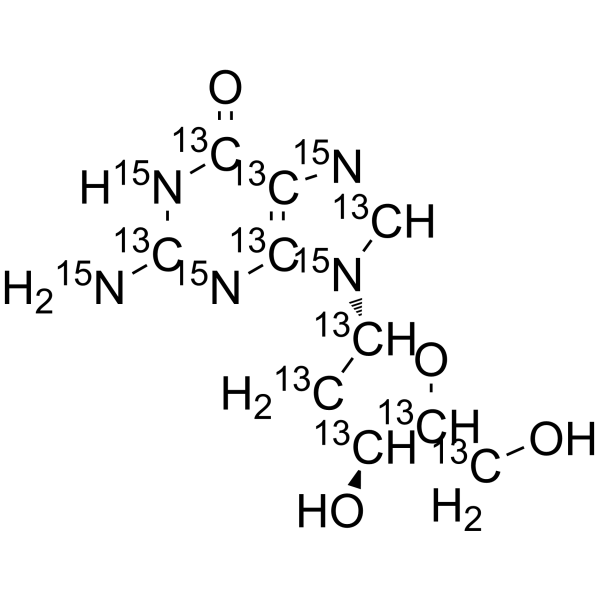 0 ImagesCat. No.: HY-17563S1CAS No.: 872624-05-0Synonyms: Deoxyguanosine-13C10,15N5; Guanine deoxyriboside-13C10,15N52'-Deoxyguanosine-13C10,15N5 (Deoxyguanosine-13C10,15N5; Guanine deoxyriboside-13C10,15N5) is a 13C- and 15N-labeled 2'-Deoxyguanosine (HY-17563).
-
DMT-2′O-TBDMS-rA(ac) phosphoramidite-15N
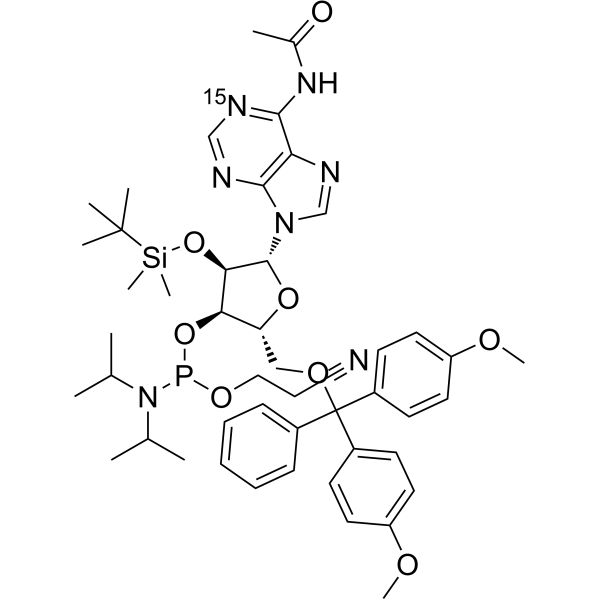 0 ImagesCat. No.: HY-150658SDMT-2′O-TBDMS-rA(ac) phosphoramidite-15N is the 15N labeled DMT-2′O-TBDMS-rA(ac) phosphoramidite.
-
Raloxifene-d10 hydrochloride
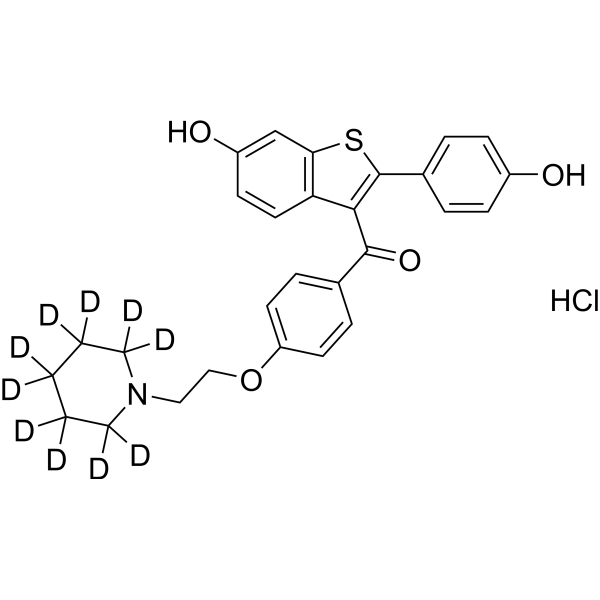 0 ImagesCat. No.: HY-W707527CAS No.: 2512224-38-1Synonyms: Keoxifene-d10 hydrochloride; LY156758-d10; LY139481-d10 hydrochlorideRaloxifene-d10 (hydrochloride) is deuterated labeled Raloxifene (hydrochloride).
-
Carboxymefloquine-d3
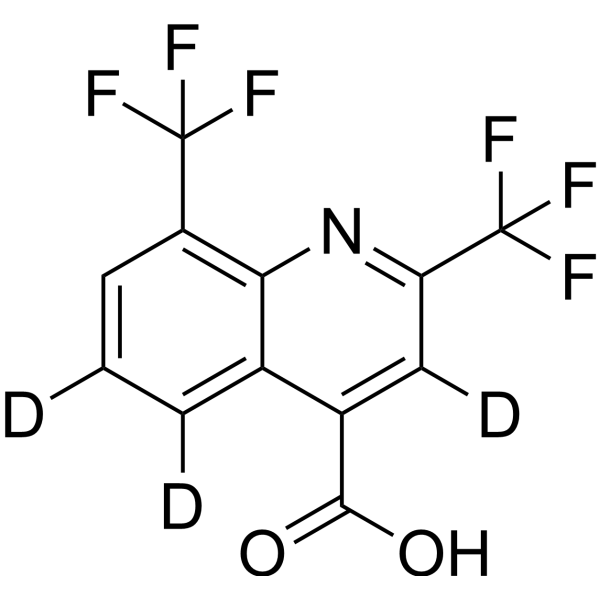 0 ImagesCat. No.: HY-142738SCAS No.: 2469206-35-5Carboxymefloquine-d3 is the deuterium labeled Carboxymefloquine.
-
E,E-Dienestrol-d6-1
 0 ImagesCat. No.: HY-B1403S1E,E-Dienestrol-d6-1 is a deuterated labeled Dienestrol.

-
2-Azidoethanol-d4
 0 ImagesCat. No.: HY-W7439312-Azidoethanol-d4 is the deuterium labeled Azido-PEG1 (HY-138461). Azido-PEG1 is a PEG-based PROTAC linker that can be used in the synthesis of PROTACs. Azido-PEG1 is a click chemistry reagent, it contains an Azide group and can undergo copper-catalyzed azide-alkyne cycloaddition reaction (CuAAc) with molecules containing Alkyne groups. It can also undergo strain-promoted alkyne-azide cycloaddition (SPAAC) reactions with molecules containing DBCO or BCN groups.
-
α-Hydroxymethyl atropine-d5
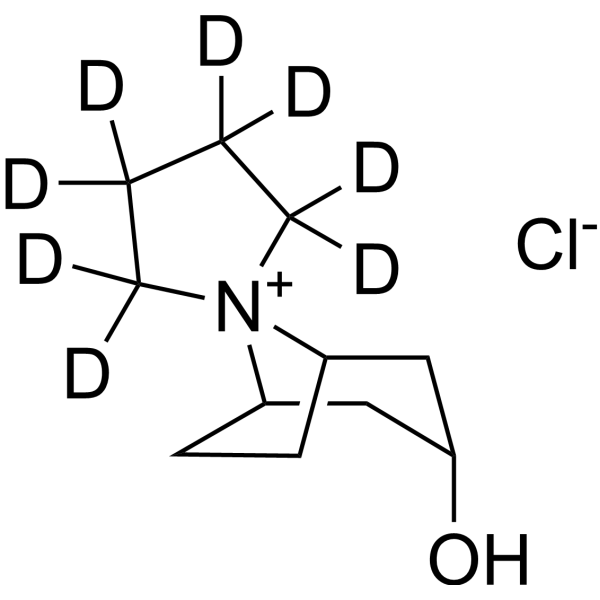
 0 ImagesCat. No.: HY-W767047CAS No.: 2124275-77-8α-Hydroxymethyl atropine-d5 is the deuterium labeled α-Hydroxymethyl atropine (HY-W587927). α-Hydroxymethyl atropine is the impurity, that could be produced in process of Atropine (HY-B1205) synthesis.
-
Pregnenolone-d6
 0 ImagesCat. No.: HY-B0151S3Synonyms: 3β-Hydroxy-5-pregnen-20-one-d6Pregnenolone-d6 (3β-Hydroxy-5-pregnen-20-one-d6) is the deuterium labeled Pregnenolone (HY-B0151) . Pregnenolone (3β-Hydroxy-5-pregnen-20-one) is a powerful neurosteroid, the main precursor of various steroid hormones including steroid ketones. Pregnenolone acts as a signaling-specific inhibitor of cannabinoid CB1 receptor, inhibits the effects of tetrahydrocannabinol (THC) that are mediated by the CB1 receptors. Pregnenolone can protect the brain from cannabis intoxication. Pregnenolone is also a TRPM3 channel activator, and also can weakly activate TRPM1 channels.
-
(R)-2-(3-Benzoylphenyl)propanoic acid-13C,d3
 0 ImagesCat. No.: HY-W778023CAS No.: 1329496-52-7Synonyms: (R)-(-)-Ketoprofen-13C,d3(R)-2-(3-Benzoylphenyl)propanoic acid-13C,d3 ((R)-(-)-Ketoprofen-13C,d3) is the deuterium labeled and 13C-labeled Ketoprofen-d3-1 (HY-W322573S).
-
(Rac)-Lysophosphatidylcholine C19:0-d5
 0 ImagesCat. No.: HY-146841S1Synonyms: (Rac)-1-Nonadecanoyl-2-hydroxy-sn-glycero-3-phosphocholine-d5; (Rac)-19:0 Lyso PC-d5(Rac)-19:0 Lyso PC-d5 is the deuterium labeled (Rac)-19:0 Lyso PC.
-
(Rac)-Atomoxetine-d5 hydrochloride
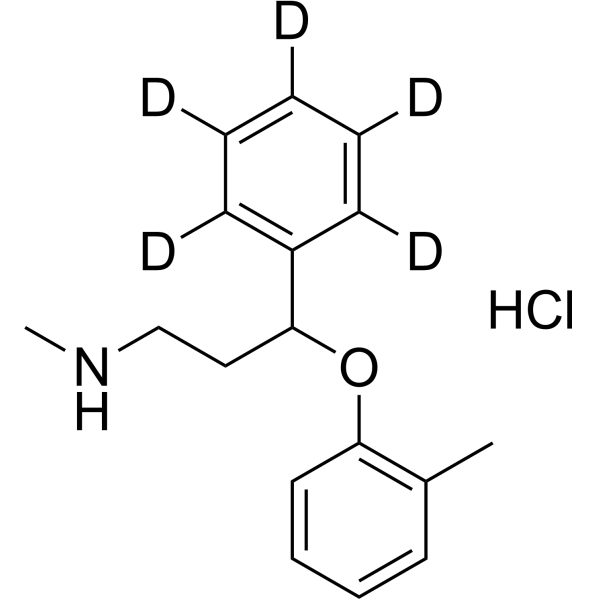 0 ImagesSynonyms: (Rac)-Tomoxetine-d5 hydrochloride; (Rac)-LY 139603-d5(Rac)-Atomoxetine-d5 (hydrochloride) is the deuterium labeled (Rac)-Atomoxetine hydrochloride.
-
3-Methyladenine-d3 hydroiodide
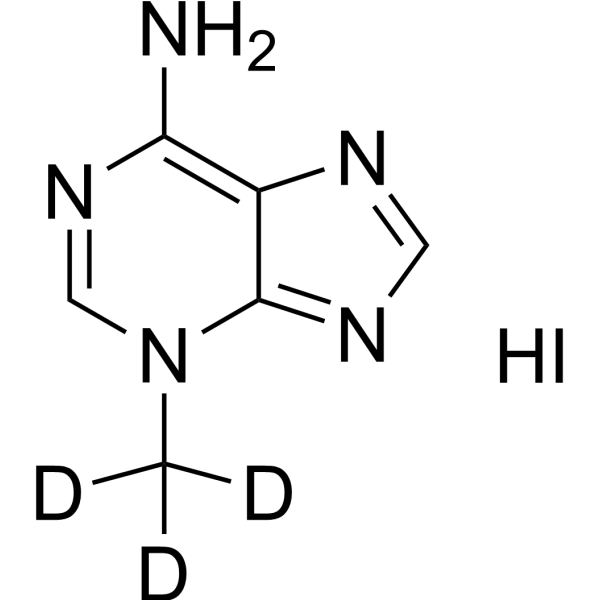 0 ImagesCat. No.: HY-19312AS3-Methyladenine-d3 (hydroiodide) is deuterated labeled 3-Methyladenine.
-
L-Glutamine-2-13C
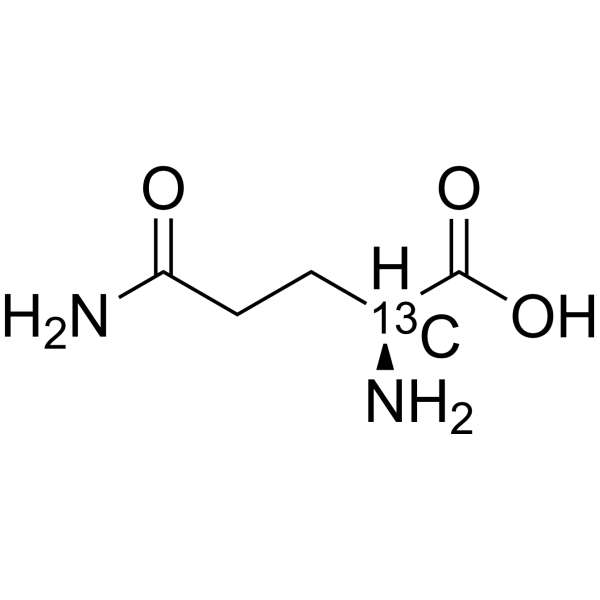 0 ImagesCat. No.: HY-N0390S11CAS No.: 180991-02-0Synonyms: L-Glutamic acid 5-amide-2-13CL-Glutamine-2-13C is the 13C-labeled L-Glutamine. L-Glutamine (L-Glutamic acid 5-amide) is a non-essential amino acid present abundantly throughout the body and involved in many metabolic processes. L-Glutamine provides a source of carbons for oxidation in some cells.
-
Sodium 3-methyl-2-oxobutanoate-13C2,d4
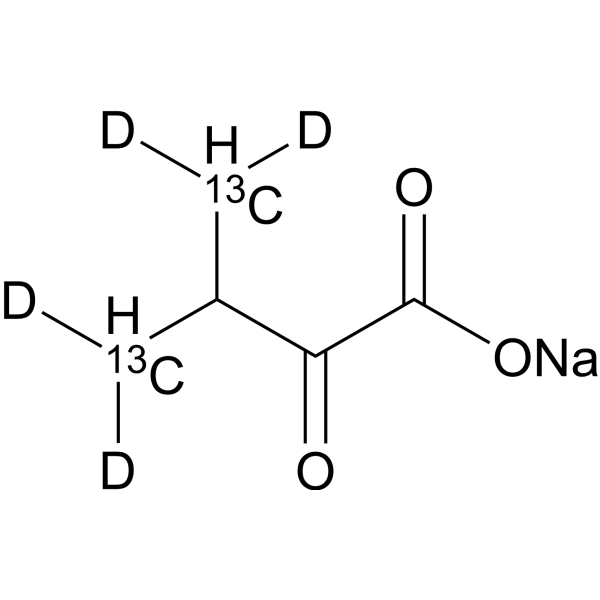 0 ImagesCat. No.: HY-W006057AS3CAS No.: 1007477-29-3Sodium 3-methyl-2-oxobutanoate-13C2,d4 is the deuterium and 13C labeled Sodium 3-methyl-2-oxobutanoate.
-
Sparsentan-d5
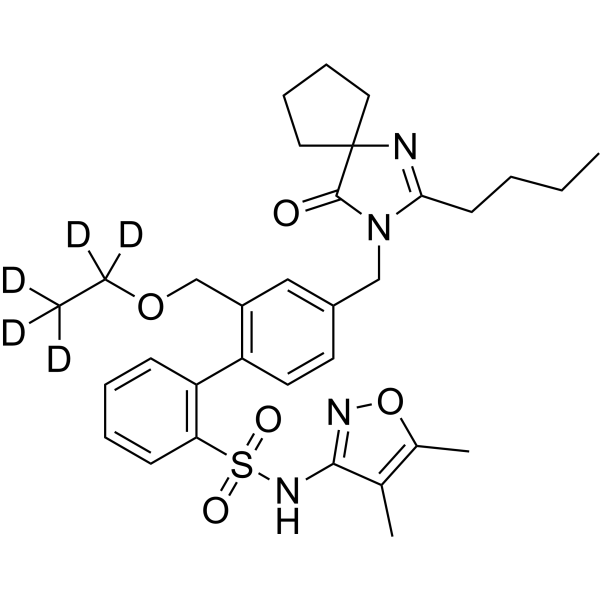 0 ImagesCat. No.: HY-17621SCAS No.: 1801597-09-0Synonyms: RE-021-d5; DARA-a-d5Sparsentan-d5 is deuterium labeled Sparsentan. Sparsentan (RE-021) is a highly potent dual angiotensin II and endothelin A receptor antagonist with Kis of 0.8 and 9.3 nM, respectively.



