



NPFFR1
NPFFR1 (neuropeptide FF receptor 1, GPR147) is a class A G protein-coupled receptor that functions as a receptor for the RF-amide neuropeptides NPFF and NPAF and mediates neuropeptide signaling through Gi/o-dependent pathways[1][2]. Mechanistically, NPFFR1 participates in neuropeptide signaling networks that regulate nociception, opioid responsiveness, hormonal modulation, thermoregulation, and metabolic homeostasis, linking extracellular RF-amide peptides to intracellular signaling programs[3][4]. Structural studies further demonstrated that NPFFR1 and NPFFR2 share conserved RF-amide peptide recognition mechanisms while exhibiting subtype-specific determinants of ligand selectivity and G-protein coupling, providing a molecular basis for distinct biological functions[3]. In disease-relevant and pharmacological models, the NPFF system has been strongly associated with pain regulation, opioid tolerance, opioid dependence, and metabolic disorders, making NPFFR1 an important target for mechanistic studies of neuropeptide-mediated signaling[4][3]. Compared with the related isoform NPFFR2, NPFFR1 is broadly distributed throughout the central nervous system, particularly in limbic and hypothalamic regions, whereas NPFFR2 is more prominently associated with spinal nociceptive circuits, highlighting functional specialization between the receptor subtypes[5]. For experimental applications, endogenous RFamide-related peptides, including RFRP-derived ligands, activate NPFFR1, while subtype-selective antagonists have been developed to dissect NPFFR1-dependent regulation of reproduction, stress responses, anxiety-related behaviors, and opioid-associated signaling pathways[6].
References:
- [1]. Bonini JA, et al. Identification and characterization of two G protein-coupled receptors for neuropeptide FF. J Biol Chem. 2000 Dec 15;275(50):39324-31. [Content Brief]
- [2]. Hinuma S, et al. New neuropeptides containing carboxy-terminal RFamide and their receptor in mammals. Nat Cell Biol. 2000 Oct;2(10):703-8. [Content Brief]
- [3]. Li X, et al. Structural basis of peptide recognition and modulation for neuropeptide FF receptors. Cell Rep. 2025 Sep 23;44(9):116160. [Content Brief]
- [4]. Nguyen T, et al. Neuropeptide FF and Its Receptors: Therapeutic Applications and Ligand Development. J Med Chem. 2020 Nov 12;63(21):12387-12402. [Content Brief]
- [5]. Database: Guide to pharmacology.
- [6]. Kim J. Functional Analyses of the Neuropeptide FF Receptor System Using GJ14.
All Product Categories
-
NPFFR1 Related Products (4)
Related Products (4)

-
Neuropeptide FF
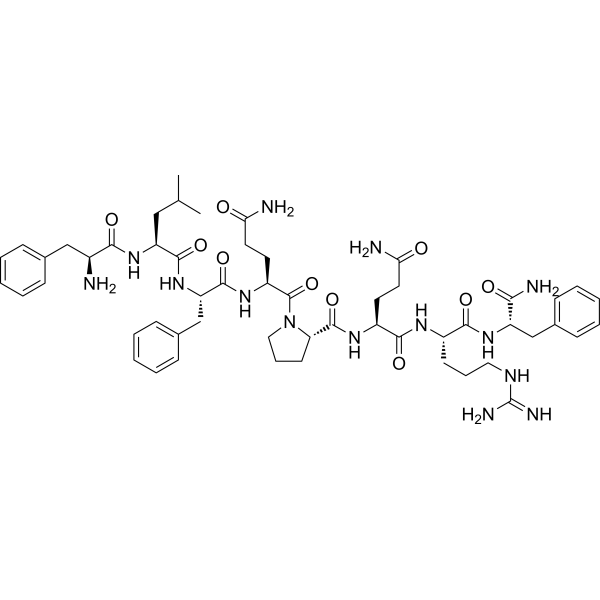 0 ImagesSynonyms: NPFFNeuropeptide FF (NPFF), an octapeptide belonging to the RF-amide family of peptides, is a NPFF1 and NPFF2 receptors agonist with Ki values of 2.82 nM and 0.21 nM, respectively. Neuropeptide FF induces abstinence syndrome, exerts antiopioid and analgesic effects, releases via calcium-dependent mechanisms from rat spinal cord, regulates memory, autonomic function, and neuroendocrine function, modulates pain and opioid antinociception, reduces food intake, stimulates water intake, alters cardiovascular parameters, and shows differential activity in hypothalamic paraventricular nucleus neurons. Neuropeptide FF is present in mammalian central nervous system and periphery, with NPFF-immunoreactivity increases in rat cerebrospinal fluid during opiate tolerance, and its NPFF gene and NPFF-R2 gene are up-regulated in rat spinal cord and dorsal root ganglia during peripheral inflammation. Neuropeptide FF can be used for the research of opioid tolerance, morphine-induced analgesia, abstinence syndrome, pain, hypertension, nociception, inflammatory pain, and neuropathic pain.
-
NPFF1-R antagonist 1
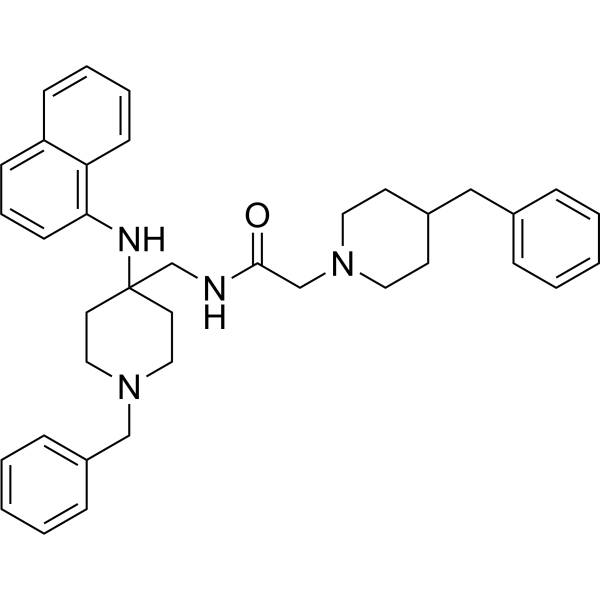 0 ImagesNPFF1-R antagonist 1 (compound 8b), a piperidine analogue, is a potent neuropeptide FF (NPFF) receptor antagonist. NPFF1-R antagonist 1 is 15-fold selective for the NPFF1-R subtype, with Ki values of 211 nM and 3270 nM for NPFF1-R and NPFF2-R, respectively.
-
DP50
 0 ImagesCat. No.: HY-P10395DP50 is a bifunctional compound that contains an opioid receptor (MOP) agonist and a neuropeptide FF receptor (NPFFR) antagonist. DP50 can be used in analgesia-related research.
-
DP32
 0 ImagesCat. No.: HY-P10394CAS No.: 2376306-14-6DP32 is a bifunctional compound that contains an opioid receptor (MOP) agonist and a neuropeptide FF receptor (NPFFR) antagonist. DP32 can be used in analgesia-related research.



