



Neuropeptide FF

Based on 1 Customer Validation
Neuropeptide FF (NPFF), an octapeptide belonging to the RF-amide family of peptides, is a NPFF1 and NPFF2 receptors agonist with Ki values of 2.82 nM and 0.21 nM, respectively. Neuropeptide FF induces abstinence syndrome, exerts antiopioid and analgesic effects, releases via calcium-dependent mechanisms from rat spinal cord, regulates memory, autonomic function, and neuroendocrine function, modulates pain and opioid antinociception, reduces food intake, stimulates water intake, alters cardiovascular parameters, and shows differential activity in hypothalamic paraventricular nucleus neurons. Neuropeptide FF is present in mammalian central nervous system and periphery, with NPFF-immunoreactivity increases in rat cerebrospinal fluid during opiate tolerance, and its NPFF gene and NPFF-R2 gene are up-regulated in rat spinal cord and dorsal root ganglia during peripheral inflammation. Neuropeptide FF can be used for the research of opioid tolerance, morphine-induced analgesia, abstinence syndrome, pain, hypertension, nociception, inflammatory pain, and neuropathic pain.
Nos produits utilisent uniquement pour la recherche. Nous ne vendons pas aux patients.
- Pureté : 99.35%
- CAS No.: 99566-27-5
- Formule: C54H76N14O10
- Masse moléculaire:1081.27
-
Stockage:
Sealed storage, away from moisture and light.
Powder -80°C, 2 years , -20°C, 1 year* In solvent : -80°C, 6 months; -20°C, 1 month (sealed storage, away from moisture and light)

To place orders, for customer services and technical support, please contact: MedChemExpress USA
Tel: 609-228-6898 E-mail: [email protected] [email protected]


-
 Activité biologique
-
Chemical Information
-
Solvant et solubilité
- Protocole
- Pureté et documentation
- Références
-
 Help & FAQs


-
HY-P1250
RFRP-3(human)NPFF1 Receptor Agonist -
HY-P1428
RFRP-1(human)NPFF Receptor Agonist -
HY-P1035
Neuropeptide W-23 (human)NPBW1/2 Agonist -
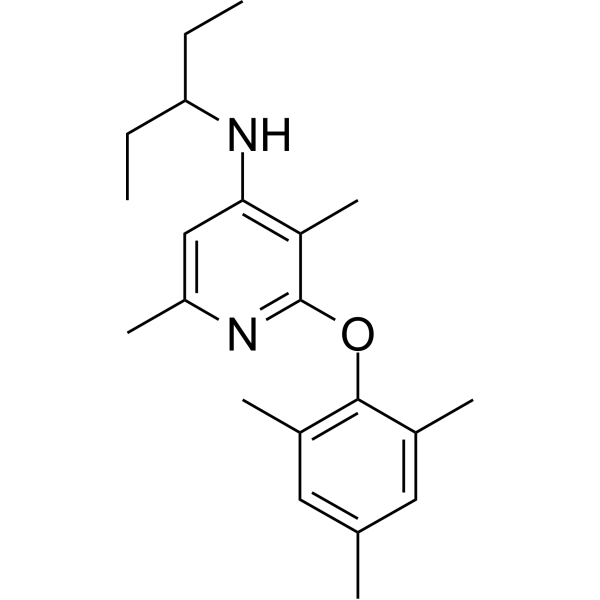
HY-14130
CP 376395CRF1 Receptor Antagonist -
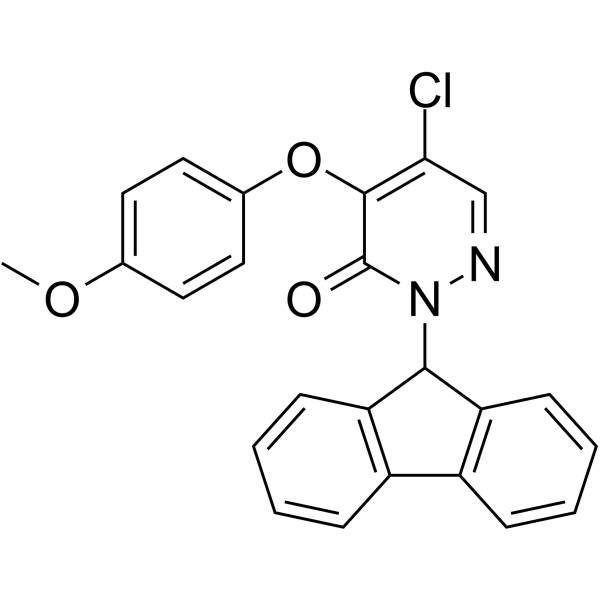
HY-108624
CYM 50769GPR7 Antagonist -
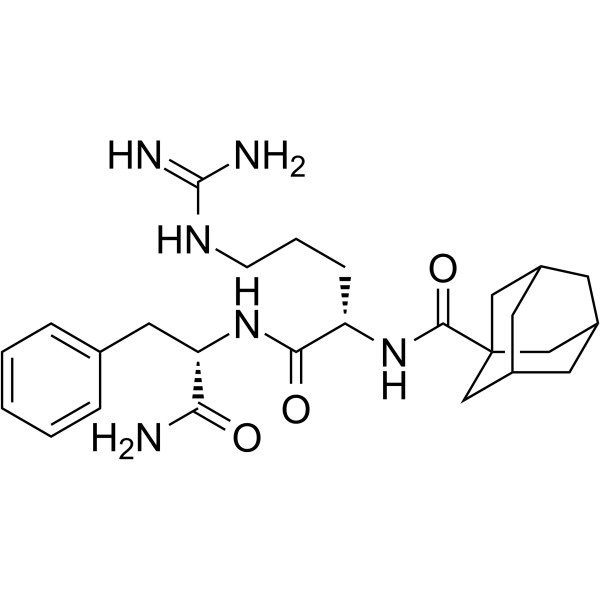
HY-107382
RF9Neuropeptide Y Receptor Antagonist -

HY-P0198
Neuropeptide Y (human,rat,mouse)Active Compound -
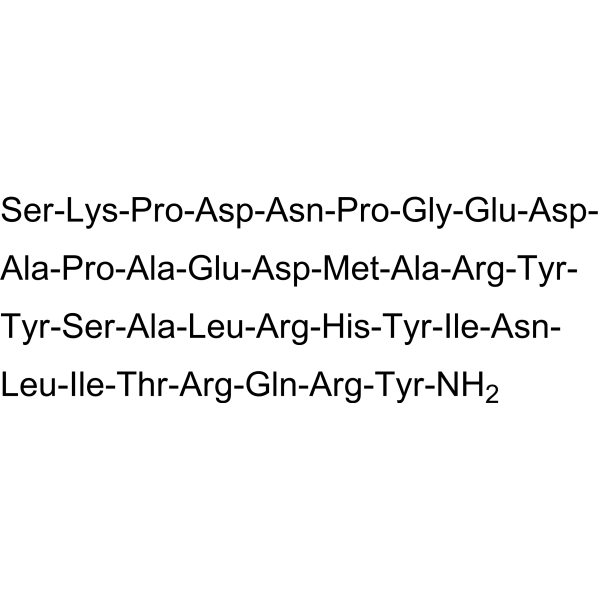
HY-P2543
Neuropeptide Y (3-36) (human, rat)Neuropeptide -
HY-P1514
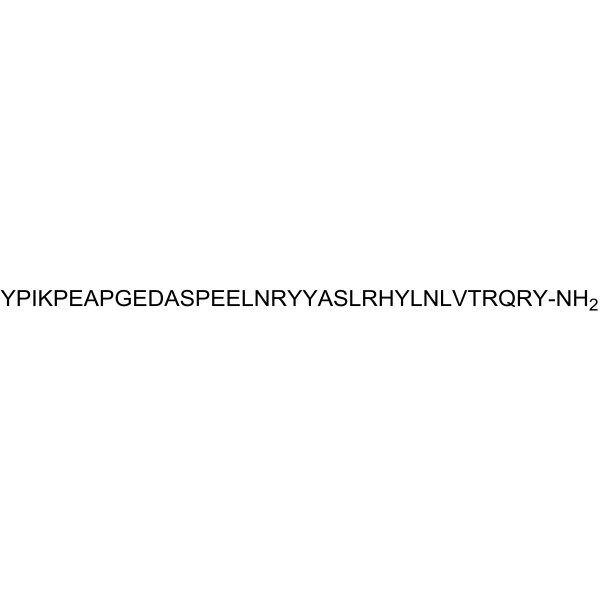
Peptide YY (PYY), humanGut Hormone -
HY-P1601
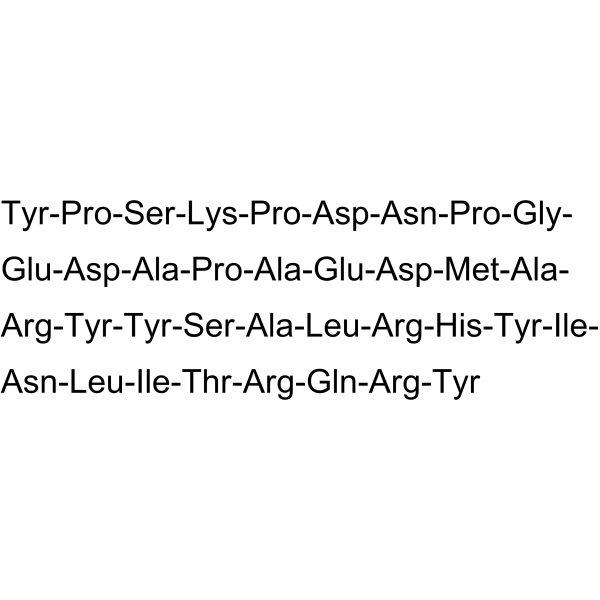
Neuropeptide Y(29-64)Peptide -

HY-P1480
Neuropeptide Y (13-36), amide, humanNeuropeptide Y2 Receptor Agonist -
HY-P1840
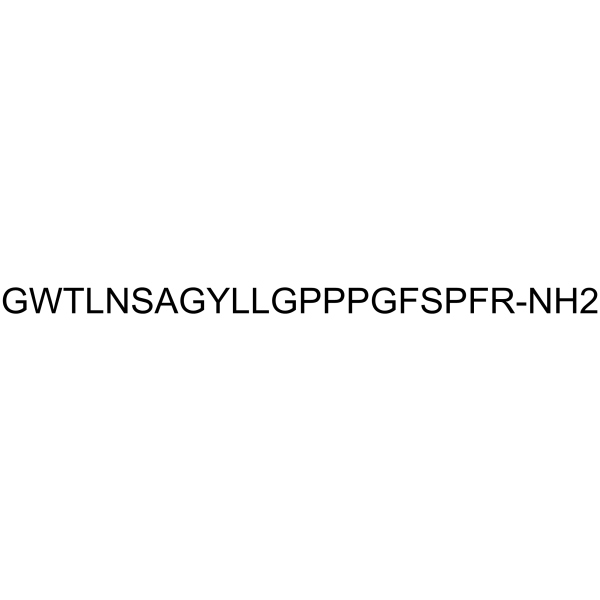
Galanin Receptor Ligand M35Galanin receptor Antagonist


Activité biologique
Description
IC50 & Target
[7]|
NPFF1-R 2.82 nM (Ki) |
NPFF2-R 0.21 nM (Ki) |
In Vitro
Neuropeptide FF (0.1 pM-100 nM) exerts concentration-dependent effects on human peripheral blood lymphocyte proliferation, enhancing proliferation at 0.1 pM and inhibiting proliferation at 100 nM[1].
Neuropeptide FF binds to two distinct sites on human Jurkat T lymphocyte cells, with a high-affinity site (Kd of 0.29 nM) and a low-affinity site (Kd of 0.512 μM)[1].
Neuropeptide FF binds with high affinity to both human NPFF-R1 and NPFF-R2 expressed in CHO-NFA-bla cells, with a slightly higher affinity for NPFF-R2 (IC50 = 3.1 nM) compared to NPFF-R1 (IC50 = 6.2 nM)[3].
Neuropeptide FF specifically potentiates acid-gated currents in Xenopus oocytes expressing heteromeric human ASIC2a + ASIC3 channels by delaying channel desensitization[3].
Neuropeptide FF reduces depolarization-induced intracellular calcium elevation in dissociated mouse dorsal root ganglion neurons[3].
Neuropeptide FF (NPFF) (0.01-10 μM; 5 min) dose-dependently activates ERK phosphorylation in dSH-SY5Y cells via a PKA-, inducible nitric oxide synthase-, and neuronal nitric oxide synthase-dependent mechanism, with peak activation at 10 μM for 5 min[4].
Neuropeptide FF (NPFF) (0.01-10 μM; 90-135 min) activates the upstream components of the NF-κB pathway in dSH-SY5Y cells in a time- and dose-dependent, ERK-independent manner, with peak IKKα/β phosphorylation at 10 μM for 120 min and peak I-κKα phosphorylation at 10 μM for 135 min[4].
MedChemExpress (MCE) has not independently confirmed the accuracy of these methods. They are for reference only. Further protocols information, click here.
-
Cell Line:Differentiated human neuroblastoma dSH-SY5Y cells
-
Concentration:0.01 μM, 0.1 μM, 1 μM, 10 μM
-
Incubation Time:5 min (direct treatment); 2 h (inhibitor pre-incubation) followed by 5 min (NPFF treatment)
-
Result:Stimulated ERK phosphorylation in a dose-dependent manner, with peak response at 10 μM.
-
Cell Line:Differentiated human neuroblastoma dSH-SY5Y cells
-
Concentration:10 μM
-
Incubation Time:90 min, 105 min, 120 min, 135 min
-
Result:Induced time-dependent phosphorylation of IKKα/β, with increased phosphorylation observed at 90 min, peak activation at 120 and 135 min.
Induced dose-dependent phosphorylation of IKKα/β after 120 min of treatment.
Induced time-dependent phosphorylation of I-κKα, with increased phosphorylation at 90 min, peak activation at 135 min.
In Vivo
Neuropeptide FF (intrathecal) produces potent antiallodynia in rats with carrageenan-induced inflammatory nociception[3].
Neuropeptide FF (intrathecal) produces potent antiallodynia in rats with mononeuropathic or diabetic neuropathic nociception[3].
Neuropeptide FF (NPFF) (5-10 μg/rat; i.c.v.; single injection) produces a dose-related reduction in food intake during the first 60 minutes in 24-hour food-deprived male Sprague-Dawley rats, with the 10 μg/rat dose inducing a statistically significant decrease[5].
MedChemExpress (MCE) has not independently confirmed the accuracy of these methods. They are for reference only.
-
Animal Model:Sprague-Dawley (male, 250-270 g, 24-hour food deprivation)[5]
-
Dosage:5 μg/rat; 10 μg/rat
-
Administration:i.c.v.; single injection
-
Result:Reduced food intake in the first 60 minutes after injection in a dose-related manner.
Produced a statistically significant reduction in food intake relative to control at 10 μg/rat.
Showed no significant differences in cumulative food intake at 2 hours after injection or later.


Chemical Information
-
CAS No. 99566-27-5
-
Appearance Solid
-
Masse moléculaire 1081.27
-
Formule C54H76N14O10
-
Color White to off-white
-
Synonyms
NPFF
-
Sequence
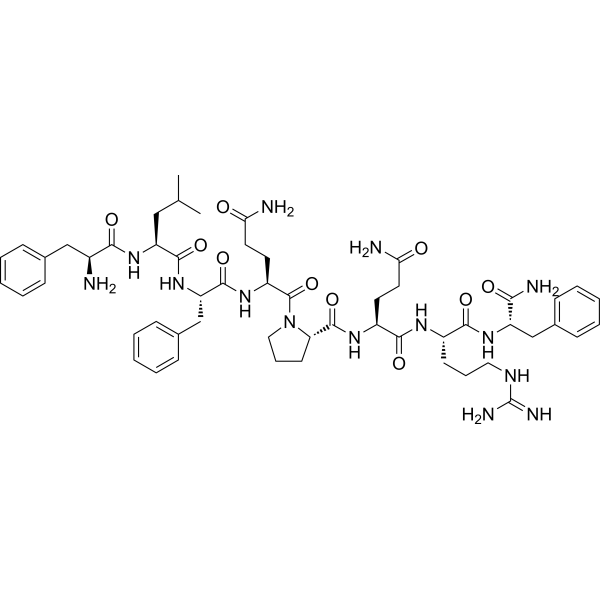
Phe-Leu-Phe-Gln-Pro-Gln-Arg-Phe-NH2
-
Sequence Shortening
FLFQPQRF-NH2
-
Livraison
Room temperature in continental US; may vary elsewhere.
-
Stockage
Sealed storage, away from moisture and light
Powder -80°C 2 years -20°C 1 year * In solvent : -80°C, 6 months; -20°C, 1 month (sealed storage, away from moisture and light)


Solvant et solubilité
In Vitro:
DMSO : 100 mg/mL (92.48 mM; Need ultrasonic; Hygroscopic DMSO has a significant impact on the solubility of product, please use newly opened DMSO)
H2O : 50 mg/mL (46.24 mM; Need ultrasonic)
Please refer to the solubility information to select the appropriate solvent. Once prepared, please aliquot and store the solution to prevent product inactivation from repeated freeze-thaw cycles.
Storage method and period of stock solution: -80°C, 6 months; -20°C, 1 month (sealed storage, away from moisture and light). When stored at -80°C, please use it within 6 months. When stored at -20°C, please use it within 1 month.
* Note: If you choose water as the stock solution, please dilute it to the working solution, then filter and sterilize it with a 0.22 μm filter before use.
Please refer to the solubility information to select the appropriate solvent. Once prepared, please aliquot and store the solution to prevent product inactivation from repeated freeze-thaw cycles.
Storage method and period of stock solution: -80°C, 6 months; -20°C, 1 month (sealed storage, away from moisture and light). When stored at -80°C, please use it within 6 months. When stored at -20°C, please use it within 1 month.
* Note: If you choose water as the stock solution, please dilute it to the working solution, then filter and sterilize it with a 0.22 μm filter before use.
Concentration (start) × Volume (start) = Concentration (final) × Volume (final)
In Vivo:
Select the appropriate dissolution method based on your experimental animal and administration route.
- For the following dissolution methods, please ensure to first prepare a clear stock solution using an In Vitro approach and then sequentially add co-solvents:
- To ensure reliable experimental results, the clarified stock solution can be appropriately stored based on storage conditions. As for the working solution for In Vivo experiments, it is recommended to prepare freshly and use it on the same day.
- The percentages shown for the solvents indicate their volumetric ratio in the final prepared solution. If precipitation or phase separation occurs during preparation, heat and/or sonication can be used to aid dissolution.
Add each solvent one by one: 10% DMSO 40% PEG300 5% Tween-80 45% Saline
Solubility: ≥ 2.5 mg/mL (2.31 mM); Clear solution
This protocol yields a clear solution of ≥ 2.5 mg/mL (saturation unknown).
Taking 1 mL working solution as an example, add 100 μL DMSO stock solution (25.0 mg/mL) to 400 μL PEG300, and mix evenly; then add 50 μL Tween-80 and mix evenly; then add 450 μL Saline to adjust the volume to 1 mL.
Preparation of Saline: Dissolve 0.9 g sodium chloride in ddH₂O and dilute to 100 mL to obtain a clear Saline solution.
Add each solvent one by one: 10% DMSO 90% (20% SBE-β-CD in Saline)
Solubility: ≥ 2.5 mg/mL (2.31 mM); Clear solution
This protocol yields a clear solution of ≥ 2.5 mg/mL (saturation unknown).
Taking 1 mL working solution as an example, add 100 μL DMSO stock solution (25.0 mg/mL) to 900 μL 20% SBE-β-CD in Saline, and mix evenly.
Preparation of 20% SBE-β-CD in Saline (4°C, storage for one week): 2 g SBE-β-CD powder is dissolved in 10 mL Saline, completely dissolve until clear.
In Vivo Dissolution Calculator
Please enter the basic information of animal experiments:
-
-
-
-
Recommended: Prepare an additional quantity of animals to account for potential losses during experiments.
Working solution concentration: 0.22 mg/mL
This product has good water solubility, please refer to the measured solubility data in water/PBS/Saline for details.

Protocole
-
Formalin-Induced Paw Inflammation/Nociceptive Inflammation
The formalin-induced paw inflammation/nociceptive test is a chemical persistent pain model in rodents in which subcutaneous injection of formalin into the hind paw produces spontaneous nocifensive behaviors such as flinching and licking. The response is classically biphasic, consisting of an early acute phase (Phase I) reflecting direct activation of peripheral nociceptors (particularly C-fiber afferents), followed by a later prolonged phase (Phase II) associated with central sensitization in the spinal dorsal horn driven by sustained afferent input and inflammatory signaling. This model is widely used to evaluate analgesic and anti-inflammatory interventions because it captures both peripheral nociception and central sensitization processes within a single assay system.
-
Research Protocol for Cardiovascular Diseases
Cardiovascular disease can be modeled as maladaptive cardiac remodeling, where ischemic injury or pressure overload activates inflammatory signaling, fibroblast activation, extracellular-matrix deposition, cardiomyocyte hypertrophy, vascular remodeling, and progressive ventricular dysfunction. The TGF-β/SMAD axis is a central profibrotic pathway after myocardial injury and pressure overload, while innate immune and cytokine pathways regulate leukocyte recruitment, scar formation, and adverse remodeling. Key unresolved questions include which inflammatory signals are reparative versus harmful, when fibrosis is protective versus maladaptive, and whether pathway inhibition improves function without weakening necessary infarct healing or compensatory remodeling.
-
Research Protocol for Inflammation-related Diseases
The NLRP3 inflammasome is a cytosolic innate immune signaling platform that integrates priming signals and danger-signal activation to promote caspase-1 activation, maturation of IL-1β and IL-18, and gasdermin D-mediated pyroptotic cell death. The core experimental logic is to determine whether inflammatory disease phenotypes are driven by increased NLRP3 expression, ASC-containing inflammasome assembly, caspase-1 cleavage, GSDMD cleavage, and extracellular release of IL-1β/IL-18 rather than by nonspecific cell injury alone. The pathway is strongly linked to inflammation-related disease phenotypes because monosodium urate crystals activate NALP3/NLRP3 inflammasome signaling in gout-like crystal inflammation, cholesterol crystals activate NLRP3 inflammasomes in atherogenesis models, and DSS-induced intestinal inflammation has been reported to involve NLRP3 inflammasome activity. However, experimental colitis studies also show context-dependent protective effects of NLRP3 inflammasome co


Pureté et documentation
-
Fiche technique (283 KB)
-
SDS (254 KB)
- English - EN (254 KB)
- Français - FR (254 KB)
- Deutsch - DE (254 KB)
- Norwegian - NO (254 KB)
- Español - ES (254 KB)
- Swedish - SV (254 KB)
- Italian - IT (254 KB)
- Korean - KR (254 KB)
- Portuguese - PT (254 KB)
-
Instruction de manipulation (2659 KB)
Références
[1]. Mollereau C, et al. Pharmacological characterization of human NPFF(1) and NPFF(2) receptors expressed in CHO cells by using NPY Y(1) receptor antagonists. Eur J Pharmacol. 2002 Sep 20;451(3):245-56. [Content Brief]
[2]. Panula P, et al. Neuropeptide FF, a mammalian neuropeptide with multiple functions. Prog Neurobiol. 1996;48(4-5):461-487. [Content Brief]
[3]. Jhamandas JH, et al. Role of neuropeptide FF in central cardiovascular and neuroendocrine regulation. Front Endocrinol (Lausanne). 2013;4:8. Published 2013 Feb 7. [Content Brief]
[4]. Yang HY, et al. Modulatory role of neuropeptide FF system in nociception and opiate analgesia. Neuropeptides. 2008;42(1):1-18. [Content Brief]
[5]. Sun YL, et al. Neuropeptide FF activates ERK and NF kappa B signal pathways in differentiated SH-SY5Y cells. Peptides. 2012;38(1):110-117. [Content Brief]
[6]. Murase T, et al. Neuropeptide FF reduces food intake in rats. Peptides. 1996;17(2):353-354. [Content Brief]
[7]. Ankö ML, et al. Regulation of endogenous human NPFF2 receptor by neuropeptide FF in SK-N-MC neuroblastoma cell line. J Neurochem. 2006;96(2):573-584. [Content Brief]


Complete Stock Solution Preparation Table
Please refer to the solubility information to select the appropriate solvent. Once prepared, please aliquot and store the solution to prevent product inactivation from repeated freeze-thaw cycles.
Storage method and period of stock solution: -80°C, 6 months; -20°C, 1 month (sealed storage, away from moisture and light). When stored at -80°C, please use it within 6 months. When stored at -20°C, please use it within 1 month.
| Optional Solvent | Concentration Solvent Mass | 1 mg | 5 mg | 10 mg | 25 mg |
|---|---|---|---|---|---|
| H2O / DMSO | 1 mM | 0.9248 mL | 4.6242 mL | 9.2484 mL | 23.1210 mL |
| 5 mM | 0.1850 mL | 0.9248 mL | 1.8497 mL | 4.6242 mL | |
| 10 mM | 0.0925 mL | 0.4624 mL | 0.9248 mL | 2.3121 mL | |
| 15 mM | 0.0617 mL | 0.3083 mL | 0.6166 mL | 1.5414 mL | |
| 20 mM | 0.0462 mL | 0.2312 mL | 0.4624 mL | 1.1560 mL | |
| 25 mM | 0.0370 mL | 0.1850 mL | 0.3699 mL | 0.9248 mL | |
| 30 mM | 0.0308 mL | 0.1541 mL | 0.3083 mL | 0.7707 mL | |
| 40 mM | 0.0231 mL | 0.1156 mL | 0.2312 mL | 0.5780 mL | |
| DMSO | 50 mM | 0.0185 mL | 0.0925 mL | 0.1850 mL | 0.4624 mL |
| 60 mM | 0.0154 mL | 0.0771 mL | 0.1541 mL | 0.3853 mL | |
| 80 mM | 0.0116 mL | 0.0578 mL | 0.1156 mL | 0.2890 mL |
* Note: If you choose water as the stock solution, please dilute it to the working solution, then filter and sterilize it with a 0.22 μm filter before use.


Neuropeptide FF Related Classifications
HY-P1248 Related Classifications
 Powered by Bioz