



NPFFR2
NPFFR2 is a G protein-coupled neuropeptide FF receptor activated by NPFF-related peptides and linked to pain modulation, opioid regulation, and RF-amide peptide signaling[1]. Mechanistically, NPFFR2 signaling regulates nociceptive transmission through CGRP, because NPFFR2 activation increased spinal CGRP and produced hyperalgesia in mouse inflammatory pain models[2]. In cephalic pain models, NPFFR2 knockdown or knockout reduced capsaicin-induced CGRP upregulation in trigeminal ganglion, supporting its use in headache and trigeminovascular pathway research[3]. In metabolic models, loss of NPFFR2 impaired high-fat-diet adaptive thermogenesis, reduced BAT UCP-1 and PGC-1α, and worsened obesity-related phenotypes[4]. Compared with related isoforms, NPFFR2 responds strongly to NPFF peptides, whereas NPFFR1 is activated by RFRPs and regulates reproductive hormone balance[5]. For experimental applications, selective nonpeptidergic NPFF2 agonists derived from aryliminoguanidines showed activity in in vivo pain models[6]. - NPFFR2 models connect nociception, CGRP biology, and trigeminovascular pathway activation in mice[2][3]. - Selective NPFF2 agonists support pharmacological separation from nonselective NPFF1/NPFF2 ligand effects[6].
References:
- [1]. Bonini JA, et al. Identification and characterization of two G protein-coupled receptors for neuropeptide FF. J Biol Chem. 2000 Dec 15;275(50):39324-31. [Content Brief]
- [2]. Lin YT, et al. Activation of NPFFR2 leads to hyperalgesia through the spinal inflammatory mediator CGRP in mice. Exp Neurol. 2017 May;291:62-73. [Content Brief]
- [3]. Lin YT, et al. Neuropeptide FF receptor 2 inhibits capsaicin-induced CGRP Upregulation in mouse trigeminal ganglion. J Headache Pain. 2020 Jul 8;21(1):87. [Content Brief]
- [4]. Zhang L, et al. Diet-induced adaptive thermogenesis requires neuropeptide FF receptor-2 signalling. Nat Commun. 2018 Nov 9;9(1):4722. [Content Brief]
- [5]. Kim J, et al. Structural insights into the selective recognition of RF-amide peptides by neuropeptide FF receptor 2. EMBO Rep. 2025 May;26(9):2413-2434. [Content Brief]
- [6]. Gaubert G, et al. Discovery of selective nonpeptidergic neuropeptide FF2 receptor agonists. J Med Chem. 2009 Nov 12;52(21):6511-4. [Content Brief]
-
NPFFR2 Related Products (7)
Related Products (7)

-
Neuropeptide FF
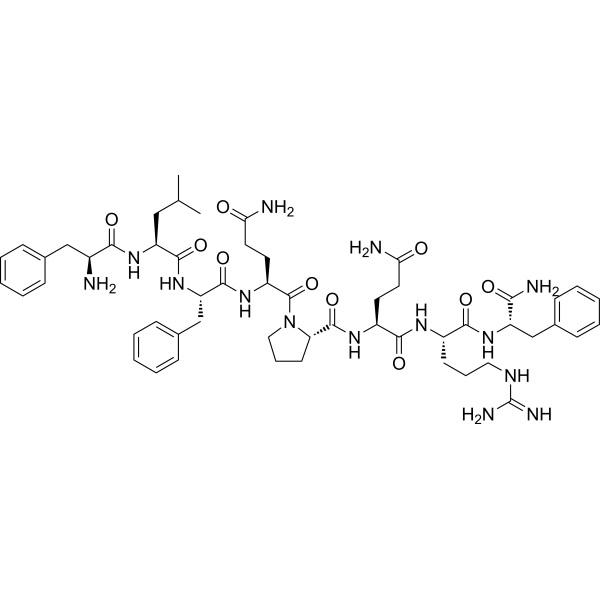 0 ImagesSynonyms: NPFFNeuropeptide FF (NPFF), an octapeptide belonging to the RF-amide family of peptides, is a NPFF1 and NPFF2 receptors agonist with Ki values of 2.82 nM and 0.21 nM, respectively. Neuropeptide FF induces abstinence syndrome, exerts antiopioid and analgesic effects, releases via calcium-dependent mechanisms from rat spinal cord, regulates memory, autonomic function, and neuroendocrine function, modulates pain and opioid antinociception, reduces food intake, stimulates water intake, alters cardiovascular parameters, and shows differential activity in hypothalamic paraventricular nucleus neurons. Neuropeptide FF is present in mammalian central nervous system and periphery, with NPFF-immunoreactivity increases in rat cerebrospinal fluid during opiate tolerance, and its NPFF gene and NPFF-R2 gene are up-regulated in rat spinal cord and dorsal root ganglia during peripheral inflammation. Neuropeptide FF can be used for the research of opioid tolerance, morphine-induced analgesia, abstinence syndrome, pain, hypertension, nociception, inflammatory pain, and neuropathic pain.

-
NPFF1-R antagonist 1
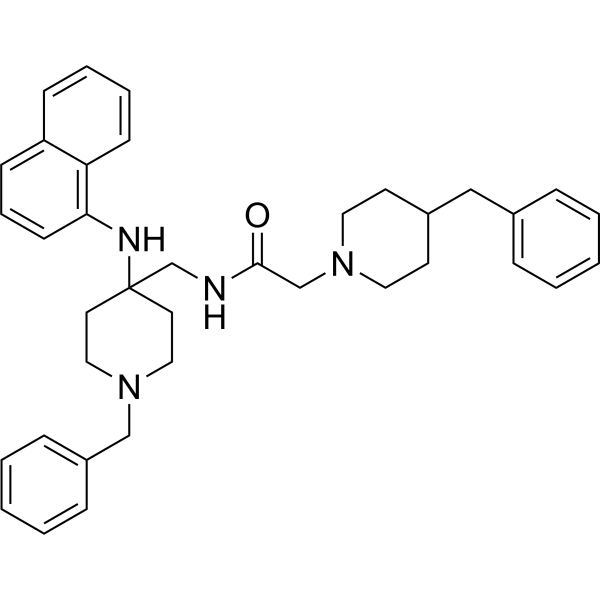 0 ImagesNPFF1-R antagonist 1 (compound 8b), a piperidine analogue, is a potent neuropeptide FF (NPFF) receptor antagonist. NPFF1-R antagonist 1 is 15-fold selective for the NPFF1-R subtype, with Ki values of 211 nM and 3270 nM for NPFF1-R and NPFF2-R, respectively.

-
DP50
 0 ImagesCat. No.: HY-P10395DP50 is a bifunctional compound that contains an opioid receptor (MOP) agonist and a neuropeptide FF receptor (NPFFR) antagonist. DP50 can be used in analgesia-related research.

-
DP32
 0 ImagesCat. No.: HY-P10394CAS No.: 2376306-14-6DP32 is a bifunctional compound that contains an opioid receptor (MOP) agonist and a neuropeptide FF receptor (NPFFR) antagonist. DP32 can be used in analgesia-related research.



