



Nuclear Hormone Receptor 4A/NR4A Antagonist
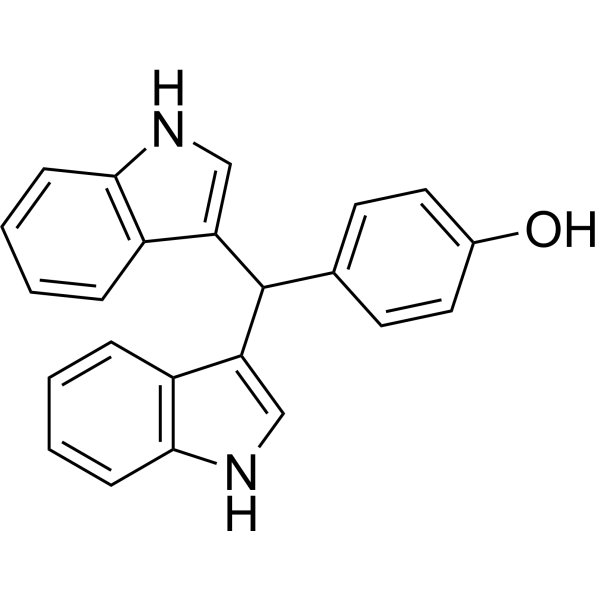
-
TMPA
 0 Images
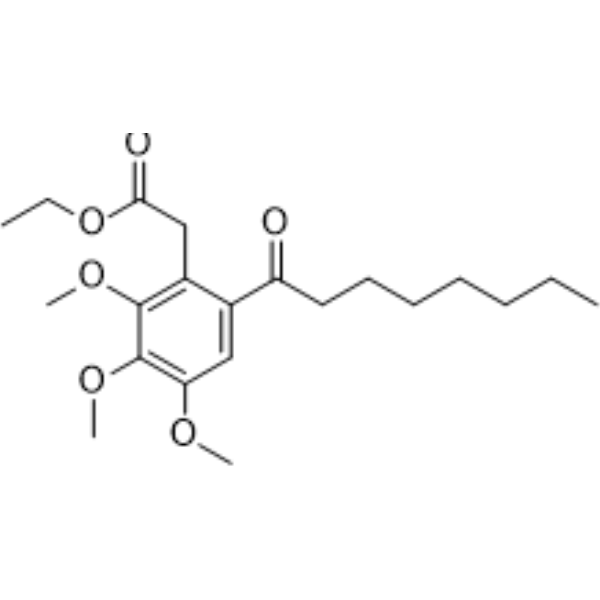
TMPA is a high-affinity Nur77 antagonist that binds to Nur77 leading to the release and shuttling of LKB1 in the cytoplasm to activate AMPKα. TMPA effectively lowers blood glucose and attenuates insulin resistance in type II db/db, high-fat diet and streptozotocin-induced diabetic mice. TMPA reduces RICD (restimulation-induced cell death) in human T cells, can also be used in studies of cancer and T-cell apoptosis dysregulation.
-
DIM-C-pPhCO2Me
 0 Images
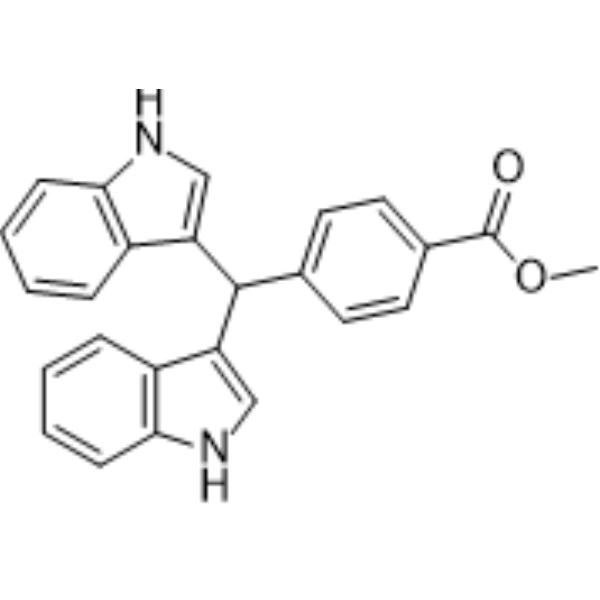
DIM-C-pPhCO2Me is a nuclear receptor 4A1 (NR4A1) antagonist. DIM-C-pPhCO2Me induces Apoptosis. DIM-C-pPhCO2Me decreases PAX3-FOXO1A, N-Myc, Rassf4, MyoD1, Grem1, and DAPK1 proteins. DIM-C-pPhCO2Me decreases expression of TXNDC5 and IDH1, induces markers of ER stress (CHOP, ATF4 and p-PERK). DIM-C-pPhCO2Me inhibits renal cell carcinoma, breast cancer. DIM-C-pPhCO2Me can also be used in rhabdomyosarcoma research.
-
DIM-3,5-Cl2
 0 Images
DIM-3,5-Cl2 is an inverse NR4A1/NR4A2 agonist with KD values of 7.7 μM and 12.0 μM for NR4A1 and NR4A2, respectively. DIM-3,5-Cl2 acts as an inverse agonist to downregulate pro-oncogenic and proendometriotic gene products, and as an agonist to enhance NR4A1/2/Sp1/Sp4-mediated CD71 transactivation. DIM-3,5-Cl2 induces ferroptosis via ROS formation, lipoperoxidation, MDA production, and reduced GPX4, SLC7A11 expression. DIM-3,5-Cl2 induces apoptosis via PARP and caspase-3 cleavage, reduced BCL-2 expression, and inhibits cancer cell viability. DIM-3,5-Cl2 can be used for the research of triple negative breast cancer, endometriosis, and colorectal cancer.
-
Nur77 antagonist 2
 0 ImagesCat. No.: HY-179033
Nur77 antagonist 2 (Compound 12b) is an orally active Nur77 antagonist with a KD value of 0.42 μM. Nur77 antagonist 2 exhibits proliferative activity on liver cancer cells. Nur77 antagonist 2 stabilizes Nur77 by inhibiting its ubiquitin-proteasomal degradation, leading to Nur77-dependent apoptosis via the ASK1-JNK/p38 pathway. Nur77 antagonist 2 inhibits tumor growth in the HCCLM3 xenograft model. Nur77 antagonist 2 can be used for the study of hepatocellular carcinoma (HCC).
-
Nur77 antagonist 1
 0 ImagesCat. No.: HY-155490CAS No.: 2378780-25-5
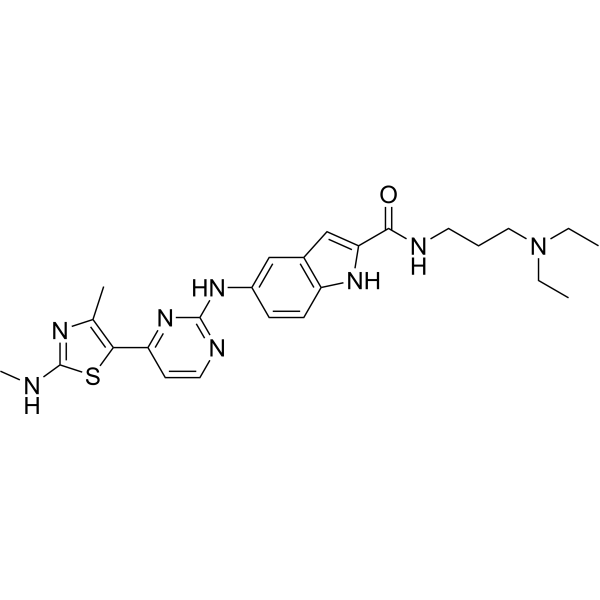
Nur77 antagonist 1(Compound ja) is a selective Nur77 antagonist(KDSPRNur77 = 91 nM). Nur77 antagonist 1 induces cancer cell apoptosis. ja displays excellent antitumor against triple-negative breast cancer (TNBC) cells.
-
BIM5078
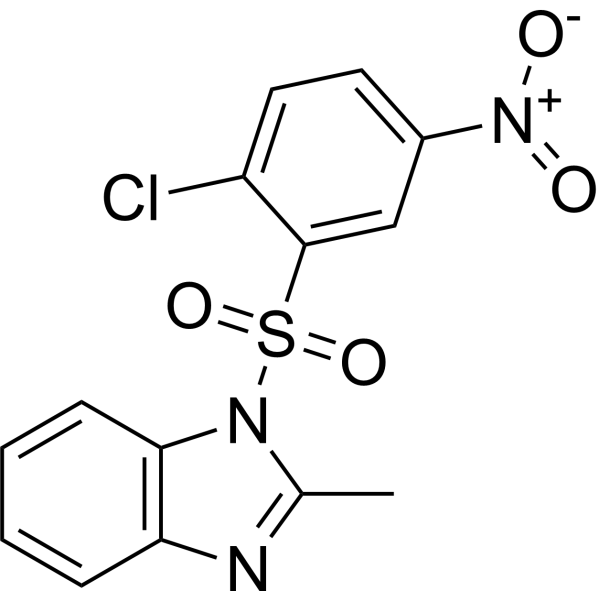 0 ImagesCat. No.: HY-119971CAS No.: 337506-43-1



