



Tebipenem
Based on 7 publication(s) in Google Scholar
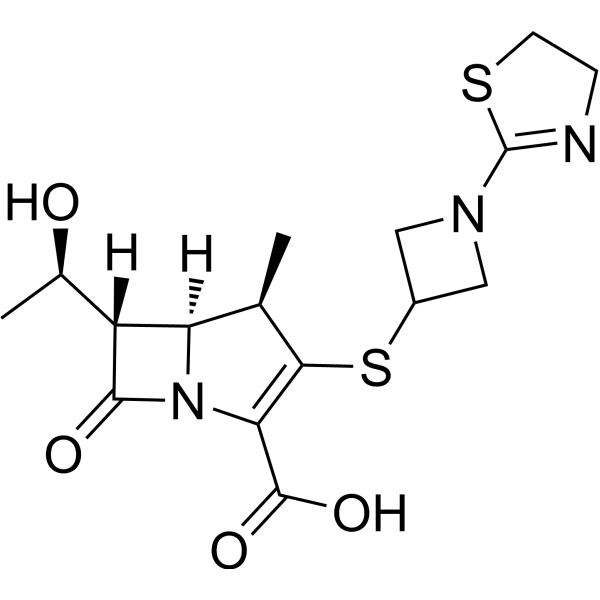
Tebipenem is an orally available carbapenem antibiotic, shows broad-spectrum activity against Gram-positive and -negative bacteria, except for Pseudomonas aeruginosa.
For research use only. We do not sell to patients.
- Purity : 99.26%
- CAS No.: 161715-21-5
- Formula: C16H21N3O4S2
- Molecular Weight:383.49
-
Storage:Powder -20°C, 3 years , 4°C, 2 years ; In solvent -80°C, 2 years , -20°C, 1 year

To place orders, for customer services and technical support, please contact: MedChemExpress USA
Tel: 609-228-6898 E-mail: [email protected] [email protected]


-
 Biological Activity
-
Chemical Information
-
Solvent & Solubility
- Protocols
- Purity & Documentation
- References
-
 Help & FAQs


-
HY-13678
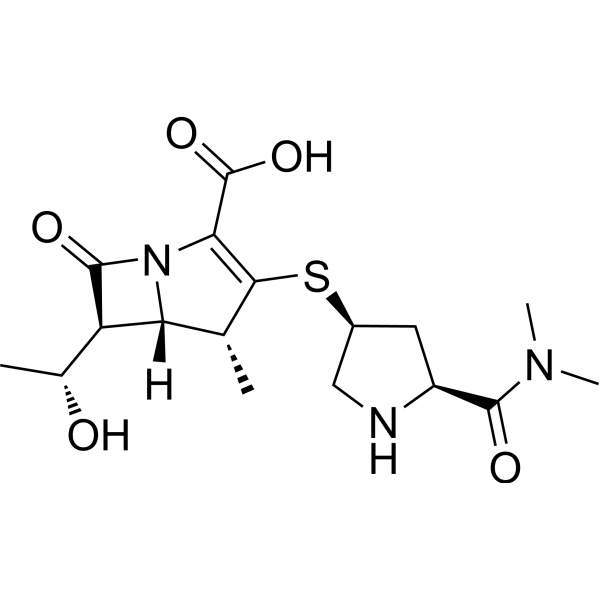
MeropenemAntimicrobial Agent -
HY-14879A
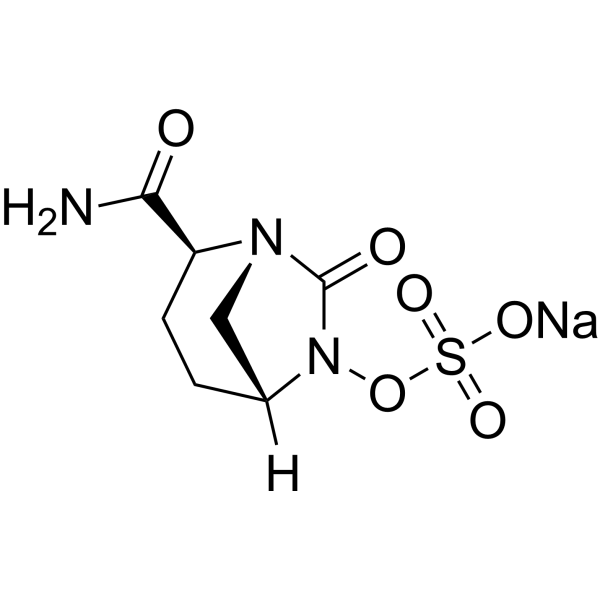
Avibactam sodiumBeta-lactamase Inhibitor -
HY-19930
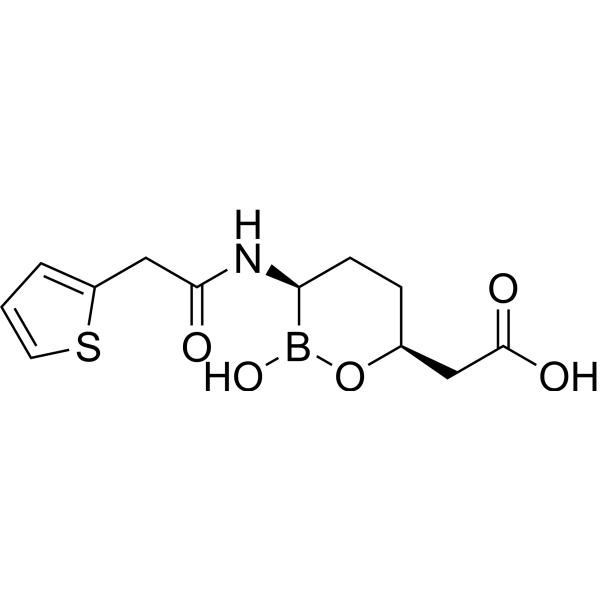
Vaborbactamβ-lactamase Inhibitor -
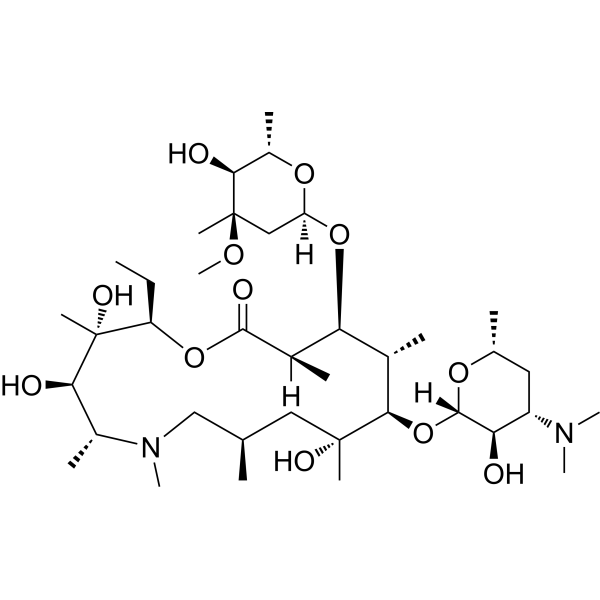
HY-17506
Azithromycin -
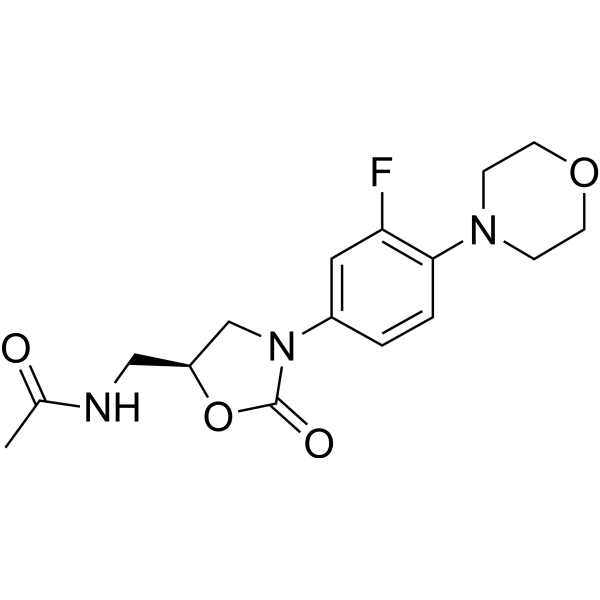
HY-10394
LinezolidAntibiotic -
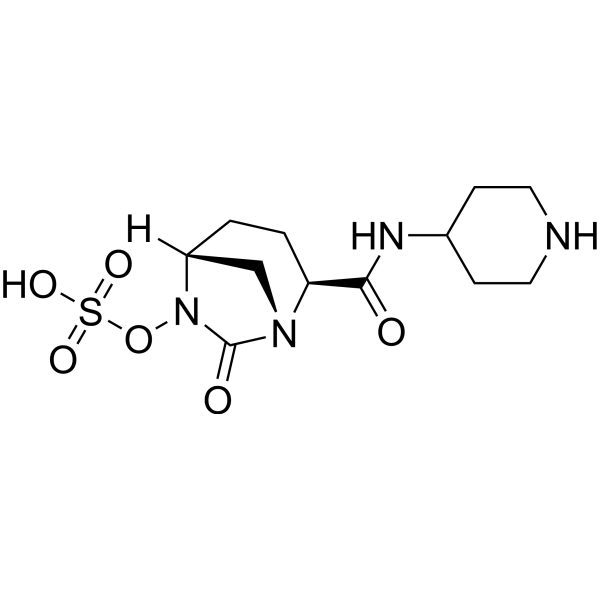
HY-16752
RelebactamBeta-lactamase Inhibitor -
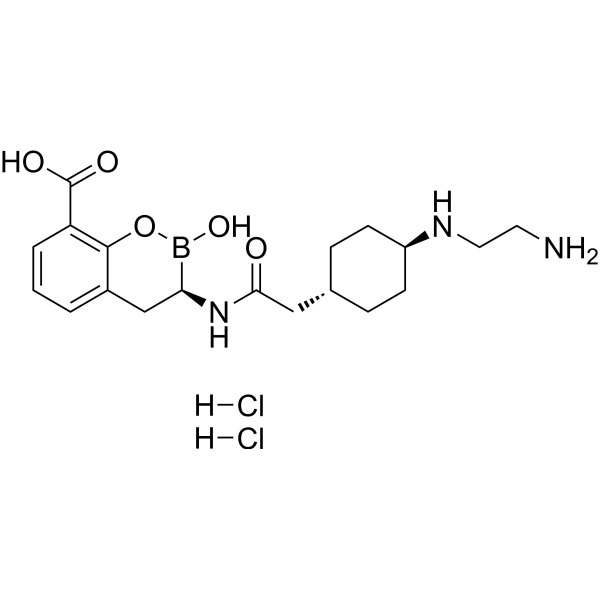
HY-109124A
Taniborbactam hydrochlorideβ-lactamase Inhibitor -
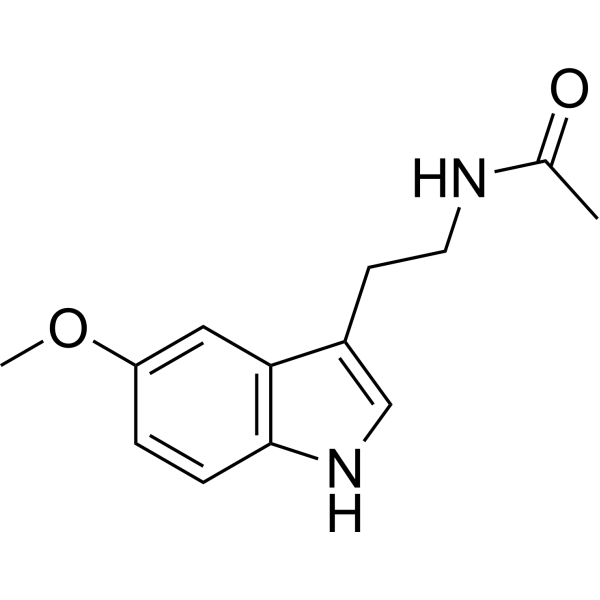
HY-B0075
MelatoninMelatonin Receptor Activator -
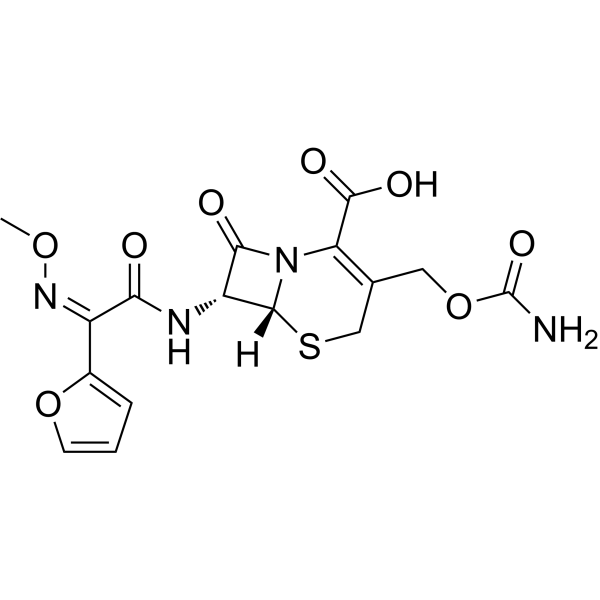
HY-B1256A
CefuroximeAntibiotic -
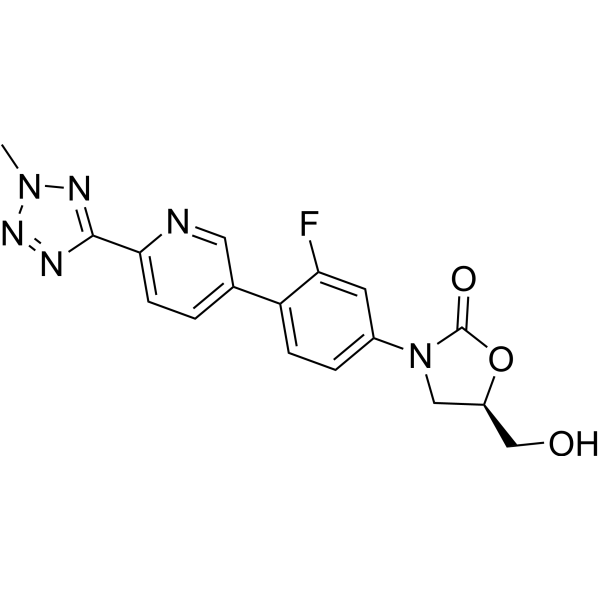
HY-14855
TedizolidAntibiotic -
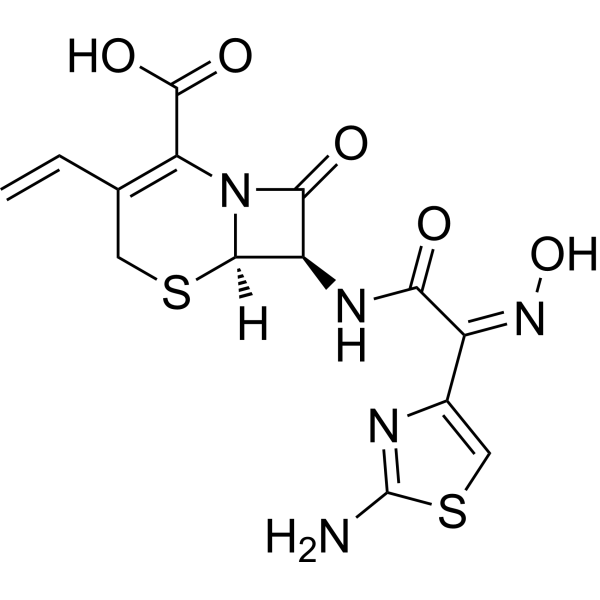
HY-B0136
CefdinirBacterial Inhibitor -
HY-B0129
AztreonamBacterial Inhibitor
Publications Citing Use of MedChemExpress (MCE) Tebipenem
More- Antibiotics (Basel). 2022 Sep 20;11(10):1274. [Abstract]
- Antimicrob Agents Chemother. 2024 Dec 5;68(12):e0105124. [Abstract]
- Antimicrob Agents Chemother. 2024 Feb 7;68(2):e0133223. [Abstract]
- Antimicrob Agents Chemother. 2021 Jul 16;65(8):e0055221. [Abstract]
- J Glob Antimicrob Resist. 2025 Aug 8:44:435-441. [Abstract]
- Biomed Res Int. 2018 Jul 2:2018:3579832. [Abstract]
- Patent. US20200289462A1.
All Antibiotic Isoforms
More

Biological Activity
Description
IC50 & Target
|
β-lactam |
In Vitro
Tebipenem exhibits slow tight-binding inhibition at low micromolar concentrations versus the chromogenic substrate nitrocefin, and apparent Km and kcat values of 0.8 μM and 0.03 min-1, respectively[1]. Tebipenem shows potent activity against B. pseudomallei, with MIC50 and MIC90 values of both 2 mg/L[2]. Tebipenem shows good activity against S. pneumoniae, with the MIC range of ≤0.25 μg/mL in all of the S. pneumoniae isolates[3].
MedChemExpress (MCE) has not independently confirmed the accuracy of these methods. They are for reference only.
Clinical Trial
| NCT Number | Sponsor | Condition | Start Date |
Phase

|
|---|---|---|---|---|
| NCT01329991 | Plexxikon| | 2011-05 | PHASE1 |


Chemical Information
-
CAS No. 161715-21-5
-
Appearance Solid
-
Molecular Weight 383.49
-
Formula C16H21N3O4S2
-
Color White to yellow
-
SMILES
O=C(C(N1C2=O)=C(SC3CN(C4=NCCS4)C3)[C@H](C)[C@]1([H])[C@@]2([H])[C@H](O)C)O
-
Synonyms
LJC 11036
-
Shipping
Room temperature in continental US; may vary elsewhere.
-
Storage
Powder -20°C 3 years 4°C 2 years In solvent -80°C 2 years -20°C 1 year


Publications (7)
-
Journal Impact Factor
-
Most Recent
-
Antibiotics (Basel)
Anti-Tuberculosis Activity of Three Carbapenems, Clofazimine and Nitazoxanide Using a Novel Ex Vivo Phenotypic Drug Susceptibility Model of Human Tuberculosis. [Abstract]2022 Sep 20;11(10):1274. PMID: 36289932 -
Antimicrob Agents Chemother
Multidrug tolerance conferred by loss-of-function mutations in anti-sigma factor RshA of Mycobacterium abscessus. [Abstract]2024 Dec 5;68(12):e0105124. PMID: 39470195 -
Antimicrob Agents Chemother
2024 Feb 7;68(2):e0133223. PMID: 38174924 -
Antimicrob Agents Chemother
Microbiological Characterization of VNRX-5236, a Broad-Spectrum β-Lactamase Inhibitor for Rescue of the Orally Bioavailable Cephalosporin Ceftibuten as a Carbapenem-Sparing Agent against Strains of Enterobacterales Expressing Extended-Spectrum β-Lactamases and Serine Carbapenemases. [Abstract]2021 Jul 16;65(8):e0055221. PMID: 34001510 -
J Glob Antimicrob Resist
Susceptibility of multidrug-resistant Escherichia coli and Klebsiella pneumoniae to oral antibiotics in Australia. [Abstract]2025 Aug 8:44:435-441. PMID: 40784378 -
Biomed Res Int
In Vitro Activity of β-Lactams in Combination with β-Lactamase Inhibitors against Mycobacterium tuberculosis Clinical Isolates. [Abstract]2018 Jul 2:2018:3579832. PMID: 30065936 -


Solvent & Solubility
In Vitro:
DMSO : 33.33 mg/mL (86.91 mM; Need ultrasonic; Hygroscopic DMSO has a significant impact on the solubility of product, please use newly opened DMSO)
H2O : 5 mg/mL (13.04 mM; ultrasonic and warming and heat to 60°C)
Please refer to the solubility information to select the appropriate solvent. Once prepared, please aliquot and store the solution to prevent product inactivation from repeated freeze-thaw cycles.
Storage method and period of stock solution: -80°C, 2 years; -20°C, 1 year. When stored at -80°C, please use it within 2 years. When stored at -20°C, please use it within 1 year.
* Note: If you choose water as the stock solution, please dilute it to the working solution, then filter and sterilize it with a 0.22 μm filter before use.
Please refer to the solubility information to select the appropriate solvent. Once prepared, please aliquot and store the solution to prevent product inactivation from repeated freeze-thaw cycles.
Storage method and period of stock solution: -80°C, 2 years; -20°C, 1 year. When stored at -80°C, please use it within 2 years. When stored at -20°C, please use it within 1 year.
* Note: If you choose water as the stock solution, please dilute it to the working solution, then filter and sterilize it with a 0.22 μm filter before use.
Concentration (start) × Volume (start) = Concentration (final) × Volume (final)
In Vivo:
Select the appropriate dissolution method based on your experimental animal and administration route.
- For the following dissolution methods, please ensure to first prepare a clear stock solution using an In Vitro approach and then sequentially add co-solvents:
- To ensure reliable experimental results, the clarified stock solution can be appropriately stored based on storage conditions. As for the working solution for In Vivo experiments, it is recommended to prepare freshly and use it on the same day.
- The percentages shown for the solvents indicate their volumetric ratio in the final prepared solution. If precipitation or phase separation occurs during preparation, heat and/or sonication can be used to aid dissolution.
Add each solvent one by one: 10% DMSO 40% PEG300 5% Tween-80 45% Saline
Solubility: ≥ 2.5 mg/mL (6.52 mM); Clear solution
This protocol yields a clear solution of ≥ 2.5 mg/mL (saturation unknown).
Taking 1 mL working solution as an example, add 100 μL DMSO stock solution (25.0 mg/mL) to 400 μL PEG300, and mix evenly; then add 50 μL Tween-80 and mix evenly; then add 450 μL Saline to adjust the volume to 1 mL.
Preparation of Saline: Dissolve 0.9 g sodium chloride in ddH₂O and dilute to 100 mL to obtain a clear Saline solution.
Add each solvent one by one: 10% DMSO 90% (20% SBE-β-CD in Saline)
Solubility: ≥ 2.5 mg/mL (6.52 mM); Clear solution
This protocol yields a clear solution of ≥ 2.5 mg/mL (saturation unknown).
Taking 1 mL working solution as an example, add 100 μL DMSO stock solution (25.0 mg/mL) to 900 μL 20% SBE-β-CD in Saline, and mix evenly.
Preparation of 20% SBE-β-CD in Saline (4°C, storage for one week): 2 g SBE-β-CD powder is dissolved in 10 mL Saline, completely dissolve until clear.
For the following dissolution methods, please prepare the working solution directly:
It is recommended to prepare fresh solutions and use them promptly within a short period of time.
The percentages shown for the solvents indicate their volumetric ratio in the final prepared solution. If precipitation or phase separation occurs during preparation, heat and/or sonication can be used to aid dissolution.
Add each solvent one by one: PBS
Solubility: 8.33 mg/mL (21.72 mM); Clear solution; Need ultrasonic and warming and heat to 60°C
In Vivo Dissolution Calculator
Please enter the basic information of animal experiments:
-
-
-
-
Recommended: Prepare an additional quantity of animals to account for potential losses during experiments.
Please enter your animal formula composition:
-
%DMSO +
Recommended: Keep the proportion of DMSO in working solution below 2% if your animal is weak.
-
%+
-
+%Tween-80 + +
-
%Saline +
The co-solvents required include: DMSO, . All of co-solvents are available by MedChemExpress (MCE). , Tween 80. All of co-solvents are available by MedChemExpress (MCE).
Working solution concentration: 0.22 mg/mL
Method for preparing stock solution: mg drug dissolved in μL DMSO. Stock solution concentration: mg/mL.
1. Take μL DMSO stock solution;
2. Add μL .
μL , mix evenly;
3. Then add μL Tween 80, mix evenly;
4. Then add μL
Please ensure that the stock solution in the first step is dissolved to a clear state, and add co-solvents in sequence. You can use ultrasonic heating (ultrasonic cleaner, recommended frequency 20-40 kHz), vortexing, etc. to assist dissolution.


Purity & Documentation
-
Data Sheet (281 KB)
-
SDS (393 KB)
- English - EN (393 KB)
- Français - FR (393 KB)
- Deutsch - DE (393 KB)
- Norwegian - NO (393 KB)
- Español - ES (393 KB)
- Swedish - SV (393 KB)
- Italian - IT (393 KB)
- Korean - KR (393 KB)
- Portuguese - PT (393 KB)
-
Handling Instructions (2659 KB)
References
[1]. Hazra S, et al. Tebipenem, a new carbapenem antibiotic, is a slow substrate that inhibits the β-lactamase from Mycobacterium tuberculosis. Biochemistry. 2014 Jun 10;53(22):3671-8 [Content Brief]
[2]. Seenama C, et al. In vitro activity of tebipenem against Burkholderia pseudomallei. Int J Antimicrob Agents. 2013 Oct;42(4):375. [Content Brief]
[3]. Li H, et al. In vitro antibacterial activities of two novel oral antibiotics, tebipenem and cefditoren, and other comparators against community-acquired respiratory tract infection-associated bacterial pathogens: A multicentre study in China. Int J Antimicrob Agents. 2014 Jan;43(1):92-3. [Content Brief]


Complete Stock Solution Preparation Table
Please refer to the solubility information to select the appropriate solvent. Once prepared, please aliquot and store the solution to prevent product inactivation from repeated freeze-thaw cycles.
Storage method and period of stock solution: -80°C, 2 years; -20°C, 1 year. When stored at -80°C, please use it within 2 years. When stored at -20°C, please use it within 1 year.
| Optional Solvent | Concentration Solvent Mass | 1 mg | 5 mg | 10 mg | 25 mg |
|---|---|---|---|---|---|
| H2O / DMSO | 1 mM | 2.6076 mL | 13.0381 mL | 26.0763 mL | 65.1907 mL |
| 5 mM | 0.5215 mL | 2.6076 mL | 5.2153 mL | 13.0381 mL | |
| 10 mM | 0.2608 mL | 1.3038 mL | 2.6076 mL | 6.5191 mL | |
| DMSO | 15 mM | 0.1738 mL | 0.8692 mL | 1.7384 mL | 4.3460 mL |
| 20 mM | 0.1304 mL | 0.6519 mL | 1.3038 mL | 3.2595 mL | |
| 25 mM | 0.1043 mL | 0.5215 mL | 1.0431 mL | 2.6076 mL | |
| 30 mM | 0.0869 mL | 0.4346 mL | 0.8692 mL | 2.1730 mL | |
| 40 mM | 0.0652 mL | 0.3260 mL | 0.6519 mL | 1.6298 mL | |
| 50 mM | 0.0522 mL | 0.2608 mL | 0.5215 mL | 1.3038 mL | |
| 60 mM | 0.0435 mL | 0.2173 mL | 0.4346 mL | 1.0865 mL | |
| 80 mM | 0.0326 mL | 0.1630 mL | 0.3260 mL | 0.8149 mL |
* Note: If you choose water as the stock solution, please dilute it to the working solution, then filter and sterilize it with a 0.22 μm filter before use.


Tebipenem Related Classifications
HY-A0076 Related Classifications
 Powered by Bioz