



Valspodar
Based on 19 publication(s) in Google Scholar
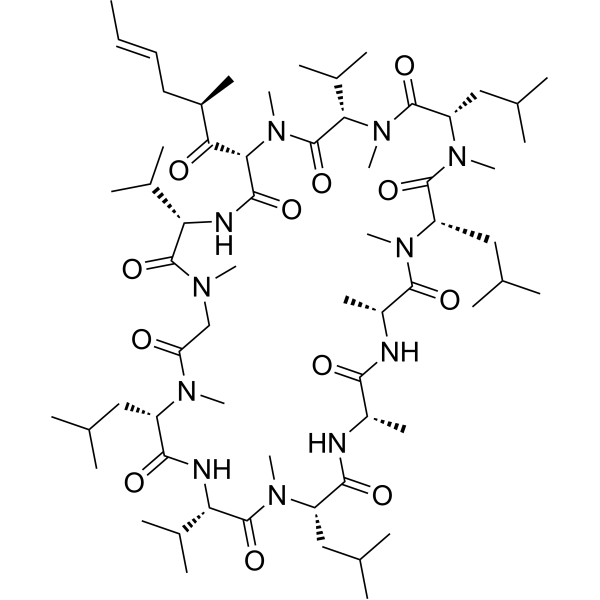
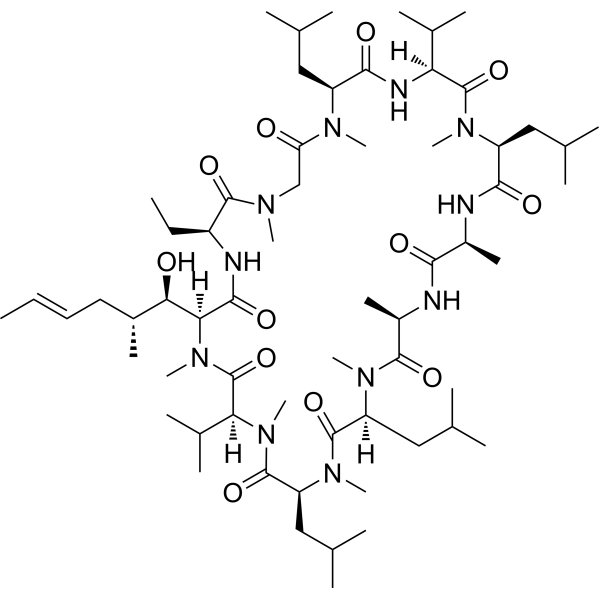
Valspodar (PSC 833) is a selective P-glycoprotein inhibitor that has been used as an experimental cancer treatment and chemosensitizer.
연구목적의 판매만을 진행합니다. 환자를 대상으로 한 판매는 하지 않습니다.
- Purity : 98.0%
- CAS No.: 121584-18-7
- 화학식: C63H111N11O12
- 분자량:1214.62
-
보관:Powder -20°C, 3 years ; In solvent -80°C, 6 months , -20°C, 1 month

To place orders, for customer services and technical support, please contact: MedChemExpress USA
Tel: 609-228-6898 E-mail: [email protected] [email protected]


-
 Biological Activity
-
Chemical Information
-
용액&용해도
- 순도&문서
- References
-
 Help & FAQs


-
HY-10550
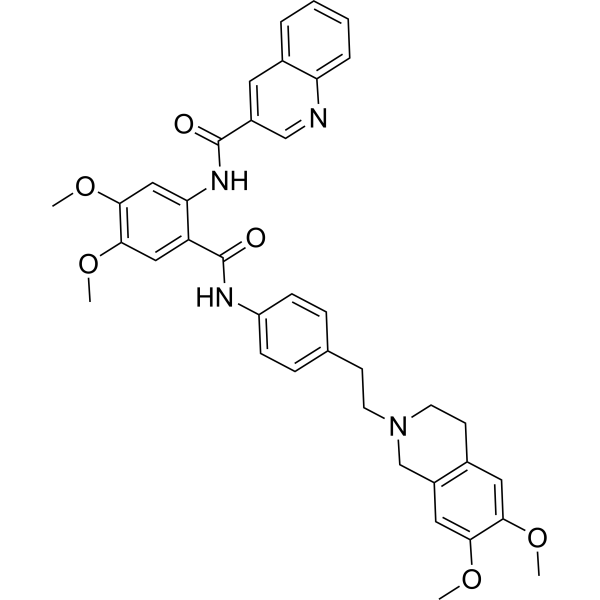
TariquidarP-gp Inhibitor -
HY-50879
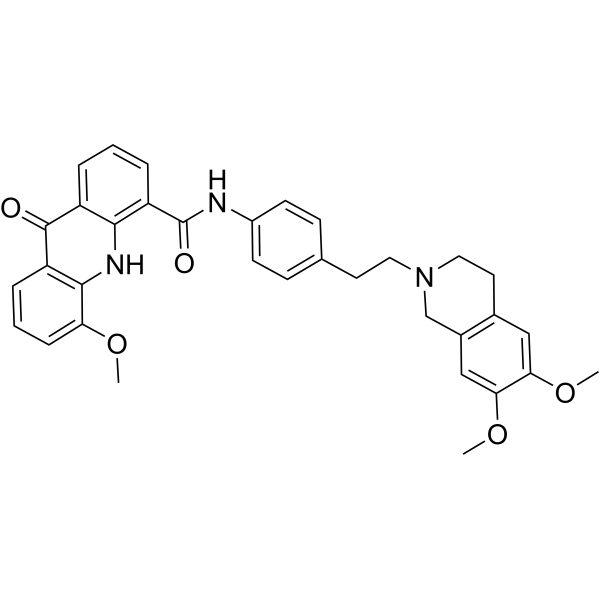
ElacridarP-gp And BCRP Dual-Inhibitor -
HY-50671
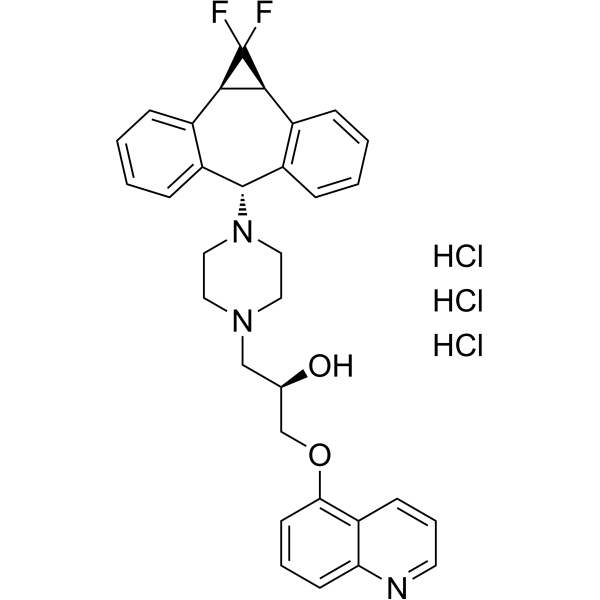
Zosuquidar trihydrochlorideP-gp Inhibitor -
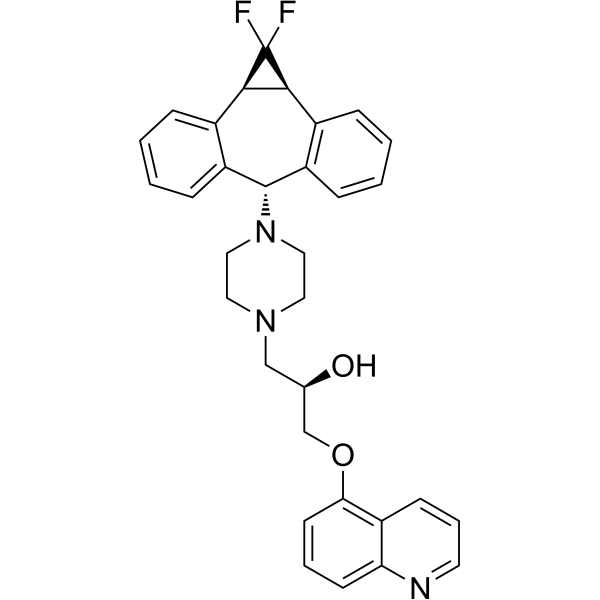
HY-15255
ZosuquidarP-gp Inhibitor -
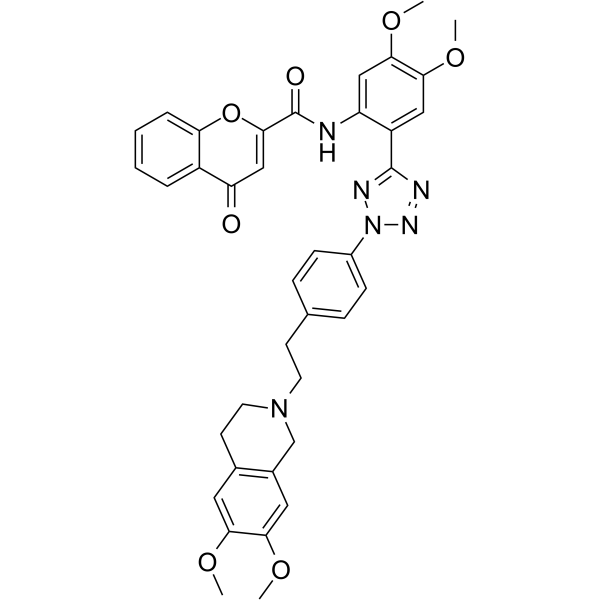
HY-13646
EncequidarP-glycoprotein Inhibitor -
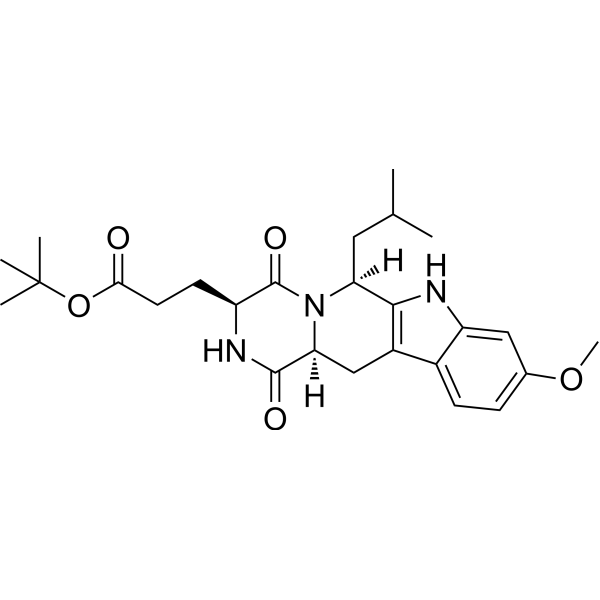
HY-10010
Ko 143BCRP/ABCG2 Inhibitor -
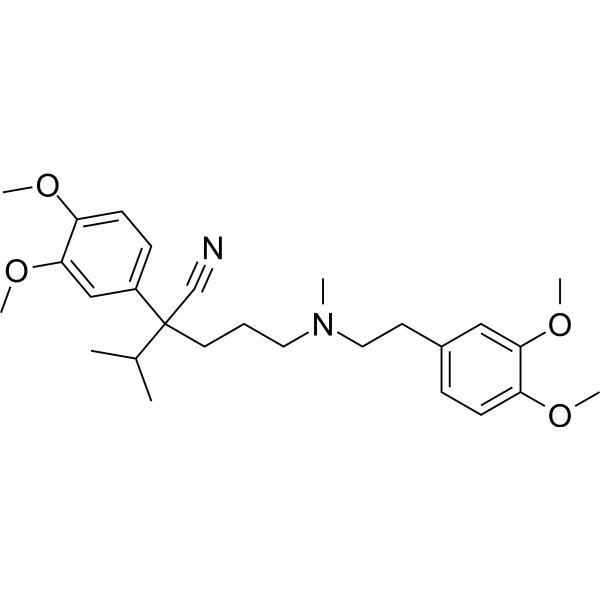
HY-14275
VerapamilCalcium Channel Blocker -
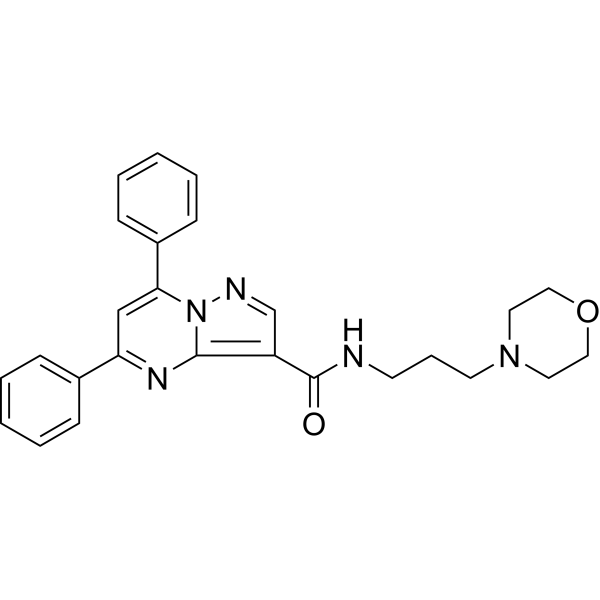
HY-107643
ReversanPgp Inhibitor; MRP1 Inhibitor -
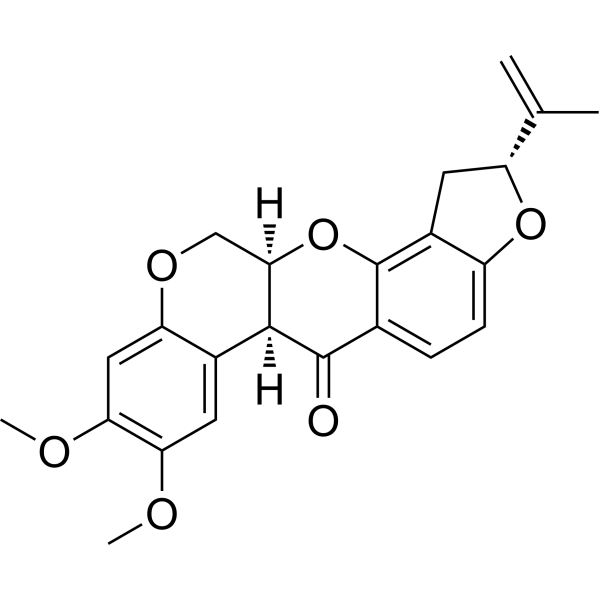
HY-B1756
RotenoneMitochondrial Complex I Inhibitor -
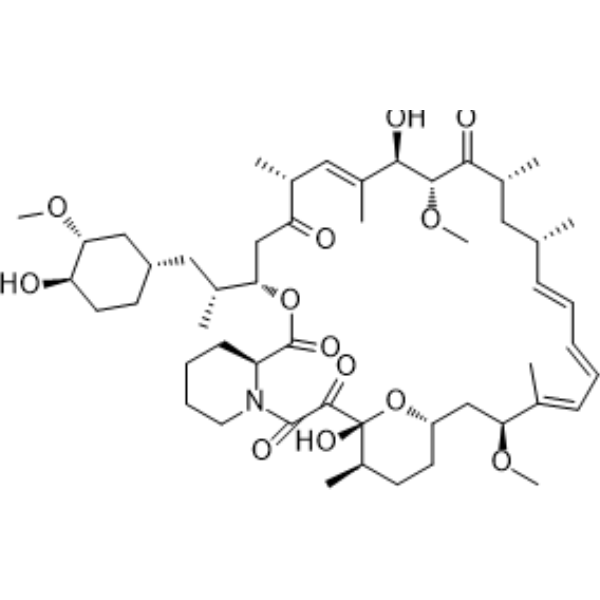
HY-10219
RapamycinmTOR Inhibitor -
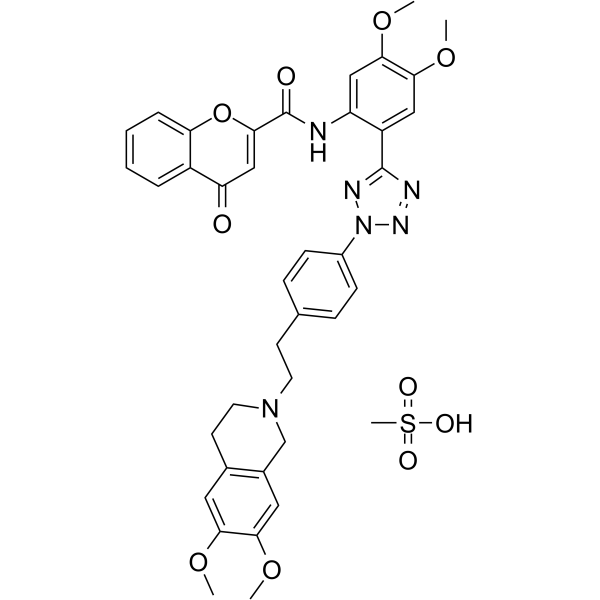
HY-13646A
Encequidar mesylateP-gp Inhibitor -
HY-B0579
Cyclosporin ACalcineurin Inhibitor
Publications Citing Use of MedChemExpress (MCE) Valspodar
More- Exploration. 2026 May 28;6(3):20240134. [Abstract]
- Cell Death Discov. 2024 Aug 14;10(1):364. [Abstract]
- Food Chem. 2021 May 1:343:128510. [Abstract]
- J Tissue Eng. 2026 Jul 24:17:20417314261472260.
- Cell Prolif. 2022 Mar;55(3):e13190. [Abstract]
- Hepatol Commun. 2024 May 2;8(5):e0437. [Abstract]
- Front Pharmacol. 2019 Jun 26:10:722. [Abstract]
- Transl Oncol. 2021 Jan;14(1):100917. [Abstract]
- Sci Rep. 2017 Dec 22;7(1):18069. [Abstract]
- J Drug Target. 2016;24(5):441-9. [Abstract]
- Antiviral Res. 2021 Sep:193:105124. [Abstract]
- FASEB J. 2019 Feb;33(2):2084-2094. [Abstract]
- J Biol Chem. 2022 Apr;298(4):101756. [Abstract]
- Drug Metab Pharmacokinet. 2022 Feb:42:100430. [Abstract]
- Lasers Surg Med. 2017 Sep;49(7):719-726. [Abstract]
- J Asian Nat Prod Res. 2021 Jun;23(6):556-569. [Abstract]
- Res Sq. 2026 Aug 29.
- bioRxiv. 2023 Feb 23:2023.02.23.529736. [Abstract]
- Oncotarget. 2016 Oct 18;7(42):68623-68637. [Abstract]
 Customer Validation & Images

-
WB

-
Bio/Physico-chemical Assay

-
Bio/Physico-chemical Assay
-
Cell Proliferation/Viability Assay

-
Flow Cytometry


Biological Activity
제품 설명
Cellular Effect
|
Cell Line

|
Type | Value | Description | References |
|---|---|---|---|---|
| Caco-2 | IC50 |
0.11 μM
Compound: PSC-833 (Valspodar)
|
TP_TRANSPORTER: inhibition of Digoxin transepithelial transport (basal to apical) (Digoxin: 5 uM) in Caco-2 cells
TP_TRANSPORTER: inhibition of Digoxin transepithelial transport (basal to apical) (Digoxin: 5 uM) in Caco-2 cells
|
[PMID: 10820137] |
| L929 | IC50 |
>100 μM
Compound: 3
|
Cytotoxicity against mouse L929 cells after 72 hrs
Cytotoxicity against mouse L929 cells after 72 hrs
|
[PMID: 22320402] |
| LLC-PK1 | IC50 |
0.0222 μM
Compound: PSC-833 (Valspodar)
|
TP_TRANSPORTER: inhibition of Digoxin transepithelial transport (basal to apical) (Digoxin: 0.1 uM) in MDR1-expressing LLC-PK1 cells
TP_TRANSPORTER: inhibition of Digoxin transepithelial transport (basal to apical) (Digoxin: 0.1 uM) in MDR1-expressing LLC-PK1 cells
|
[PMID: 10997946] |
| LLC-PK1 | IC50 |
0.291 μM
Compound: PSC-833 (Valspodar)
|
TP_TRANSPORTER: inhibition of Doxorubicin transepithelial transport (basal to apical) (Doxorubicin: 0.8 uM) in MDR1-expressing LLC-PK1 cells
TP_TRANSPORTER: inhibition of Doxorubicin transepithelial transport (basal to apical) (Doxorubicin: 0.8 uM) in MDR1-expressing LLC-PK1 cells
|
[PMID: 9914792] |
| LLC-PK1 | IC50 |
1.06 μM
Compound: PSC-833 (Valspodar)
|
TP_TRANSPORTER: inhibition of Vinblastine transepithelial transport (basal to apical) (Vinblastine: 0.1 uM) in MDR1-expressing LLC-PK1 cells
TP_TRANSPORTER: inhibition of Vinblastine transepithelial transport (basal to apical) (Vinblastine: 0.1 uM) in MDR1-expressing LLC-PK1 cells
|
[PMID: 9914792] |
| SW-620 | IC50 |
0.1 μM
Compound: PSC833
|
Reversal of P-gp-mediated resistance to doxorubicin in human SW620 cells assessed as reduction in doxorubin IC50 at 400 nM after 72 hrs by SRB assay
Reversal of P-gp-mediated resistance to doxorubicin in human SW620 cells assessed as reduction in doxorubin IC50 at 400 nM after 72 hrs by SRB assay
|
[PMID: 25215856] |
In Vitro
Valspodar (PSC 833) has no cytotoxicity effects at up to the concentration of 0.75 μg/mL. Valspodar (0.25, 0.5 and 0.75 μg/mL) and DOX-L are added to the DOX resistant cells, and cell kill efficacy of MDR cell type increases significantly when valspodar is administered alongside DOX-L. Valspodar (0.5 and 0.75 μg/mL), in combination with all concentrations of DOX, are most toxic and kill more than 70% of the resistant cells[1].
Pretreatment with PSC833 decreases the IC50 value of NSC 279836 in MDA-MB-435mdr cells to 0.4±0.02 μM in MDR cells and almost completely reverses the resistance of MDR cells to NSC 279836[3].
MedChemExpress (MCE) has not independently confirmed the accuracy of these methods. They are for reference only.
In Vivo
Preadministration of PSC833 to mice increases NSC 279836 fluorescent intensity in MDR tumor to 94% of that in the wild-type tumors[3].
MedChemExpress (MCE) has not independently confirmed the accuracy of these methods. They are for reference only.
Clinical Trial
| NCT Number | Sponsor | Condition | Start Date |
Phase
|
|---|---|---|---|---|
| NCT01329991 | 2011-05 | PHASE1 |


Chemical Information
-
CAS No. 121584-18-7
-
Appearance Solid
-
분자량 1214.62
-
화학식 C63H111N11O12
-
Color White to yellow
-
SMILES
O=C([C@H](C(C)C)N(C)C([C@H](CC(C)C)N(C)C([C@H](CC(C)C)N(C)C([C@@H](C)NC([C@H](C)NC([C@H](CC(C)C)N(C)C([C@H](C(C)C)NC([C@H](CC(C)C)N(C)C(CN(C)C([C@H](C(C)C)N1)=O)=O)=O)=O)=O)=O)=O)=O)=O)N(C)[C@@H](C([C@H](C)C/C=C/C)=O)C1=O
-
Synonyms
PSC 833
-
선적
Room temperature in continental US; may vary elsewhere.
-
보관
Powder -20°C 3 years In solvent -80°C 6 months -20°C 1 month


Publications (19)
-
Journal Impact Factor
-
Most Recent
-
Exploration
Tumor-Mimic Artificial Cell Integrated With In Situ Synthetic Biology for Testing of Antitumor Drug Sensitivity. [Abstract]2026 May 28;6(3):20240134. PMID: 42382689
Valspodar purchased from MedChemExpress. Usage Cited in: Exploration. 2026 May 28;6(3):20240134. [Abstract]
Western blotting analysis of MRP‐1, P‐gp, and SLC7A11 levels in CCMACs derived from T24 treated with MK‐571, PSC‐833, and sulfasalazine, respectively.
Valspodar purchased from MedChemExpress. Usage Cited in: Exploration. 2026 May 28;6(3):20240134. [Abstract]
Comparison of normalized fluorescence results of CCMACs derived from T24 treated with MK-571, PSC-833, and sulfasalazine for antitumor drug sensitivity evaluation.
-
Cell Death Discov
Generation of a conditional cellular senescence model using proximal tubule cells and fibroblasts from human kidneys. [Abstract]2024 Aug 14;10(1):364. PMID: 39143064
Valspodar purchased from MedChemExpress. Usage Cited in: Cell Death Discov. 2024 Aug 14;10(1):364. [Abstract]
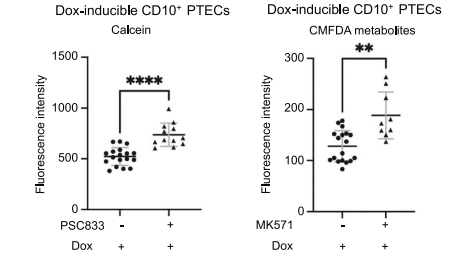
Fluorescence intensity of CD10+ PTECs with and without efflux transport blockers. The cells were first incubated with the substrates calcein-AM (1 μM) and CMFDA (1.25 μM), after which the efflux transport blockers PSC833 (Valspodar, 5 μM) and MK571 (5 μM) were added. n = 9–18, **P < 0.01, ****P < 0.0001, two-tailed unpaired t test.
-
Food Chem
2021 May 1:343:128510. PMID: 33172753 -
-
Cell Prolif
Functional differentiation and scalable production of renal proximal tubular epithelial cells from human pluripotent stem cells in a dynamic culture system. [Abstract]2022 Mar;55(3):e13190. PMID: 35102634 -
Hepatol Commun
Inhibition of the transmembrane transporter ABCB1 overcomes resistance to doxorubicin in patient-derived organoid models of HCC. [Abstract]2024 May 2;8(5):e0437. PMID: 38696353 -
Front Pharmacol
A Danshensu-Tetramethylpyrazine Conjugate DT-010 Overcomes Multidrug Resistance in Human Breast Cancer. [Abstract]2019 Jun 26:10:722. PMID: 31293428
Valspodar purchased from MedChemExpress. Usage Cited in: Front Pharmacol. 2019 Jun 26:10:722. [Abstract]
The effect of DT-010 on P-gp substrate efflux activity was assessed. MCF-7/ADR cells (5.0 × 10⁴/well) were incubated with the P-gp-specific fluorescent substrate Rh123 at 0.5 μg/ml with or without DT-010 (20 μM) for 1 h, then washed twice with ice-cold phosphate-buffered saline (PBS), and incubated in Rh123-free medium at 37℃ for additional 1 h with or without DT-010. Cells were analyzed on flow cytometry to detect Rh123 fluorescence. The PSC-833 (0.1 μM) was used as a positive control. MCF-7 cells were used for confirmation of overexpression of P-gp (increased Rh123 efflux) in MCF-7/ADR cells.
-
Transl Oncol
Cross-resistance of cisplatin selected cells to anti-microtubule agents: Role of general survival mechanisms. [Abstract]2021 Jan;14(1):100917. PMID: 33129114 -
Sci Rep
LUCS (Light-Up Cell System), a universal high throughput assay for homeostasis evaluation in live cells. [Abstract]2017 Dec 22;7(1):18069. PMID: 29273711 -
J Drug Target
2016;24(5):441-9. PMID: 26373825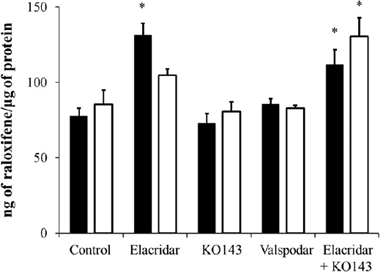
Valspodar purchased from MedChemExpress. Usage Cited in: J Drug Target. 2016;24(5):441-9. [Abstract]
Cells are co-treated with 5 μM of free LY156758 or an equivalent dose of SMA-LY156758 and either vehicle control (0.01% DMSO), Elacridar (1 μM), KO143 (5 μM), Valspodar (1 μM) or a combination of efflux inhibitors for 6 h.
-
Antiviral Res
2021 Sep:193:105124. PMID: 34197862
Valspodar purchased from MedChemExpress. Usage Cited in: Antiviral Res. 2021 Sep:193:105124. [Abstract]
MRC5 cells treated with DMSO and increasing amounts of elacridar, tariquidar, valspodar (0-40 μM), and zosuquidar (0-33.34 μM) for two days was subjected to a MTT assay. DMSO treated cells was designated at 100% cell viability and error bars represent standard error of the mean. MRC5 cells treated with DMEM, cyclohexamide or increasing concentrations of valspodar for 1, 3, 6, or 9 days were stained with Hoechst reagent to quantify cells/well (in triplicate).
-
FASEB J
ABCB1 (P-glycoprotein) regulates vitamin D absorption and contributes to its transintestinal efflux. [Abstract]2019 Feb;33(2):2084-2094. PMID: 30222077 -
J Biol Chem
The naturally occurring flavonoid nobiletin reverses methotrexate resistance via inhibition of P-glycoprotein synthesis. [Abstract]2022 Apr;298(4):101756. PMID: 35202652 -
Drug Metab Pharmacokinet
Investigation of the role and quantitative impact of breast cancer resistance protein on drug distribution into brain and CSF in rats. [Abstract]2022 Feb:42:100430. PMID: 34896751 -
Lasers Surg Med
The sensitivity of glioma cells to pyropheophorbide-αmethyl ester-mediated photodynamic therapy is enhanced by inhibiting ABCG2. [Abstract]2017 Sep;49(7):719-726. PMID: 28370217 -
J Asian Nat Prod Res
Cycloastragenol inhibits Aβ1-42-induced blood-brain barrier disruption and enhances soluble Aβ efflux in vitro. [Abstract]2021 Jun;23(6):556-569. PMID: 32608254 -
-
bioRxiv
The Multidrug Resistance Transporter P-glycoprotein Confers Resistance to Ferroptosis Inducers. [Abstract]2023 Feb 23:2023.02.23.529736. PMID: 36945397 -
Oncotarget
DCTPP1 attenuates the sensitivity of human gastric cancer cells to 5-fluorouracil by up-regulating MDR1 expression epigenetically. [Abstract]2016 Oct 18;7(42):68623-68637. PMID: 27612427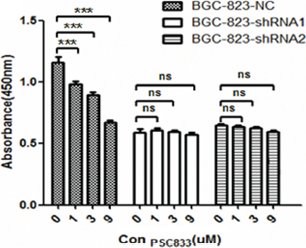
Valspodar purchased from MedChemExpress. Usage Cited in: Oncotarget. 2016 Oct 18;7(42):68623-68637. [Abstract]
The effect of MDR1 on drug sensitivity to 5-FU in BGC-823 cells is tested by using MDR1 specific inhibitor PSC833. Cells are exposed to 2 μM 5-FU combined with PSC833 (0, 1, 3, 9 μM) for 72 h. Cell viability is detected by CCK-8 assay.


용액&용해도
In Vitro:
DMSO : 100 mg/mL (82.33 mM; Need ultrasonic; Hygroscopic DMSO has a significant impact on the solubility of product, please use newly opened DMSO)
Please refer to the solubility information to select the appropriate solvent. Once prepared, please aliquot and store the solution to prevent product inactivation from repeated freeze-thaw cycles.
Storage method and period of stock solution: -80°C, 6 months; -20°C, 1 month. When stored at -80°C, please use it within 6 months. When stored at -20°C, please use it within 1 month.
Please refer to the solubility information to select the appropriate solvent. Once prepared, please aliquot and store the solution to prevent product inactivation from repeated freeze-thaw cycles.
Storage method and period of stock solution: -80°C, 6 months; -20°C, 1 month. When stored at -80°C, please use it within 6 months. When stored at -20°C, please use it within 1 month.
Concentration (start) × Volume (start) = Concentration (final) × Volume (final)
In Vivo:
Select the appropriate dissolution method based on your experimental animal and administration route.
- For the following dissolution methods, please ensure to first prepare a clear stock solution using an In Vitro approach and then sequentially add co-solvents:
- To ensure reliable experimental results, the clarified stock solution can be appropriately stored based on storage conditions. As for the working solution for In Vivo experiments, it is recommended to prepare freshly and use it on the same day.
- The percentages shown for the solvents indicate their volumetric ratio in the final prepared solution. If precipitation or phase separation occurs during preparation, heat and/or sonication can be used to aid dissolution.
In Vivo Dissolution Calculator
Please enter the basic information of animal experiments:
-
-
-
-
Recommended: Prepare an additional quantity of animals to account for potential losses during experiments.
Please enter your animal formula composition:
-
%DMSO +
Recommended: Keep the proportion of DMSO in working solution below 2% if your animal is weak.
-
%+
-
+%Tween-80 + +
-
%Saline +
The co-solvents required include: DMSO, . All of co-solvents are available by MedChemExpress (MCE). , Tween 80. All of co-solvents are available by MedChemExpress (MCE).
Working solution concentration: 0.22 mg/mL
Method for preparing stock solution: mg drug dissolved in μL DMSO. Stock solution concentration: mg/mL.
1. Take μL DMSO stock solution;
2. Add μL .
μL , mix evenly;
3. Then add μL Tween 80, mix evenly;
4. Then add μL
Please ensure that the stock solution in the first step is dissolved to a clear state, and add co-solvents in sequence. You can use ultrasonic heating (ultrasonic cleaner, recommended frequency 20-40 kHz), vortexing, etc. to assist dissolution.


순도&문서
-
Data Sheet (289 KB)
-
SDS (393 KB)
- English - EN (393 KB)
- Français - FR (393 KB)
- Deutsch - DE (393 KB)
- Norwegian - NO (393 KB)
- Español - ES (393 KB)
- Swedish - SV (393 KB)
- Italian - IT (393 KB)
- Korean - KR (393 KB)
- Portuguese - PT (393 KB)
-
Handling Instructions (2659 KB)
References


Complete Stock Solution Preparation Table
Please refer to the solubility information to select the appropriate solvent. Once prepared, please aliquot and store the solution to prevent product inactivation from repeated freeze-thaw cycles.
Storage method and period of stock solution: -80°C, 6 months; -20°C, 1 month. When stored at -80°C, please use it within 6 months. When stored at -20°C, please use it within 1 month.
| Optional Solvent | Concentration Solvent Mass | 1 mg | 5 mg | 10 mg | 25 mg |
|---|---|---|---|---|---|
| DMSO | 1 mM | 0.8233 mL | 4.1165 mL | 8.2330 mL | 20.5826 mL |
| 5 mM | 0.1647 mL | 0.8233 mL | 1.6466 mL | 4.1165 mL | |
| 10 mM | 0.0823 mL | 0.4117 mL | 0.8233 mL | 2.0583 mL | |
| 15 mM | 0.0549 mL | 0.2744 mL | 0.5489 mL | 1.3722 mL | |
| 20 mM | 0.0412 mL | 0.2058 mL | 0.4117 mL | 1.0291 mL | |
| 25 mM | 0.0329 mL | 0.1647 mL | 0.3293 mL | 0.8233 mL | |
| 30 mM | 0.0274 mL | 0.1372 mL | 0.2744 mL | 0.6861 mL | |
| 40 mM | 0.0206 mL | 0.1029 mL | 0.2058 mL | 0.5146 mL | |
| 50 mM | 0.0165 mL | 0.0823 mL | 0.1647 mL | 0.4117 mL | |
| 60 mM | 0.0137 mL | 0.0686 mL | 0.1372 mL | 0.3430 mL | |
| 80 mM | 0.0103 mL | 0.0515 mL | 0.1029 mL | 0.2573 mL |


Valspodar Related Classifications
HY-17384 Related Classifications
 Powered by Bioz