



Neuropilin-1 Antibody (YA6293)
(Synonyms: NRP1; NRP; VEGF165R; Neuropilin-1; Vascular endothelial cell growth factor 165 receptor; CD antigen CD304)Based on 1 Customer Validation
Neuropilin-1 Antibody (YA6293) is a Rabbit-derived and non-conjugated IgG monoclonal antibody, targeting to Neuropilin-1.
-
Host:
Rabbit
-
Isotype:
IgG
-
Application:
WB, IHC-P, ICC/IF, IP, ELISA
-
Reactivity :
Human, Mouse, Rat
-
Formulation:
Supplied in PBS, 50% glycerol, 0.05% Proclin 300, 0.05%BSA
-
Conjugation:
Non-conjugated


To place orders, for customer services and technical support, please contact: MedChemExpress USA
Tel: 609-228-6898 E-mail: [email protected] [email protected]





Applications
| Application |
IHC-P

IHC-P: Immunohistochemistry-Paraffin
|
WB
WB: Western Blot
|
ICC/IF
ICC/IF: Immunocytochemistry/
Immunofluorescence |
ELISA
ELISA: Enzyme Linked Immunosorbent Assay
|
IP
IP: Immunoprecipitation
|
|---|---|---|---|---|---|
| Dilution Ratio | 1:200-1000 | 1:1000-5000 | 1:200-1000 | 1:5000-20000 | 1:50-200 |


Product Details
Neuropilin-1 Antibody (YA6293) is a Rabbit-derived and non-conjugated IgG monoclonal antibody, targeting to Neuropilin-1.
-
Host Rabbit

-
Clonality Monoclonal

-
Species ReactivityHuman, Mouse, Rat
-
Observed Molecular WeightObserved band size: 135 kDa
Note: Due to possible protein modifications or aggregation, the molecular weight should be confirmed by actual measurement, and the predicted value is for reference only.

-
Calculated Molecular Weight Predicted band size: 103 kDa

Protein A
Non-conjugated
Unmodified
IgG


Product Properties
-
Appearance
Solution
-
Formulation
Supplied in PBS, 50% glycerol, 0.05% Proclin 300, 0.05%BSA
-
Concentration
Batch-dependent, Please check the COA for the concentration of each lot. Check Lot Concentration
-
Storage & Stability
Stored at -20°C for 1 year. Avoid repeated freeze / thaw cycles.
-
Shipping
Shipping with blue ice.


Verification Images
-
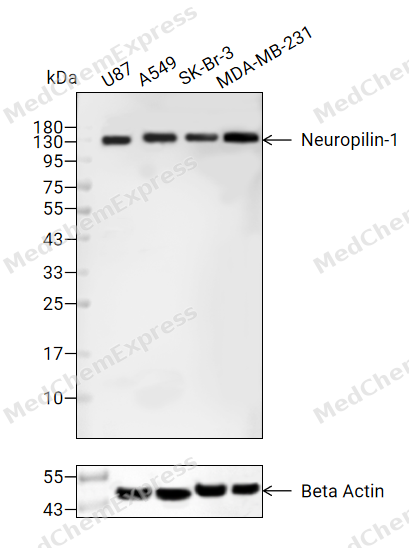 Western blot analysis of extracts from U87 (lane 2(20μg), A549 (lane 3(20μg), SK-Br-3 (lane 4(20μg), MDA-MB-231 (lane 5(20μg), using Neuropilin-1 Antibody. Proteins were transferred to a PVDF membrane and blocked with 5% BSA in TBST for 2 hour at room temperature. The primary antibody and Loading control antibody (Beta Actin, HY-P80438, 1/3000) was used in 5% BSA in TBST at 4°C overnight. Goat Anti-Mouse/Rabbit IgG-HRP Secondary Antibody (HY-P8004/HY-P8001, 1/10,000) was used for 1 hour at room temperature.
 -
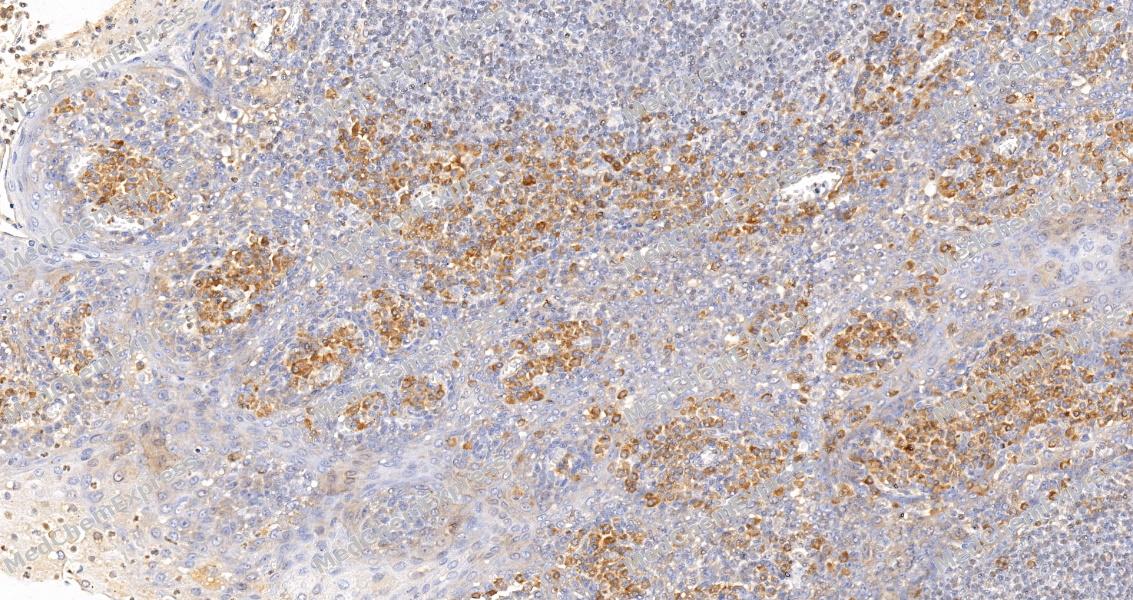 Immunohistochemical analysis of paraffin-embedded human tonsil tissue using Neuropilin-1 Antibody (HY-P86601,1/800). The section was pretreated using heat mediated antigen retrieval with sodium citrate buffer (pH 6.0) for 8 minutes. The tissues were blocked with quick block buffer for 0.5 hours at room temperature, washed with PBS and PBST, and then incubated with the primary antibody overnight at 4℃. The detection was performed using an HRP conjugated compact polymer system. DAB was used as the chromogen. Tissues were counterstained with hematoxylin and mounted with DPX.
 -
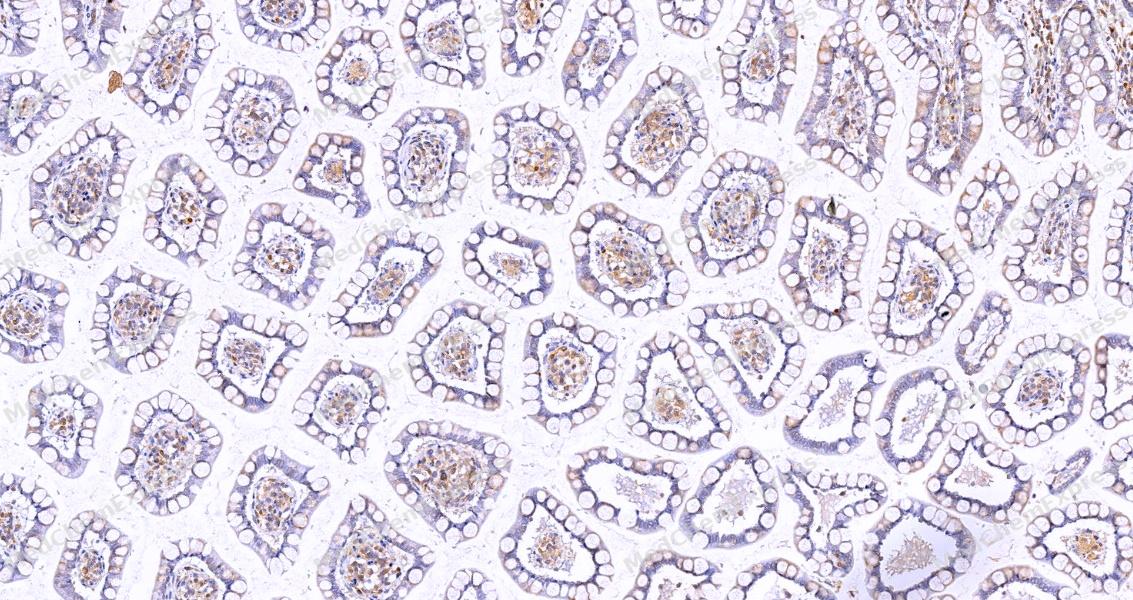 Immunohistochemical analysis of paraffin-embedded human small intestine tissue using Neuropilin-1 Antibody (HY-P86601,1/800). The section was pretreated using heat mediated antigen retrieval with sodium citrate buffer (pH 6.0) for 8 minutes. The tissues were blocked with quick block buffer for 0.5 hours at room temperature, washed with PBS and PBST, and then incubated with the primary antibody overnight at 4℃. The detection was performed using an HRP conjugated compact polymer system. DAB was used as the chromogen. Tissues were counterstained with hematoxylin and mounted with DPX.
 -
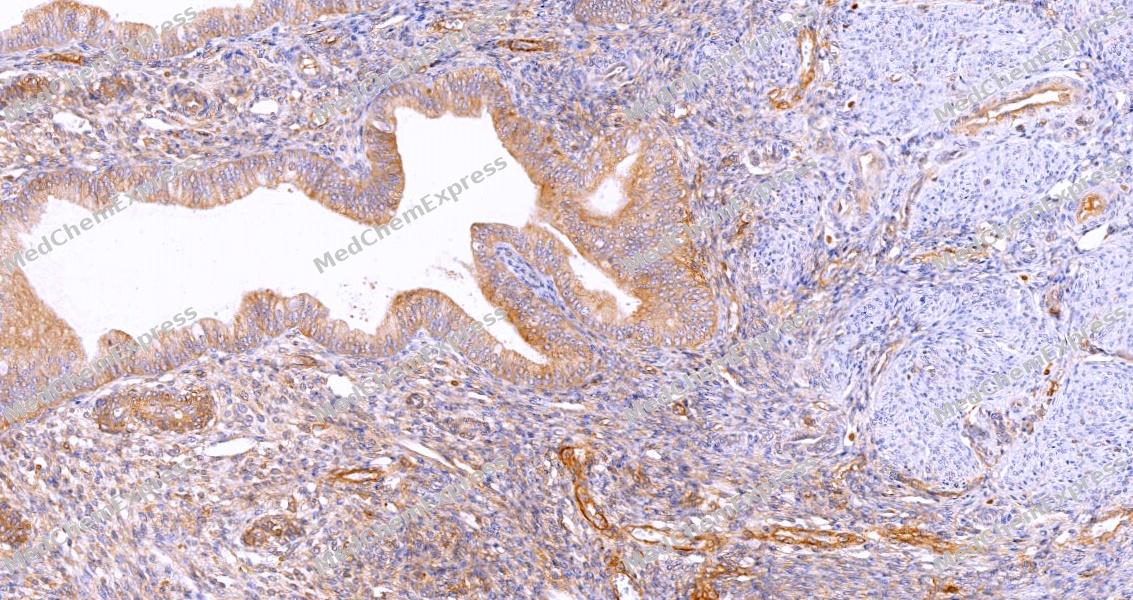 Immunohistochemical analysis of paraffin-embedded human endometrium tissue using Neuropilin-1 Antibody (HY-P86601,1/800). The section was pretreated using heat mediated antigen retrieval with sodium citrate buffer (pH 6.0) for 8 minutes. The tissues were blocked with quick block buffer for 0.5 hours at room temperature, washed with PBS and PBST, and then incubated with the primary antibody overnight at 4℃. The detection was performed using an HRP conjugated compact polymer system. DAB was used as the chromogen. Tissues were counterstained with hematoxylin and mounted with DPX.
 -
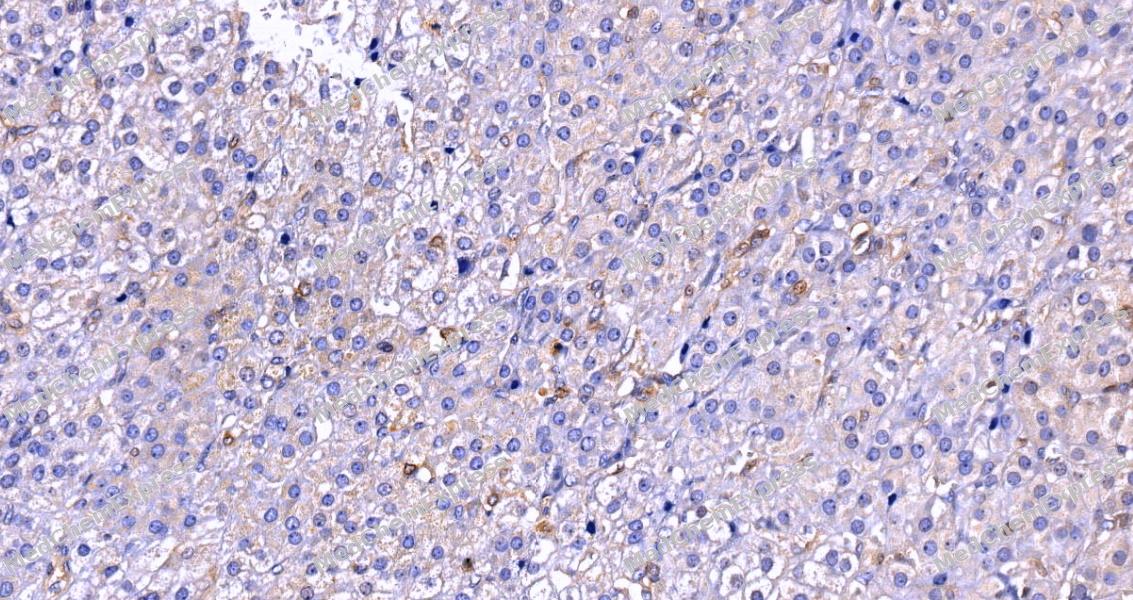 Immunohistochemical analysis of paraffin-embedded human adrenal gland tissue using Neuropilin-1 Antibody (HY-P86601,1/800). The section was pretreated using heat mediated antigen retrieval with sodium citrate buffer (pH 6.0) for 8 minutes. The tissues were blocked with quick block buffer for 0.5 hours at room temperature, washed with PBS and PBST, and then incubated with the primary antibody overnight at 4℃. The detection was performed using an HRP conjugated compact polymer system. DAB was used as the chromogen. Tissues were counterstained with hematoxylin and mounted with DPX.
 -
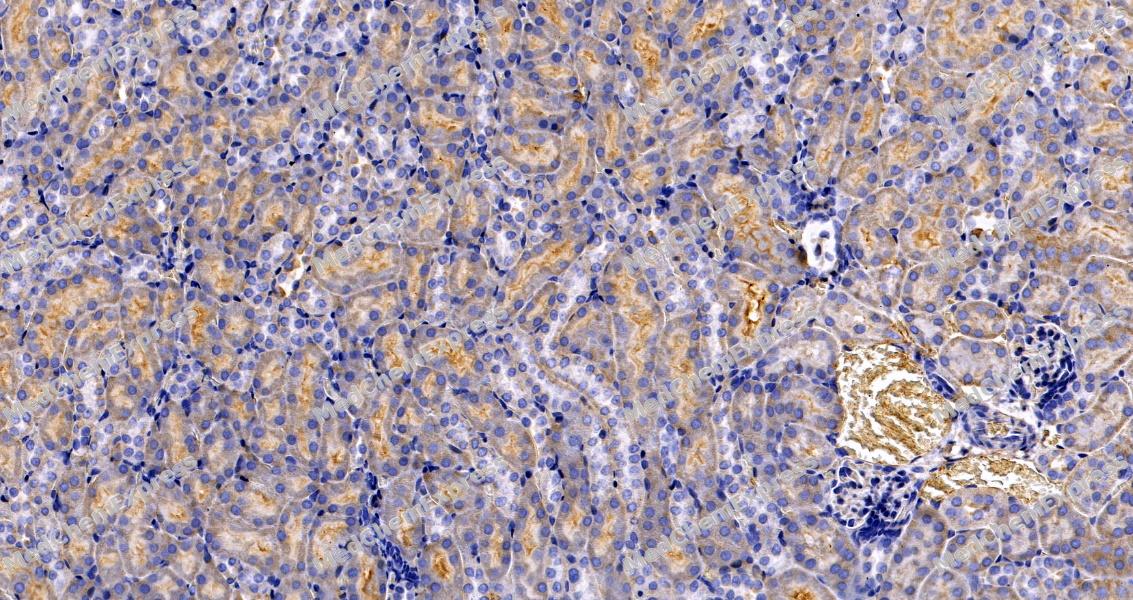 Immunohistochemical analysis of paraffin-embedded mouse kidney tissue using Neuropilin-1 Antibody (HY-P86601,1/800). The section was pretreated using heat mediated antigen retrieval with sodium citrate buffer (pH 6.0) for 8 minutes. The tissues were blocked with quick block buffer for 0.5 hours at room temperature, washed with PBS and PBST, and then incubated with the primary antibody overnight at 4℃. The detection was performed using an HRP conjugated compact polymer system. DAB was used as the chromogen. Tissues were counterstained with hematoxylin and mounted with DPX.
 -
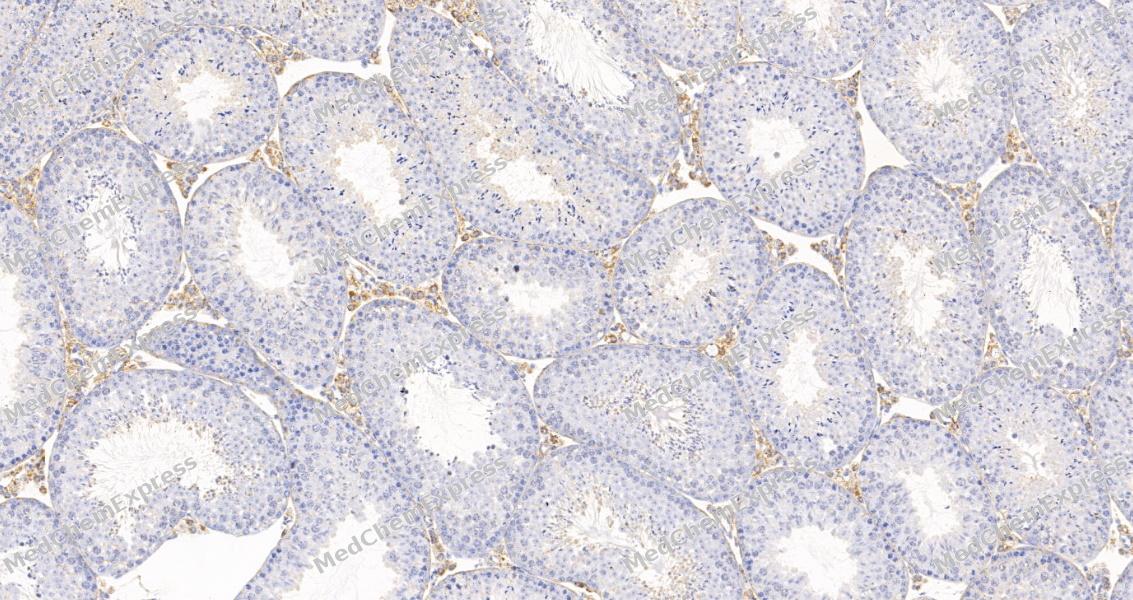 Immunohistochemical analysis of paraffin-embedded mouse testis tissue using Neuropilin-1 Antibody (HY-P86601,1/800). The section was pretreated using heat mediated antigen retrieval with sodium citrate buffer (pH 6.0) for 8 minutes. The tissues were blocked with quick block buffer for 0.5 hours at room temperature, washed with PBS and PBST, and then incubated with the primary antibody overnight at 4℃. The detection was performed using an HRP conjugated compact polymer system. DAB was used as the chromogen. Tissues were counterstained with hematoxylin and mounted with DPX.
 -
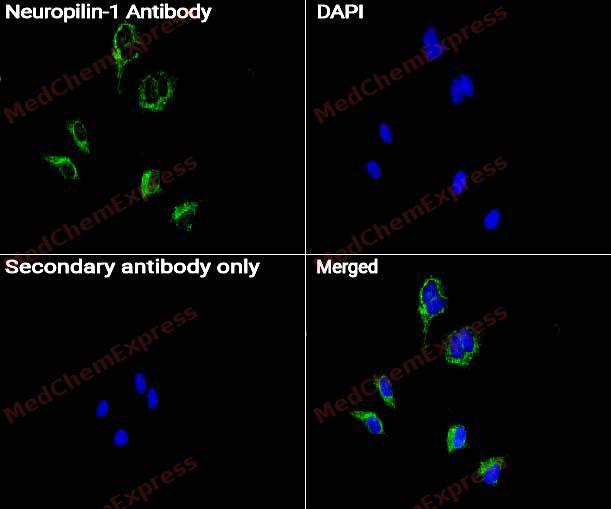 Immunocytochemistry analysis of HUVEC cells labeling Neuropilin-1 with Neuropilin-1 antibody (HY-P86601) at 1/50 dilution. Cells were fixed in 4% paraformaldehyde for 15 minutes at room temperature, permeabilized with 0.1% Triton X-100 for 10 minutes at room temperature, then blocked with BSA for Immunol Staining for 10 min at room temperature. Cells were then incubated with Neuropilin-1 antibody (HY-P86601) at 1/50 dilution in BSA for Immunol Staining at 4 ℃,Stay overnight. AF488-conjugated AffiniPure Goat Anti-Rabbit IgG H&L(HY-P8002, Green) was used as the secondary antibody at 1/1,000 dilution. PBS instead of the primary antibody was used as the secondary antibody only control. The Nuclear counterstain was DAPI (Blue).
 -
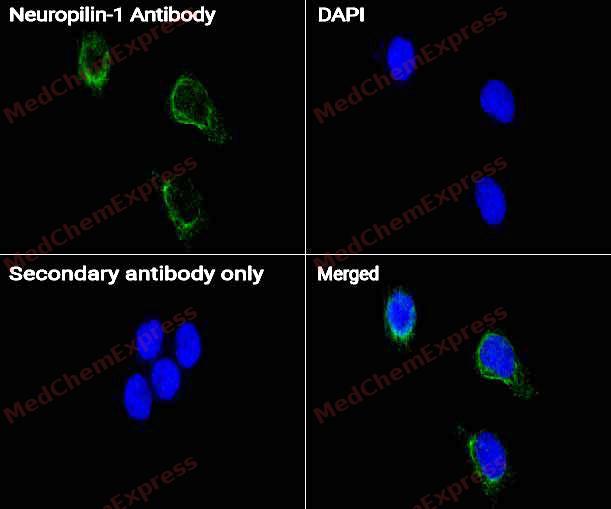 Immunocytochemistry analysis of MCF-7 cells labeling Neuropilin-1 with Neuropilin-1 antibody (HY-P86601) at 1/50 dilution. Cells were fixed in 4% paraformaldehyde for 15 minutes at room temperature, permeabilized with 0.1% Triton X-100 for 10 minutes at room temperature, then blocked with BSA for Immunol Staining for 10 min at room temperature. Cells were then incubated with Neuropilin-1 antibody (HY-P86601) at 1/50 dilution in BSA for Immunol Staining at 4℃,Stay overnight. AF488-conjugated AffiniPure Goat Anti-Rabbit IgG H&L(HY-P8002, Green) was used as the secondary antibody at 1/1,000 dilution. PBS instead of the primary antibody was used as the secondary antibody only control. The Nuclear counterstain was DAPI (Blue).


Background
-
Function
Neuropilin-1 is a Cell-surface receptor involved in the development of the cardiovascular system, in angiogenesis, in the formation of certain neuronal circuits and in organogenesis outside the nervous system. Mediates the chemorepulsant activity of semaphorins. Recognizes a C-end rule (CendR) motif R/KXXR/K on its ligands which causes cellular internalization and vascular leakage. It binds to semaphorin 3A, the PLGF-2 isoform of PGF, the VEGF165 isoform of VEGFA and VEGFB. Coexpression with KDR results in increased VEGF165 binding to KDR as well as increased chemotaxis. Regulates VEGF-induced angiogenesis. Binding to VEGFA initiates a signaling pathway needed for motor neuron axon guidance and cell body migration, including for the caudal migration of facial motor neurons from rhombomere 4 to rhombomere 6 during embryonic development. Regulates mitochondrial iron transport via interaction with ABCB8/MITOSUR; (Microbial infection) Acts as a host factor for human coronavirus SARS-CoV-2 infection. Recognizes and binds to CendR motif RRAR on SARS-CoV-2 spike protein S1 which enhances SARS-CoV-2 infection; Binds VEGF-165 and may inhibit its binding to cells. May induce apoptosis by sequestering VEGF-165. May bind as well various members of the semaphorin family. Its expression has an averse effect on blood vessel number and integrity[1][2][3][4][5][6][7].
-
Subcellular Localization
Secreted; Mitochondrion membrane; Single-pass type I membrane protein; Cell membrane; Single-pass type I membrane protein; Cytoplasm
-
Expression
Tissue_specificity:Expression of isoforms 1 and 2 appears to have no overlap. Expressed in olfactory epithelium (protein level) (PubMed:33082293) . Expressed in fibroblasts (protein level) (PubMed:36213313) . Expressed in blood vessels of various tissues. In developing embryos, primarily present in the nervous system. In adult tissues, highly expressed in the heart and placenta; moderately expressed in the lungs, liver, skeletal muscle, kidneys, and pancreas; and lowly expressed in the adult brain (PubMed:10688880, PubMed:9529250) . Expressed in the central nervous system, including olfactory-related regions such as the olfactory tubercle and paraolfactory gyrus (PubMed:33082293) ; expression of isoforms 1 and 2 appears to have no overlap. Present in hepatocytes of the liver and distal and proximal convoluted tubules of the kidneys. -
Isoforms & Post-Translational Modification
O14786 has 3 isomers: O14786-1: 103134 Da (predicted); O14786-2: 71935 Da (predicted); O14786-3: 68376 Da (predicted).
-
Subunit
Homodimer, and heterodimer with NRP2 (PubMed:17989695). Interacts with FER (By similarity). Interacts with PLXNB1 (PubMed:10520995). Interacts with VEGFA (PubMed:19805273, PubMed:26503042). Interacts with ABCB8/MITOSUR in mitochondria (PubMed:30623799)
-
SwissProt ID
-
Synonyms
NRP1; NRP; VEGF165R; Neuropilin-1; Vascular endothelial cell growth factor 165 receptor; CD antigen CD304


Documentation
-
Data Sheet (234 KB)
-
SDS (252 KB)
- English - EN (252 KB)
- Français - FR (252 KB)
- Deutsch - DE (252 KB)
- Norwegian - NO (252 KB)
- Español - ES (252 KB)
- Swedish - SV (252 KB)
- Italian - IT (252 KB)
- Korean - KR (252 KB)
- Portuguese - PT (252 KB)
-
User Guide for Antibodies (1077 KB)

 Powered by Bioz
