



SELENBP1 (Selenium Binding Protein 1) Antibody (YA7832)
(Synonyms: HEL-S-134P; hSBP; LPSB; SBP56; SP56)
Based on 1 Customer Validation
SELENBP1 (Selenium Binding Protein 1) Antibody (YA7832) is a Mouse-derived and non-conjugated IgG2a monoclonal antibody, targeting to SELENBP1 (Selenium Binding Protein 1).
-
Host:
Mouse
-
Isotype:
IgG2a
-
Application:
WB, IHC-P
-
Reactivity :
Human, Mouse, Rat
-
Formulation:
Spplied in PBS (pH 7.3) containing 1% BSA, 50% glycerol and 0.02% sodium azide.
-
Conjugation:
Non-conjugated


To place orders, for customer services and technical support, please contact: MedChemExpress USA
Tel: 609-228-6898 E-mail: [email protected] [email protected]





Applications
| Application |
WB

WB: Western Blot
|
IHC-P
IHC-P: Immunohistochemistry-Paraffin
|
|---|---|---|
| Dilution Ratio | 1:500-2000 | 1:150-500 |


Product Details
SELENBP1 (Selenium Binding Protein 1) Antibody (YA7832) is a Mouse-derived and non-conjugated IgG2a monoclonal antibody, targeting to SELENBP1 (Selenium Binding Protein 1).
-
Host Mouse

-
Clonality Monoclonal

-
Species ReactivityHuman, Mouse, Rat
-
Calculated Molecular Weight Predicted band size: 52.2 kDa

Full length human recombinant protein of human SELENB1 produced in HEK293T cell.
Endogenous
Affinity purified
Non-conjugated
Unmodified
IgG2a


Product Properties
-
Appearance
Liquid
-
Formulation
Spplied in PBS (pH 7.3) containing 1% BSA, 50% glycerol and 0.02% sodium azide.
-
Concentration
Batch-dependent, Please check the COA for the concentration of each lot. Check Lot Concentration
-
Storage & Stability
Stored at -20°C for 1 year. Avoid repeated freeze / thaw cycles.
-
Shipping
Shipping with blue ice.


Verification Images
-
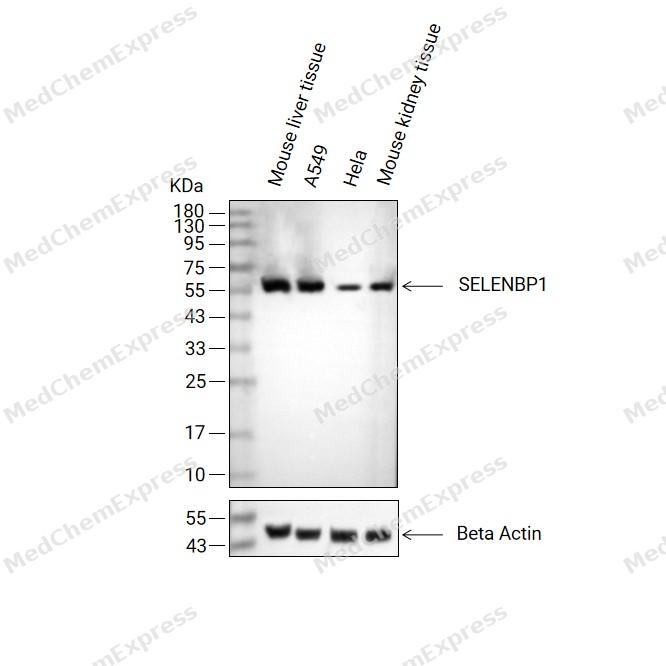 Western blot analysis of extracts from Mouse liver tissue(lane 2(20μg) , A549(lane 3(20μg) ,Hela(lane 4(20μg)and Mouse kidney tissue( lane 5(20μg) using SELENBP1 Antibody (HY-P88148). Proteins were transferred to a PVDF membrane and blocked with 5% non-fat milk in TBST for 2 hour at room temperature. The primary antibody (1/1000) and Loading control antibody (Beta Actin, HY-P80993,1/10000) was used in 5% non-fat milk in TBST at 4°C overnight. Goat Anti-Mouse IgG-HRP Secondary Antibody (HY-P8004,1/10,000) was used for 1 hour at room temperature.
 -
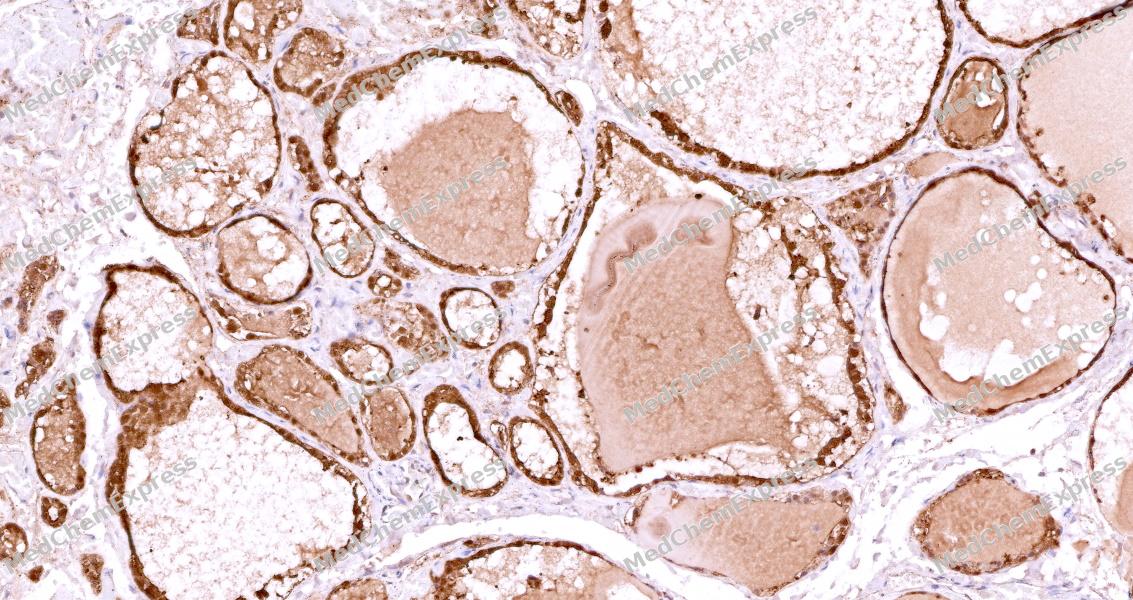 Immunohistochemical analysis of paraffin-embedded human thyroid gland tissue using SELENBP1 Antibody (HY-P88148, 1/500). The section was pretreated using heat mediated antigen retrieval with sodium citrate buffer (pH 6.0) for 8 minutes. The tissues were blocked with quick block buffer for 0.5 hours at room temperature, washed with PBS and PBST, and then incubated with the primary antibody overnight at 4℃. The detection was performed using an HRP conjugated compact polymer system. DAB was used as the chromogen. Tissues were counterstained with hematoxylin and mounted with DPX.
 -
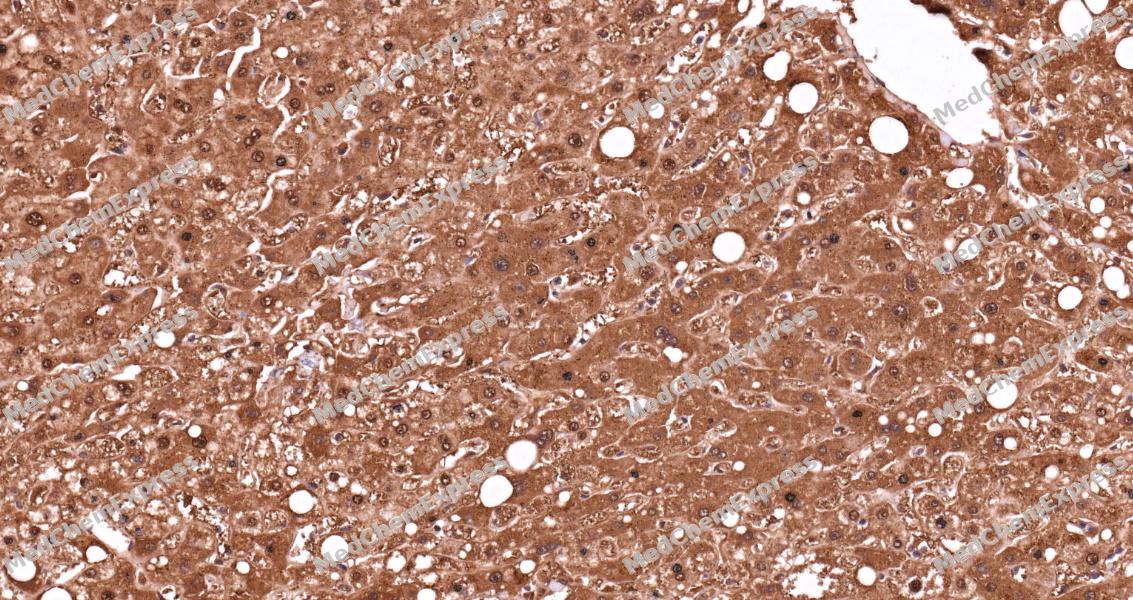 Immunohistochemical analysis of paraffin-embedded human liver tissue using SELENBP1 Antibody (HY-P88148, 1/500). The section was pretreated using heat mediated antigen retrieval with sodium citrate buffer (pH 6.0) for 8 minutes. The tissues were blocked with quick block buffer for 0.5 hours at room temperature, washed with PBS and PBST, and then incubated with the primary antibody overnight at 4℃. The detection was performed using an HRP conjugated compact polymer system. DAB was used as the chromogen. Tissues were counterstained with hematoxylin and mounted with DPX.
 -
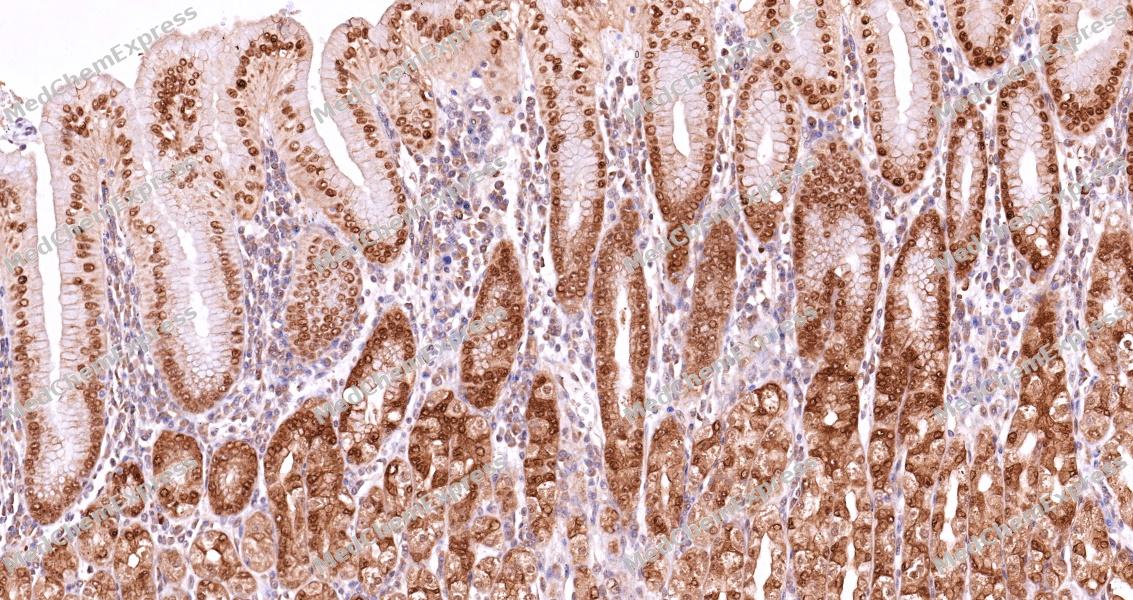 Immunohistochemical analysis of paraffin-embedded human stomach tissue using SELENBP1 Antibody (HY-P88148, 1/500). The section was pretreated using heat mediated antigen retrieval with sodium citrate buffer (pH 6.0) for 8 minutes. The tissues were blocked with quick block buffer for 0.5 hours at room temperature, washed with PBS and PBST, and then incubated with the primary antibody overnight at 4℃. The detection was performed using an HRP conjugated compact polymer system. DAB was used as the chromogen. Tissues were counterstained with hematoxylin and mounted with DPX.
 -
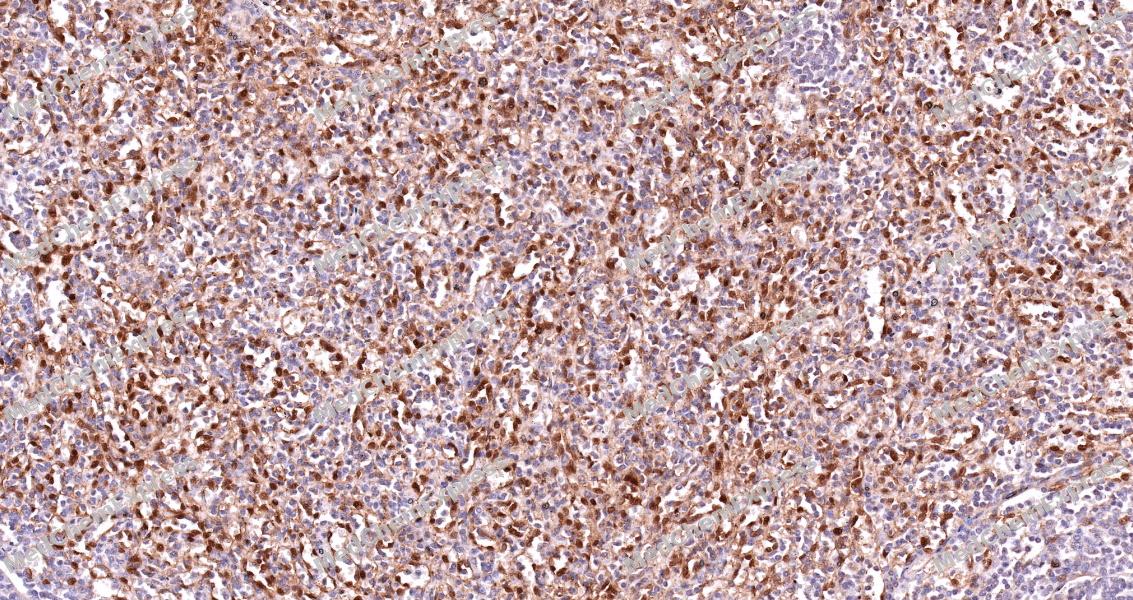 Immunohistochemical analysis of paraffin-embedded human spleen tissue using SELENBP1 Antibody (HY-P88148, 1/500). The section was pretreated using heat mediated antigen retrieval with sodium citrate buffer (pH 6.0) for 8 minutes. The tissues were blocked with quick block buffer for 0.5 hours at room temperature, washed with PBS and PBST, and then incubated with the primary antibody overnight at 4℃. The detection was performed using an HRP conjugated compact polymer system. DAB was used as the chromogen. Tissues were counterstained with hematoxylin and mounted with DPX.
 -
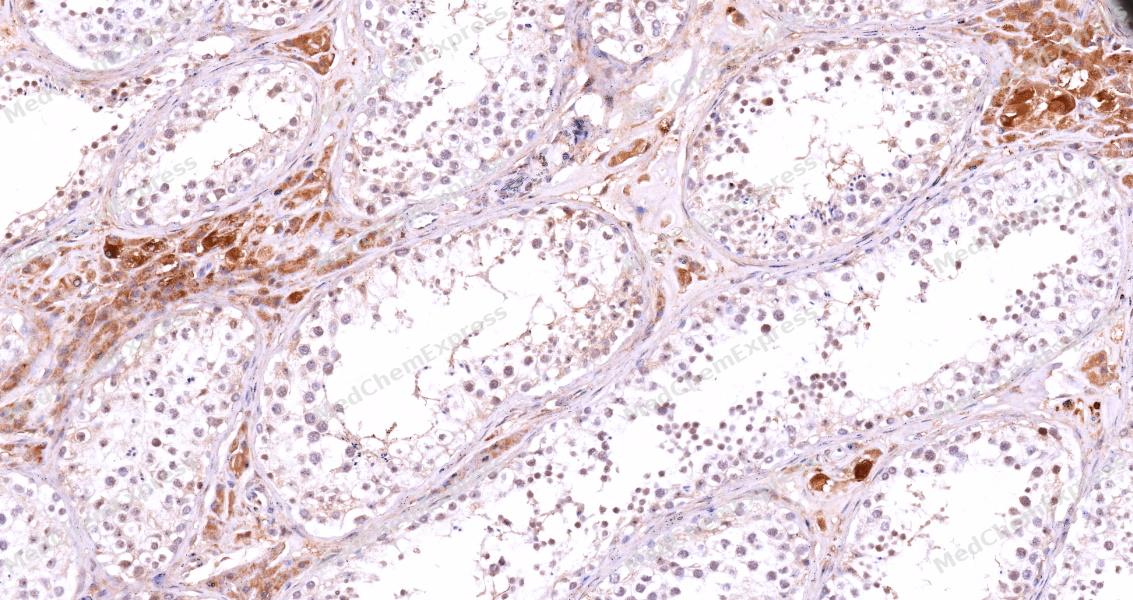 Immunohistochemical analysis of paraffin-embedded human testis tissue using SELENBP1 Antibody (HY-P88148, 1/500). The section was pretreated using heat mediated antigen retrieval with sodium citrate buffer (pH 6.0) for 8 minutes. The tissues were blocked with quick block buffer for 0.5 hours at room temperature, washed with PBS and PBST, and then incubated with the primary antibody overnight at 4℃. The detection was performed using an HRP conjugated compact polymer system. DAB was used as the chromogen. Tissues were counterstained with hematoxylin and mounted with DPX.
 -
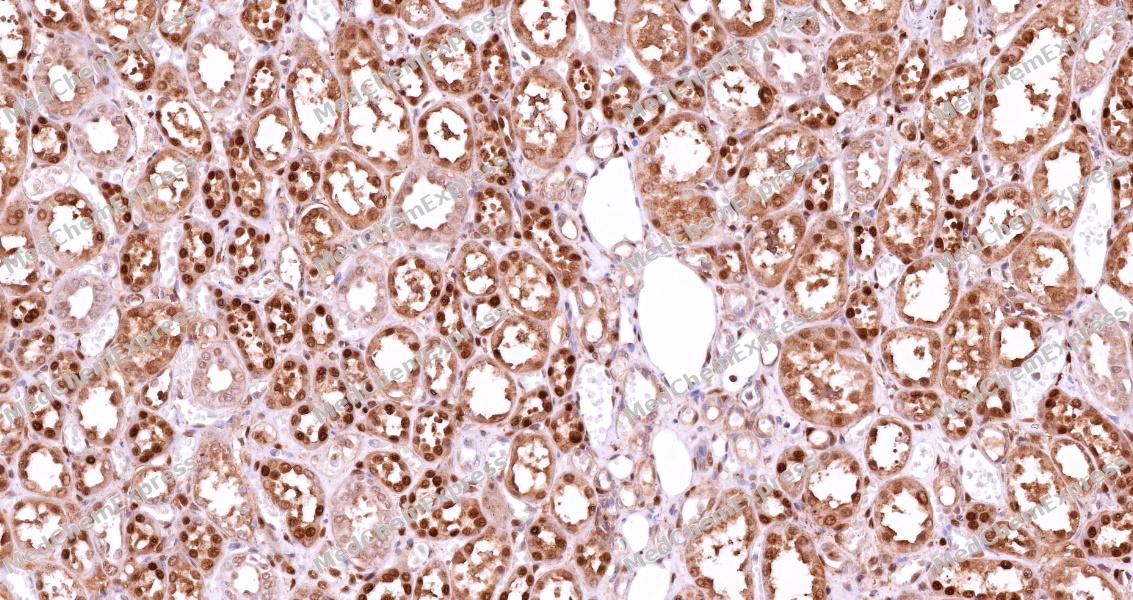 Immunohistochemical analysis of paraffin-embedded human kidney tissue using SELENBP1 Antibody (HY-P88148, 1/500). The section was pretreated using heat mediated antigen retrieval with sodium citrate buffer (pH 6.0) for 8 minutes. The tissues were blocked with quick block buffer for 0.5 hours at room temperature, washed with PBS and PBST, and then incubated with the primary antibody overnight at 4℃. The detection was performed using an HRP conjugated compact polymer system. DAB was used as the chromogen. Tissues were counterstained with hematoxylin and mounted with DPX.


Background
-
Function
SELENBP1 catalyzes the oxidation of methanethiol, an organosulfur compound known to be produced in substantial amounts by gut bacteria. Selenium-binding protein which may be involved in the sensing of reactive xenobiotics in the cytoplasm. May be involved in intra-Golgi protein transport[1].
-
Subcellular Localization
Nucleus,Cytoplasm, cytosol,Membrane
-
Expression
Tissue_Specificity: Widely expressed. Highly expressed in liver, lung, colon, prostate, kidney and pancreas. In brain, present both in neurons and glia (at protein level). Down-regulated in lung adenocarcinoma, colorectal carcinoma and ovarian cancer. Two-fold up-regulated in brain and blood from schizophrenia patients
Induction: Down-regulated by androgen in prostate cancer cells -
Isoforms & Post-Translational Modification
Q13228 has four isomers: Q13228-1: 52391 Da (predicted); Q13228-2: 45349 Da (predicted); Q13228-3: 45469 Da (predicted); Q13228-4: 56866 Da (predicted).
Phosphorylated丨The N-terminus is blocked -
Subunit
Interacts with USP33
-
SwissProt ID
-
Synonyms
HEL-S-134P; hSBP; LPSB; SBP56; SP56


Documentation

 Powered by Bioz
