



HPV-Positive Cervical Cancer
-
HPV-Positive Cervical Cancer (6)


- Molecular Weight: 7699.00
Agatolimod ((ODN 2006; PF-3512676; CpG 7909)) is a TLR9 agonist and immunomodulator with an EC50 of 180 nM against human TLR9. Agatolimod activates and upregulates the expression of both TLR9 and TLR6, and mediates downstream signaling pathways via IRAK4, IRF5, IRF7. Agatolimod induces Th1-type innate and adaptive immune responses, activates various immune cells and promotes antigen presentation, regulates antibody levels and immune cell infiltration, upregulates the secretion of multiple cytokines, induces apoptosis and cell cycle arrest, enhances cytotoxicity, and clears intracellular Salmonella. Agatolimod is applicable to research on COVID-19, breast cancer, lung adenocarcinoma, HPV-related tumors, melanoma, and salmonellosis.

- Formula: C27H38N2O9
- Molecular Weight: 534.60
Antimycin A2 is a selective inhibitor of the cytochrome b-c1 complex in the mitochondrial electron transport chain. Antimycin A2 disrupts mitochondrial membrane potential and produces reactive oxygen species (ROS) by inhibiting electron transfer between cytochrome b and c. Antimycin A2 has bactericidal and piscicidal activity, as well as tumor cell growth inhibitory effects, and can induce S-phase cell cycle arrest and apoptosis in HeLa cells. Antimycin A2 is suitable for research of cervical cancer and fisheries management. Antimycin A2 can be naturally isolated from the fermentation products of Streptomyces sp. strains.

- Formula: C16H19NO2
- Molecular Weight: 257.33
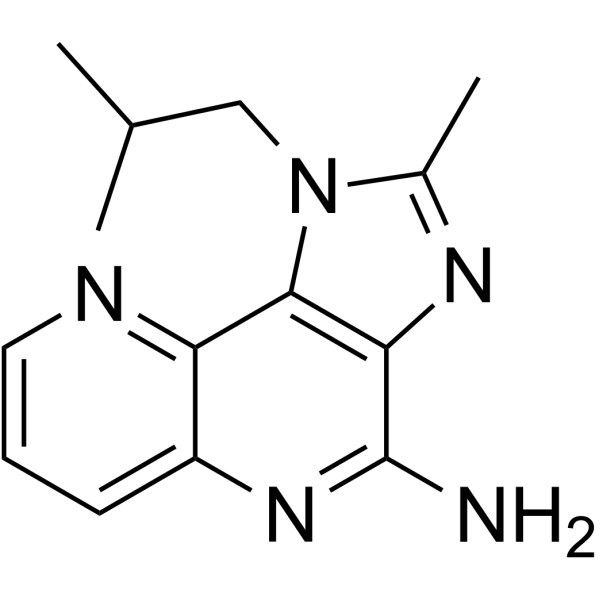
- Formula: C14H17N5
- Molecular Weight: 255.32
Sotirimod (R850) is a TLR7 agonist and immunomodulator. Sotirimod inhibits Apoptosis. Sotirimod is applicable to research related to actinic keratosis, early cervical HPV infection, and precancerous lesions of colorectal cancer.


- Formula: C36H48N2O9
- Molecular Weight: 652.77
Hydroxymycotrienin B is an ansamycin group antibiotic (triene-ansamycin) found in culture broths of Bacillus sp. BMJ958-62F4. Hydroxymycotrienin B inhibits HPV-positive cervical cancer cell growth 3~10 times more strongly than HPV-negative cervical cancer cells. Hydroxymycotrienin B can be used for the research of human cervical cancer.



