



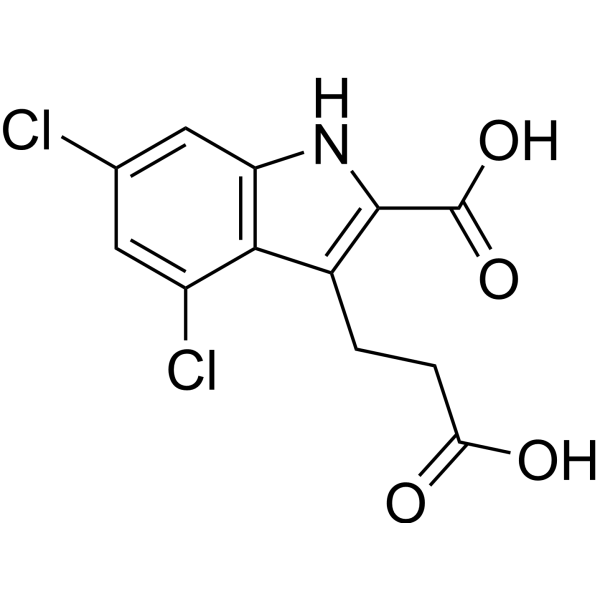
MDL-29951
Based on 5 publication(s) in Google Scholar
MDL-29951 is a novel glycine antagonist of NMDA receptor activation, with Ki of 0.14 μM for [3H]glycine binding in vitro and in vivo.
Nos produits utilisent uniquement pour la recherche. Nous ne vendons pas aux patients.
- Pureté : 99.17%
- CAS No.: 130798-51-5
- Formule: C12H9Cl2NO4
- Masse moléculaire:302.11
-
Stockage:Powder -20°C, 3 years , 4°C, 2 years ; In solvent -80°C, 2 years , -20°C, 1 year

To place orders, for customer services and technical support, please contact: MedChemExpress USA
Tel: 609-228-6898 E-mail: [email protected] [email protected]


-
 Activité biologique
-
Chemical Information
-
Solvant et solubilité
- Pureté et documentation
- Références
-
 Help & FAQs


-
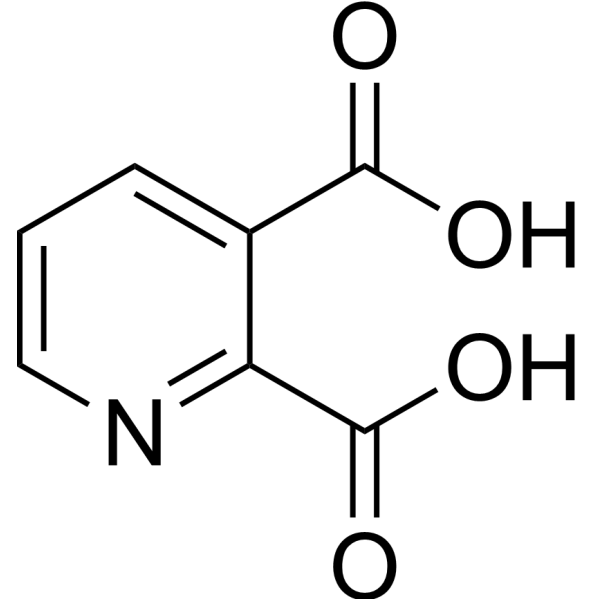
HY-100807
Quinolinic acidNMDA Receptor Agonist -
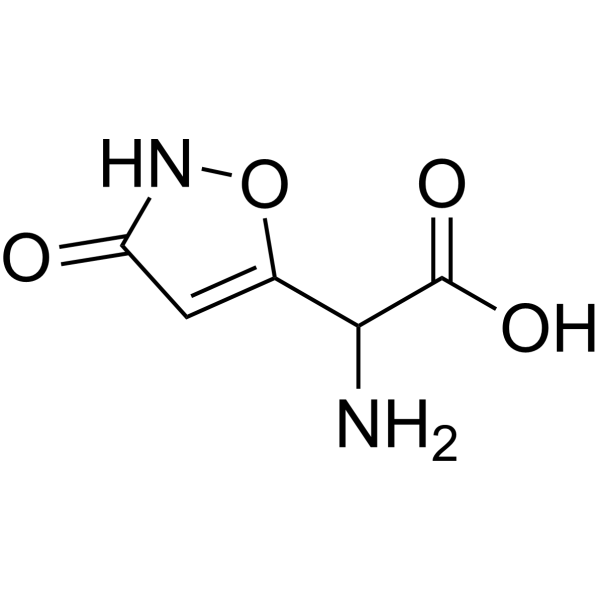
HY-N2311
Ibotenic acidiGluR Agonist -
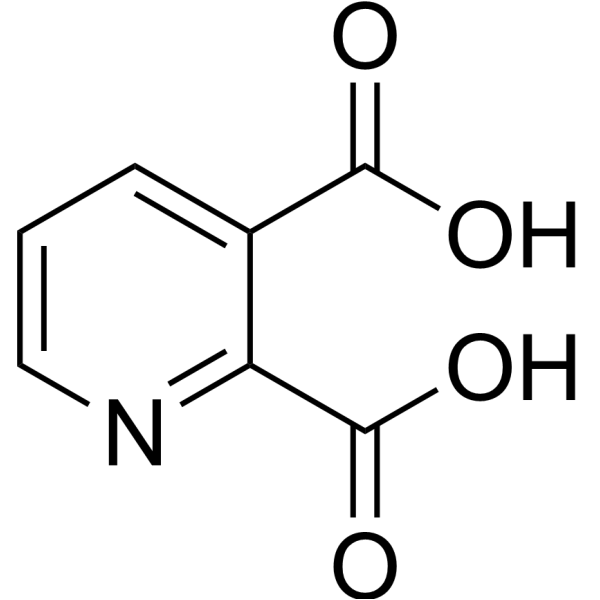
HY-100807R
Quinolinic acid (Standard)Standard of Quinolinic acid -
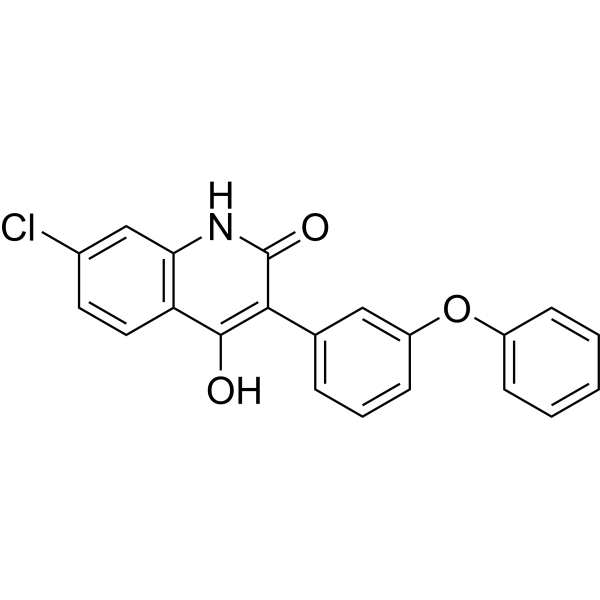
HY-18698
L-701324NMDA Receptor Antagonist -
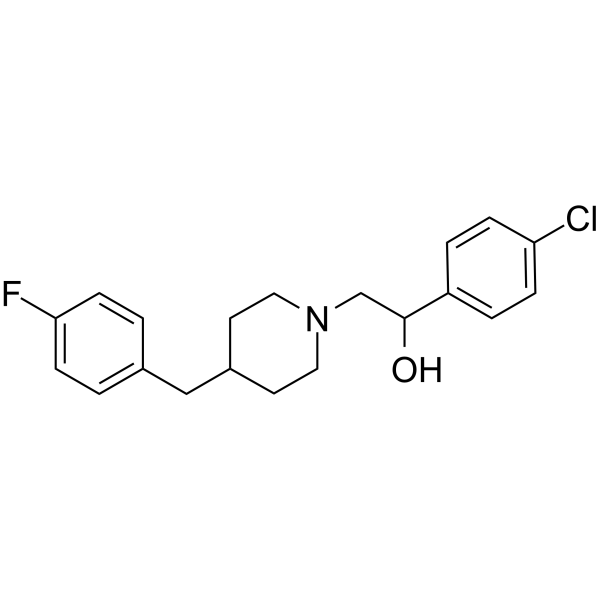
HY-12881
EliprodilNR2B-NMDA Inhibitor -
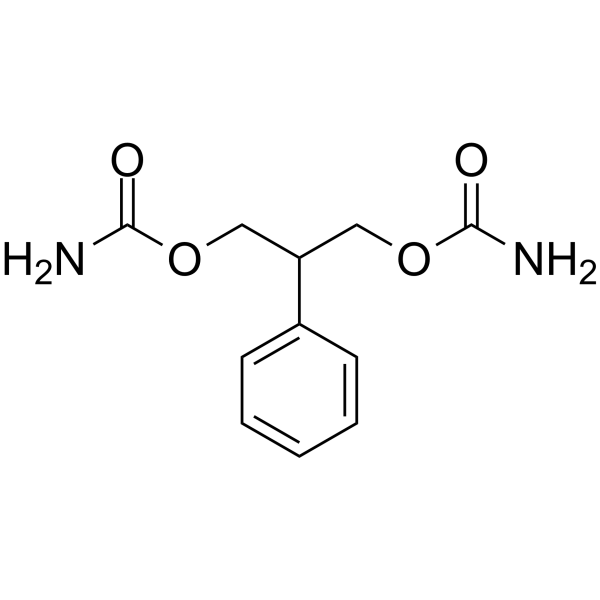
HY-B0184
FelbamateiGluR Inhibitor -
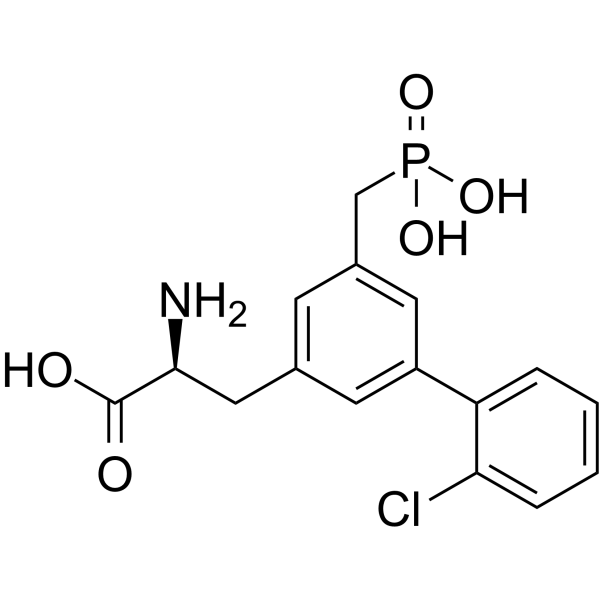
HY-13059
SDZ 220-581NMDA Receptor Antagonist -
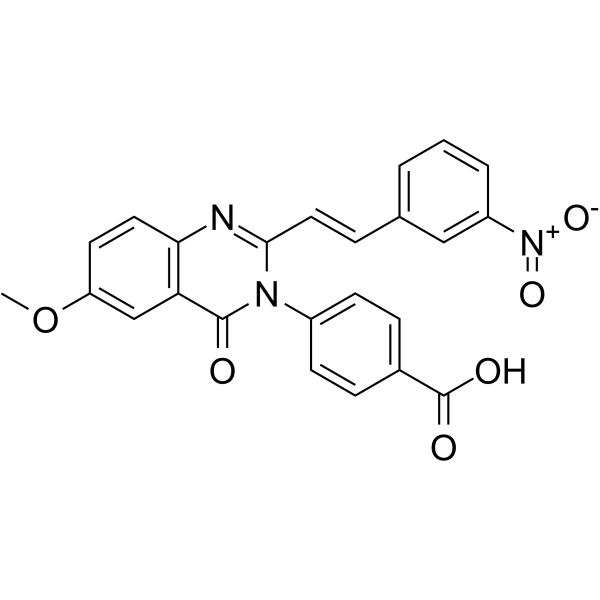
HY-15703
QNZ46NMDA Receptor Antagonist -
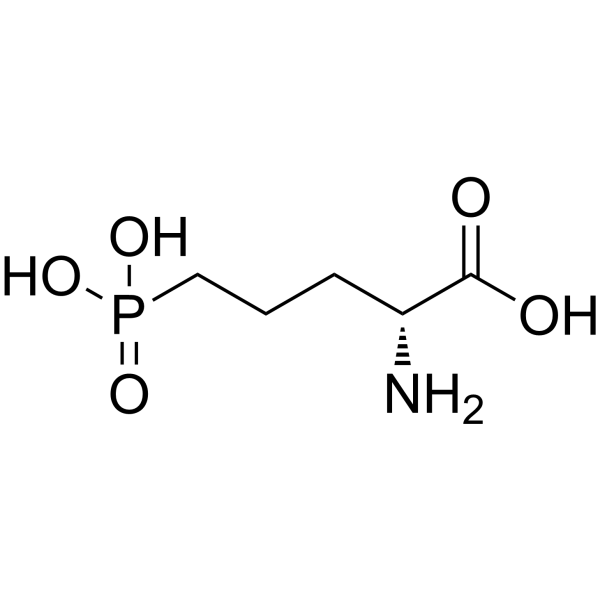
HY-100714A
D-AP5NMDA Antagonist -
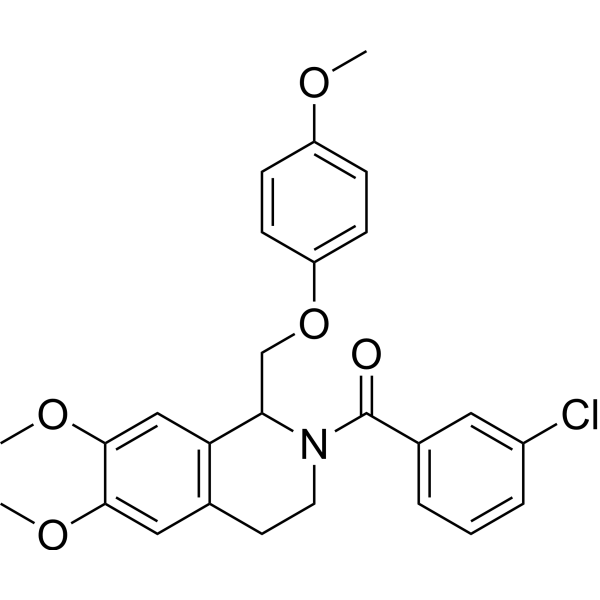
HY-18699
CIQiGluR Activator -

HY-N2311R
Ibotenic acid (Standard)iGluR Agonist -
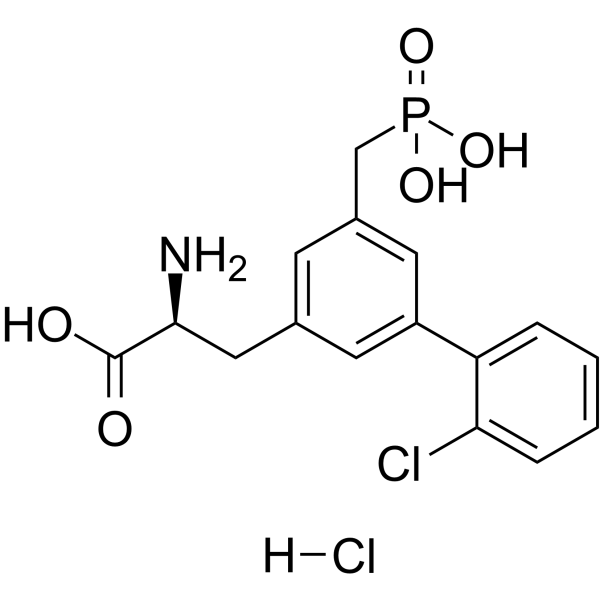
HY-13059B
SDZ 220-581 hydrochloride
Publications Citing Use of MedChemExpress (MCE) MDL-29951
MoreVoir tous les produits spécifiques à Isoform iGluR
More

Activité biologique
Description
IC50 & Target
|
NMDA Receptor |
In Vitro
MDL 100,748 and MDL 29,951 are approximately 2000-fold selective for the glycine binding site relative to the glutamate recognition sites[1]. MDL-29951 is found to inhibit the human F16Bpase under these conditions (IC50=2.5 μM). MDL-29951 inhibits the human liver (IC50=2.5 μM), porcine kidney (IC50=1.0 μM), and rabbit liver (IC50=0.21 μM) isoforms of the enzyme, but is significantly less potent against the rat liver isoform (IC50=11 μM)[2]. The MDL29951-activated receptor exhibits other activities associated with GPCR-mediated signaling, including G protein-dependent activation of extracellular signal-regulated kinase 1 and 2 (ERK1/2) and recruitment of β-arrestin. As with recombinant cell systems, MDL29951 promotes Ca2+ signaling responses and inhibition of cyclic adenosine monophosphate (cAMP) accumulation in rat oligodendrocyte precursor cells during the period of peak GPR17 abundance. Effects of MDL29951 are markedly reduced in cells with low GPR17 abundance and are blocked by pranlukast[3].
MedChemExpress (MCE) has not independently confirmed the accuracy of these methods. They are for reference only.


Chemical Information
-
CAS No. 130798-51-5
-
Appearance Solid
-
Masse moléculaire 302.11
-
Formule C12H9Cl2NO4
-
Color White to off-white
-
SMILES
O=C(O)CCC1=C(C(O)=O)NC2=C1C(Cl)=CC(Cl)=C2
-
Livraison
Room temperature in continental US; may vary elsewhere.
-
Stockage
Powder -20°C 3 years 4°C 2 years In solvent -80°C 2 years -20°C 1 year


Publications (5)
-
Journal Impact Factor
-
Most Recent
-
Cell Death Dis
G-protein-coupled receptor GPR17 inhibits glioma development by increasing polycomb repressive complex 1-mediated ROS production. [Abstract]2021 Jun 12;12(6):610. PMID: 34120140 -
J Neuroinflammation
Knockdown and inhibition of hippocampal GPR17 attenuates lipopolysaccharide-induced cognitive impairment in mice. [Abstract]2023 Nov 21;20(1):271. PMID: 37990234 -
J Neurosci
Olig2-Targeted G-Protein-Coupled Receptor Gpr17 Regulates Oligodendrocyte Survival in Response to Lysolecithin-Induced Demyelination. [Abstract]2016 Oct 12;36(41):10560-10573. PMID: 27733608 -
bioRxiv
2025 Nov 26:2025.11.26.690757. PMID: 41394703 -


Solvant et solubilité
In Vitro:
DMSO : ≥ 50 mg/mL (165.50 mM; Hygroscopic DMSO has a significant impact on the solubility of product, please use newly opened DMSO)
* "≥" means soluble, but saturation unknown.
Please refer to the solubility information to select the appropriate solvent. Once prepared, please aliquot and store the solution to prevent product inactivation from repeated freeze-thaw cycles.
Storage method and period of stock solution: -80°C, 2 years; -20°C, 1 year. When stored at -80°C, please use it within 2 years. When stored at -20°C, please use it within 1 year.
Please refer to the solubility information to select the appropriate solvent. Once prepared, please aliquot and store the solution to prevent product inactivation from repeated freeze-thaw cycles.
Storage method and period of stock solution: -80°C, 2 years; -20°C, 1 year. When stored at -80°C, please use it within 2 years. When stored at -20°C, please use it within 1 year.
Concentration (start) × Volume (start) = Concentration (final) × Volume (final)
In Vivo:
Select the appropriate dissolution method based on your experimental animal and administration route.
- For the following dissolution methods, please ensure to first prepare a clear stock solution using an In Vitro approach and then sequentially add co-solvents:
- To ensure reliable experimental results, the clarified stock solution can be appropriately stored based on storage conditions. As for the working solution for In Vivo experiments, it is recommended to prepare freshly and use it on the same day.
- The percentages shown for the solvents indicate their volumetric ratio in the final prepared solution. If precipitation or phase separation occurs during preparation, heat and/or sonication can be used to aid dissolution.
Add each solvent one by one: 10% DMSO 40% PEG300 5% Tween-80 45% Saline
Solubility: ≥ 2.5 mg/mL (8.28 mM); Clear solution
This protocol yields a clear solution of ≥ 2.5 mg/mL (saturation unknown).
Taking 1 mL working solution as an example, add 100 μL DMSO stock solution (25.0 mg/mL) to 400 μL PEG300, and mix evenly; then add 50 μL Tween-80 and mix evenly; then add 450 μL Saline to adjust the volume to 1 mL.
Preparation of Saline: Dissolve 0.9 g sodium chloride in ddH₂O and dilute to 100 mL to obtain a clear Saline solution.
Add each solvent one by one: 10% DMSO 90% (20% SBE-β-CD in Saline)
Solubility: ≥ 2.5 mg/mL (8.28 mM); Clear solution
This protocol yields a clear solution of ≥ 2.5 mg/mL (saturation unknown).
Taking 1 mL working solution as an example, add 100 μL DMSO stock solution (25.0 mg/mL) to 900 μL 20% SBE-β-CD in Saline, and mix evenly.
Preparation of 20% SBE-β-CD in Saline (4°C, storage for one week): 2 g SBE-β-CD powder is dissolved in 10 mL Saline, completely dissolve until clear.
In Vivo Dissolution Calculator
Please enter the basic information of animal experiments:
-
-
-
-
Recommended: Prepare an additional quantity of animals to account for potential losses during experiments.
Please enter your animal formula composition:
-
%DMSO +
Recommended: Keep the proportion of DMSO in working solution below 2% if your animal is weak.
-
%+
-
+%Tween-80 + +
-
%Saline +
The co-solvents required include: DMSO, . All of co-solvents are available by MedChemExpress (MCE). , Tween 80. All of co-solvents are available by MedChemExpress (MCE).
Working solution concentration: 0.22 mg/mL
Method for preparing stock solution: mg drug dissolved in μL DMSO. Stock solution concentration: mg/mL.
1. Take μL DMSO stock solution;
2. Add μL .
μL , mix evenly;
3. Then add μL Tween 80, mix evenly;
4. Then add μL
Please ensure that the stock solution in the first step is dissolved to a clear state, and add co-solvents in sequence. You can use ultrasonic heating (ultrasonic cleaner, recommended frequency 20-40 kHz), vortexing, etc. to assist dissolution.


Pureté et documentation
-
Fiche technique (280 KB)
-
SDS (393 KB)
- English - EN (393 KB)
- Français - FR (393 KB)
- Deutsch - DE (393 KB)
- Norwegian - NO (393 KB)
- Español - ES (393 KB)
- Swedish - SV (393 KB)
- Italian - IT (393 KB)
- Korean - KR (393 KB)
- Portuguese - PT (393 KB)
-
Instruction de manipulation (2659 KB)
Références
[1]. Baron BM, et al. Potent indole- and quinoline-containing N-methyl-D-aspartate antagonists acting at the strychnine-insensitive glycine binding site. J Pharmacol Exp Ther. 1992 Sep;262(3):947-56. [Content Brief]
[2]. Wright SW, et al. 3-(2-carboxyethyl)-4,6-dichloro-1H-indole-2-carboxylic acid: an allosteric inhibitor of fructose-1,6-bisphosphatase at the AMP site. Bioorg Med Chem Lett. 2003 Jun 16;13(12):2055-8. [Content Brief]
[3]. Harden TK. Enigmatic GPCR finds a stimulating drug. Sci Signal. 2013 Oct 22;6(298):pe34. [Content Brief]


Complete Stock Solution Preparation Table
Please refer to the solubility information to select the appropriate solvent. Once prepared, please aliquot and store the solution to prevent product inactivation from repeated freeze-thaw cycles.
Storage method and period of stock solution: -80°C, 2 years; -20°C, 1 year. When stored at -80°C, please use it within 2 years. When stored at -20°C, please use it within 1 year.
| Optional Solvent | Concentration Solvent Mass | 1 mg | 5 mg | 10 mg | 25 mg |
|---|---|---|---|---|---|
| DMSO | 1 mM | 3.3101 mL | 16.5503 mL | 33.1005 mL | 82.7513 mL |
| 5 mM | 0.6620 mL | 3.3101 mL | 6.6201 mL | 16.5503 mL | |
| 10 mM | 0.3310 mL | 1.6550 mL | 3.3101 mL | 8.2751 mL | |
| 15 mM | 0.2207 mL | 1.1034 mL | 2.2067 mL | 5.5168 mL | |
| 20 mM | 0.1655 mL | 0.8275 mL | 1.6550 mL | 4.1376 mL | |
| 25 mM | 0.1324 mL | 0.6620 mL | 1.3240 mL | 3.3101 mL | |
| 30 mM | 0.1103 mL | 0.5517 mL | 1.1034 mL | 2.7584 mL | |
| 40 mM | 0.0828 mL | 0.4138 mL | 0.8275 mL | 2.0688 mL | |
| 50 mM | 0.0662 mL | 0.3310 mL | 0.6620 mL | 1.6550 mL | |
| 60 mM | 0.0552 mL | 0.2758 mL | 0.5517 mL | 1.3792 mL | |
| 80 mM | 0.0414 mL | 0.2069 mL | 0.4138 mL | 1.0344 mL | |
| 100 mM | 0.0331 mL | 0.1655 mL | 0.3310 mL | 0.8275 mL |


MDL-29951 Related Classifications
HY-16312 Related Classifications
 Powered by Bioz