



IL-33 Protein, Human
Based on 4 publication(s) in Google Scholar
IL-33 Protein, Human, a Th2 cytokine, is a specific ligand for ST2L.
- Species: Human
- Source: E. coli
-
Storage:Stored at -20°C for 2 years from date of receipt. After reconstitution, it is stable at 4°C for 1 week or -20°C for longer (with carrier protein). It is recommended to freeze aliquots at -20°C or -80°C for extended storage.


To place orders, for customer services and technical support, please contact: MedChemExpress USA
Tel: 609-228-6898 E-mail: [email protected] [email protected]


-
 Biological Activity
-
Technical Parameters
-
Product Properties
- Documentation
- References
- Help & FAQs


-

HY-P70445
IL-4 Protein, Human -
HY-P7218
IL-33 Protein, Mouse -
HY-18739
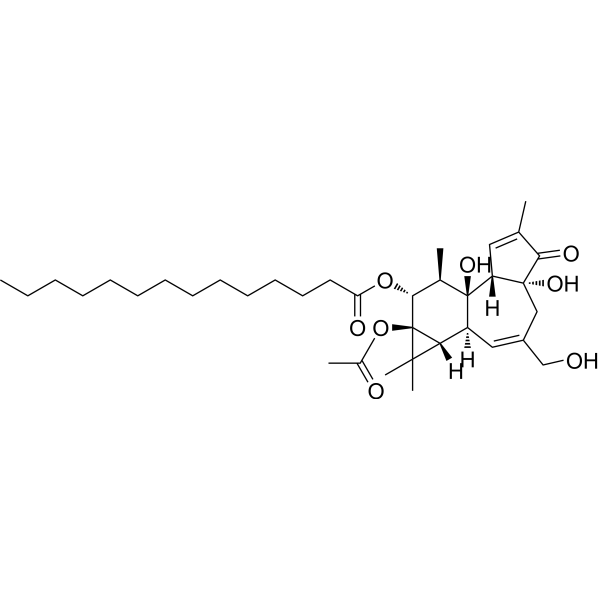
Phorbol 12-myristate 13-acetatePKC Activator -
HY-P72795
IL-13 Protein, Human -
HY-P7044
IL-6 Protein, Human -
HY-15141
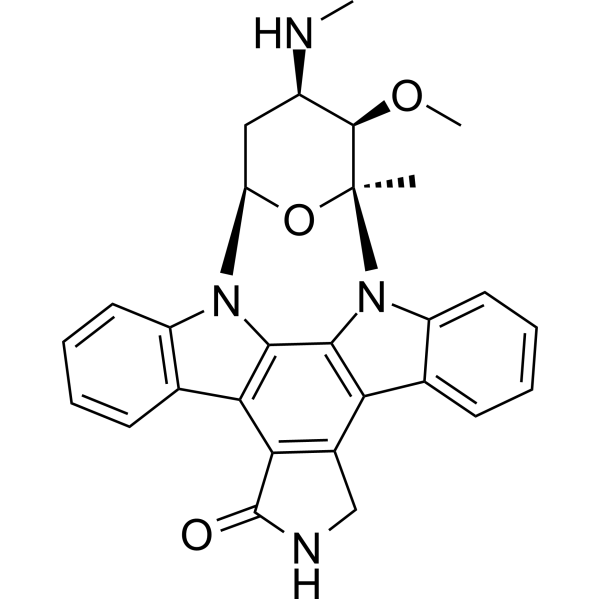
StaurosporinePKC/PKA Inhibitor -
HY-P7058
TNF-alpha/TNFSF2 Protein, Human -
HY-P7025
IFN-gamma Protein, Human -
HY-P7036
IL-17A Protein, Human -
HY-P72555
IL-25/IL-17E Protein, Human (HEK293, His) -
HY-P7071
IFN-gamma Protein, Mouse -
HY-P7028
IL-1 beta Protein, Human


Biological Activity
Description
IL-33 Protein, Human, a Th2 cytokine, is a specific ligand for ST2L.
Background
Human IL-33 is a proinflammatory protein that shares structural and functional characteristics with the IL-1 cytokine family. It binds and signals through the IL-1RL1/ST2 receptor activating NF-kappaB and MAP kinases. IL-33 induces production of Th2 cell related cytokines including IL-4, IL-5 and IL-13, and exerts multiple inflammation related bioactivities. The IL-33-ST2 signaling cascade plays some roles in the pathophysiology of chronic allergic conjunctivitis through the activation of mast cells[1].
Verified Bioactivity
1.The ED50 is <0.5 ng/mL as measured by D10S cells, corresponding to a specific activity of >2.0 × 10⁶ units/mg.
2.Measured by its binding ability in a functional ELISA. Immobilized Human IL-1RL1, Fc Tag at 5 μg/mL (100 μL/well) can bind Biotinylated Human IL-33. The ED50 for this effect is 5-30 ng/mL.
MCE Validation Data
-
Purity - SDS-PAGE
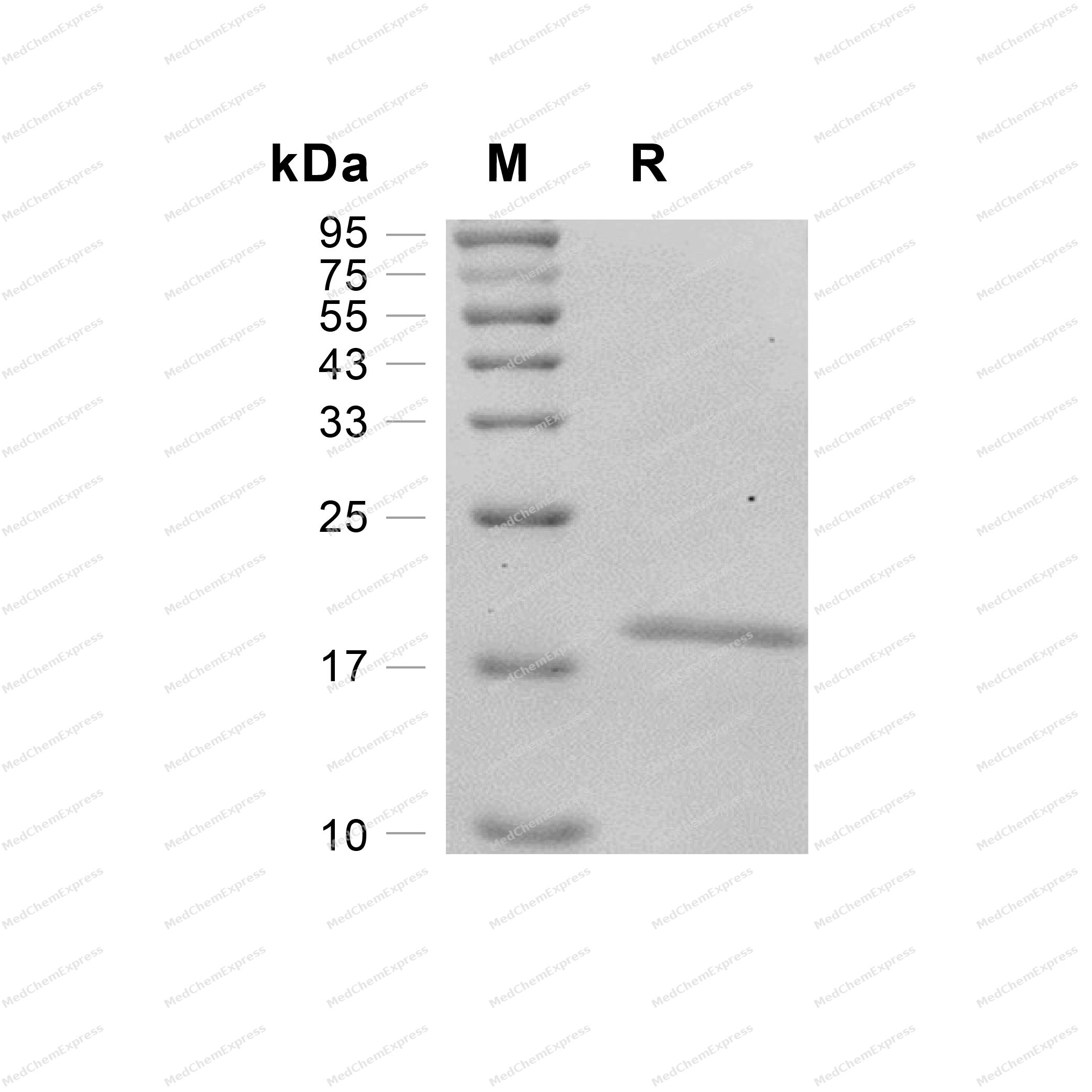
Purity - SDS-PAGE
-
Bioactivity - ELISA
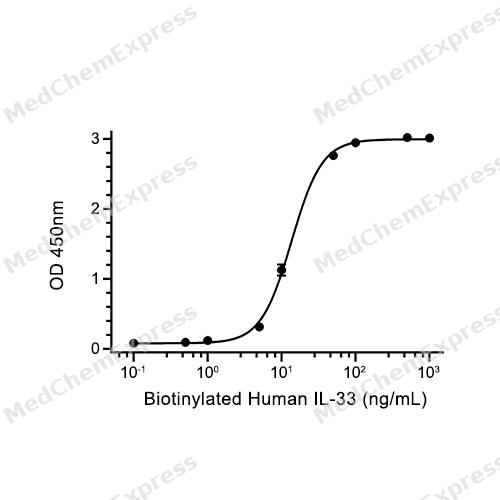
Bioactivity - ELISA


Publications (4)
-
Journal Impact Factor
-
Most Recent
-
Cells
Upregulated Hexokinase-2 in Airway Epithelium Regulates Apoptosis and Drives Inflammation in Asthma via Peptidylprolyl Isomerase F. [Abstract]2025 Jul 1;14(13):1004. PMID: 40643524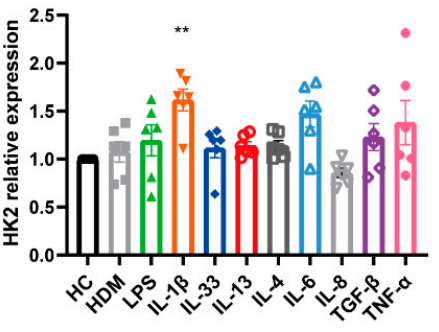
IL-33 Protein, Human purchased from MedChemExpress. Usage Cited in: Cells. 2025 Jul 1;14(13):1004. [Abstract]
HK2 mRNA levels were measured after 48 h of stimulation with HDM, IL-1β, IL-33 (IL-33 Protein, Human, 20 μg/mL), IL-6, IL-8, LPS, TGF-β, or TNF-α (n = 6 per group). The results showed that IL-33 did not significantly alter HK2 expression.
-
Int Immunopharmacol
Interleukin-33 induces angiogenesis after myocardial infarction via AKT/eNOS signaling pathway. [Abstract]2024 Oct 31;143(Pt 3):113433. PMID: 39486188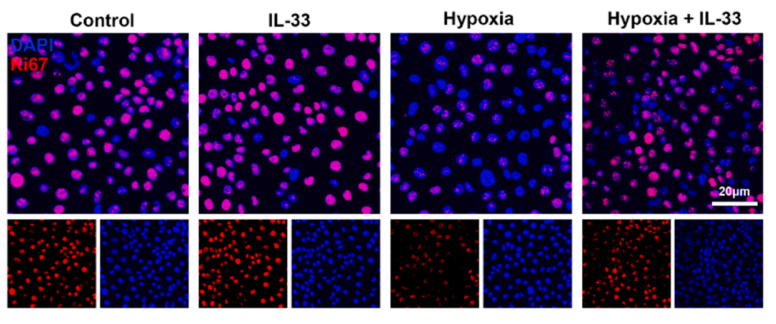
IL-33 Protein, Human purchased from MedChemExpress. Usage Cited in: Int Immunopharmacol. 2024 Oct 31;143(Pt 3):113433. [Abstract]
Representative fluorescence images of Ki67 staining (red) of HUVECs, nuclei were counterstained with DAPI (blue), scale bar = 20 μm. The results showed that ECs subjected to hypoxic conditions exhibited decreased Ki67 staining intensity, and the decreased proliferation was reversed after IL-33 (IL-33 Protein, Human, 20 ng/mL; 4 h) supplementation, indicating an increase in cell proliferation.
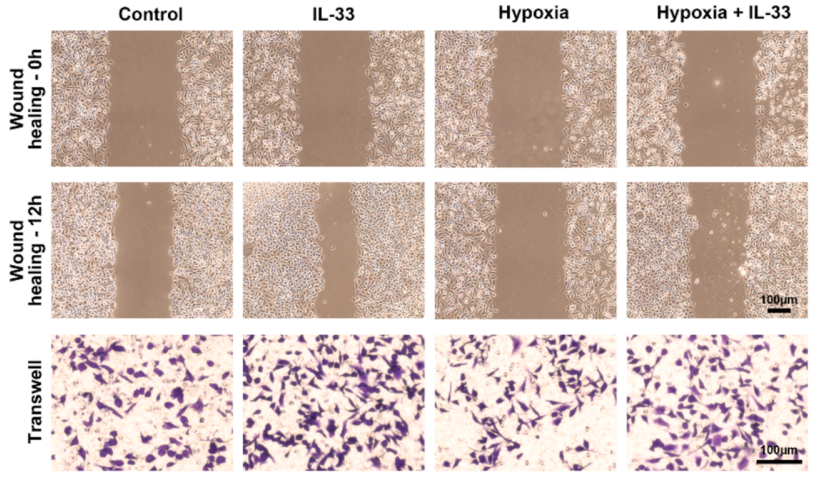
IL-33 Protein, Human purchased from MedChemExpress. Usage Cited in: Int Immunopharmacol. 2024 Oct 31;143(Pt 3):113433. [Abstract]
Representative images of endothelial function including migration (wound healing and transwell) assays in endothelial cells with different treatment, scale bar = 100 μm. The results showed that following treatment of hypoxic endothelial cells with IL-33 (IL-33 Protein, Human, 20 ng/mL; 4 h), endothelial migration also improved significantly.
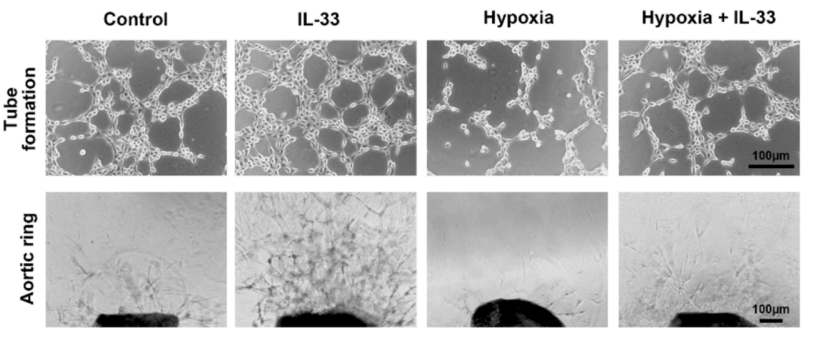
IL-33 Protein, Human purchased from MedChemExpress. Usage Cited in: Int Immunopharmacol. 2024 Oct 31;143(Pt 3):113433. [Abstract]
Representative images of endothelial function including tube formation (Matrigel) and aortic ring assays in endothelial cells with different treatment, scale bar = 100 μm. The results showed that IL-33 (IL-33 Protein, Human, 20 ng/mL; 4 h) treatment led to a significant enhancement of tube formation and vessel sprouting in mouse aortic rings, surpassing the effects observed under hypoxic conditions alone.
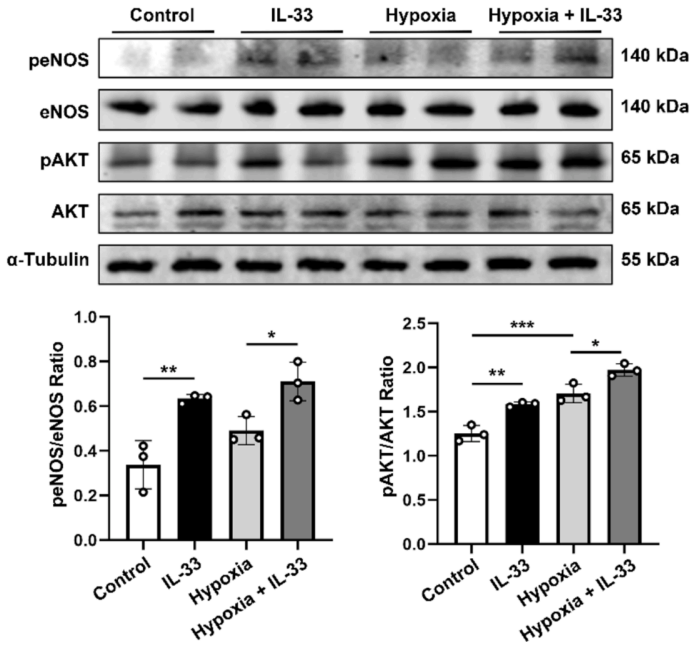
IL-33 Protein, Human purchased from MedChemExpress. Usage Cited in: Int Immunopharmacol. 2024 Oct 31;143(Pt 3):113433. [Abstract]
IL-33 (IL-33 Protein, Human, 20 ng/mL; 4 h) treatment upregulated the phosphorylation levels of Akt and eNOS compared with that of the hypoxic group in HUVECs.
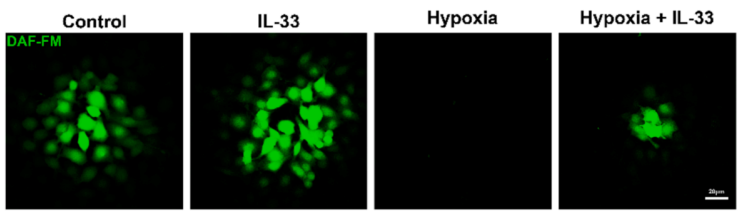
IL-33 Protein, Human purchased from MedChemExpress. Usage Cited in: Int Immunopharmacol. 2024 Oct 31;143(Pt 3):113433. [Abstract]
Representative fluorescence images of HUVECs stained with NO fluorescent probe (DAF-FM DA) under different conditions, scale bar = 20 μm. The results showed that IL-33 (IL-33 Protein, Human, 20 ng/mL; 4 h) stimulated NO production in ECs under hypoxic conditions, implying that NO plays a role in mediating IL-33-induced angiogenesis.
-
Andrology
Expression of IL-33 in rodent testes and its role in Leydig cell steroidogenesis and aging. [Abstract]2025 Jun 16. PMID: 40521800 -


Technical Parameters
-
Species Human
-
Source E. coli
-
Tag Tag Free
-
Accession
O95760-1 (S112-T270)
-
Molecular Construction
-
N-term
-
IL-33 (S112-T270)
Accession # O95760-1 -
C-term
-
-
Protein Length
Full Length of Interleukin-33 (109-270) Chain
-
Synonyms
IL33; DVS27-Related Protein; Prev. C9orf26; Chromosome 9 Open Reading Frame 26 (NF-HEV); NF-HEV; Interleukin-1 Family, Member 11; IL1F11; Alternative Protein IL33; Interleukin-33; IL-1F11; DVS27; NFEHEV; Nuclear Factor From High Endothelial Venules; IL-33
-
AA Sequence
SITGISPITEYLASLSTYNDQSITFALEDESYEIYVEDLKKDEKKDKVLLSYYESQHPSNESGDGVDGKMLMVTLSPTKDFWLHANNKEHSVELHKCEKPLPDQAFFVLHNMHSNCVSFECKTDPGVFIGVKDNHLALIKVDSSENLCTENILFKLSET
-
Predicted Molecular Mass
18.1 kDa
-
Molecular Weight
Approximately 18-19 kDa, based on SDS-PAGE under reducing conditions, due to the glycosylation.
-
Purity
≥ 95%, as determined by reducing SDS-PAGE.


Product Properties
Lyophilized powder
1.Lyophilized from a 0.22 μm filtered solution of 20 mM PB, 150 mM NaCl, pH 7.4.
2.Lyophilized from a 0.22 μm filtered solution of PBS.
3.Lyophilized from a 0.22 μm filtered solution of 50 mM Tris-HCl, 300 mM NaCl, pH 7.4.
4.Lyophilized from a 0.22 μm filtered solution of PBS, pH 7.4, 8% trehalose.
Please refer to the lot-specific COA for specific buffer information.
Note: For SPR assay, please replace the buffer. Primary amine components (e.g., Tris, imidazole) can affect protein-coupled chips.
<1 EU/μg, determined by LAL method.
It is not recommended to reconstitute to a concentration less than 100 μg/mL in ddH2O. For long term storage it is recommended to add a carrier protein (0.1% BSA, 5% HSA, 10% FBS or 5% Trehalose).
Stored at -20°C for 2 years from date of receipt. After reconstitution, it is stable at 4°C for 1 week or -20°C for longer (with carrier protein). It is recommended to freeze aliquots at -20°C or -80°C for extended storage.
Room temperature in continental US; may vary elsewhere.


Documentation
-
Data Sheet (262 KB)
-
SDS (252 KB)
- English - EN (252 KB)
- Français - FR (252 KB)
- Deutsch - DE (252 KB)
- Norwegian - NO (252 KB)
- Español - ES (252 KB)
- Swedish - SV (252 KB)
- Italian - IT (252 KB)
- Korean - KR (252 KB)
- Portuguese - PT (252 KB)
-
Handling Instructions (2659 KB)


References

Calculators
Concentration (start) × Volume (start) = Concentration (final) × Volume (final)


 Powered by Bioz

