



IL1RAPL1 Protein, Mouse (HEK293, Fc)

Based on 1 Customer Validation
IL1RAPL1 protein inhibits N-type calcium channels, regulates secretion, and activates JNK signaling. It promotes neurite growth and bidirectionally induces presynaptic and postsynaptic differentiation by binding to PTPRD during dendritic spine formation. IL1RAPL1 Protein, Mouse (HEK293, Fc) is the recombinant mouse-derived IL1RAPL1 protein, expressed by HEK293 , with C-hFc labeled tag.
- Species: Mouse
- Source: HEK293
-
Storage:Stored at -20°C for 2 years from date of receipt. After reconstitution, it is stable at 4°C for 1 week or -20°C for longer (with carrier protein). It is recommended to freeze aliquots at -20°C or -80°C for extended storage.


To place orders, for customer services and technical support, please contact: MedChemExpress USA
Tel: 609-228-6898 E-mail: [email protected] [email protected]


-
 Biological Activity
-
Technical Parameters
-
Product Properties
- Documentation
- Help & FAQs




Biological Activity
Description
IL1RAPL1 protein inhibits N-type calcium channels, regulates secretion, and activates JNK signaling. It promotes neurite growth and bidirectionally induces presynaptic and postsynaptic differentiation by binding to PTPRD during dendritic spine formation. IL1RAPL1 Protein, Mouse (HEK293, Fc) is the recombinant mouse-derived IL1RAPL1 protein, expressed by HEK293 , with C-hFc labeled tag.
Background
The IL1RAPL1 protein appears to exert regulatory control over secretion and presynaptic differentiation by inhibiting the activity of N-type voltage-gated calcium channels. Additionally, it may activate the MAP kinase JNK, suggesting a potential role in intracellular signaling pathways. Furthermore, IL1RAPL1 is implicated in neurite outgrowth, indicating its involvement in the extension of neuronal processes. Notably, during dendritic spine formation, IL1RAPL1 can bidirectionally induce both pre- and post-synaptic differentiation of neurons through trans-synaptic binding to PTPRD. This multifaceted functionality underscores IL1RAPL1's significance in modulating various aspects of neuronal development and synaptic differentiation, with potential implications for neural circuit formation and function. Further investigation into the specific mechanisms and downstream effects of IL1RAPL1 in these processes could provide valuable insights into its role in neurodevelopment.
Verified Bioactivity
Measured by its binding ability in a functional ELISA. When Recombinant Human PTPRD is immobilized at 1 µg/mL (100 µL/well) can bind Recombinant Mouse IL1RAPL1. The ED50 for this effect is 20.36 ng/mL.
MCE Validation Data
-
Purity - SDS-PAGE
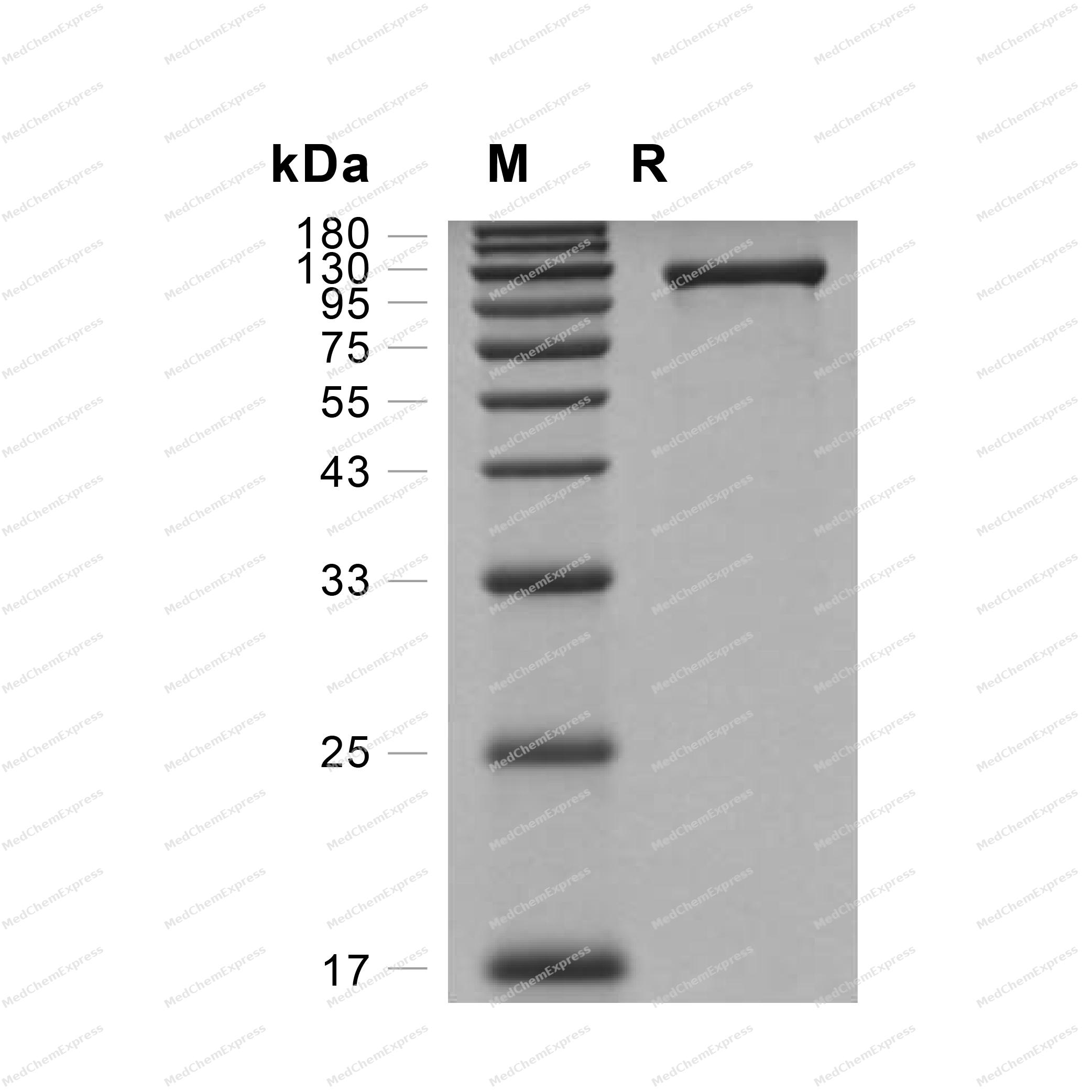
Purity - SDS-PAGE
-
Bioactivity - ELISA
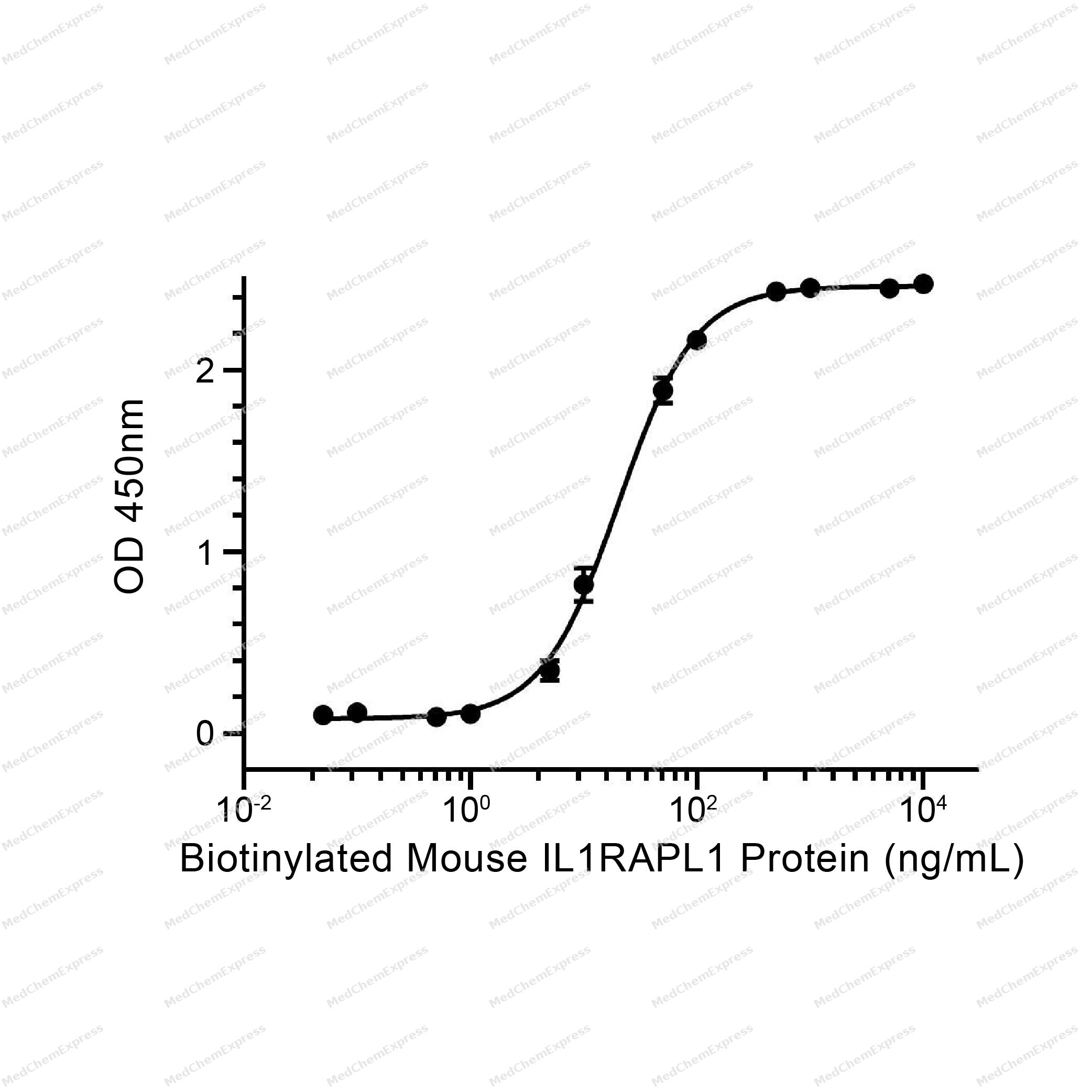
Bioactivity - ELISA


Technical Parameters
-
Species Mouse
-
Source HEK293
-
Tag C-hFc
-
Accession
P59823 (R25-T357)
-
Molecular Construction
-
N-term
-
IL1RAPL1 (R25-T357)
Accession # P59823 -
hFc
-
C-term
-
-
Protein Length
Extracellular Domain
-
Synonyms
IL1RAPL1; Interleukin-1 Receptor Accessory Protein-Like 1; Prev. IL1RAPL; Oligophrenin-4; Prev. MRX10; IL-1-RAPL-1; Prev. MRX21; IL-1RAPL-1; Prev. MRX34; Interleukin 1 Receptor Accessory Protein-Like 1; IL1RAPL-1; Mental Retardation, X-Linked 34; TIGIRR-2
-
AA Sequence
RGSADGCTDWSVDIKKYQVLVGEPVRIKCALFYGYIRTNYSLAQSAGLSLMWYKSSGPGDFEEPIAFDGSRMSKEEDSIWFRPTLLQDSGLYACVIRNSTYCMKVSISLTVGENDTGLCYNSKMKYFEKAELSKSKEISCRDIEDFLLPTREPEILWYKECRTKAWRPSIVFKRDTLLIKEVKEDDIGNYTCELKYGGFVVRRTTELTVTAPLTDKPPKLLYPMESKLTVQETQLGGSANLTCRAFFGYSGDVSPLIYWMKGEKFIEDLDENRVWESDIRILKEHLGEQEVSISLIVDSVEEGDLGNYSCYVENGNGRRHASVLLHKRELMYT
-
Predicted Molecular Mass
65 kDa
-
Molecular Weight
Approximately 85-95 kDa, based on SDS-PAGE under reducing conditions, due to the glycosylation.
-
Purity
≥ 95%, as determined by reducing SDS-PAGE.


Product Properties
Lyophilized powder.
Lyophilized from a 0.22 μm filtered solution of PBS, pH 7.4.
<1 EU/μg, determined by LAL method.
It is not recommended to reconstitute to a concentration less than 100 μg/mL in ddH2O. For long term storage it is recommended to add a carrier protein (0.1% BSA, 5% HSA, 10% FBS or 5% Trehalose).
Stored at -20°C for 2 years from date of receipt. After reconstitution, it is stable at 4°C for 1 week or -20°C for longer (with carrier protein). It is recommended to freeze aliquots at -20°C or -80°C for extended storage.
Room temperature in continental US; may vary elsewhere.


Documentation
-
Data Sheet (238 KB)
-
SDS (254 KB)
- English - EN (254 KB)
- Français - FR (254 KB)
- Deutsch - DE (254 KB)
- Norwegian - NO (254 KB)
- Español - ES (254 KB)
- Swedish - SV (254 KB)
- Italian - IT (254 KB)
- Korean - KR (254 KB)
- Portuguese - PT (254 KB)
-
Handling Instructions (2659 KB)

Calculators
Concentration (start) × Volume (start) = Concentration (final) × Volume (final)


 Powered by Bioz

