



Leptin Protein, Human
Based on 3 publication(s) in Google Scholar
Leptin is a cytokine-like sugar secretory protein secreted by adipocytes that helps regulate energy balance by inhibiting food intake and increasing thermogenesis. Leptin can activate the JAK2-STAT3 and PI3K-AKT/mTOR pathways to regulate energy metabolism, prolong the QT interval via MAPK in the myocardium, and play a protective role in the gastric mucosa by inducing NO/CGRP release via the vagus nerve. Circulating CRP protein binds to leptin and blocks signal transduction, leading to obesity resistance. Leptin Protein, Human is a recombinant human Leptin protein expressed by E. coli without a tag.
- Species: Human
- Source: E. coli
-
Storage:Stored at -20°C for 2 years from date of receipt. After reconstitution, it is stable at 4°C for 1 week or -20°C for longer (with carrier protein). It is recommended to freeze aliquots at -20°C or -80°C for extended storage.


To place orders, for customer services and technical support, please contact: MedChemExpress USA
Tel: 609-228-6898 E-mail: [email protected] [email protected]


-
 Biological Activity
-
Technical Parameters
-
Product Properties
- Documentation
- References
- Help & FAQs


-

HY-P70704
Leptin Protein, Mouse -
HY-10219
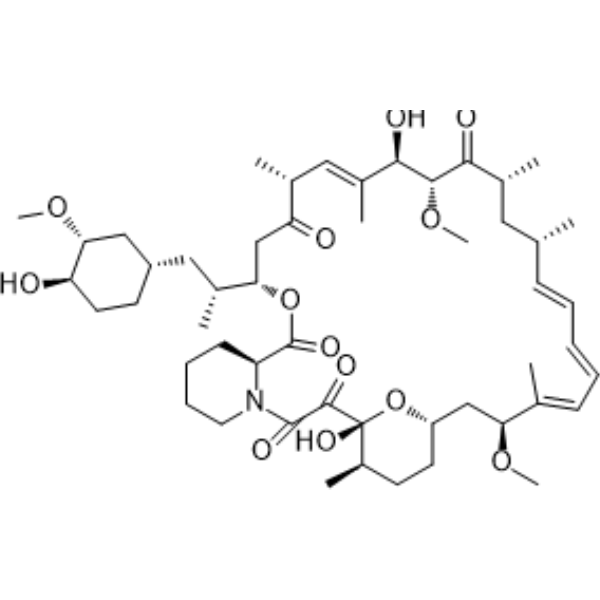
RapamycinmTOR Inhibitor -
HY-15371
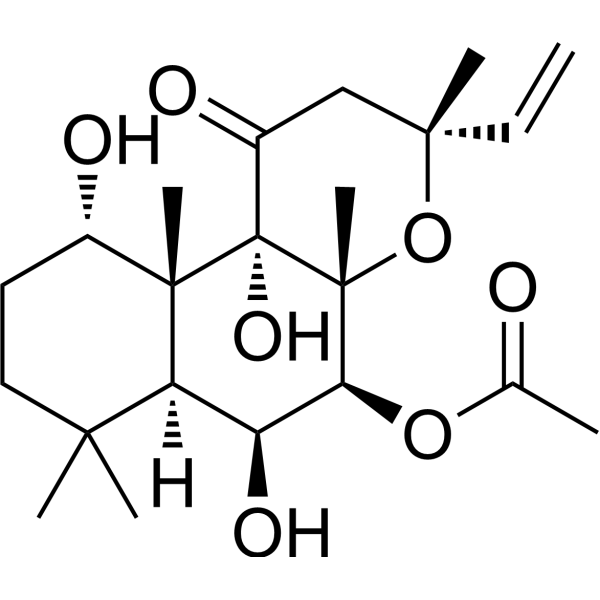
ForskolinAdenylate Cyclase Activator -
HY-13715
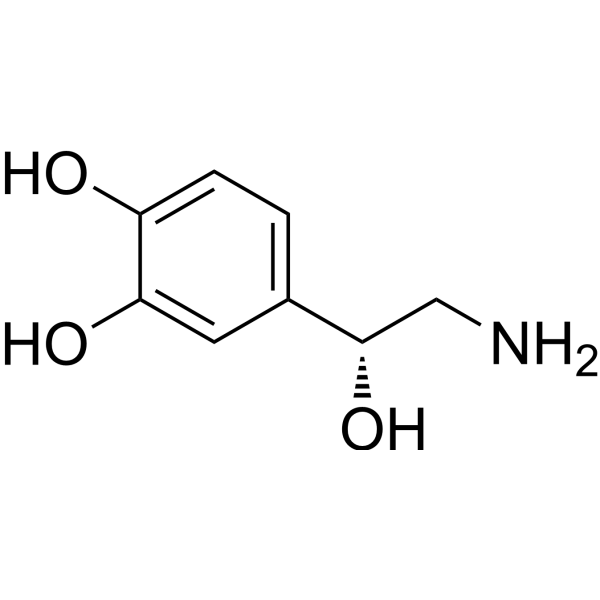
NorepinephrineAdrenergic Receptor Agonist -
HY-17571
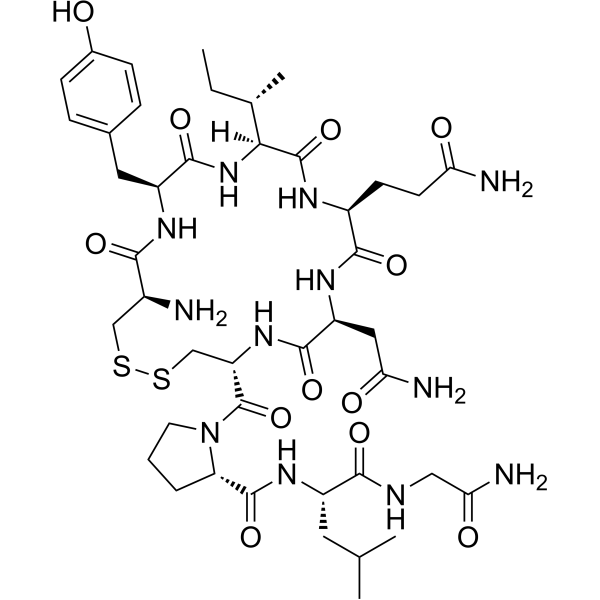
OxytocinHypothalamic Peptide -
HY-P7025
IFN-gamma Protein, Human -
HY-N0067
γ-Aminobutyric acidNeurotransmitter -
HY-P7044
IL-6 Protein, Human -
HY-P70504
Adiponectin/Acrp30 Protein, Human (HEK293, His) -
HY-N0583
HydrocortisoneGlucocorticoid Receptor Agonist -
HY-10071
Y-27632ROCK Inhibitor -

HY-P0082
Glucagon (1-29), bovine, humanPeptide Hormone


Biological Activity
Description
Leptin is a cytokine-like sugar secretory protein secreted by adipocytes that helps regulate energy balance by inhibiting food intake and increasing thermogenesis. Leptin can activate the JAK2-STAT3 and PI3K-AKT/mTOR pathways to regulate energy metabolism, prolong the QT interval via MAPK in the myocardium, and play a protective role in the gastric mucosa by inducing NO/CGRP release via the vagus nerve. Circulating CRP protein binds to leptin and blocks signal transduction, leading to obesity resistance. Leptin Protein, Human is a recombinant human Leptin protein expressed by E. coli without a tag.
Background
Leptin is a hormone secreted by adipocytes that helps regulate energy balance by inhibiting food intake and increasing thermogenesis. It belongs to the cytokine-like protein family. Leptin has a conserved four-helix bundle conformation, with a tertiary structure stabilized by disulfide bonds. It lacks a classical signal peptide but is secreted via a non-classical pathway. The C-terminal domain of leptin mediates receptor binding, while the N-terminal region promotes oligomerization. Leptin binds to the long receptor OB-Rb in hypothalamic neurons and peripheral tissues, activating the JAK2-STAT3 and PI3K-AKT/mTOR pathways, inhibiting food intake and enhancing energy expenditure. In cardiomyocytes, leptin mediates MAPK activation through OB-Rb, reducing heart rate and prolonging the QT interval, an effect that is independent of β-adrenergic signaling[1][2][3][4].
In the gastric mucosa, leptin stimulates sensory neurons to release NO and CGRP via the vagus nerve, enhancing blood flow and protecting tissues from ischemia-reperfusion injury. Circulating C-reactive protein (CRP) binds to leptin, blocks receptor interaction and attenuates STAT3 phosphorylation, leading to leptin resistance in obesity[3][4]. Upstream regulators of leptin include leptin secreted by adipocytes and CRP synthesized by the liver; downstream targets include STAT3, PI3K, eNOS and mTOR, which play a role in regulating metabolism, neurogenesis and vascular function[1][4].
In metabolic diseases, leptin resistance is associated with hyperleptinemia and inhibition of CRP-mediated signaling, and leptin supplementation may inhibit congenital lipodystrophy and type 2 diabetes[4]. At the same time, Leptin's direct effect on cardiac repolarization (QT interval prolongation) and its interaction with CRP may be involved in obesity-related arrhythmias and atherosclerosis[2]. Leptin also enhances gastric mucosal blood flow and protects against ischemic damage through vagus-sensory nerve-mediated NO/CGRP release, and can be used in the study of peptic ulcer disease[3].
Verified Bioactivity
1.The ED50 as determined by a chemotaxis bioassay using human Leptin R transfected BaF3 murine proB cells is less than 2.0 ng/mL, corresponding to a specific activity of > 5.0 × 10⁵ IU/mg.
2.Immobilized Mouse LEPR (C-10His) at 10 μg/mL (100 μL/well) can bind Leptin, Human. The ED50 is 17.15 ng/mL.
3.Measured in a cell proliferation assay using BaF3 mouse pro-B cells transfected with human Leptin R. The ED50 for this effect is ≤1.948 ng/mL, corresponding to a specific activity is ≥5.133×10⁵ units/mg.
4. Immobilized Recombinant Mouse LEPR (C-10His) at 2 μg/mL(100 μl/well) can bind Recombinant Human Leptin: Biotinylated by NHS-biotin prior to testing. The ED50 of Recombinant Human Leptin is 3.85 ng/mL.
MCE Validation Data
-
Purity - SDS-PAGE
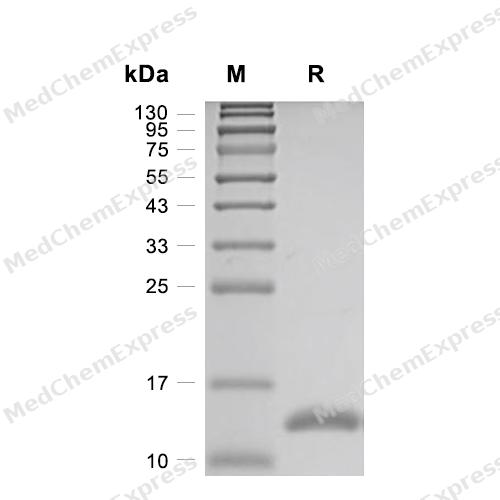
Purity - SDS-PAGE
-
Bioactivity - Cell-Based Assay
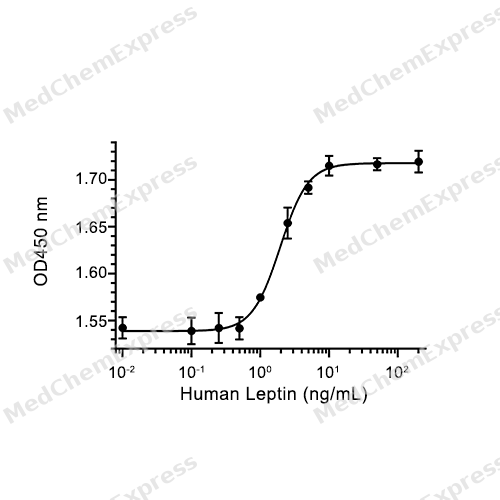
Bioactivity - Cell-Based Assay


Publications (3)
-
Journal Impact Factor
-
Most Recent
-
Adv Sci (Weinh)
Loss of OVOL2 in Triple-Negative Breast Cancer Promotes Fatty Acid Oxidation Fueling Stemness Characteristics. [Abstract]2024 Jun;11(24):e2308945. PMID: 38627980 -
Stem Cell Res Ther
Modulation of senescent Lepr+ skeletal stem cells via suppression of leptin-induced STAT3‒FGF7 axis activation alleviates abnormal subchondral bone remodeling and osteoarthritis progression. [Abstract]2025 May 5;16(1):227. PMID: 40325465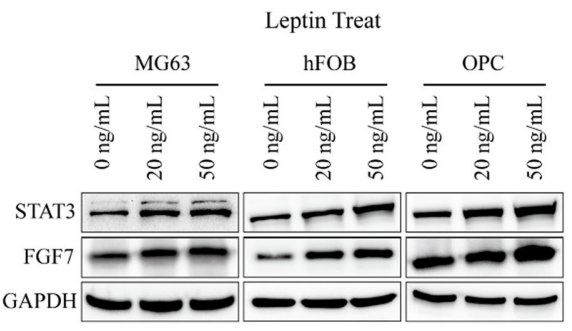
Leptin Protein, Human purchased from MedChemExpress. Usage Cited in: Stem Cell Res Ther. 2025 May 5;16(1):227. [Abstract]
Western blot analysis of the levels of STAT3 and FGF7 in MG63, hFOB, and OPC cells following leptin (Leptin Protein, Human, HY-P7232) (20-50 ng/mL) treatment. The results showed that Leptin Protein promoted the upregulation of STAT3 and FGF7 expression in a dose-dependent manner across a range of cell lines.
-
Sci Rep
Leptin-induced autophagy regulates the immunomodulatory potential of adipose-derived mesenchymal stem cells through down regulating the expression of TSG-6. [Abstract]2026 Jun 15. PMID: 42298025


Technical Parameters
-
Species Human
-
Source E. coli
-
Tag Tag Free
-
Accession
P41159 (V22-C167)
-
Molecular Construction
-
N-term
-
Leptin (V22-C167)
Accession # P41159 -
C-term
-
-
Protein Length
Full Length of Mature Protein
-
Synonyms
LEP; Leptin (Murine Obesity Homolog); Prev. OBS; Obese Protein; Prev. OB; Obese, Mouse, Homolog Of; Obesity Factor; LEPD; Leptin; Leptin (Obesity Homolog, Mouse)
-
AA Sequence
VPIQKVQDDTKTLIKTIVTRINDISHTQSVSSKQKVTGLDFIPGLHPILTLSKMDQTLAVYQQILTSMPSRNVIQISNDLENLRDLLHVLAFSKSCHLPWASGLETLDSLGGVLEASGYSTEVVALSRLQGSLQDMLWQLDLSPGC
-
Molecular Weight
Approximately 14 kDa, based on SDS-PAGE under reducing conditions.
-
Purity
≥ 95%, as determined by reducing SDS-PAGE.


Product Properties
Lyophilized powder
1. Lyophilized from a 0.22 μm filtered solution of PBS, pH 7.4, 8% trehalose.
2. Lyophilized from a 0.22 μm filtered solution of 20 mM Tris-HCl, 50 mM NaCl, 10% Trehalose, 0.02% Tween 80, pH 8.5.
Note: If this product is used in SPR assay, please note that the protein buffer should not contain primary amino components (such as Tris and Imidazole), and the buffer needs to be replaced.
<1 EU/μg, determined by LAL method.
It is not recommended to reconstitute to a concentration less than 100 μg/mL in ddH2O. For long term storage it is recommended to add a carrier protein (0.1% BSA, 5% HSA, 10% FBS or 5% Trehalose).
Stored at -20°C for 2 years from date of receipt. After reconstitution, it is stable at 4°C for 1 week or -20°C for longer (with carrier protein). It is recommended to freeze aliquots at -20°C or -80°C for extended storage.
Room temperature in continental US; may vary elsewhere.


Documentation
-
Data Sheet (264 KB)
-
SDS (252 KB)
- English - EN (252 KB)
- Français - FR (252 KB)
- Deutsch - DE (252 KB)
- Norwegian - NO (252 KB)
- Español - ES (252 KB)
- Swedish - SV (252 KB)
- Italian - IT (252 KB)
- Korean - KR (252 KB)
- Portuguese - PT (252 KB)
-
Handling Instructions (2659 KB)


References
[1]. Chen K, et al. Induction of leptin resistance through direct interaction of C-reactive protein with leptin. Nat Med. 2006 Apr;12(4):425-32. [Content Brief]
[2]. Tsuchiya T, et al. Expression of leptin receptor in lung: leptin as a growth factor. Eur J Pharmacol. 1999 Jan 22;365(2-3):273-9. [Content Brief]
[3]. Lin YC, et al. Leptin decreases heart rate associated with increased ventricular repolarization via its receptor. Am J Physiol Heart Circ Physiol. 2015 Nov 15;309(10):H1731-9. [Content Brief]
[4]. Brzozowski T, et al. Brain-gut axis in gastroprotection by leptin and cholecystokinin against ischemia-reperfusion induced gastric lesions. J Physiol Pharmacol. 2001 Dec;52(4 Pt 1):583-602. [Content Brief]

Calculators
Concentration (start) × Volume (start) = Concentration (final) × Volume (final)


 Powered by Bioz

