



TNF-alpha/TNFSF2 Protein, Rat
Based on 10 publication(s) in Google Scholar
Tumour Necrosis Factor alpha (TNF alpha) is a potent pro-inflammatory cytokine. TNF alpha binds to its receptors, mainly TNFR1 and TNFR2, and then transmits molecular signals for biological functions such as inflammation and cell death. TNF alpha stimulates NF-κB pathway via TNFR2 promotes cancer growth, invasion, and metastasis. Anti-TNF-α MAb significantly suppresses the tumor development in colitis-associated cancer (CAC) mouse. TNF alpha as a proneurogenic factor activates the SAPK/JNK Pathway and can facilitate neuronal replacement and brain repair in response to brain injury .
- Species: Rat
- Source: E. coli
-
Storage:Stored at -20°C for 2 years from date of receipt. After reconstitution, it is stable at 4°C for 1 week or -20°C for longer (with carrier protein). It is recommended to freeze aliquots at -20°C or -80°C for extended storage.


To place orders, for customer services and technical support, please contact: MedChemExpress USA
Tel: 609-228-6898 E-mail: [email protected] [email protected]


-
 Biological Activity
-
Technical Parameters
-
Product Properties
- Documentation
- References
- Help & FAQs


-

HY-P7097
IL-1 beta Protein, Rat -
HY-P7117
TGF beta 1/TGFB1 Protein, Mouse/Rat (HEK293, Tag Free) -
HY-P7095
IFN-gamma Protein, Rat -
HY-P7058
TNF-alpha/TNFSF2 Protein, Human -
HY-15371
Forskolin -
HY-13259
MG-132 -
HY-P7103A
IL-6 Protein, Rat (HEK293) -
HY-P7094
GM-CSF Protein, Rat (CHO) -
HY-P7417
TNF-alpha/TNFSF2 Protein, Mouse (His) -
HY-P70800
TNF-alpha/TNFSF2 protein, Rabbit -
HY-P7095A
IFN-gamma Protein, Rat (CHO) -
HY-P7096
IL-1 alpha Protein, Rat (CHO)


Biological Activity
Description
Tumour Necrosis Factor alpha (TNF alpha) is a potent pro-inflammatory cytokine[1]. TNF alpha binds to its receptors, mainly TNFR1 and TNFR2, and then transmits molecular signals for biological functions such as inflammation and cell death[2]. TNF alpha stimulates NF-κB pathway via TNFR2 promotes cancer growth, invasion, and metastasis. Anti-TNF-α MAb significantly suppresses the tumor development in colitis-associated cancer (CAC) mouse[3]. TNF alpha as a proneurogenic factor activates the SAPK/JNK Pathway and can facilitate neuronal replacement and brain repair in response to brain injury[4] .
Background
TNF alpha is produced by various types of cells including macrophages, monocytes, neutrophils, T cells, and NK-cells[2].
The amino acid sequence of human TNF alpha protein has low homology between mouse, rat, bovine, cynomolgus TNF alpha protein. While, human TNF alpha shares 94.85% aa sequence identity with cynomolgus TNF alpha protein, mouse TNF alpha shares 94.47% aa sequence identity with rat TNF alpha protein.
TNF alpha exists in two forms; a type II transmembrane protein (tmTNF-α) and a mature soluble protein (sTNF-α). TNF-α binds to its receptors, mainly TNFR1 and TNFR2, and then transmits molecular signals for biological functions such as inflammation and cell death. Both sTNF-α and tmTNF-α activate TNFR1, and process a death domain (DD) that interacts with the TNFR1-associated death domain (TRADD) adaptor protein. The TNFR2 signaling pathway is mainly activated by tmTNF-α. TNFR1 signaling tends to be pro-inflammatory and apoptotic. TNFR2 results in NF-κB and MAPKs and AKT activation, TNFR2 activation is associated with homeostatic bioactivities such as tissue regeneration, cell proliferation, and cell survival, as well as host defense and inflammation[1].
TNF-alpha is critical for normal immune response, abnormal secretion TNF alpha activates synovial fibroblasts, keratinocytes, osteoclasts, induces rheumatoid arthritis, inflammatory bowel disease, psoriatic arthritis (PsA), and noninfectious uveitis (NIU)[3]. TNF alpha positively regulates endogenous TNF-α expression levels independently of Pgp efflux activity, induces IHF cells proliferation[4]. TNF alpha in tissues may promote cancer growth, invasion, and metastasis. Besides, TNF alpha stimulates NF-κB pathway via TNFR2 and anti-TNF-α MAb significantly suppresses the tumor development in colitis-associated cancer (CAC) mouse[5]. TNF alpha as a proneurogenic factor activates the SAPK/JNK pathway and can facilitate neuronal replacement and brain repair in response to brain injury[6].
Verified Bioactivity
Measured in a cytotoxicity assay using L-929 mouse fibroblast cells in the presence of the metabolic inhibitor actinomycin D (HY-17559). The ED50 for this effect is 2-10 pg/mL.
MCE Validation Data
-
Purity - SDS-PAGE

Purity - SDS-PAGE
-
Bioactivity - Cell-Based Assay
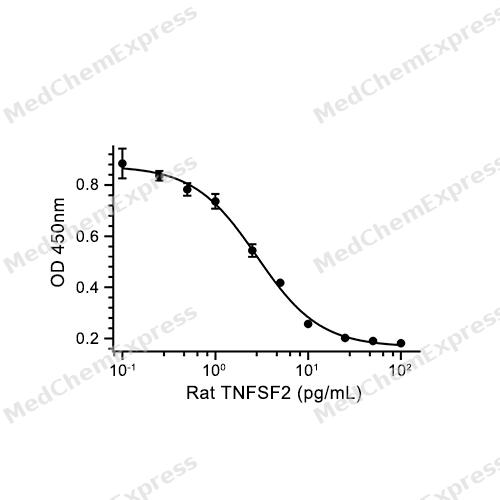
Bioactivity - Cell-Based Assay


Publications (10)
-
Journal Impact Factor
-
Most Recent
-
Sci Adv
Neuronal Reg3β/macrophage TNF-α-mediated positive feedback signaling contributes to pain chronicity in a rat model of CRPS-I. [Abstract]2025 Aug;11(31):eadu4270. PMID: 40749060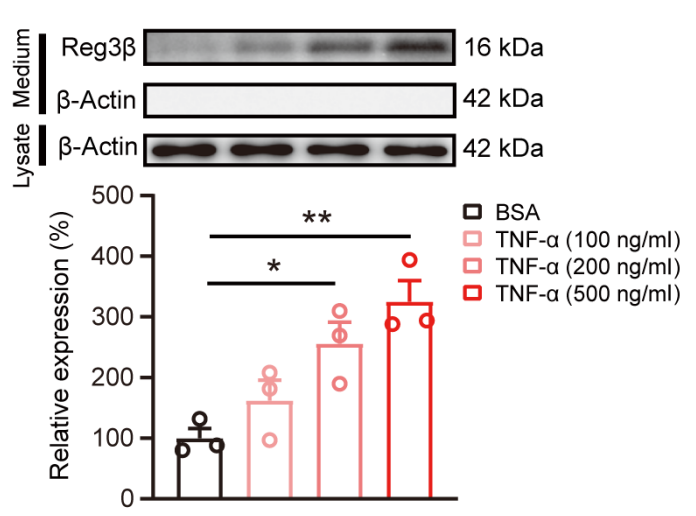
TNF-alpha/TNFSF2 Protein, Rat purchased from MedChemExpress. Usage Cited in: Sci Adv. 2025 Aug;11(31):eadu4270. [Abstract]
Reg3β secretion in culture medium under TNF-α treatment. Top: Bands of Reg3β and β-actin in culture medium and β-actin in DRG cell lysates. β-Actin in culture medium was examined as negative control. Bottom: Quantification of Reg3β secretion by TNF-α (100、200 or 500 ng/mL; 6 h; HY-P70697) and Veh (0.1% BSA) in culture medium. n = 3 cultures per group. (C) Reg3β expression in DRG cell lysates. n = 4 cultures per group. The results showed that TNF-α treatment could dose-dependently promote Reg3β secretion to culture medium.
-
Nat Cardiovasc Res
The drug-elicitable alternative splicing module for tunable vector expression in the heart. [Abstract]2025 Jul;4(7):938-955. PMID: 40514436 -
Phytomedicine
Pithecellobium clypearia Benth and malic acid protect against colitis by enhancing intestinal epithelial fucosylation and barrier function. [Abstract]2025 Dec:149:157531. PMID: 41240543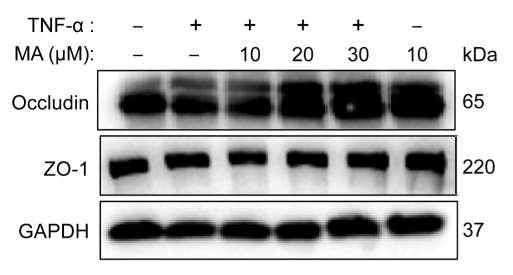
TNF-alpha/TNFSF2 Protein, Rat purchased from MedChemExpress. Usage Cited in: Phytomedicine. 2025 Dec:149:157531. [Abstract]
Western blot analysis of tight junction proteins ZO-1 and Occludin in Caco-2 cells treated with TNF-α (50 ng/mL; 24 h) with or without MA pretreatment.
TNF-alpha/TNFSF2 Protein, Rat purchased from MedChemExpress. Usage Cited in: Phytomedicine. 2025 Dec:149:157531. [Abstract]
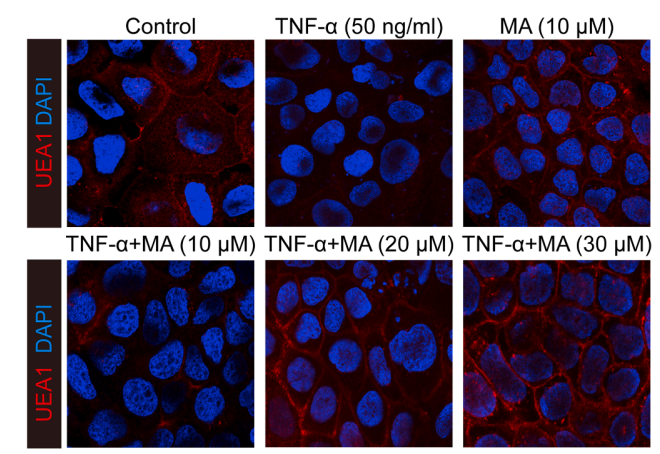
Immunofluorescence staining of UEA-1 lectin in Caco-2 cells under the indicated conditions. The results showed that TNF-α (50 ng/mL; 24 h) markedly decreased epithelial fucosylation, whereas malic acid treatment restored UEA1 binding in a dose-dependent manner.
-
Neurotherapeutics
Phenotype Shifting in Astrocytes Account for Benefits of Intra-Arterial Selective Cooling Infusion in Hypertensive Rats of Ischemic Stroke. [Abstract]2022 Jan;19(1):386-398. PMID: 35044645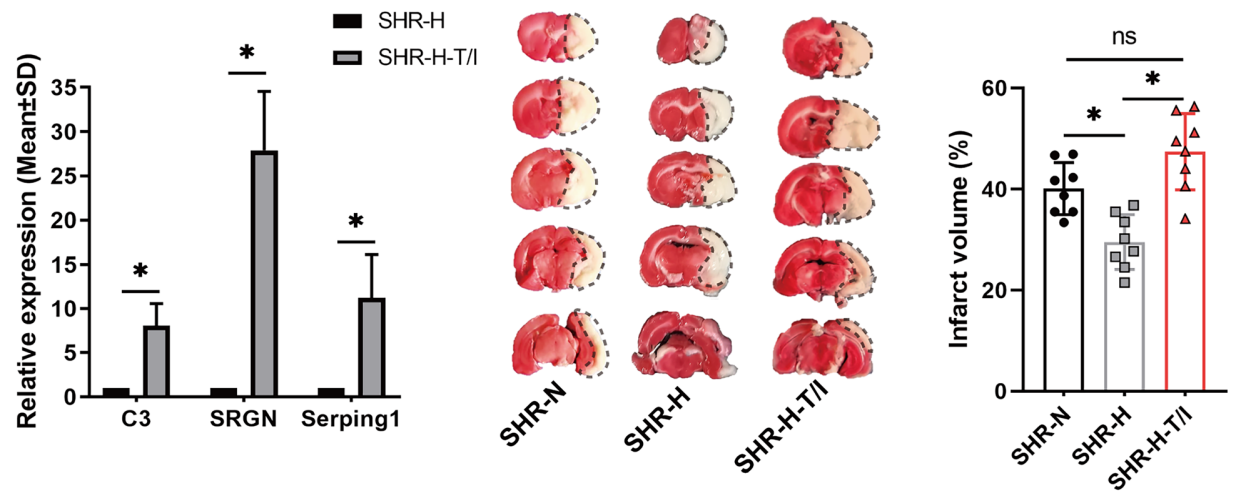
TNF-alpha/TNFSF2 Protein, Rat purchased from MedChemExpress. Usage Cited in: Neurotherapeutics. 2022 Jan;19(1):386-398. [Abstract]
Gene expression of A1-like astrocytes after intracerebroventricular injection of TNFα/IL-1α (n = 4/group; 3 time points). Triphenyltetrazolium chloride staining and quantification of the relative ratio of the infarcted tissue volume to the volume of the contralateral hemisphere (n = 8 per group). The results showed that TNFα (10 μg in 0.9% NaCl; i.c.v., 1 μL per injection over 5 min; HY-P7096) significantly upregulated the expression of A1-like genes in SHR rats.
-
-
ACS Biomater Sci Eng
Electrospun Nanofiber Membrane with Sustained Release of Mogroside V Enhances Alveolar Bone Defect Repair in Diabetic Rats. [Abstract]2025 Mar 10;11(3):1660-1674. PMID: 39953973 -
J Med Virol
2024 Oct;96(10):e29945. PMID: 39370874 -
J Biomater Sci Polym Ed
Neutrophil membrane-coated multifunctional biomimetic nanoparticles for spinal cord injuries. [Abstract]2024 Sep 19:1-25. PMID: 39298153 -
Biochim Biophys Acta Gen Subj
SLAMF9 aggravates myocardial ischemia reperfusion injury through activating the hippo-yap pathway. [Abstract]2025 Jul;1869(8):130821. PMID: 40383314 -
Exp Lung Res
Hypobaric hypoxia promotes the production of IL-10 of lung NKT cells in HAPE rats to fight inflammation. [Abstract]2025 Jun 2;51(1):38-49. PMID: 40489386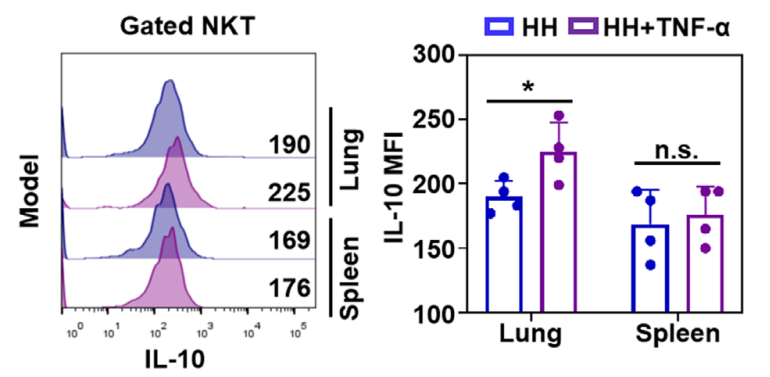
TNF-alpha/TNFSF2 Protein, Rat purchased from MedChemExpress. Usage Cited in: Exp Lung Res. 2025 Jun 2;51(1):38-49. [Abstract]
Representative flow cytometry plot and MFI of IL-10 production by NKT cells in the lung and spleen from HH and HH+TNF-α rats (4 rats per group). The results showed that TNF-α (20 μg/mL, 10 μg/rat; i.p.; once daily for 4 days) increased the MFI of IL-10 in lung NKT cells of HAPE rats, but did not affect its MFI in the spleen.


Technical Parameters
-
Species Rat
-
Source E. coli
-
Tag Tag Free
-
Accession
P16599 (L80-L235)
-
Molecular Construction
-
N-term
-
TGF-α (L80-L235)
Accession # P16599 -
C-term
-
-
Protein Length
Full Length of Tumor necrosis factor, soluble form Chain
-
Synonyms
TNF; Tumor Necrosis Factor (TNF Superfamily, Member 2); Prev. TNFA; Tumor Necrosis Factor-Alpha; TNF-Alpha; Tumor Necrotic Factor Alpha; TNFSF2; TNF Superfamily, Member 2; Tumor Necrosis Factor Ligand Superfamily Member 2; TNF, Macrophage-Derived; TNF-A; TNF, Monocyte-Derived; DIF; APC1 Protein; Cachectin; IMD127; TNLG1F; Tumor Necrosis Factor; Tumor Necrosis Factor Ligand 1F
-
AA Sequence
LRSSSQNSSDKPVAHVVANHQAEEQLEWLSQRANALLANGMDLKDNQLVVPADGLYLIYSQVLFKGQGCPDYVLLTHTVSRFAISYQEKVSLLSAIKSPCPKDTPEGAELKPWYEPMYLGGVFQLEKGDLLSAEVNLPKYLDITESGQVYFGVIAL
-
Predicted Molecular Mass
17.4 kDa
-
Molecular Weight
Approximately 14-16 kDa, based on SDS-PAGE under reducing conditions.
-
Purity
≥ 95%, as determined by reducing SDS-PAGE.


Product Properties
Lyophilized powder
Lyophilized from a 0.22 μm filtered solution of PBS, pH 7.4.
<1 EU/μg, determined by LAL method.
It is not recommended to reconstitute to a concentration less than 100 μg/mL in ddH2O. For long term storage it is recommended to add a carrier protein (0.1% BSA, 5% HSA, 10% FBS or 5% Trehalose).
Stored at -20°C for 2 years from date of receipt. After reconstitution, it is stable at 4°C for 1 week or -20°C for longer (with carrier protein). It is recommended to freeze aliquots at -20°C or -80°C for extended storage.
Room temperature in continental US; may vary elsewhere.


Documentation
-
Data Sheet (265 KB)
-
SDS (252 KB)
- English - EN (252 KB)
- Français - FR (252 KB)
- Deutsch - DE (252 KB)
- Norwegian - NO (252 KB)
- Español - ES (252 KB)
- Swedish - SV (252 KB)
- Italian - IT (252 KB)
- Korean - KR (252 KB)
- Portuguese - PT (252 KB)
-
Handling Instructions (2659 KB)


References
[1]. Horiuchi T, et al. Transmembrane TNF-alpha: structure, function and interaction with anti-TNF agents. Rheumatology (Oxford). 2010 Jul;49(7):1215-28. [Content Brief]
[2]. El-Tahan RR, et al. TNF-α gene polymorphisms and expression. Springerplus. 2016 Sep 7;5(1):1508. [Content Brief]
[3]. Jang DI, et al. The Role of Tumor Necrosis Factor Alpha (TNF-α) in Autoimmune Disease and Current TNF-α Inhibitors in Therapeutics. Int J Mol Sci. 2021 Mar 8;22(5):2719. [Content Brief]
[4]. Berguetti T, et al. TNF-α Modulates P-Glycoprotein Expression and Contributes to Cellular Proliferation via Extracellular Vesicles. Cells. 2019 May 24;8(5):500. [Content Brief]
[5]. Onizawa M, et al. Signaling pathway via TNF-alpha/NF-kappaB in intestinal epithelial cells may be directly involved in colitis-associated carcinogenesis. Am J Physiol Gastrointest Liver Physiol. 2009 Apr;296(4):G850-9. [Content Brief]
[6]. Bernardino L, et al. Tumor necrosis factor-alpha modulates survival, proliferation, and neuronal differentiation in neonatal subventricular zone cell cultures. Stem Cells. 2008 Sep;26(9):2361-71. [Content Brief]
[7]. Matsuno H, et al. The role of TNF-alpha in the pathogenesis of inflammation and joint destruction in rheumatoid arthritis (RA): a study using a human RA/SCID mouse chimera. Rheumatology (Oxford). 2002 Mar;41(3):329-37. [Content Brief]

Calculators
Concentration (start) × Volume (start) = Concentration (final) × Volume (final)


 Powered by Bioz

